

The landscape of enterprise artificial intelligence deployment is shifting rapidly from experimental proof-of-concept stages to production-grade, highly complex operational environments. As organizations increasingly rely on autonomous AI agents to manage intricate multi-step workflows spanning hours or even days, infrastructure constraints have emerged as a primary bottleneck. Traditional microVM environments, while effective for short-lived tasks, often struggle with long-term state persistence, intensive multi-agent coordination, and specialized computational requirements like graphics processing unit (GPU) acceleration. To address these enterprise pain points, Amazon Web Services (AWS) has announced the official launch of runtime instances, a complementary compute option within the Amazon Bedrock AgentCore Runtime architecture designed to offer persistent, managed infrastructure specifically tailored for advanced AI workloads.

Background Context and Evolution of Agentic Infrastructure
For years, developers transitioning AI agents from development environments to production faced significant overhead. Building systems capable of maintaining persistent state over prolonged operational windows required extensive manual intervention. Engineering teams had to independently provision Amazon Elastic Compute Cloud (EC2) instances, configure complex networking topologies, implement session management layers, handle auto-scaling protocols, and stitch together disparate monitoring tools.

These architectural hurdles limited the scalability of collaborative agent systems. When multiple autonomous entities needed to share context, access a unified file system, or leverage underlying operating system capabilities, developers were forced to build custom orchestration layers from scratch. The introduction of Amazon Bedrock AgentCore Runtime microVMs previously alleviated some of these issues by offering fully managed environments supporting invocations of up to eight hours with managed session storage. However, continuous multi-day operations, specialized hardware dependencies, and dense multi-agent collaboration still demanded a more robust underlying infrastructure.
Key Technical Capabilities and Architecture
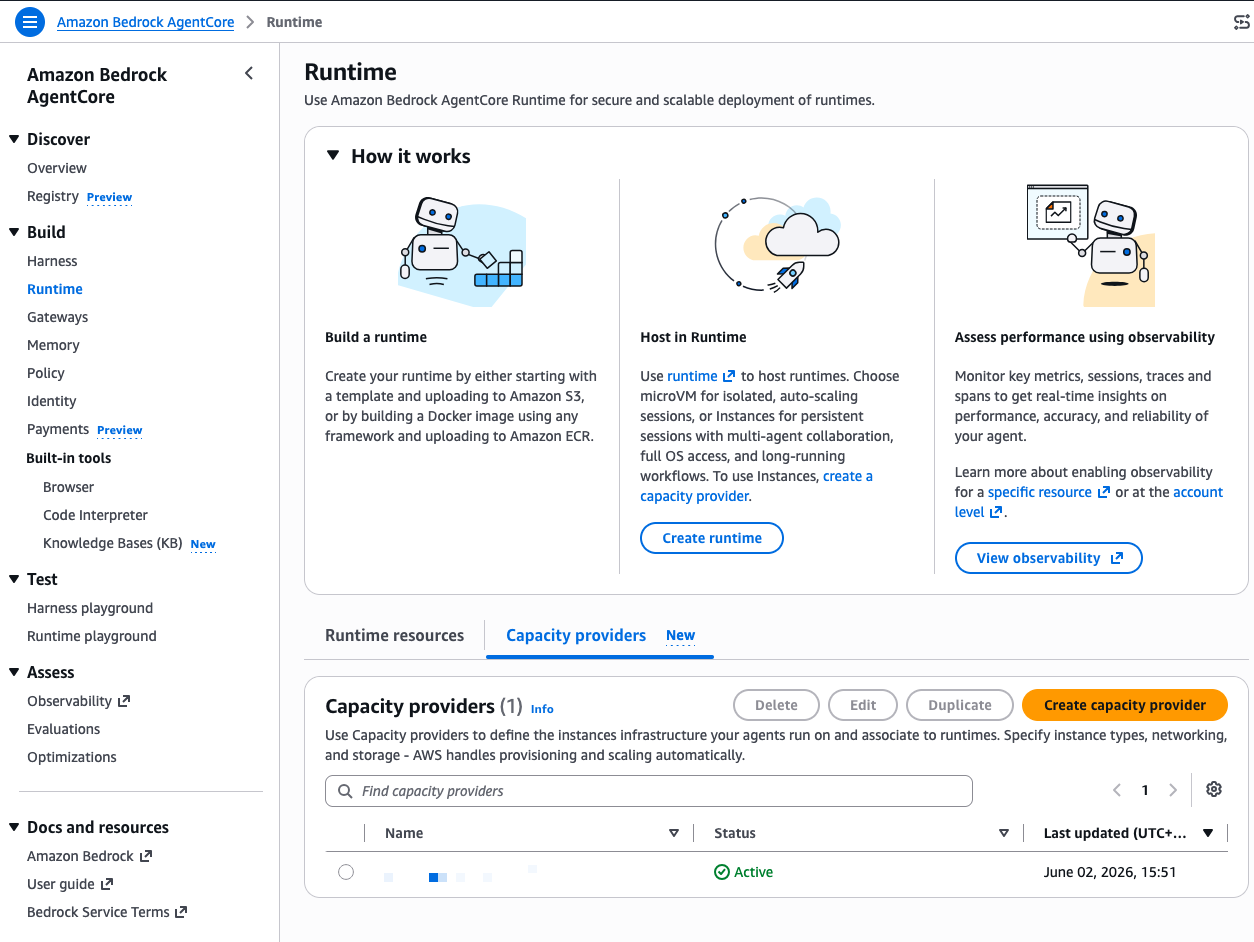
The newly unveiled runtime instances feature AWS-managed EC2 infrastructure that allows enterprises to deploy multiple autonomous agents within a single runtime environment. Each agent maintains distinct dependencies and artifact types while collaborating on a shared host. Sessions can persist for up to 14 days, providing a stable operational runway for long-running computational processes.
Furthermore, the service incorporates robust GPU acceleration support for compute-intensive tasks such as large-scale data processing, machine learning model fine-tuning, and advanced code compilation. To optimize operational expenditure, the architecture supports session stop and restart functionalities, allowing organizations to hibernate workflows during idle periods—such as overnight or over weekends—and resume them without data loss.
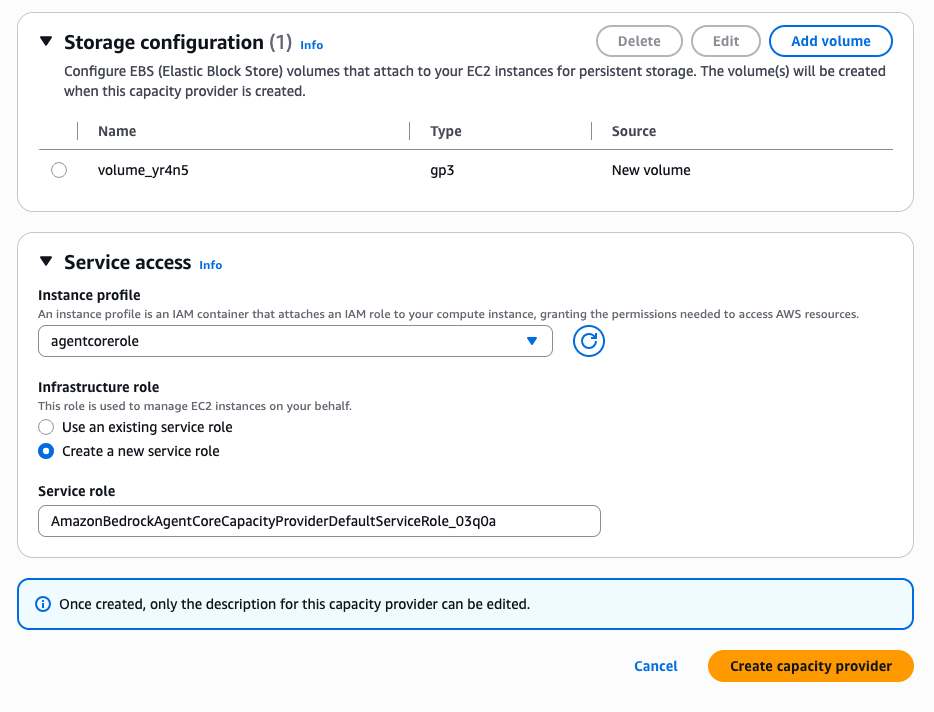
For persistent data storage that must outlive active sessions, runtime instances integrate seamlessly with Amazon Elastic Block Store (Amazon EBS) and AgentCore Memory. This integration grants agents long-term recall across sessions and disparate operational environments. Crucially, the new compute option operates via the same AgentCore APIs, identity controls, and observability frameworks that developers already utilize with AgentCore microVMs, ensuring a unified management experience across different infrastructure tiers.
Interoperability and Multi-Agent Collaboration
A notable advancement of the runtime instances framework is its native support for complex multi-agent collaboration. Agents can interact directly as tools within a shared session, operating autonomously until a defined objective is achieved. The architecture is framework-agnostic, supporting popular developer ecosystems such as CrewAI, LangGraph, LlamaIndex, and Strands, alongside any chosen foundational model.
AWS has designed runtime microVMs and runtime instances to function as complementary components rather than competing alternatives. Organizations can deploy a lightweight orchestrator agent on a runtime microVM to handle high-level API routing, task dispatching, and result aggregation. Meanwhile, specialized worker agents can operate on runtime instances to execute compute-heavy functions requiring direct operating system access, continuous state maintenance, or hardware acceleration.
Practical Implementation and Demonstration
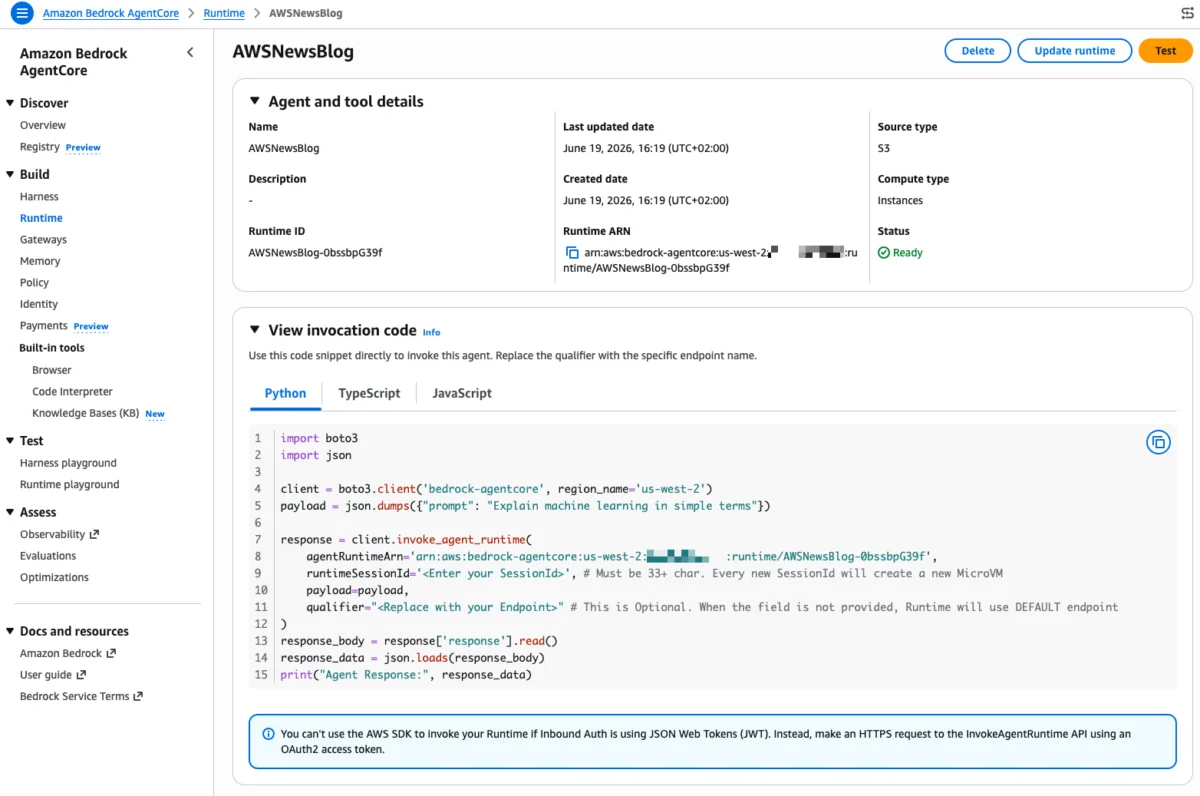
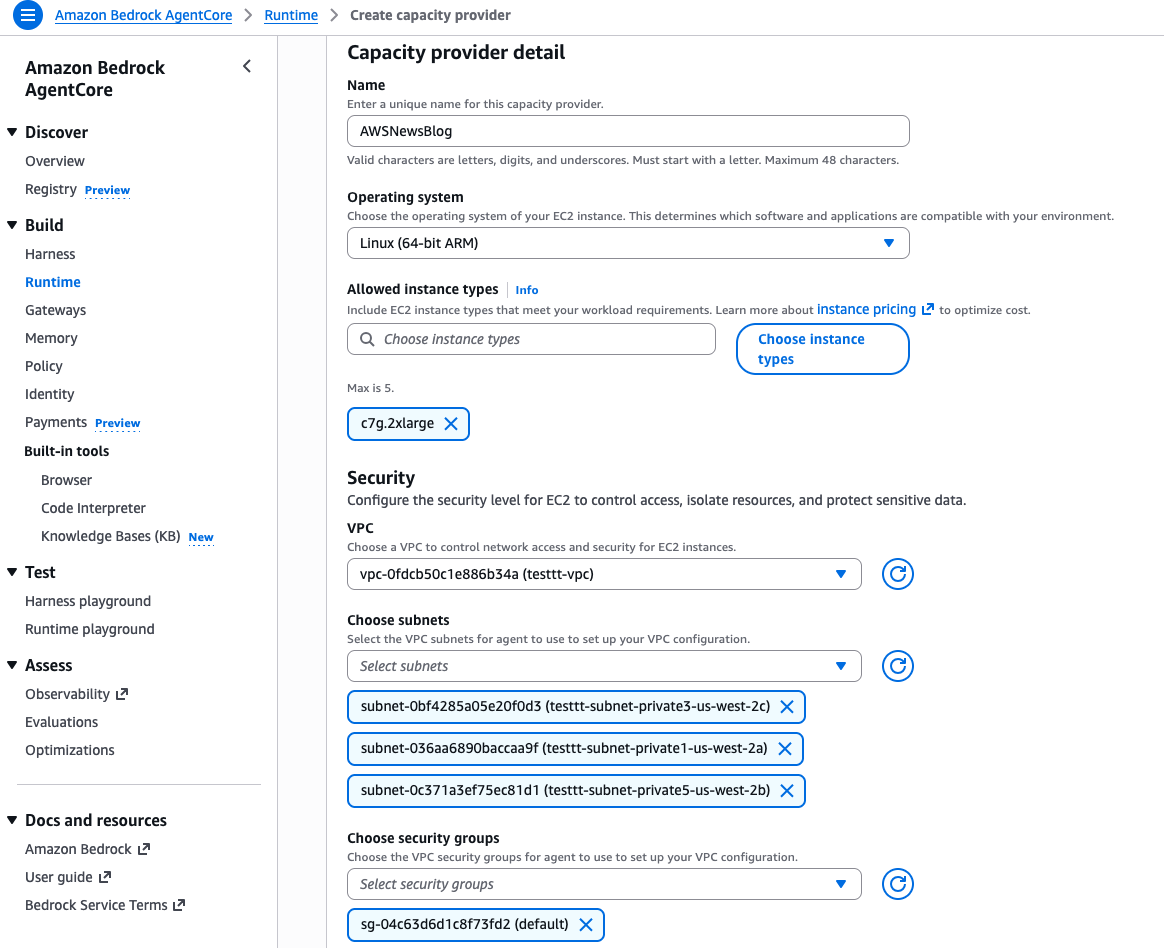
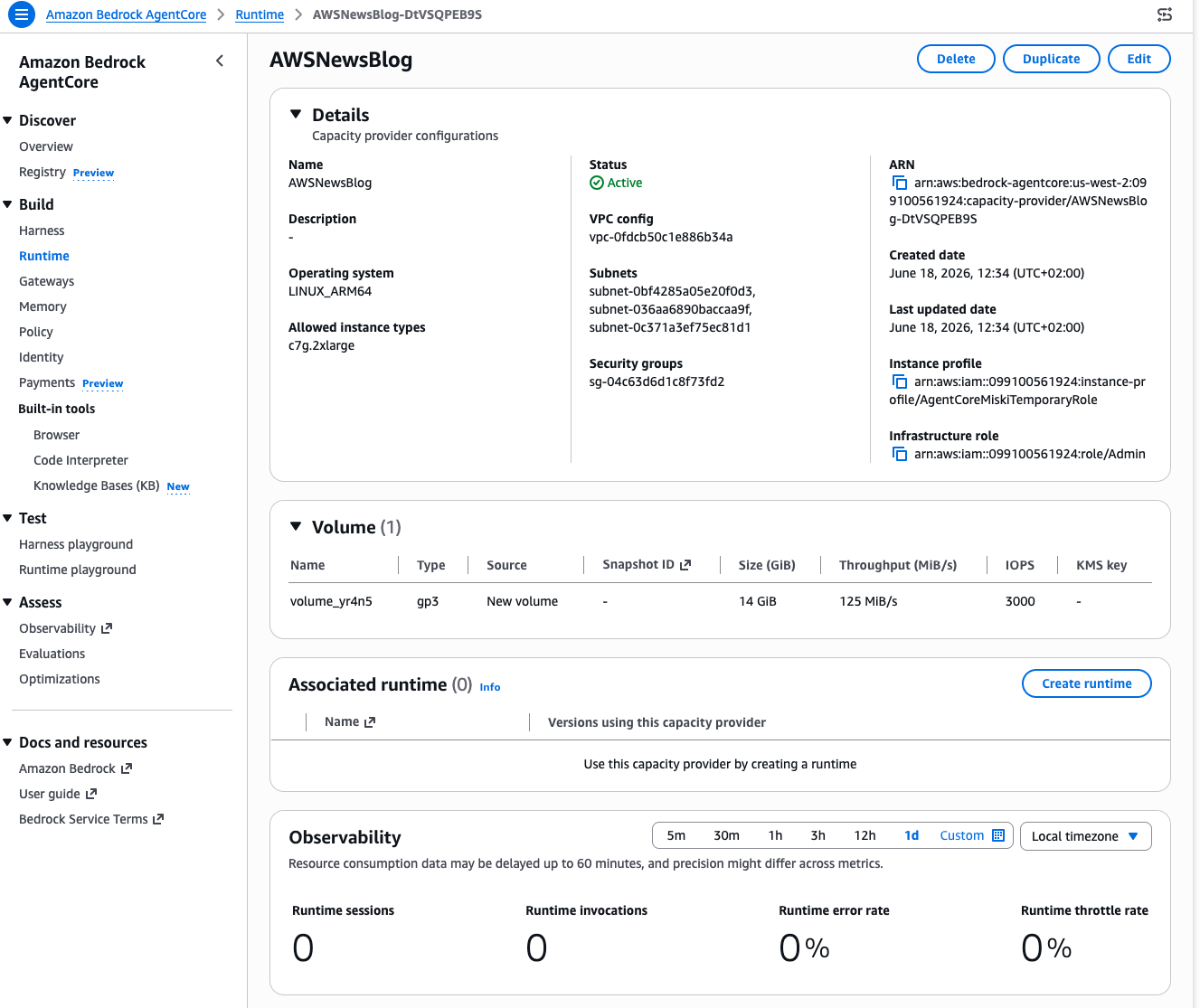
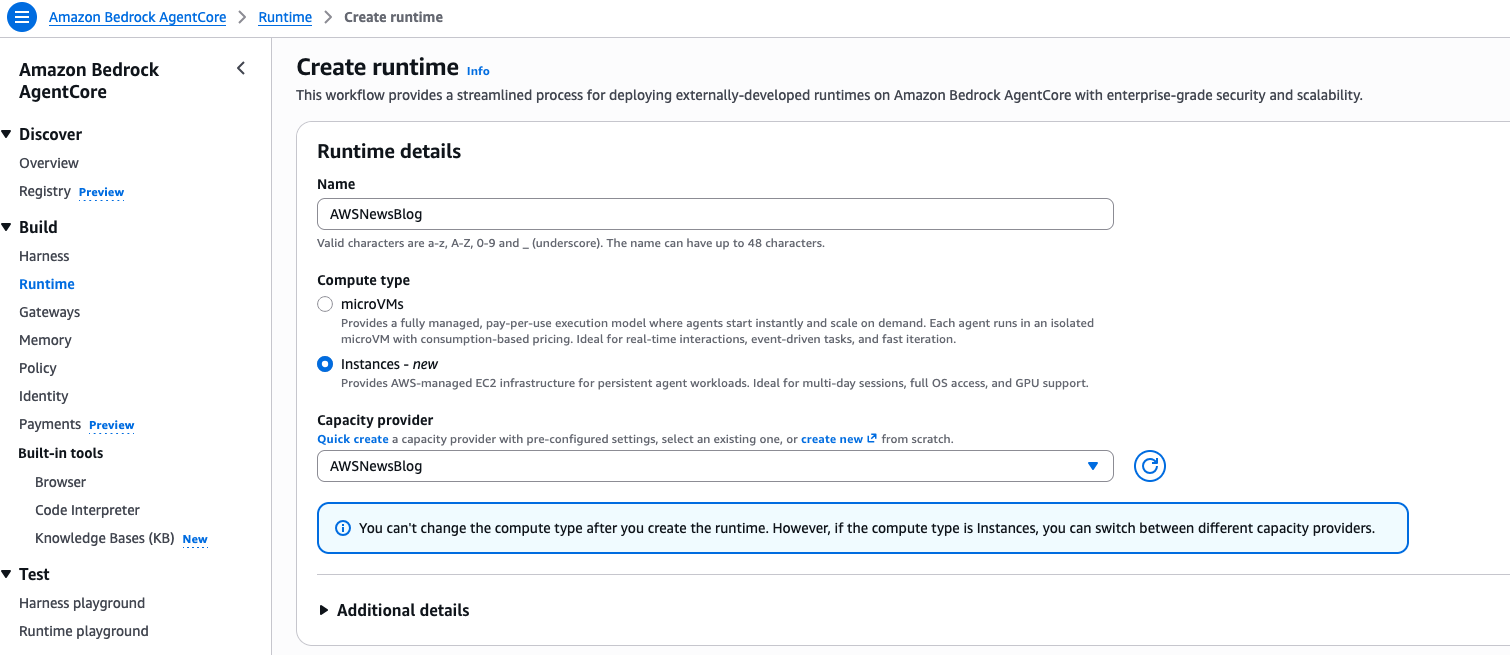
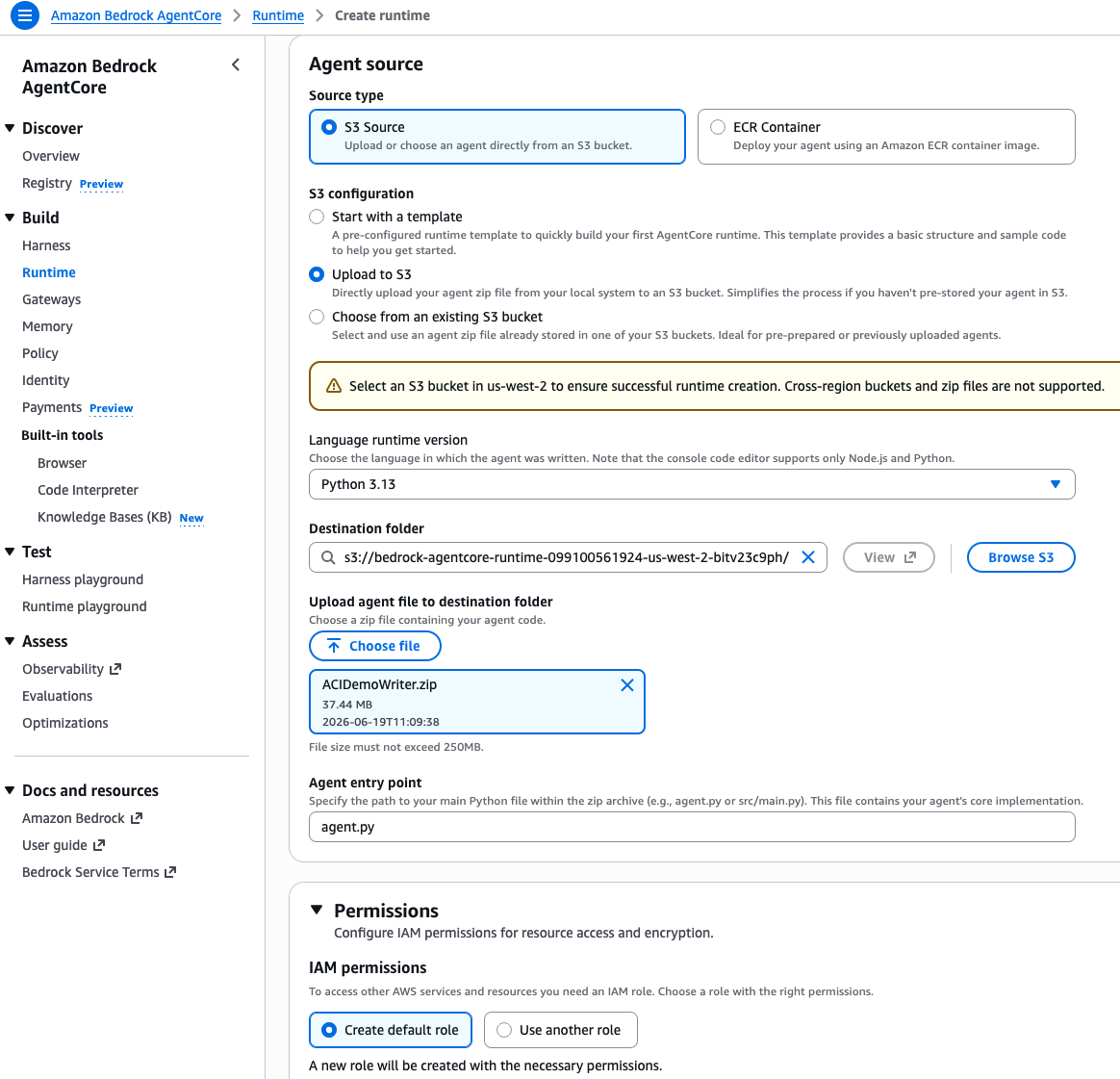
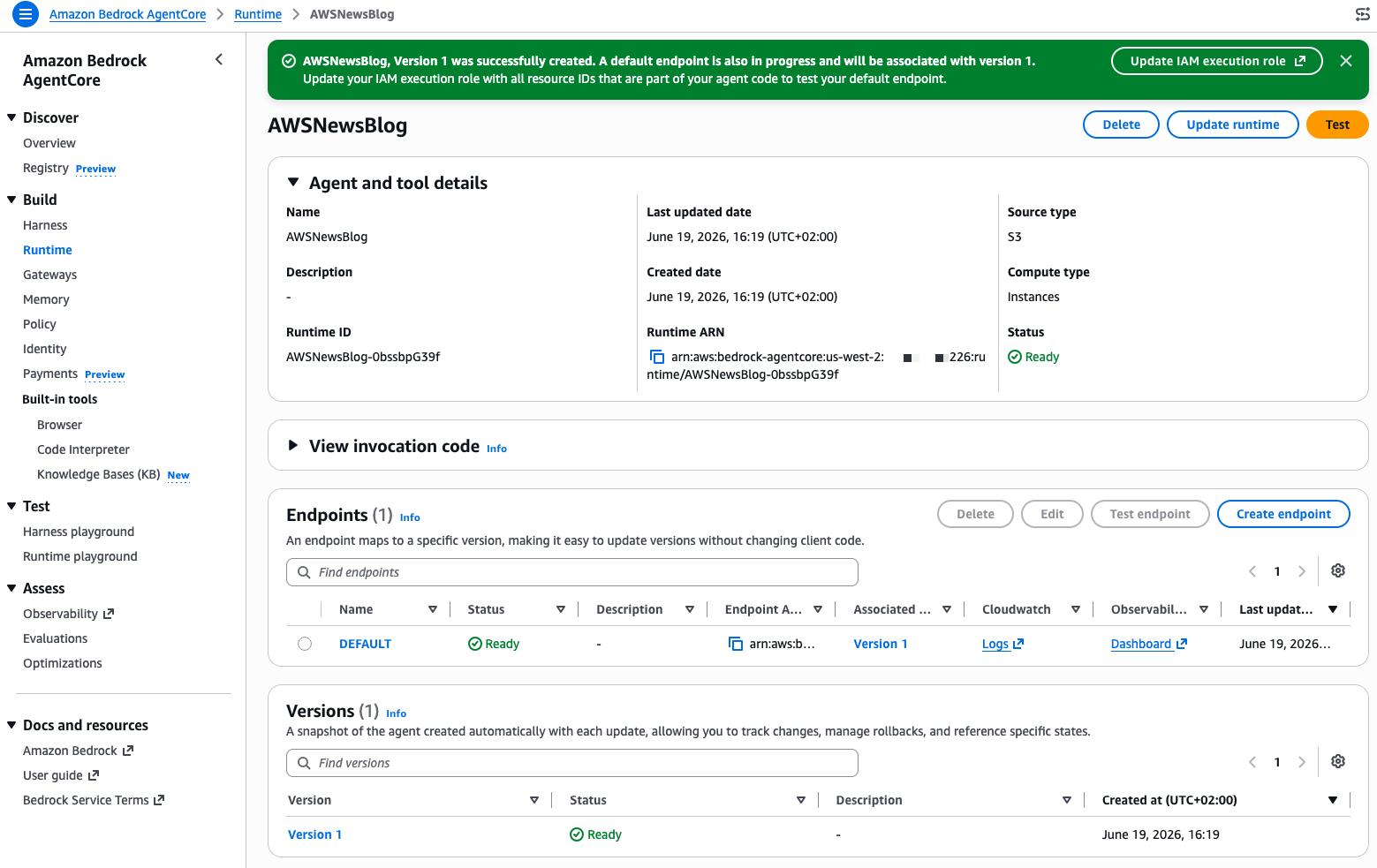
To illustrate the practical application of runtime instances, AWS demonstrated a dual-agent workflow consisting of a code-writer agent and a code-reviewer agent. Built using Strands Agents and powered by advanced language models, both agents were deployed onto a shared capacity provider utilizing an AWS-managed ARM-based EC2 instance type (c7g.2xlarge), which provides eight vCPUs and 16 GiB of memory.
In this demonstration, the code-writer agent generated a Python module based on a natural language prompt and wrote the output directly to a shared session directory on the host file system. Subsequently, the code-reviewer agent accessed that exact directory within the same session ID, reading the generated code without requiring intermediate API calls or external data transfer mechanisms. The reviewer agent then generated a comprehensive structural and stylistic critique.
This shared-filesystem paradigm eliminates network latency and authentication overhead between cooperating agents. Enterprises can scale this pattern to include testing agents, documentation generators, and automated security vulnerability scanners, all operating within the same localized workspace.
Industry Implications and Future Outlook
The release of Amazon Bedrock AgentCore runtime instances marks a maturity milestone in cloud-native artificial intelligence architecture. By bridging the gap between ephemeral serverless functions and manually managed server fleets, AWS is lowering the operational barrier to entry for complex, multi-agent enterprise automation.
Industry analysts note that as businesses move toward autonomous software engineering, supply chain optimization, and automated research workflows, the demand for persistent, secure, and cost-effective agent infrastructure will continue to surge. The ability to pause long-running computational threads—such as hibernating a multi-day data analysis workflow on Monday night and resuming it on Wednesday morning with complete context intact—represents a significant efficiency gain for enterprise engineering teams.
As organizations adopt these new tooling options, the focus of AI development will increasingly shift away from infrastructure plumbing and toward higher-level agent reasoning, orchestration logic, and inter-agent communication protocols. The Amazon Bedrock AgentCore runtime instances are available now through the AWS Management Console, AWS Command Line Interface (CLI), and infrastructure-as-code deployment frameworks, signaling a new phase in production-ready generative artificial intelligence.
