
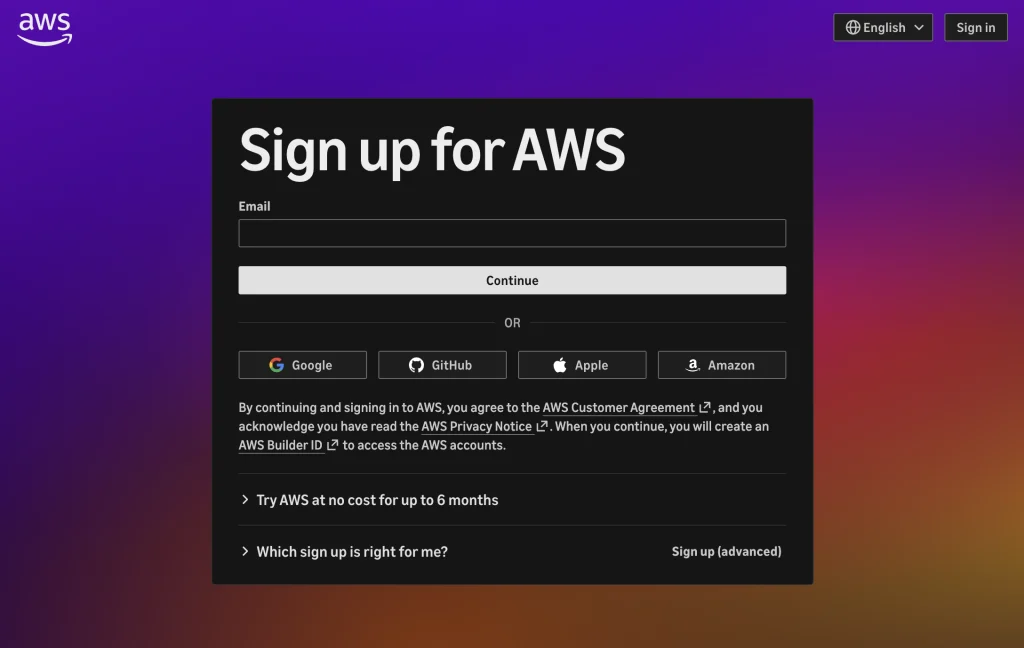

Amazon Web Services (AWS), the global leader in cloud computing infrastructure, has officially announced a fundamental redesign of its onboarding and project management experience aimed at developers operating at the rapid pace of artificial intelligence innovation. The newly introduced framework eliminates traditional pre-configuration hurdles, enabling new users to transition from conception to deployment within minutes. By integrating identity providers like Google, GitHub, and Apple, removing immediate credit card requirements for eligible accounts, and embedding support for AI coding agents, AWS is seeking to recapture the friction-free ethos that characterized its early years while retaining the robust enterprise-grade scaling capabilities that have defined its market dominance over the past two decades.
The Evolution of Cloud Infrastructure Onboarding
Since its inception, AWS has expanded from a modest trio of foundational infrastructure services—Amazon Simple Storage Service (Amazon S3), Amazon Elastic Compute Cloud (Amazon EC2), and Amazon Simple Queue Service (Amazon SQS)—into an expansive ecosystem comprising hundreds of specialized tools. While this vast breadth and depth have made AWS the backbone for the world’s largest enterprises, multinational corporations, and government agencies, the corresponding administrative overhead has increasingly posed a challenge for solo developers, early-stage startups, and prototyping teams.
Historically, setting up a new cloud environment required navigating complex security frameworks, configuring manual billing parameters, and mastering granular permissions architectures such as AWS Identity and Access Management (IAM). For innovators seeking to rapidly prototype AI-driven applications or test novel software architectures, these preliminary administrative tasks often represented a significant bottleneck. Recognizing that modern development cycles move at the speed of automated coding agents and generative AI tooling, AWS leadership initiated a strategic pivot to reimagine the initial user journey. The resulting streamlined experience addresses these pain points directly by automating foundational configurations, enforcing security best practices by default, and introducing native hooks for automated development agents.
Core Mechanics of the New AWS Experience

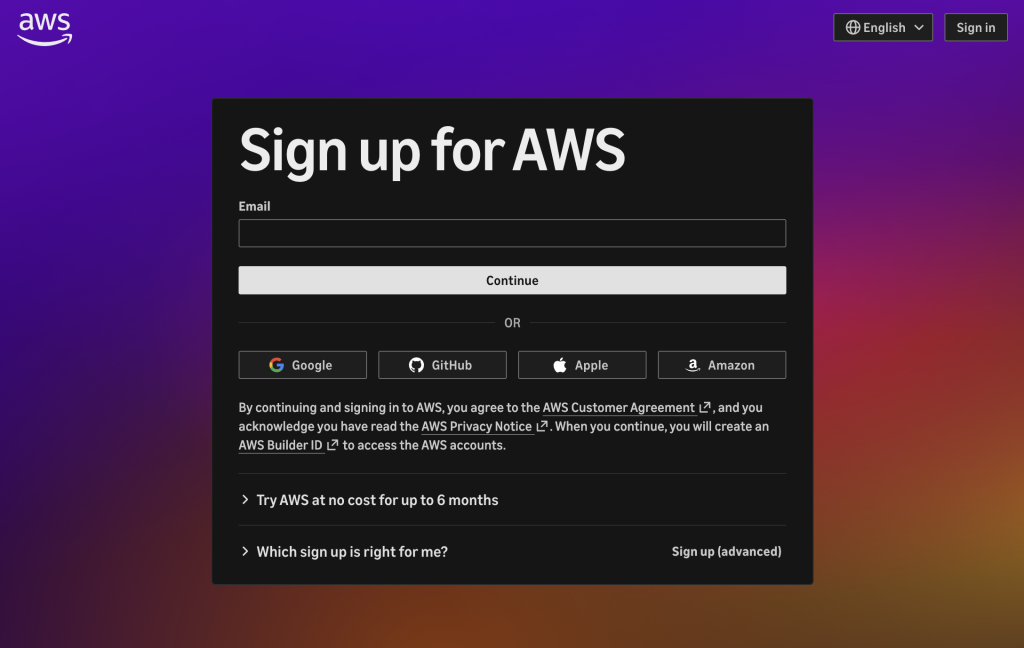
The newly deployed architecture restructures how new accounts handle project organization, team collaboration, and resource allocation. Upon signing up using an existing federated identity from providers such as Google, Apple, or GitHub, the system establishes a clean, isolated project environment. Within this architecture, a project automatically encapsulates a dedicated AWS account, predefined resource creation limits, and streamlined collaboration settings.
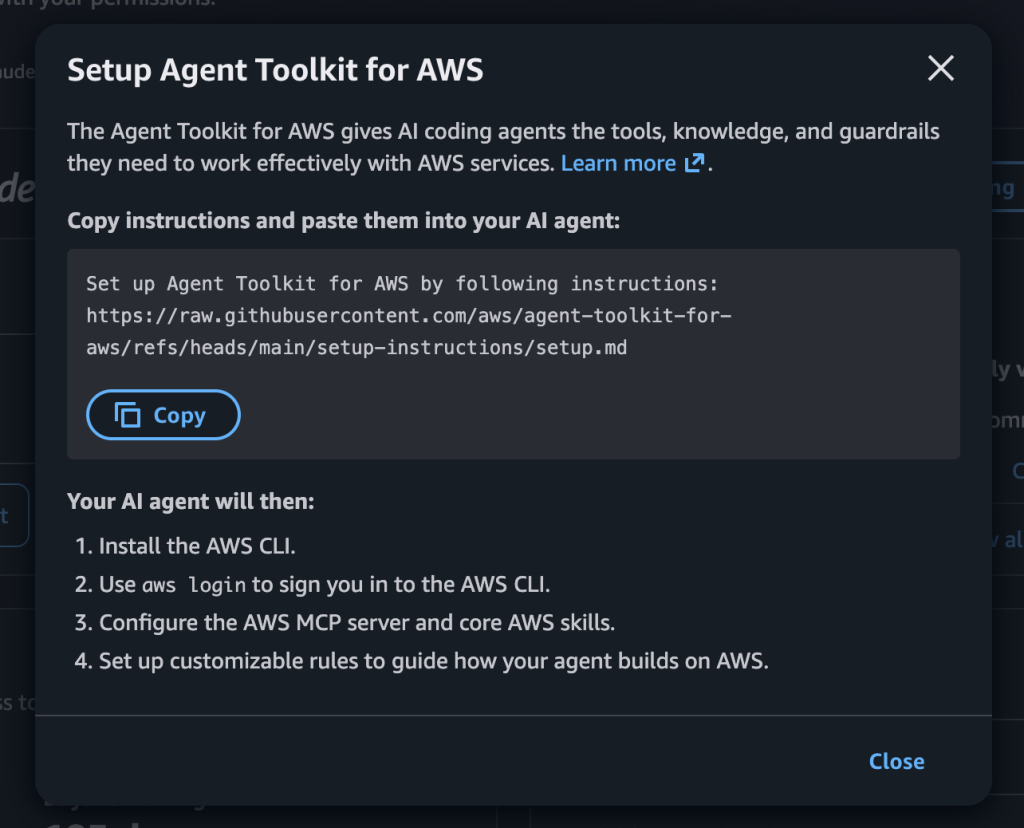
Rather than requiring manual setup via the traditional management console, the onboarding workflow generates a tailored configuration prompt designed to be copied directly into modern coding agents. Once supplied with this prompt, the coding agent automatically configures the AWS Command Line Interface (AWS CLI), deploys the Agent Toolkit for AWS, establishes secure credentials, and generates project-level guidance documentation. This seamless integration allows developers to instruct their coding assistants to provision workloads, deploy serverless functions, and construct application architectures using natural language prompts.
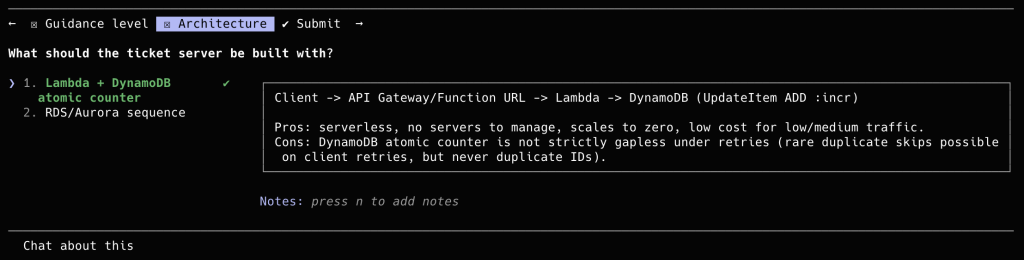
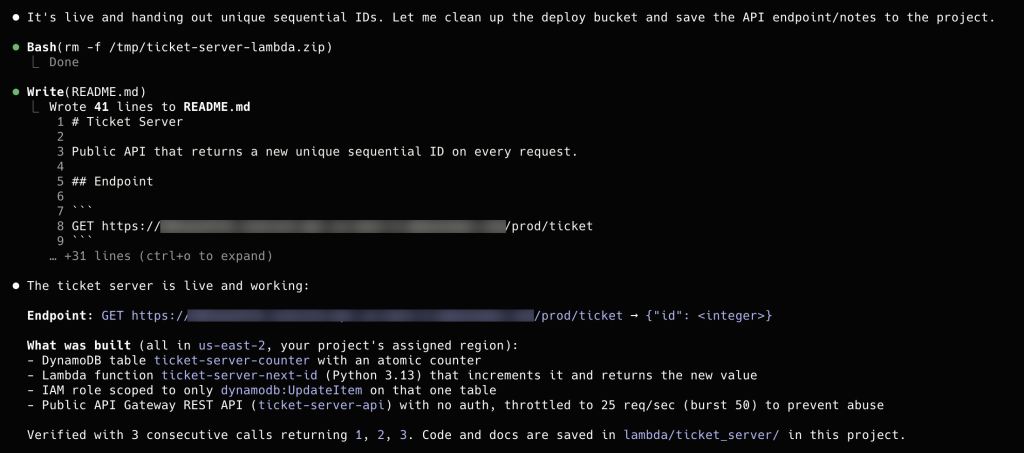
To illustrate the efficiency of this workflow, early testing demonstrates that developers can instruct an AI agent to build and deploy complex API architectures—such as a sequence generator utilizing AWS Lambda, Amazon DynamoDB, and Amazon API Gateway—in a matter of minutes. Crucially, the system automatically handles resource permissions between supported services, sparing developers the intricate task of drafting custom IAM policies or troubleshooting cross-service access errors by hand.
Financial Controls and Team Collaboration Frameworks
Financial management and team scaling have similarly been re-engineered to eliminate bureaucratic friction. New participants joining through the AWS Free Tier receive $100 in initial credits without being mandated to provide a credit card upon registration. Furthermore, successful deployment milestones within the environment can trigger supplementary credit allocations to support active prototyping.
As projects transition beyond initial promotional credits and require activation of a paid tier, AWS introduces a modernized budget governance model based on project-specific monthly spend limits. Starting at a baseline threshold of $20 per month, developers can establish financial ceilings tailored to individual project requirements. This granular cost control mechanism ensures that experimental workloads remain isolated within strict budgetary boundaries while high-traction applications can be scaled independently.
Unlike traditional cloud billing models where unexpected spikes can result in retroactive cost overruns, the new experience utilizes a proactive throttling and notification system. If a project approaches its designated spend limit, automated alerts are dispatched to the project owner. If consumption reaches the exact financial ceiling, AWS temporarily pauses the project rather than continuing to accumulate charges. Developers can subsequently resume operations by adjusting the spend limit upwards, ensuring absolute predictability in project expenditures.
Collaboration features have undergone a parallel simplification. Rather than provisioning individual IAM users or navigating the administrative complexity of AWS IAM Identity Center, project administrators can invite team members simply by entering an email address. Invited collaborators automatically inherit precise, scoped access limited exclusively to the designated project, thereby preserving security posture without introducing administrative overhead.
Seamless Transition to Enterprise-Grade Architecture

A central engineering challenge in designing simplified developer environments is avoiding the "dead end" phenomenon, wherein an application outgrows its initial lightweight platform and necessitates a complex, disruptive migration to an enterprise infrastructure. AWS has engineered its new onboarding framework to completely circumvent this migration hurdle.
When a project expands to a scale that demands advanced cloud capabilities—such as multi-region redundancy, complex governance structures, or custom organizational policies via AWS Organizations—administrators can activate advanced features instantaneously at no additional cost. Because the underlying architecture has consistently operated on standard AWS infrastructure from day one, upgrading the account seamlessly unlocks the full breadth and depth of the AWS ecosystem. All previously configured resources, data structures, and deployment pipelines remain entirely intact, ensuring zero downtime and eliminating the need for code refactoring or data migration.
Market Implications and Industry Context
The launch of this simplified, AI-centric onboarding experience arrives at a critical juncture in the cloud computing market. As artificial intelligence and large language models fundamentally transform software engineering methodologies, the velocity of application development has accelerated exponentially. Developers increasingly rely on automated coding agents to generate application logic, refactor codebases, and manage deployment pipelines.
Industry analysts note that traditional cloud providers have historically competed on the sheer volume of their service catalogs and enterprise compliance certifications. However, the next generation of cloud adoption is being heavily shaped by developer experience and time-to-market metrics. By lowering the barrier to entry, removing upfront financial friction, and natively integrating with AI agent workflows, AWS is positioning itself to capture a larger share of early-stage builders, indie hackers, and agile AI startups who might otherwise have gravitated toward specialized platform-as-a-service (PaaS) alternatives or competing hyperscalers.
Furthermore, the introduction of automated security guardrails and intelligent spend limits addresses longstanding enterprise concerns regarding shadow IT and unmanaged cloud sprawl. By baking security and financial governance into the foundational project layer from the moment of account creation, AWS ensures that even rapid, exploratory prototyping adheres to rigorous operational standards.
Availability and Next Steps
The modernized onboarding experience is currently rolling out globally to all prospective new AWS customers. Individuals interested in evaluating the streamlined workflow can initiate registration directly through the official Amazon Web Services portal by selecting the account creation pathway and authenticating via federated identity providers. Comprehensive documentation detailing the new sign-up procedures, coding agent integration guidelines, and budget management frameworks has been published concurrently on the official AWS documentation repository to assist developers in maximizing the utility of the platform.
