

Amazon Web Services (AWS) has announced the general availability of the AWS Model Context Protocol (MCP) Server, a significant advancement designed to provide AI agents and coding assistants with secure, authenticated, and up-to-date access to all AWS services. This new managed remote server, a core component of the Agent Toolkit for AWS, directly addresses the persistent challenge developers have faced: enabling AI agents to interact with cloud infrastructure at scale without compromising security or relying on outdated information. The introduction of the MCP Server marks a pivotal moment for AI-driven development, promising to transform how developers build and manage applications on AWS by embedding security, efficiency, and best practices directly into AI agent workflows.
The Evolving Landscape of AI Agents and Cloud Development
The proliferation of AI agents and coding assistants has rapidly transformed the software development landscape, offering unprecedented opportunities for automation, code generation, and task execution. From automating routine infrastructure provisioning to assisting with complex debugging, these intelligent tools are poised to significantly enhance developer productivity and accelerate innovation. However, their integration with critical cloud infrastructure, particularly platforms as extensive and sensitive as AWS, has presented substantial hurdles.
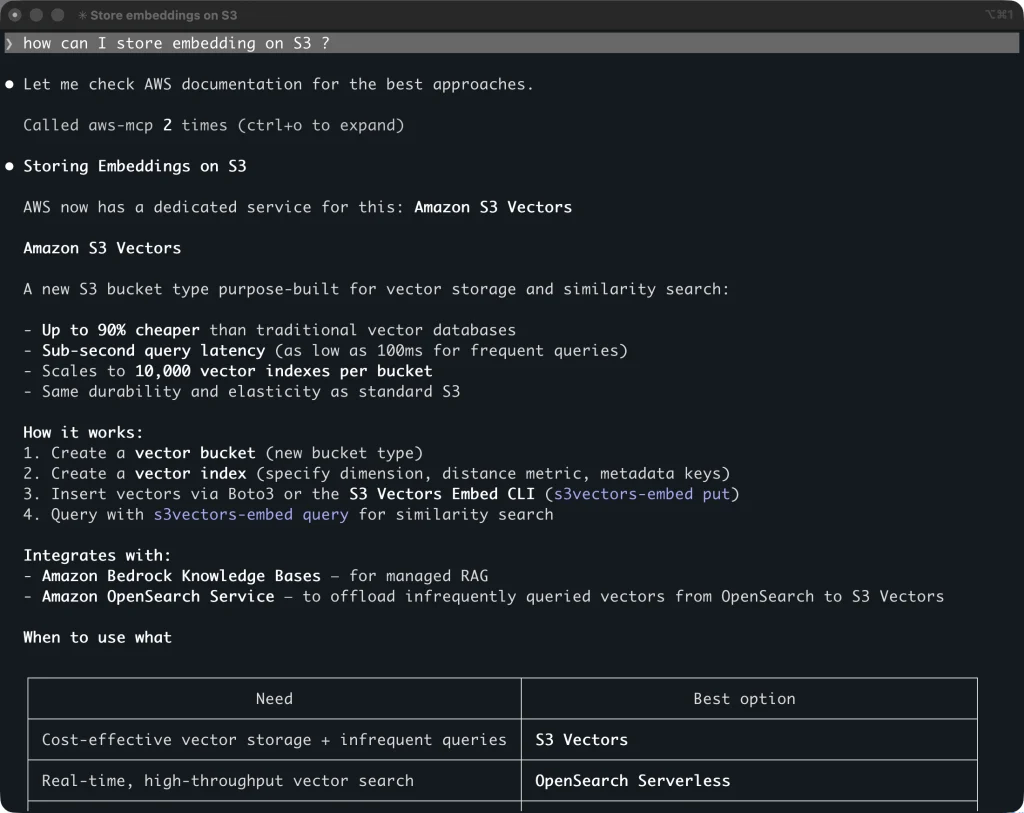
Prior to solutions like the AWS MCP Server, AI agents often operated under severe limitations. One primary challenge stemmed from their inherent knowledge cutoffs; AI models are trained on historical data, meaning they often lack awareness of the latest services, features, and best practices introduced after their last training update. For a platform as dynamic as AWS, which frequently rolls out new services and updates, this leads to agents suggesting outdated or inefficient solutions. For instance, an agent might recommend traditional methods for storing embeddings on Amazon S3, completely unaware of the more optimized and recently launched Amazon S3 Vectors service.
Beyond knowledge gaps, security has been a paramount concern. Granting an AI agent direct, unfettered access to an AWS account is akin to "handing it the keys to the kingdom," posing unacceptable risks to data integrity and system security. Developers have struggled to implement fine-grained access controls for agents, often resorting to overly broad permissions or manual oversight, which negates the benefits of automation. Furthermore, agents frequently default to less secure or less efficient methods, such as using the AWS Command Line Interface (AWS CLI) for infrastructure deployment instead of more robust, declarative tools like AWS Cloud Development Kit (AWS CDK) or AWS CloudFormation, and tend to generate overly permissive AWS Identity and Access Management (IAM) policies. The consequence is often infrastructure that functions in a demonstration environment but falls short of production readiness, lacking the necessary security, auditability, and operational resilience.
AWS MCP Server: Bridging the Gap with Secure and Intelligent Access
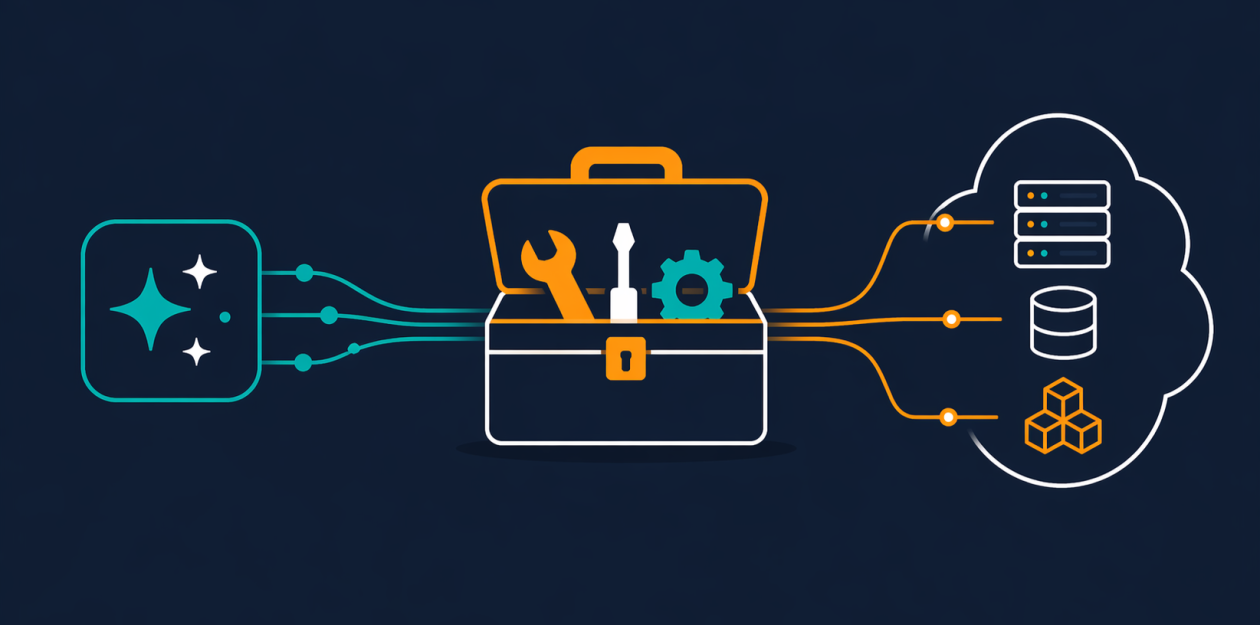
The AWS MCP Server is engineered to overcome these fundamental challenges by providing a secure, authenticated conduit for AI agents to interact with AWS services. It is a managed remote Model Context Protocol (MCP) server, meaning AWS handles the underlying infrastructure, allowing developers to focus solely on leveraging its capabilities. As part of the broader Agent Toolkit for AWS, which includes skills and plugins, the MCP Server empowers coding agents to build more effectively and efficiently on AWS.
A cornerstone of the MCP Server’s design is its compact and context-efficient toolset, specifically crafted to minimize an AI model’s context window consumption while maximizing utility. This approach reduces computational overhead, improves response times, and mitigates the risk of "hallucinations" – instances where AI agents generate incorrect or irrelevant information due to an overloaded context.
Core Capabilities and Advanced Features
The AWS MCP Server introduces several critical tools and capabilities that fundamentally change how AI agents operate within the AWS ecosystem:
-
call_awsTool: This central tool allows AI agents to execute any of the over 15,000 AWS API operations. Crucially, it leverages existing IAM credentials, ensuring that all agent actions are performed under defined security boundaries. A significant advantage is the rapid support for new AWS APIs, which become available for agent interaction within days of their launch, guaranteeing that agents always work with the most current service offerings.
-
search_documentationandread_documentationTools: To combat the issue of outdated training data, these tools enable agents to retrieve current AWS documentation and best practices in real-time, at the moment of query. This ensures that the agent consistently operates with up-to-date information, including knowledge of recently launched services like Amazon S3 Vectors, Amazon Aurora DSQL, or Amazon Bedrock AgentCore. With the general availability release, documentation retrieval no longer requires authentication, streamlining the information-gathering process for agents. -
Efficiency Enhancements: AWS has focused on optimizing the server’s performance. The number of tokens required per interaction has been significantly reduced, which directly translates to lower operational costs and faster execution, especially critical for complex, multi-step workflows.
-
run_scriptTool for Sandboxed Execution: A notable addition is therun_scripttool, which allows an AI agent to write and execute short Python scripts server-side within a secure, sandboxed environment. This capability addresses a key limitation of agents: the inability to chain multiple API calls, filter responses, or perform intermediate computations efficiently. Withrun_script, agents can now perform these tasks in a single round-trip, drastically improving both speed and context efficiency. Importantly, the sandbox inherits the user’s IAM permissions but has no network access and is isolated from the local file system or shell, offering a robust security perimeter for data processing without granting broad system access. -
Skills for Curated Guidance and Best Practices: The transition from "Agent SOPs" to "Skills" represents a strategic move towards embedding curated guidance and best practices directly into the agent’s operational framework. These Skills provide validated workflows for common tasks where agents might typically make mistakes, helping them complete work faster, with fewer errors, and consuming fewer tokens. Skills are contributed and maintained by AWS service teams, guaranteeing their accuracy, relevance, and alignment with AWS best practices. This approach keeps the agent’s tool list short and predictable, further reducing hallucination and improving focus.
Enterprise-Grade Security, Governance, and Auditability
For enterprise customers, the AWS MCP Server offers robust features for security, governance, and auditability, which are paramount for compliant cloud operations:
- Clear Permission Separation: The server facilitates a clear distinction between human and agent permissions. Organizations can use standard IAM policies or Service Control Policies (SCPs) to define granular access. For example, a policy might allow a human user to perform mutating operations (e.g., creating resources) while restricting the MCP Server to read-only actions, ensuring that automated processes adhere strictly to predefined operational boundaries.
- Comprehensive Observability: Amazon CloudWatch metrics, published under the
AWS-MCPnamespace, provide separate visibility into MCP server calls versus direct human calls. This level of detail is crucial for compliance teams, enabling them to observe and verify the actions performed by AI agents independently. - Full Audit Trail: All API calls made through the AWS MCP Server are captured by Amazon CloudTrail, providing a complete, immutable record of every action. This comprehensive audit trail is indispensable for security investigations, regulatory compliance, and operational transparency.
These features collectively enable enterprises to confidently adopt AI agents for critical cloud operations, knowing that their security, governance, and audit requirements are fully met.
Demonstration: Bridging the Knowledge Gap with Amazon S3 Vectors
To illustrate the transformative impact of the AWS MCP Server, consider a practical scenario involving Amazon S3 Vectors. Amazon S3 Vectors, launched in preview in July 2025 and generally available in December 2025, provides native support for storing and querying vectors (embeddings) directly within S3, offering an optimized solution for machine learning workloads.
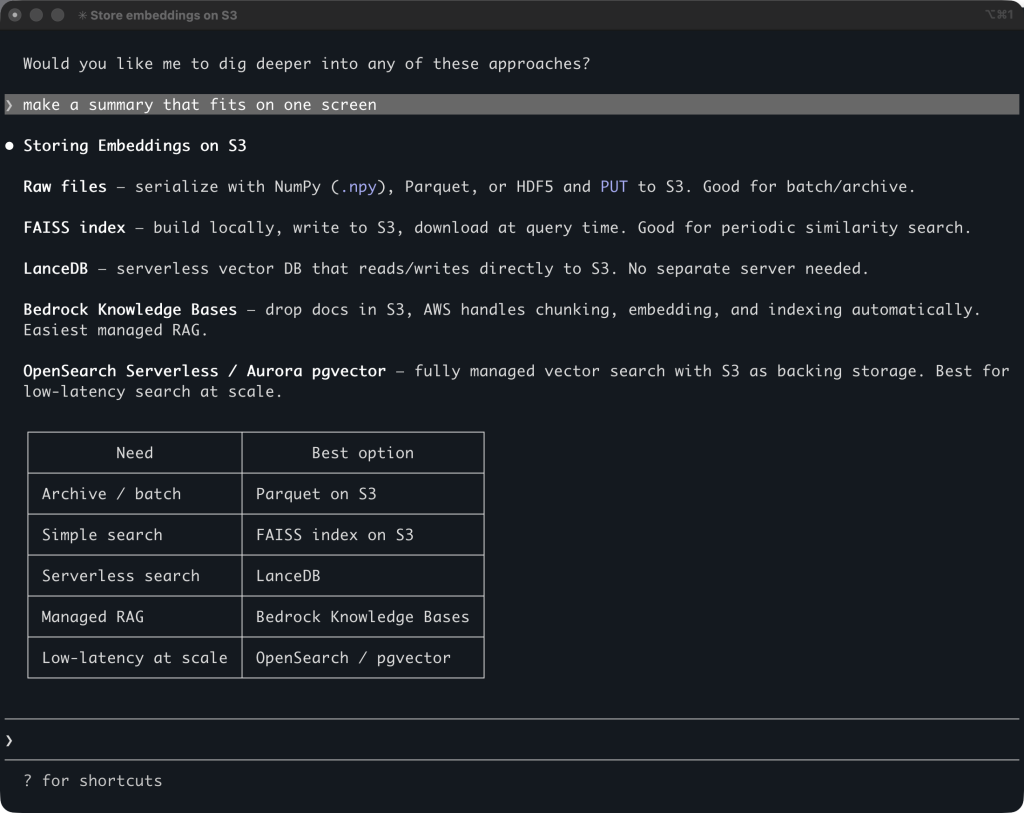
An AI agent, such as Claude Code configured with the Anthropic Opus 4.6 model, has a knowledge cutoff date of May 2025. When asked "how to store embedding on S3" without the MCP Server, the agent, relying solely on its training data, provides five correct but generic solutions for storing data on S3. Critically, it fails to mention Amazon S3 Vectors because this service was announced and made available after the model’s knowledge cutoff. This demonstrates a significant limitation: AI models, however powerful, are inherently constrained by the recency of their training data.
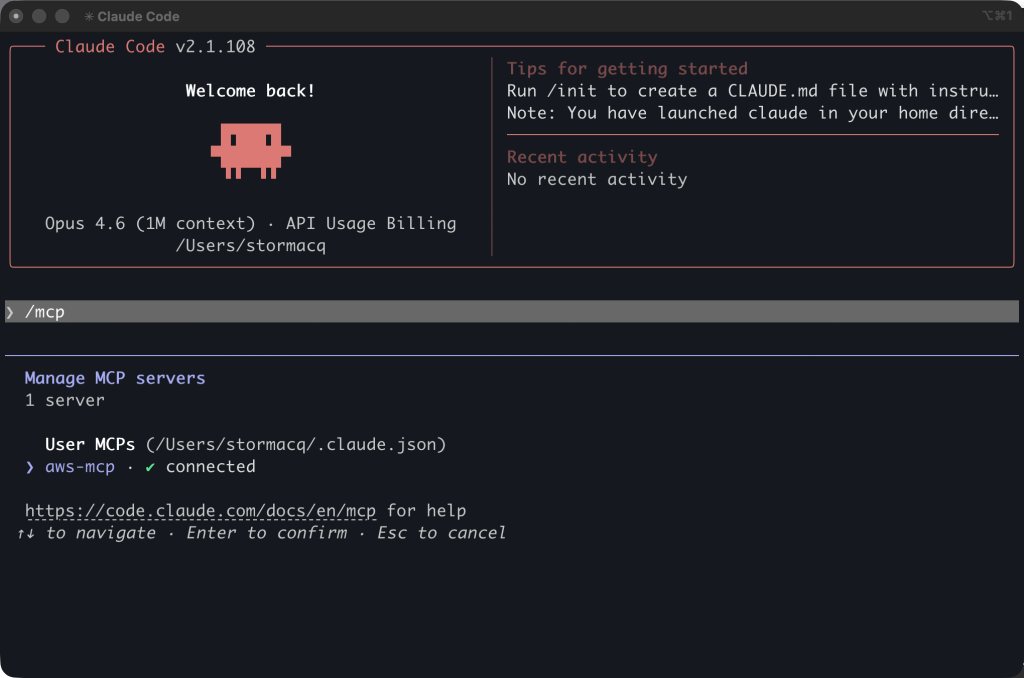
However, when the AWS MCP Server is integrated, the agent’s capabilities are dramatically enhanced. The integration process involves configuring the AI coding agent to call the AWS MCP Server, typically via a proxy like the open-source mcp-proxy-for-aws. This proxy, running locally, bridges the gap between IAM SigV4 authentication (used by AWS) and OAuth 2.1 (supported by many AI clients), allowing the agent to securely leverage existing local AWS credentials.
Upon integration, when the same question – "how can I store embedding on S3" – is posed, Claude Code recognizes that it has access to the aws___search_documentation tool. After obtaining permission to invoke this tool, the agent queries the current AWS documentation. Within seconds, it returns an accurate and up-to-date answer: "AWS now has a dedicated service for this: Amazon S3 Vectors…" This example vividly demonstrates how the MCP Server enables AI agents to transcend their inherent knowledge limitations, providing real-time, accurate, and contextually relevant information.
Pricing, Availability, and Future Outlook
The AWS MCP Server is currently available in the US East (N. Virginia) and Europe (Frankfurt) AWS Regions, with the capability to make API calls to any AWS Region globally. Importantly, there is no additional charge for the AWS MCP Server itself; customers only pay for the AWS resources they create and any applicable data transfer costs incurred by agent actions. This transparent pricing model encourages broad adoption and experimentation.
The AWS MCP Server is designed for broad compatibility, working seamlessly with Claude Code, Kiro, Cursor, and any other MCP-compatible client. This interoperability ensures that developers can integrate the server into their existing AI agent workflows and tools of choice.
The general availability of the AWS MCP Server represents a strategic move by AWS to accelerate the secure and efficient adoption of AI agents in cloud development. By providing a managed, authenticated, and up-to-date interface to AWS services, it empowers developers to build more robust, secure, and intelligent applications. Industry analysts anticipate that this development will significantly drive enterprise adoption of AI-assisted development, fostering a new era of productivity and innovation while upholding the highest standards of security and compliance. This integration of current documentation, authenticated API access, and sandboxed script execution within a single, managed server fundamentally redefines the capabilities of AI agents on AWS, paving the way for unprecedented levels of automation and developer empowerment.
