
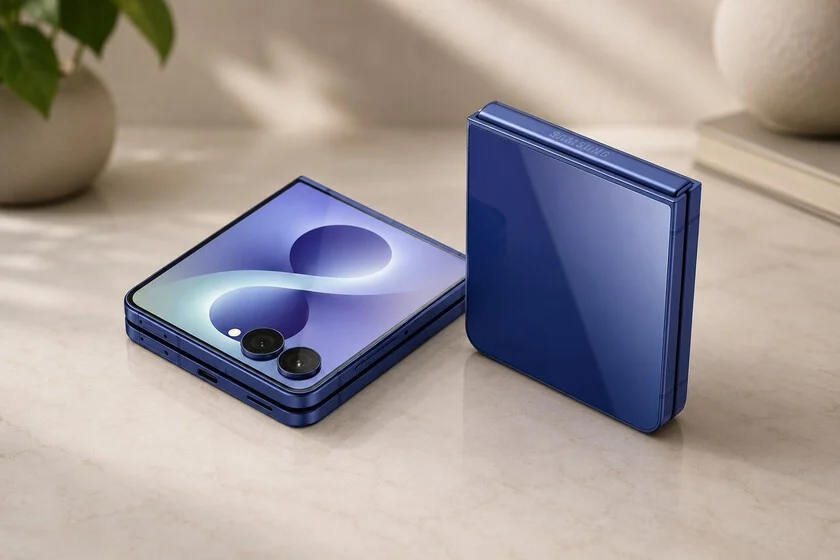

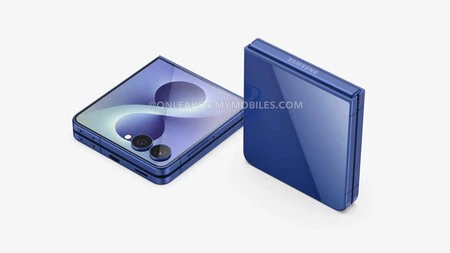
Despite the absence of official pronouncements from Samsung, a consistent stream of leaks from historically reliable sources has painted an increasingly clear picture of the forthcoming Galaxy Z Flip8. Early renders, notably from industry insider OnLeaks, provided initial visual insights, which have since been corroborated and expanded upon by further details emerging from the supply chain and Korean tipsters. These collective insights suggest that Samsung is preparing to unveil a device that, while retaining its iconic clamshell form factor, will introduce significant enhancements, particularly in addressing one of the most persistent challenges in foldable technology: the screen crease.
Anticipated Unveiling and Market Debut
The most frequently cited date for the Galaxy Z Flip8’s grand reveal is July 22, 2026, with expectations pointing towards a flagship Galaxy Unpacked event slated to take place in London. Following Samsung’s established pattern for its summer foldable launches, market availability is projected to commence in the first week of August. This global launch event is not expected to solely feature the Z Flip8; a host of other highly anticipated devices are also on the agenda. These include the premium Galaxy Z Fold8, the intriguing new concept device, the Galaxy Z Wide Fold, and potentially the latest iterations of Samsung’s wearable technology, the Galaxy Watch9 and the Galaxy Watch Ultra 2. The decision to host such a pivotal event in London underscores the increasing global importance of the foldable market and Samsung’s ambition to solidify its leadership position.
A Revolution in Foldable Design: The Hinge and the Near-Invisible Crease
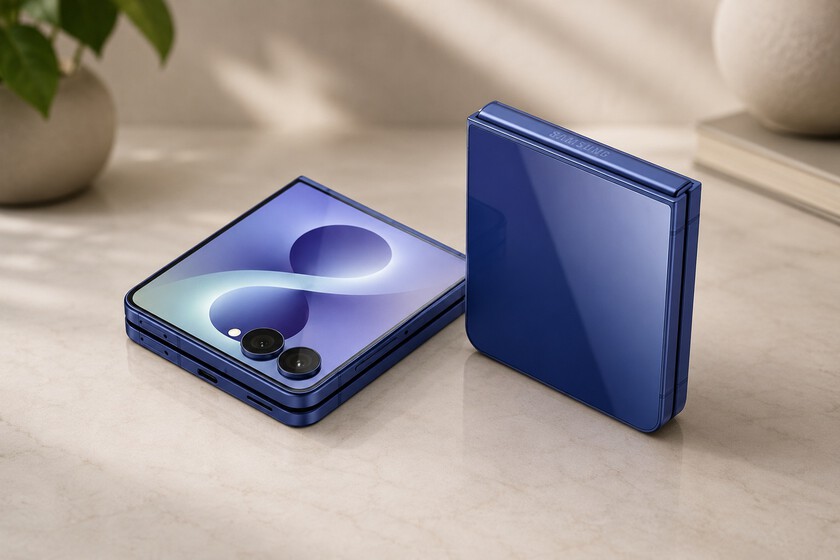
Central to the excitement surrounding the Galaxy Z Flip8 is a reportedly revolutionary overhaul of its hinge mechanism. Multiple tipsters have consistently highlighted the introduction of a completely new hinge design, engineered to dramatically reduce the visibility of the crease on the internal display. The language used by various sources ranges from "almost imperceptible crease" to "crease-free visible design," signaling a major leap forward in foldable display aesthetics and user experience. This development directly addresses a long-standing point of contention for many foldable smartphone users, where the visible fold line could detract from the immersive quality of the large internal screen.
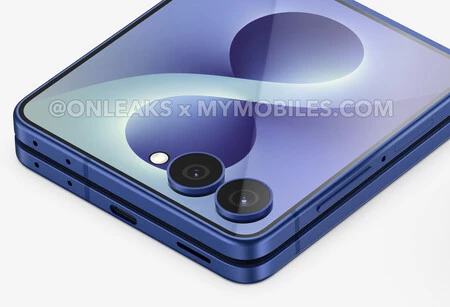
The initial renders from OnLeaks provided visual corroboration of these claims, depicting a significantly narrower gap between the two halves of the phone when closed, compared to its predecessor, the Galaxy Z Flip7. This tighter closure is a direct consequence of an improved hinge architecture, which aims to allow the display to fold into a more gentle, teardrop shape internally, thereby minimizing the stress point and the resulting crease. Furthermore, the article suggests that Samsung’s proprietary Ultra-Thin Glass (UTG) technology, a critical component in its foldable displays, is also expected to receive an update. This updated UTG is designed to work in conjunction with the new hinge, further reducing tension at the folding point and contributing to the overall integrity and visual smoothness of the screen.
While the promise of an "almost invisible" crease is tantalizing, it’s crucial to acknowledge that the subjective interpretation of "invisible" can vary. No leaked material has yet showcased the final result in real-world usage conditions, leaving some room for anticipation regarding how truly imperceptible the fold line will be. Nevertheless, if these leaks prove accurate, this hinge innovation could redefine expectations for clamshell foldables, making the Z Flip8 a significantly more appealing device for mainstream consumers wary of the traditional crease. This enhancement would also place Samsung in a stronger competitive position against rivals who have made strides in crease reduction.
Refined Ergonomics: Lighter, Thinner, and Slightly Wider
Beyond the groundbreaking hinge, the Galaxy Z Flip8 is also expected to feature a subtly refined physical design, prioritizing ergonomics and user comfort. Leaks indicate unfolded dimensions of 166.8 x 75.4 x 6.6 mm. While the length and thickness when unfolded remain largely consistent with the Z Flip7, a slight increase in width is noted. More significantly, when closed, the Flip8 is projected to boast a thickness of approximately 13.2 mm, representing a reduction of about 0.5 mm compared to its predecessor. Although this numerical difference may seem modest, in the context of a clamshell foldable, even minor adjustments to closed thickness can profoundly impact how the device feels in the pocket and its ease of one-handed operation.
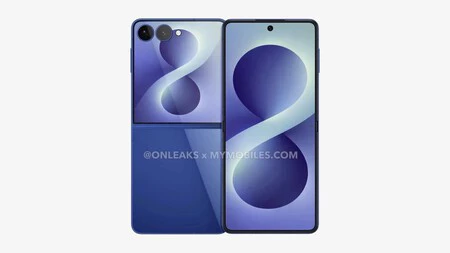
Perhaps the most impactful physical alteration is a reduction in weight. Multiple sources converge on a projected weight of 180 grams for the Flip8, an impressive 8-gram decrease from the Z Flip7’s 188 grams. This lighter build, coupled with the reduced closed thickness, suggests a more manageable and comfortable device for extended daily use. The overall design language, as depicted in the renders, remains distinctly Samsung’s Flip series: the familiar dual-screen concept and camera arrangement are retained, indicating that Samsung is focusing on refining an already successful formula rather than embarking on radical aesthetic changes. This iterative design strategy allows Samsung to concentrate its engineering efforts on core functional improvements, such as the hinge, while maintaining a recognizable and popular form factor.
Display Prowess: Familiar Dimensions, Enhanced Visual Clarity
In terms of display dimensions, the Galaxy Z Flip8 appears to maintain consistency with its predecessor. The internal main screen is expected to remain a 6.9-inch OLED panel, while the external FlexWindow display will retain its 4.1-inch diagonal. Samsung seems content with these sizes, suggesting that the current form factor has reached an optimal balance for user interaction and portability within the clamshell design.
However, the consistency in size belies a crucial improvement in the user experience of the internal panel. If the hinge-related leaks materialize, the visual quality of the main display will be significantly enhanced by the dramatic reduction, or even near elimination, of the crease. A screen of the same dimensions, but without the distraction of a visible fold line, fundamentally alters the perception of the device and elevates the immersive quality of content consumption. This strategic focus on improving the quality of the display experience, rather than merely increasing its size, aligns with Samsung’s long-standing leadership in OLED technology and its commitment to delivering premium visual performance.
Under the Hood: The Exynos 2600 Powerhouse for All Markets
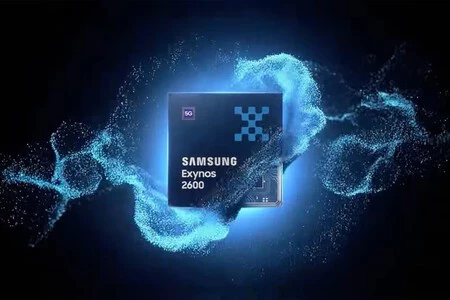
A significant and widely corroborated leak pertains to the Galaxy Z Flip8’s processing unit. Multiple sources unanimously indicate that the device will be powered by Samsung’s own Exynos 2600 chipset across all global markets, diverging from Samsung’s recent strategy of offering Snapdragon variants in some regions for its flagship foldables. This decision signals a renewed confidence in Samsung’s in-house silicon capabilities and a potential shift towards greater standardization of its device lineup.
The Exynos 2600 is poised to be a technological marvel, being the first mobile chip manufactured using a cutting-edge 2-nanometer Gate-All-Around (GAA) process. This advanced manufacturing node, also utilized in certain configurations of the flagship Galaxy S26 and S26 Plus, promises substantial improvements in power efficiency and performance density. Architecturally, the Exynos 2600 is designed with a 10-core configuration, featuring a high-performance C1-Ultra core clocked at an impressive 3.8 GHz, complemented by the Xclipse 960 GPU. The transition from the Exynos 2500, which utilized a 3nm process, to the 2nm Exynos 2600 is expected to translate into notable gains in energy efficiency, extended battery life, and enhanced raw processing power for demanding applications, gaming, and advanced on-device artificial intelligence tasks. This commitment to a single, powerful, and efficient chipset underscores Samsung’s drive to deliver a consistent and premium user experience globally.
Battery and Charging: Familiar Capacities, Promising Wireless Evolution
In terms of power, the Galaxy Z Flip8 is anticipated to maintain the battery capacity of its predecessor, featuring a 4,300 mAh unit. Similarly, wired fast charging speeds are expected to remain at 25W. This consistency in battery and charging specifications is not necessarily a lack of innovation but rather a reflection of the inherent physical constraints imposed by the clamshell form factor. The design necessitates dividing the battery into two separate cells to accommodate the central hinge mechanism, which limits the achievable energy density without transitioning to more advanced, albeit more expensive, battery technologies like silicon-carbon. It appears Samsung has not yet made this leap for the Flip8, prioritizing other design and performance aspects.
However, a notable upgrade is anticipated in wireless charging. Leaked images of dummy units reveal a circular pattern of magnets on the rear panel, strongly suggesting the incorporation of Qi2 wireless charging. This magnetic standard, akin to Apple’s MagSafe, promises more secure and efficient wireless charging by ensuring perfect alignment between the device and the charging pad. While the wired charging speed remains competitive but not leading-edge, the potential integration of Qi2 would enhance the convenience and versatility of the Flip8’s charging ecosystem, aligning it with modern wireless charging trends.
Camera System: Iterative Software-Driven Refinement
For the third consecutive generation, the camera hardware on the Galaxy Z Flip8 is expected to remain largely unchanged from the Flip6 and Flip7. The anticipated configuration includes a 50 MP main sensor, a 12 MP ultra-wide-angle lens, and a 10 MP front-facing camera integrated into the internal display. This decision, as noted by various leaks, indicates that Samsung has opted to prioritize other areas of innovation, such as the hinge and the processing unit, over a substantial upgrade to the optical system.
While the hardware remains static, this does not necessarily mean an identical photographic experience. Samsung’s strategy, according to reports, leans heavily on the capabilities of the new Exynos 2600 chipset. The advanced AI processing power of the 2nm chip is expected to significantly enhance image processing algorithms. This could lead to improvements in areas such as low-light performance, dynamic range, color accuracy, and overall computational photography, yielding better final images even with the same camera sensors. This approach aligns with a broader industry trend where software and AI play an increasingly dominant role in elevating smartphone photography, allowing manufacturers to extract more performance from existing hardware.
The Price Conundrum: Navigating Soaring Memory Costs
The pricing strategy for the Galaxy Z Flip8 presents a significant challenge for Samsung. The Galaxy Z Flip7 was launched in Europe at €1,209 for the 256 GB variant and €1,329 for the 512 GB model. While most leaks suggest Samsung aims to keep the Flip8 within a similar price bracket, a critical market factor complicates this objective: the surging cost of memory components. According to Counterpoint Research, the cost of RAM increased by over 50% in the first quarter of 2026, and NAND flash storage prices have also seen a substantial hike.
This dramatic increase in component costs implies that the manufacturing cost for a smartphone equipped with 12 GB of RAM and 256 GB of storage could rise by an estimated $100 to $150 compared to the previous quarter. Samsung now faces a strategic decision: absorb a significant portion of these increased costs to maintain competitive pricing, or pass them on to consumers, potentially leading to a price increase. While some leaks hint at a possible price hike, the final European pricing – whether the Flip8 launches below or above the €1,300 mark – will ultimately depend on Samsung’s willingness to absorb these escalating component expenses. This economic pressure could influence market adoption, especially in the increasingly competitive foldable segment.
Software, Connectivity, and Enduring Durability
The Galaxy Z Flip8 is expected to launch running Android 17 out of the box, overlaid with Samsung’s latest custom user interface, One UI 9. This ensures users will benefit from the newest Android features, security updates, and Samsung’s refined software experience, which includes a commitment to seven years of major OS updates.
In terms of durability, the device is projected to retain its IP48 certification for water and dust resistance, a crucial feature for a premium foldable. Essential biometric security will be provided by a reliable side-mounted fingerprint reader. Audio enhancements are expected through stereo speakers, offering an immersive sound experience. Connectivity features will be robust, including WiFi 7, Bluetooth 6.0, NFC, and a USB-C port capable of data transfer speeds up to 5 Gbps. These specifications underscore Samsung’s commitment to delivering a comprehensive and future-proof user experience.
The Galaxy Z Flip7 already holds a strong position in the market, lauded for its balanced combination of design, software, and Samsung’s industry-leading seven years of software updates. The Z Flip8 appears to build upon this robust foundation, strategically targeting key areas for improvement that directly impact daily usage, particularly the hinge and overall ergonomics, while retaining elements that already excel. If the anticipated hinge innovation lives up to the promises hinted at by the leaks, it could be the compelling factor needed to justify an upgrade for existing foldable users and attract a new wave of consumers to the captivating world of clamshell foldables. Samsung’s consistent focus on refining the user experience, rather than just raw specifications, positions the Z Flip8 as a pivotal release in the evolving foldable market.
