

Seattle, WA – Amazon Web Services (AWS) has announced a pivotal advancement in enterprise artificial intelligence (AI) adoption, enabling AI agents to securely interact with desktop and legacy applications through Amazon WorkSpaces. This development directly addresses a significant hurdle for businesses aiming to integrate AI into their operational workflows, particularly those reliant on systems lacking modern Application Programming Interfaces (APIs). The announcement positions Amazon WorkSpaces, a well-established managed virtual desktop service, as a critical enabler for scaling enterprise productivity through AI, circumventing the need for costly and time-consuming application modernization projects.
The Pervasive Challenge of Legacy Systems in the AI Era
Enterprises worldwide grapple with the dichotomy of an accelerating AI landscape and deeply entrenched legacy infrastructure. Many critical business processes continue to run on applications designed decades ago, long before the advent of modern cloud computing or sophisticated AI models. These systems, often custom-built or mainframe-based, form the backbone of operations in sectors ranging from finance and healthcare to manufacturing and government. A 2024 Gartner report underscores the scale of this challenge, revealing that a staggering 75% of organizations utilize legacy applications devoid of modern APIs. Furthermore, the report highlights that 71% of Fortune 500 companies execute core processes on mainframe systems, which typically lack adequate programmatic access for contemporary AI tools.
This architectural chasm has presented a difficult choice for organizations: either defer AI integration, missing out on potential efficiency gains and competitive advantages, or embark on extensive and risky modernization initiatives. Such projects often entail multi-year timelines, significant capital investment, and the inherent risk of disrupting stable, mission-critical operations. The complexity of rewriting codebases, migrating data, and retraining personnel for new platforms has historically acted as a formidable barrier, trapping vast amounts of enterprise data and functionality away from the transformative power of AI. The demand for solutions that bridge this gap without necessitating a complete overhaul has been growing exponentially, driven by the rapid advancements in AI agent capabilities.
Amazon WorkSpaces: A New Paradigm for AI Integration

AWS’s latest offering fundamentally alters this dynamic. Amazon WorkSpaces, trusted by millions of employees for secure, managed virtual desktops, can now serve as the operational environment for AI agents. This strategic extension means that AI agents can interact with existing desktop applications – whether they are Windows-based productivity suites, custom enterprise resource planning (ERP) tools, or specialized vertical applications – precisely as a human user would. This capability is delivered without requiring any modifications to the underlying applications.
The core benefit lies in the elimination of traditional integration roadblocks. Enterprises no longer need to build custom APIs, plan complex application migrations, or manage new, specialized infrastructure solely for AI agent deployment. The agents operate within the familiar, secure, and governed WorkSpaces environment, leveraging an existing IT investment rather than demanding a new one. This approach not only accelerates AI adoption but also significantly de-risks the process by isolating agent activity within a controlled virtual environment.
Unlocking Secure and Auditable AI Agent Operations
Security and compliance are paramount considerations for any enterprise technology, particularly when introducing AI into sensitive workflows. AWS has meticulously engineered the AI agent capabilities within WorkSpaces to uphold the highest standards of enterprise-grade security. AI agents authenticate through AWS Identity and Access Management (IAM), ensuring that their access is governed by granular permissions and policies, consistent with existing organizational security frameworks.
Every interaction an AI agent performs within a WorkSpace is fully auditable. Comprehensive audit trails are available through AWS CloudTrail, which logs API calls and related events, and Amazon CloudWatch, which provides monitoring capabilities for resources and applications. This level of transparency is crucial for regulated industries that must maintain strict oversight of all operational activities. By operating within secure WorkSpaces environments rather than on local machines, agents inherit the organization’s established security controls and compliance policies, including data residency, access control, and network isolation. This means that existing security postures remain fully intact, offering peace of mind to IT and compliance teams.
Moreover, Amazon WorkSpaces supports the industry-standard Model Context Protocol (MCP). This adherence ensures broad compatibility, allowing WorkSpaces to integrate seamlessly with a wide array of popular AI agent frameworks, including LangChain, CrewAI, and Strands Agents. This open approach prevents vendor lock-in and provides organizations with the flexibility to utilize their preferred AI development tools and models, further accelerating deployment and innovation.

Early Adopter Validation and Industry Impact
The utility and robustness of this new feature have been validated by early adopters. Chris Noon, Director at Nuvens Consulting, provided a compelling testimony: "WorkSpaces lets our clients give AI agents the same secure, governed desktop environment their employees already use – no custom API integrations, full audit trails, and enterprise-grade isolation out of the box. For regulated industries, that’s not a nice-to-have – it’s the baseline." This statement highlights the critical importance of security, governance, and auditability, especially in sectors like finance, healthcare, and government, where data privacy and regulatory compliance are non-negotiable.
The ability for AI agents to operate within a trusted, isolated desktop environment transforms the landscape for these industries. Financial institutions can automate complex reconciliation processes involving multiple legacy systems without exposing sensitive data to external APIs. Healthcare providers can streamline patient record management, prescription refills, and insurance claim processing using existing electronic health record (EHR) systems. Government agencies can enhance the efficiency of administrative tasks, data entry, and report generation, all while maintaining strict adherence to compliance protocols. This direct, secure access to legacy applications could unlock billions in potential savings and efficiency gains across these sectors.
A Technical Overview: Configuring AI Agent Access
Setting up a WorkSpaces environment for AI agents is designed to be intuitive, leveraging the familiar AWS Management Console. The process begins with creating a new WorkSpaces Applications stack, which defines the environment and controls how agents connect and what permissions they possess.
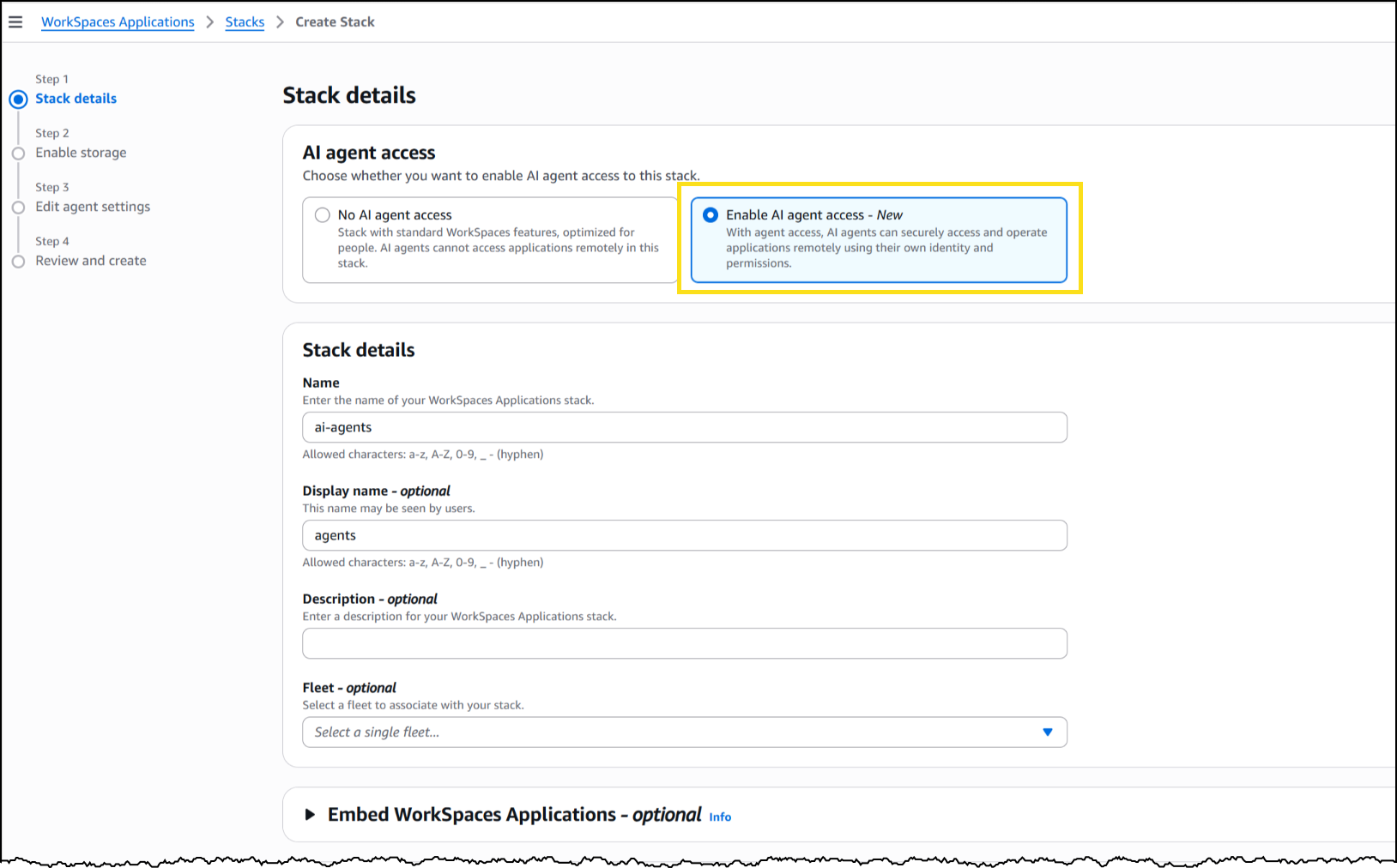
Within the Amazon WorkSpaces console, administrators initiate the "Create stack" workflow, configuring basic parameters such as name, fleet association, and Virtual Private Cloud (VPC) endpoints. A crucial new addition appears in Step 3: the "AI agents" section. Here, two distinct options are presented: "No AI agent access," the default for standard human-user WorkSpaces, and "Add AI Agents." Selecting "Add AI Agents" activates the necessary configurations for secure agent connections on that specific stack.
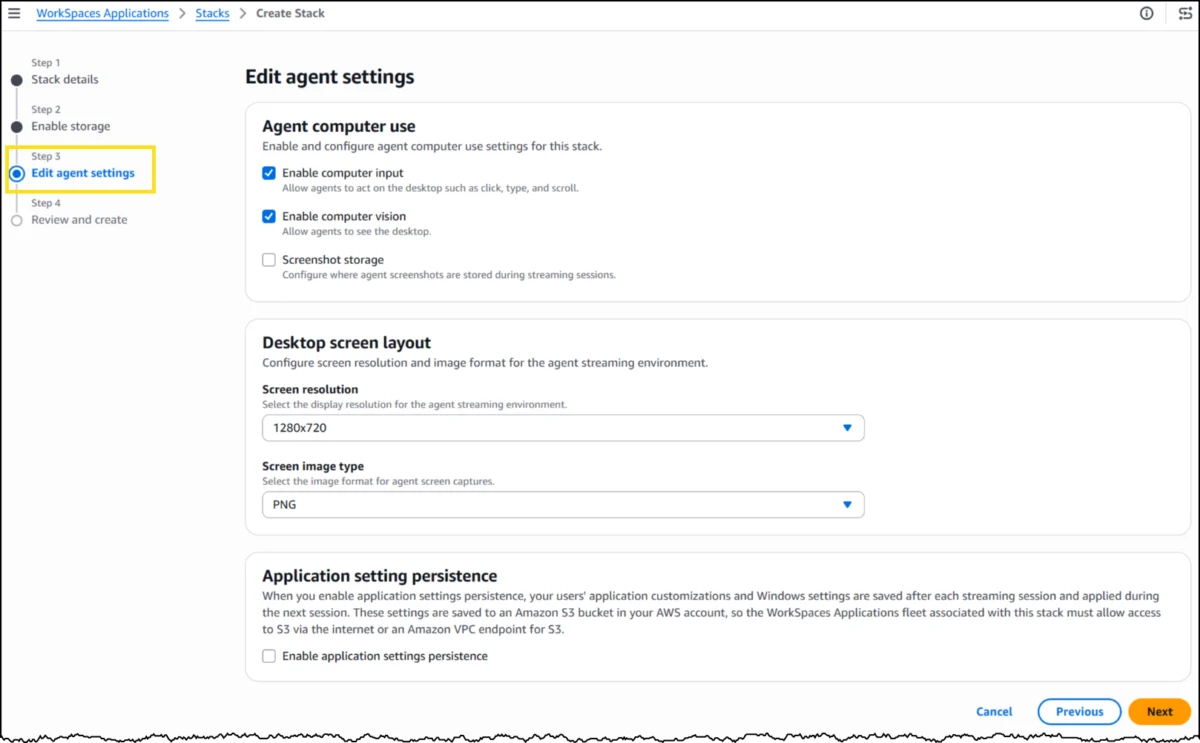
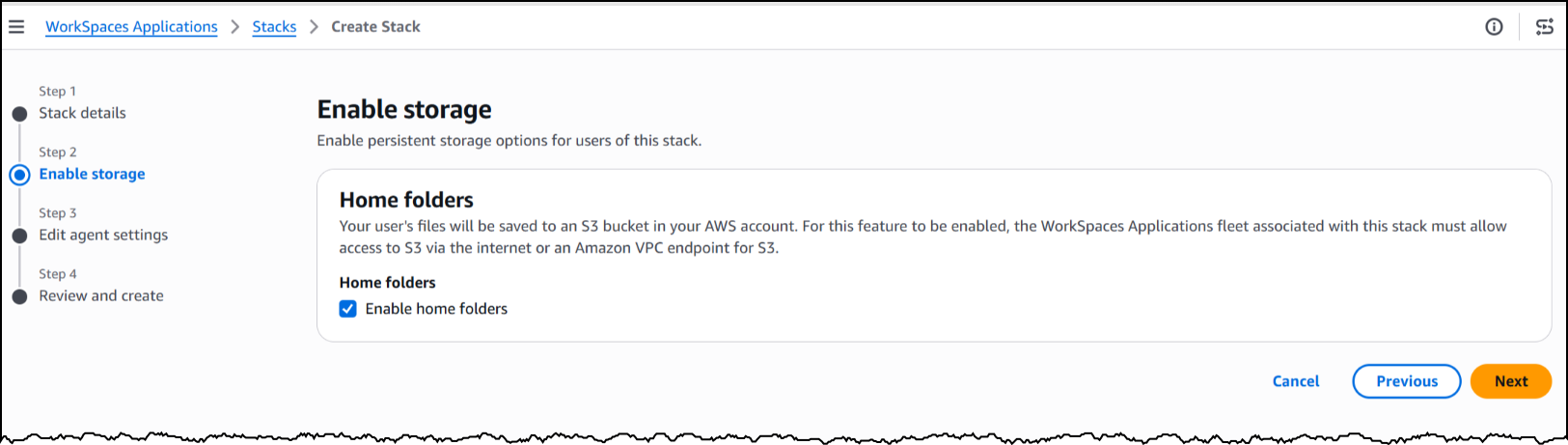
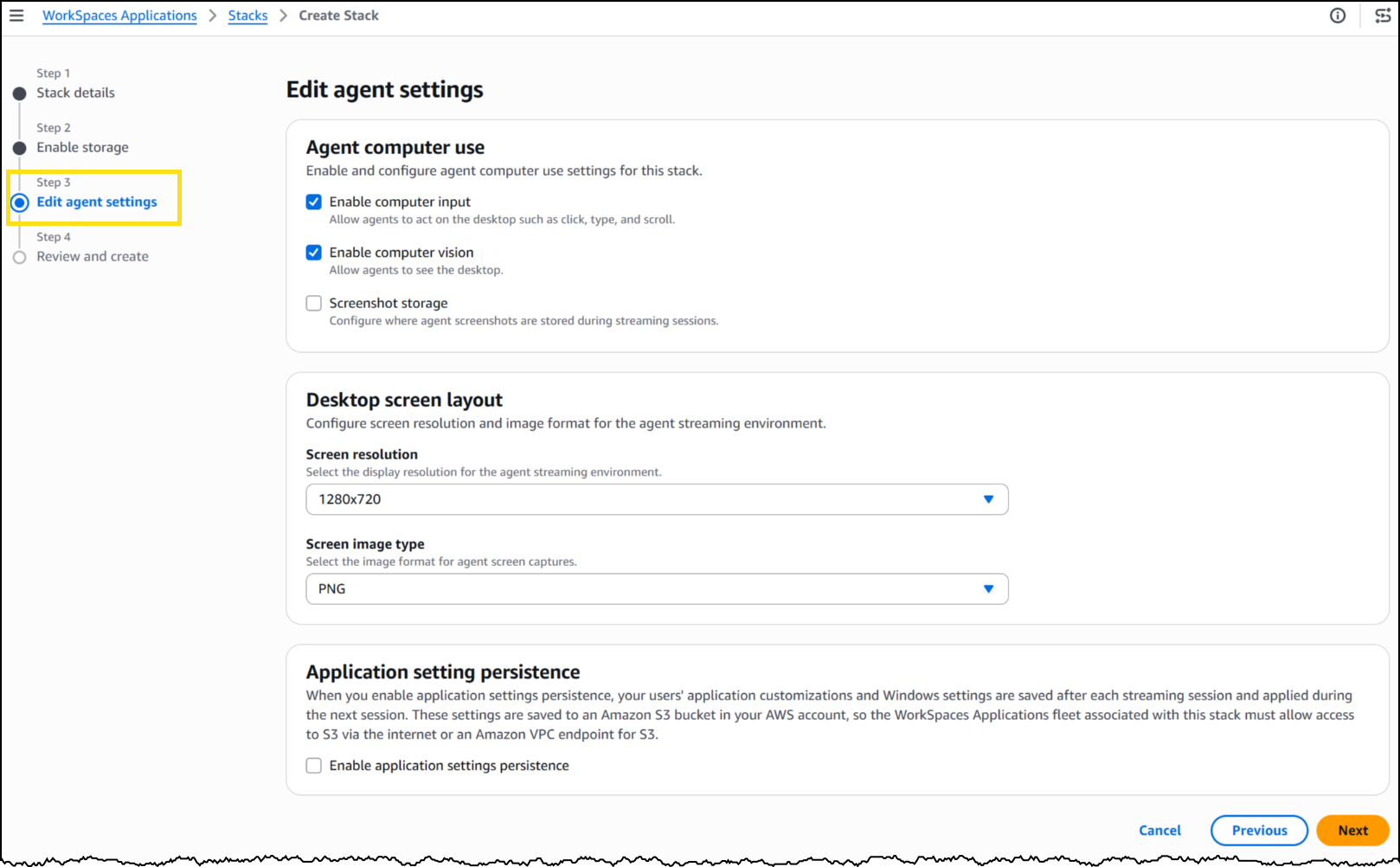
Following this, administrators enable storage and configure granular agent access settings to precisely define how agents interact with the virtual desktop. Under "Agent features," three core capabilities can be enabled:
- Computer input: Grants the AI agent the ability to simulate human input, including clicking, typing, and scrolling within the desktop interface.
- Computer vision: Allows the agent to capture screenshots of the desktop, providing the visual "sense" through which it perceives and interprets the application’s user interface. This is fundamental for agents to understand context and navigate graphical environments.
- Screenshot storage: Configures the secure location where session screenshots are stored, serving as a vital component for audit trails, debugging, and post-session analysis.
Further customization is available under "Desktop screen layout," where parameters such as screen resolution and image format (e.g., PNG) are defined. The chosen resolution directly impacts the fidelity of what the agent "sees." A complex application with dense UI elements might necessitate a higher resolution for accurate interaction, while simpler, terminal-style interfaces can function effectively at resolutions like 1280×720.
Once the stack is configured, WorkSpaces exposes a managed Model Context Protocol (MCP) endpoint. AI agent frameworks can then be pointed to this endpoint, supplied with the appropriate IAM credentials for authentication, allowing the agent to commence interacting with the desktop applications installed on the fleet’s image. This elegant solution allows AI agents to operate within an application without the application itself being aware that it is being driven by an automated entity, preserving the integrity and stability of the original software.
Real-World Demonstration: Automating a Prescription Refill
To illustrate the practical power of this integration, AWS provided a compelling demonstration. An AI agent, built using the Strands Agent SDK and powered by Amazon Bedrock, successfully navigated a complex workflow within a sample pharmacy system that lacked any modern APIs. The agent performed the following sequence of actions:
- Patient Record Lookup: Accessed and retrieved the patient’s medical records.
- Medication Search: Searched for the specific medication required for refill.
- Order Placement: Initiated and placed the prescription order.
- Confirmation: Confirmed the successful refill of the prescription.
Crucially, the pharmacy application remained entirely unmodified throughout this process. The agent interacted with the software exactly as a human pharmacist would, demonstrating the system’s capability to automate intricate, multi-step business processes without requiring any changes, rebuilding, or re-integration of the existing software infrastructure. This example vividly showcases the potential for immediate, tangible benefits for enterprises burdened by legacy application limitations.
Broader Implications and Future Outlook
This announcement marks a significant inflection point in the enterprise AI landscape. By providing a secure and auditable pathway for AI agents to interact with legacy desktop applications, AWS is effectively democratizing access to AI-driven automation for a vast segment of the market previously held back by technological debt.
The economic implications are substantial. Enterprises can now unlock efficiency gains, reduce operational costs, and accelerate their digital transformation journeys without the prohibitive expense and risk of full-scale modernization. This translates to quicker return on investment for AI initiatives and a faster pace of innovation. Strategically, it empowers organizations to leverage their existing IT investments more effectively, turning what was once a liability (legacy systems) into an asset for AI adoption.
The development also solidifies Amazon WorkSpaces’ position as a versatile and future-proof virtual desktop infrastructure. Beyond traditional end-user computing, it now serves as a foundational platform for sophisticated AI automation, expanding its utility and market reach. This could lead to a proliferation of new AI agent-driven use cases, particularly in back-office operations, customer service, data processing, and compliance reporting, where repetitive, rule-based tasks often rely on manual interaction with desktop applications.
Availability and Getting Started
This groundbreaking feature is now available in public preview, offering enterprises an immediate opportunity to explore and implement AI agent-driven automation. It is accessible in key AWS Regions globally, including US East (N. Virginia, Ohio), US West (Oregon), Canada (Central), Europe (Frankfurt, Ireland, Paris, London), and Asia (Tokyo, Mumbai, Sydney, Seoul, Singapore). There is no additional cost for this feature during the public preview period, further lowering the barrier to entry for businesses eager to experiment with and deploy AI agents.
AWS encourages interested organizations to get started today. Comprehensive resources, including sample code and detailed documentation, are available through the official AWS GitHub repository and the Amazon WorkSpaces product page. This initiative represents a profound step forward in bridging the gap between cutting-edge AI capabilities and the enduring realities of enterprise IT infrastructure, promising a future where AI can seamlessly integrate with and enhance virtually any business process.
