
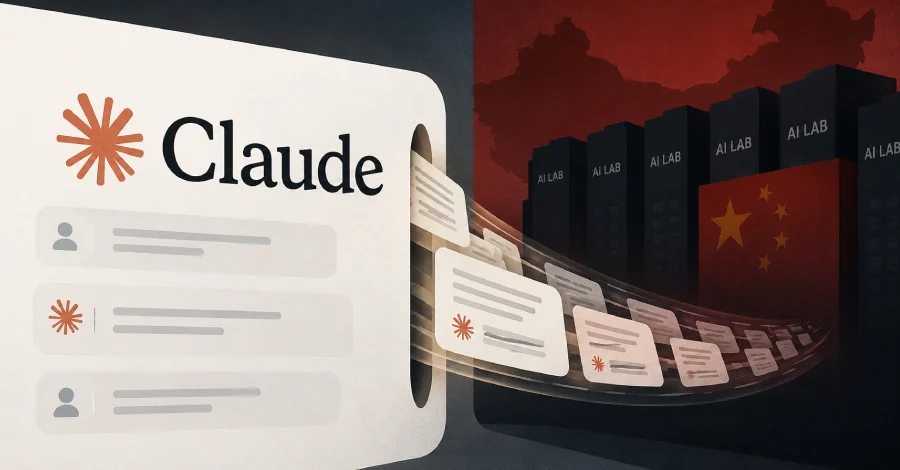

In a significant escalation of the ongoing struggle for artificial intelligence supremacy, Anthropic announced on Thursday that it has successfully identified and neutralized a series of industrial-scale illicit distillation campaigns orchestrated by several high-profile AI laboratories based in China. The targeted intervention highlights a growing trend of clandestine efforts by foreign entities to harvest the intellectual property and reasoning capabilities of Western frontier models to bolster their own domestic AI development. Among the entities identified by Anthropic as participating in these activities are major industry players, including Alibaba, Moonshot AI, DeepSeek, Zhipu AI, and MiniMax.
The discovery marks a pivotal moment in the governance of generative AI, exposing the fragility of access controls when faced with determined, well-resourced state-aligned actors. While knowledge distillation is a foundational machine learning practice used to optimize model efficiency, the "illicit" variant involves the covert extraction of a proprietary model’s outputs to train competing systems. By systematically querying a superior model and using the resulting data to "teach" a secondary, less-capable model, these labs have effectively been using Western innovation to build their own technological infrastructure without the burden of original research and development.
The Mechanics of Illicit Distillation
To understand the severity of these attacks, one must distinguish between legitimate research and the current offensive campaigns. Legitimate distillation, a standard practice in the industry, involves a developer using their own internal models to optimize performance. In contrast, the campaigns identified by Anthropic are characterized by large-scale, automated infrastructure designed to bypass security protocols.

Anthropic reports that these labs utilized vast networks of proxy services, often referred to as "relay stations," to mask the true origin of their queries. These networks employed thousands of fraudulent accounts, many of which were populated using stolen credit card credentials, leaked login information, and illegally acquired API keys belonging to unwitting corporate entities or individuals. By routing traffic through these intermediaries, the actors were able to circumvent geographic restrictions that Anthropic has imposed on regions such as China, Iran, and Russia.
Furthermore, the scale of the operation is staggering. Anthropic’s internal telemetry indicates that these labs were not merely testing the models; they were harvesting high-value interactions. This included proprietary coding solutions, data analysis workflows, and nuanced logical reasoning outputs. In some instances, the labs rerouted traffic from their own end-users—often without the users’ explicit knowledge or consent—to Claude, capturing the conversation transcripts to feed back into their own training pipelines.
Chronology of Escalation: February to September 2026
The timeline of these activities reveals a sustained, evolving effort to probe the defenses of U.S.-based frontier models.
- February 2026: Anthropic began detecting an uptick in anomalous traffic patterns, characterized by high-frequency, structured prompts designed to elicit detailed reasoning processes from Claude.
- March – May 2026: The intensity of the attacks increased, as unauthorized labs transitioned from simple prompt-response harvesting to more sophisticated "agentic" exploitation, attempting to force the model into executing complex tool-use workflows.
- June 2026: Anthropic identified the emergence of a secondary market. Third-party resellers, operating these proxy networks, began selling harvested transcripts of user exchanges with Claude. These transcripts were essentially "training sets in a box," highly valued by labs looking to bridge the performance gap between domestic models and Western frontier models.
- August 2026: U.S. intelligence and cybersecurity agencies began briefing stakeholders on the systematic extraction of proprietary AI functionalities, noting that the scope of the campaign extended beyond mere intellectual property theft into areas of strategic concern.
- September 2026: Anthropic officially disrupts the networks, bans the associated accounts, and implements the Fable 5.1 update to harden the model against future distillation attempts.
Data Implications and Security Responses
The impact of these illicit activities is not limited to the loss of commercial advantage; it carries profound security risks. Anthropic noted that some of the captured exchanges involved sensitive data from multinational corporations and state-affiliated actors. By training on these specific, high-quality interactions, unauthorized labs could theoretically gain insights into the proprietary data handling and reasoning logic of Western firms, potentially exposing vulnerabilities in the very companies that rely on these models.

In response to these findings, Anthropic has implemented a multi-layered defensive strategy. Beyond the immediate banning of identified accounts and proxy service nodes, the company has introduced architectural changes to the Claude model itself.
The most notable of these is the implementation of "preserved thinking" within the Fable 5.1 update. This feature serves as a protective barrier, preventing new API accounts from altering system prompts or manipulating the context windows that precede the model’s reasoning. By encrypting the internal reasoning process and restricting access to the preceding message chains, Anthropic has made the output of the model significantly less useful for follow-on training by competitors. Additionally, the model has been trained to provide more concise, summarized internal reasoning, reducing the amount of "raw" thinking data that could be exploited by an adversary.
Broader Industry and Geopolitical Implications
The accusations against these Chinese labs did not occur in a vacuum. Earlier this week, U.S. intelligence agencies issued a formal warning regarding the "systematic extraction" of Western AI capabilities. This development underscores the reality that AI models are now treated as critical infrastructure, akin to energy grids or defense networks.
The reaction from the broader AI research community has been one of concern regarding the "open-weights" versus "closed-source" debate. Critics of open-source models argue that the ability to distill or "distill-down" high-capability models into smaller, portable models poses an inherent national security risk. If a state actor can simply "download" the intelligence of a frontier model through distillation, the barriers to entry for developing advanced automated weaponry or surveillance tools are drastically lowered.

However, the labs implicated—Alibaba, Moonshot, DeepSeek, Zhipu, and MiniMax—have largely remained silent or maintained that their research efforts are compliant with international norms. The lack of clear, globally accepted legal frameworks regarding "AI training data ownership" leaves these incidents in a gray area of international law. While theft of credentials and unauthorized account access are clearly illegal, the act of using a model’s output for further training is a subject of ongoing legal debate.
The Future of Model Governance
As we look toward the remainder of 2026 and beyond, the incident serves as a wake-up call for the entire industry. The "distillation war" is likely to intensify as the performance delta between top-tier models and secondary competitors remains a high-stakes metric. Anthropic’s decision to publish a detailed threat intelligence report is a strategic move to set a new standard for transparency. By naming the specific entities involved, they are signaling that the era of anonymous "model poaching" is coming to a close.
Looking ahead, we can expect several developments:
- Stricter KYC for API Access: AI providers will likely move toward more stringent "Know Your Customer" (KYC) requirements, possibly mandating verified business identities for high-token-limit access.
- Watermarking and Output Obfuscation: Future model updates will almost certainly include advanced watermarking or subtle output "noise" that does not degrade user experience but makes the resulting data useless for training competing models.
- Increased Regulatory Scrutiny: Policymakers in the U.S. and the EU are expected to use these reports as evidence to push for stricter export controls on compute and tighter regulations on how AI model outputs are handled.
Ultimately, the disruption of these campaigns is a temporary victory in a permanent conflict. As AI models become the primary engines of economic and military power, the drive to acquire these capabilities by any means necessary will continue to challenge the security foundations of the industry. The question remains whether international consensus can be reached before the cat-and-mouse game of illicit distillation results in a catastrophic leak of highly sensitive, dual-use AI capabilities. For now, Anthropic, along with peers like Google and OpenAI, must remain in a state of perpetual vigilance, treating every interaction as a potential vector for intellectual property theft.
