
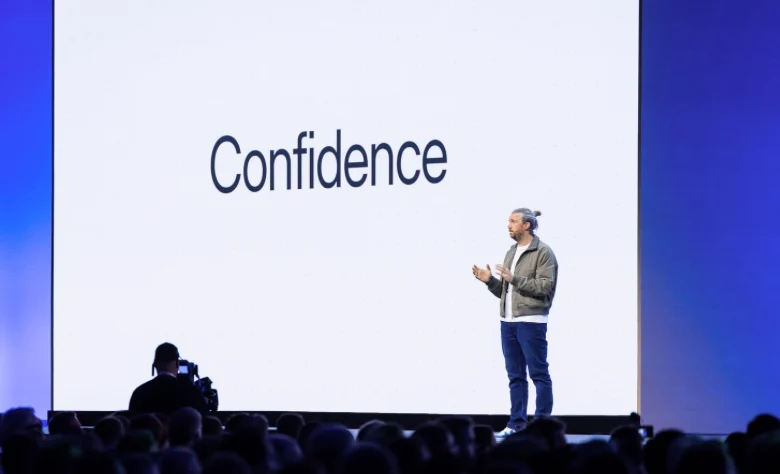

At the Atlassian Team 26 Europe conference in Amsterdam, co-founder and Chief Executive Officer Mike Cannon-Brookes delivered a confident address highlighting the company’s expanding footprint in enterprise operations. Against a backdrop of major product announcements, an expanded development alliance with OpenAI, and the introduction of regional data residency solutions, Cannon-Brookes focused heavily on a paradoxical reality facing modern enterprise software: while Atlassian’s tools have become foundational to global business infrastructure, corporate leadership often fails to recognize their true strategic importance.
According to Cannon-Brookes, enterprises routinely miscalculate the criticality of their software vendors by measuring importance through financial spend rather than operational dependency. This mismatch in perception, he argues, leaves executive leadership blind to systemic vulnerabilities that could paralyze operations if certain platforms were suddenly disabled. As Atlassian accelerates its transformation from a collaboration tool provider into an AI-driven operating backbone for diverse teams, the company is pushing to reshape how organizations audit their critical vendor ecosystems.
The Hidden Backbone of Global Industry
During his keynote and subsequent media engagements in Amsterdam, Cannon-Brookes pointed to recent visits with large global conglomerates to illustrate the depth of Atlassian’s integration. While traditional enterprise resource planning (ERP) systems and massive database infrastructures typically occupy the top tiers of corporate vendor lists due to their high subscription and licensing costs, Atlassian’s products often dictate whether core business processes can actually execute.
"For a lot of those companies, they would put us in their top five vendors around the world," Cannon-Brookes noted, referencing discussions with executives at multinational corporations. "The other four vendors are massive global brands, far bigger than us… and that is amazing really, because if we go down, that company goes down. They don’t ship a car, they cannot get a drug out the door, the rocket won’t take off, whatever it is."
This operational centrality represents a significant shift from the company’s origins as a tracking tool provider for software developers. Over the past decade, and particularly accelerated by the rapid integration of artificial intelligence over the last three to four years, Atlassian has embedded itself into human resources, strategic planning, documentation, and cross-functional operations.
The Evolution of Enterprise Perception: A Historical Perspective
To understand the friction between corporate perception and actual operational dependency, Cannon-Brookes referenced a historical anecdote involving French financial institution BNP Paribas in the mid-2000s. At a time when Atlassian was a relatively unknown entity operating under the radar of corporate IT departments, the bank scheduled a comprehensive weekend disaster recovery exercise.
The IT staff executed a planned shutdown of primary systems to test business continuity protocols. However, the exercise was abruptly canceled within three hours because the team realized they had inadvertently taken down Confluence—the platform where all disaster recovery instructions and documentation were stored. Without access to the platform, engineers could not systematically bring the bank’s primary tier-one systems back online.
"They said, ‘Maybe we should make that tier one, because it’s really important. We can’t bring the other tier one systems back without understanding that tier four system,’" Cannon-Brookes recounted. At the time, the software had been installed independently by a departmental employee with minimal expense, placing it completely outside the visibility of executive procurement teams.
While enterprise procurement and vendor management practices have evolved significantly since the mid-2000s, Cannon-Brookes asserts that a similar phenomenon persists today. Departmental adoption often outpaces central IT visibility, meaning executive leadership frequently remains unaware of how deeply embedded tools like Confluence, Jira, Loom, and Trello have become in day-to-day business continuity.
Expanding Horizons: HR, Strategy, and the Context Graph
At the Amsterdam conference, Atlassian sought to bridge this perception gap by showcasing the breadth of its modern product ecosystem, particularly its Service Collection and Strategy Collection offerings.
In the human resources sector, Atlassian has positioned itself alongside major Human Resources Information System (HRIS) providers like Workday through collaborative integrations. While traditional HRIS platforms manage payroll, benefits, and formal organizational charts, Atlassian’s tools capture the qualitative and operational dynamics of the workforce. Through applications like Loom for cultural documentation and the Talent app for skills mapping, the platform provides visibility into what employees are actually working on—a metric that standard HRIS databases often fail to capture.
Similarly, Atlassian’s Strategy Collection has gained traction at the highest levels of corporate governance. Cannon-Brookes highlighted that several of the world’s largest corporations now rely on Atlassian’s planning and goal-tracking frameworks to run core operational workflows, program management, and strategic execution on a daily and weekly basis.
Underpinning these capabilities is what Cannon-Brookes described as Atlassian’s Context Graph, which he asserted is "arguably the best in the world." By synthesizing data across disparate teams, codebases, communications, and strategic objectives, the Context Graph serves as the foundational layer enabling advanced artificial intelligence features to deliver contextual, actionable insights to enterprise users.
Navigating the Geopolitical and Regulatory AI Landscape
A central theme of the Team 26 Europe conference was the rapid acceleration of artificial intelligence and its integration into enterprise workflows. Amid ongoing global debates regarding whether the technology sector should voluntarily slow down the pace of AI development to allow regulatory and societal frameworks to catch up, Cannon-Brookes offered a pragmatic perspective rooted in geopolitical reality.
"Will we slow down? No, we won’t. There’s no logical world where I think that happens," he stated. Arguing that international competition ensures the continued advancement of frontier AI models regardless of individual corporate desires, Cannon-Brookes emphasized that technology companies must focus on pragmatic adaptation rather than attempting to alter global trajectories.
"Should we slow down? Should we pace the frontier? Should we not? It’s out of our hands anyway," he added. "There’s nothing that we can do. I think the reality of the global geopolitical world is not going to change. So we work out what we do about that world rather than wishing it was different."
Addressing European Data Sovereignty and Trust
This pragmatic approach to the realities of AI deployment was reflected in one of the most well-received announcements at the Amsterdam event: the introduction of local EU AI Inference. Designed specifically to address data privacy and regulatory compliance concerns within the European market, the new capability restricts large language model (LLM) processing exclusively to models hosted within the European Union.
European enterprises have historically faced stringent regulatory hurdles regarding data sovereignty, particularly under the General Data Protection Regulation (GDPR) and the newly enacted EU Artificial Intelligence Act. By offering proactive compliance tailored to regional and AI-specific standards, Atlassian aims to mitigate trust barriers that have slowed enterprise AI adoption across the continent. The announcement drew one of the most enthusiastic responses from attendees during the conference keynote.
Strategic Implications and the Road Ahead
Atlassian’s multi-year strategic vision centers on closing the gap between its actual operational footprint and its brand recognition among corporate executives. While the company has achieved dominant status among engineering, product, and IT teams, executive leadership—such as Chief Executive Officers and Chief Technology Officers—frequently interact with Atlassian products, like Loom video messaging, without recognizing the underlying corporate parent.
"CEOs that use Loom are a good example," Cannon-Brookes remarked. "We’ve got a lot of work to do in those areas with CEOs that send Looms, and they’re like, ‘Oh, you guys make that? That’s cool.’ And I’m like, ‘Ah, shit.’"
As Atlassian continues its push toward being universally recognized as a top-tier strategic vendor alongside traditional enterprise giants, the convergence of AI acceleration, deep workflow integration, and localized data compliance will serve as critical testing grounds. For enterprise IT leaders, the message from Amsterdam is clear: evaluating vendor criticality solely on financial ledger spend is an outdated metric in an era where software operational dependency dictates business survival.
