
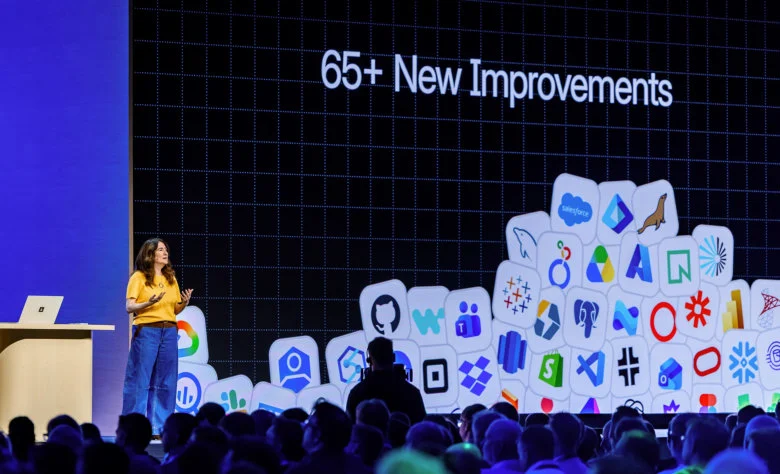

The battle for enterprise artificial intelligence supremacy has shifted decisively away from the raw computational power of foundation models toward the structured data and institutional knowledge that feed them. Speaking at the recent Team ’26 Europe conference, Atlassian CEO and co-founder Mike Cannon-Brookes asserted that his company possesses one of the most advanced context graphs in the global enterprise market. As organizations increasingly deploy autonomous AI agents to automate complex workflows, industry analysts note that generic language models frequently fail to generate accurate, organization-specific insights without deep contextual grounding. This realization has triggered an intense race among enterprise technology vendors, each racing to establish its own proprietary context graph as the definitive standard for modern businesses.
The Evolution of Enterprise AI and the Rise of Context
For years, the generative AI landscape was dominated by headlines detailing the parameter counts, training datasets, and reasoning capabilities of foundation models developed by industry titans like OpenAI, Anthropic, and Google. However, enterprise deployment realities quickly exposed a critical limitation: raw models lack organizational awareness. Without precise information regarding corporate hierarchies, historical project decisions, internal security guardrails, and cross-functional dependencies, enterprise-grade AI agents routinely produce generic, superficial, or entirely inaccurate responses.
To bridge this operational gap, technology providers have invested heavily in context graphs—sophisticated data structures that map relationships between people, projects, codebases, communications, and institutional artifacts. According to market research from leading enterprise technology firms, spending on knowledge management and contextual data layers has surged by over 40% year-over-year as businesses transition from experimental AI pilots to full-scale production deployments. Within this competitive arena, Atlassian maintains that its foundational architecture provides a distinct structural advantage due to the naturally collaborative nature of its core product suite, which includes Jira, Confluence, and Trello.
Atlassian’s Strategic Advantage: Depth, Breadth, and Longevity
Atlassian’s journey toward developing its current context graph spans nearly a decade, beginning long before the current generative AI boom. Cannon-Brookes emphasized that the company’s eight-to-nine-year investment timeline has yielded a robust infrastructure capable of automatically mapping approximately 40% of an organization’s internal content without requiring manual data importation. This baseline connectivity stems from the inherently interconnected structure of collaborative teamwork applications, where documents, tasks, and communications are organically linked from inception.
In recent years, Atlassian has dramatically accelerated its research and development expenditure to expand the scope and granularity of its graph capabilities. Last year, the company introduced comprehensive asset management tracking, allowing organizations to map non-traditional enterprise objects. Building upon this momentum, the Team ’26 Europe conference marked the rollout of advanced structured data processing features alongside deep code-reading functionalities. The updated graph can now parse software source code down to individual functions, symbols, and classes, while also indexing multimedia attachments, embedded images, and the nuanced commentary threads within external tools like Google Docs, Microsoft SharePoint, Microsoft Teams, Box, Dropbox, and Slack.
Addressing the Multi-Vendor Enterprise Reality
Despite Atlassian’s ambitious claims, enterprise IT architects face a complex architectural dilemma. Large-scale corporations rarely standardize on a single technology vendor for all operational requirements. A typical Fortune 500 enterprise relies on customer relationship management (CRM) platforms from Salesforce, enterprise resource planning (ERP) systems from SAP or Oracle, human capital management (HCM) solutions from Workday, alongside various communication and productivity suites. Consequently, industry analysts predict that no single context graph will achieve total market dominance.
Instead, large corporations are expected to maintain a curated ecosystem of three to five specialized context graphs operating concurrently across different functional domains. Recognizing this multi-vendor reality, Atlassian has deliberately positioned its teamwork graph as an open, model-agnostic layer rather than a closed ecosystem tied to a single proprietary artificial intelligence model.
This model-independent strategy has already begun yielding tangible enterprise adoption. Cannon-Brookes highlighted a case study involving a major global investment firm that utilized Atlassian’s Forge extension framework and Bring Your Own Data (BYOD) connectors to construct an automated "investment factory." By modeling complex financial objects—such as global stock exchanges, specific equities, and cross-border regulatory parameters—within Atlassian’s asset architecture, the investment house successfully powered custom AI workflows across rapidly shifting foundation models without destabilizing its core contextual repository.
Search Effectiveness and Technical Performance Metrics
Evaluating the efficacy of disparate context graphs remains a formidable challenge for enterprise decision-makers. To substantiate Atlassian’s market-leading assertions, Cannon-Brookes pointed to measurable performance benchmarks centered around search relevance, token efficiency, and response latency.
Atlassian evaluates its graph infrastructure by continuously tracking the quality scores of "graph fragments"—the hyper-relevant search results delivered to querying AI agents. According to company internal testing, aggressive refinement of graph indexing algorithms has directly driven down token consumption while simultaneously accelerating query execution speeds. The integration of granular code context has proven particularly transformative, extending far beyond traditional software engineering teams to assist operational, legal, and financial departments in navigating complex technical documentation and regulatory compliance workflows.
Broader Industry Implications and Future Outlook
The convergence of enterprise software around specialized context graphs signals a maturing phase in the corporate adoption of artificial intelligence. As businesses move past initial enthusiasm for standalone chatbots, the primary metric of software value is shifting toward systemic integration and autonomous task execution. Vendors that successfully master organizational context—spanning human collaboration, unstructured documentation, and technical codebases—will likely secure entrenched positions within the corporate IT stack.
Nevertheless, significant technical and administrative hurdles remain. Enterprises must rigorously evaluate how data security, privacy compliance, and cross-platform synchronization are managed as information flows dynamically between disparate context graphs. Furthermore, governance frameworks must evolve to prevent hallucinations and maintain strict oversight over autonomous agents operating across multiple organizational silos.
As adoption spreads and real-world deployment data accumulates across diverse industry sectors, the true test of Atlassian’s architecture will depend on its ability to scale seamlessly within complex, multi-vendor enterprise environments. For now, the aggressive expansion of context graphs highlights a permanent shift in enterprise computing: the intelligence of an artificial intelligence system is ultimately defined not by the parameters of its underlying model, but by the depth, accuracy, and security of the organizational context it commands.
