
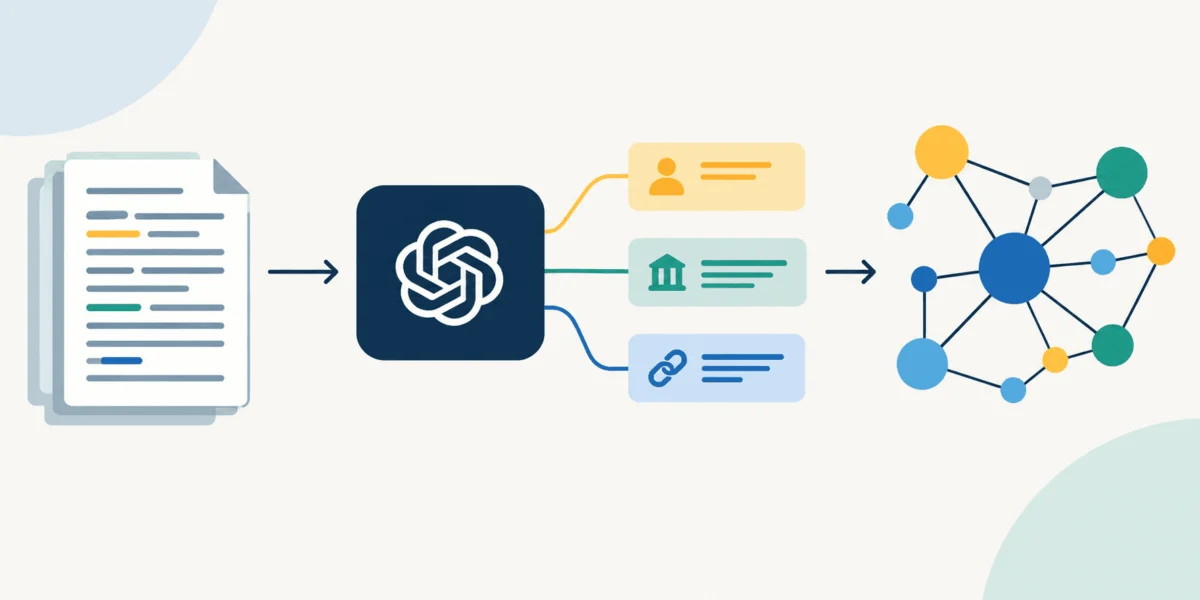

The paradigm of information retrieval is undergoing a significant shift as developers move beyond traditional vector-based search, which often struggles with semantic ambiguity and factual inaccuracies, toward deterministic, graph-based architectures. A critical hurdle in this transition is the labor-intensive process of populating knowledge graphs with verified, structured data. New developments in local Large Language Model (LLM) deployment, specifically through the Ollama framework and the Llama 3.2 model, now offer a pathway to fully automate the extraction of structured knowledge from raw, unstructured text. By utilizing the SPOC (Subject-Predicate-Object-Context) quad format, engineers can bridge the gap between human-readable text and machine-actionable knowledge, effectively mitigating the common issue of LLM hallucinations in Retrieval-Augmented Generation (RAG) systems.
The Evolution of Knowledge Representation
Historically, knowledge graphs have relied on RDF triples—Subject, Predicate, and Object—to define relationships between entities. However, as AI systems have grown more complex, the need for a fourth dimension, "Context," has become apparent. The SPOC framework allows for metadata inclusion, such as the source, date, or confidence score of a given fact. For instance, while a standard triple might simply state that an entity plays for a specific team, a quad provides the necessary provenance to verify the accuracy of that claim against a specific dataset or time period. This deterministic layer ensures that when an AI system queries its knowledge base, it does not merely rely on probabilistic generation but on a verified set of facts.
The integration of local LLMs into this workflow removes the dependency on cloud-based APIs, which are often restricted by cost, latency, and data privacy concerns. By running Llama 3.2 locally, developers can process sensitive information and generate structured outputs that are immediately compatible with lightweight graph databases like Quadstore, enabling a closed-loop system where raw data from sources like Wikipedia can be transformed into a functional knowledge base in near real-time.
Technical Infrastructure and Setup
To implement this automated pipeline, the environment must be configured to handle both the local LLM server and the data processing logic. Using tools such as Ollama, which simplifies the orchestration of models like Llama 3.2, allows for a high degree of control over the inference process. The setup involves initiating the Ollama server as a background process and utilizing the Python requests library to interact with the API in a strictly formatted JSON output mode.
The requirement for JSON output is non-negotiable for reliable data extraction. When an LLM is configured to output raw, unformatted text, the downstream code often fails due to structural inconsistencies. By enforcing a strict JSON schema that explicitly mandates a "facts" array, developers can ensure that the extracted entities and predicates are consistently parsed. This setup, compatible with both local Python IDEs and collaborative environments like Google Colab, creates a portable and scalable foundation for knowledge graph ingestion.
The Extraction Workflow
The process of constructing a knowledge graph begins with the acquisition of unstructured text. Using the Wikipedia library, developers can fetch summaries on specific topics. The critical step occurs when this text is fed into the LLM with a highly specific prompt. The prompt instructs the model to act as an expert data extraction algorithm, identifying "atomic facts."
For example, when analyzing a summary of Alan Turing’s life, the model is tasked with identifying subject-predicate-object relationships. As the model identifies these, it assigns a context label—in this case, "Wikipedia_Alan_Turing"—to every extracted fact. This context serves as a anchor, allowing developers to trace the origin of every piece of data stored in the graph. The subsequent parsing logic is designed to normalize keys (e.g., handling "Subject" vs "subject") and filter out non-compliant data, ensuring that only high-quality, structured quads are added to the Quadstore database.
Data Validation and Reliability
A notable characteristic of using LLMs for extraction is their non-deterministic nature. Unlike traditional regex-based parsing, an LLM might capture different facts or use slightly different phrasing during subsequent runs. This necessitates a robust validation layer. The logic implemented in the extraction function includes a fallback mechanism: if the primary "facts" key is missing, the code searches for the first available list within the JSON response. Furthermore, by setting the LLM’s temperature to 0.0, developers can maximize the consistency of the model’s output, ensuring that the extraction remains as objective as possible.
Analysis of the results shows that a few paragraphs of text can yield a significant amount of structured data. In trials, approximately 11 discrete, high-confidence quads were extracted from a short biographical summary. Each quad represented a unique, verifiable fact that could be indexed and queried by a RAG system. This level of efficiency highlights the potential for scaling the population of knowledge graphs across massive datasets, effectively "digitizing" libraries of text into a relational format that is resistant to the hallucinations common in pure neural-network models.
Broader Implications for AI Architecture
The ability to build deterministic, 3-tiered Graph-RAG systems has profound implications for the reliability of AI applications. By decoupling the retrieval process from the generative process, and by grounding the retrieval in a verified knowledge graph, enterprises can deploy AI solutions that are significantly more trustworthy.
For instance, in the legal or medical fields, where factual accuracy is paramount, an LLM that draws information from a curated Quadstore is far less likely to cite non-existent precedents or medical procedures. The "Context" component of the SPOC quad allows for the implementation of temporal or authority-based filtering—only retrieving facts from the most recent or most authoritative sources. This provides a mechanism for conflict resolution; if two facts in the database contradict each other, the system can compare their context tags to determine which one is more relevant to the current query.
Future Outlook and Challenges
While the automation of knowledge graph population is a major milestone, challenges remain. The quality of the graph is inherently tied to the quality of the input text and the reasoning capabilities of the underlying model. As LLMs improve, the complexity of the relationships they can extract will increase, potentially allowing for the extraction of nested or conditional relationships that go beyond simple SPOC quads.
Furthermore, the maintenance of such graphs—handling updates, deletions, and the integration of conflicting data streams—will become the next frontier in graph-based AI research. However, the current methodology of using local models like Llama 3.2 to bridge the gap between raw text and structured databases provides a sustainable and cost-effective blueprint. As the ecosystem of local AI tools continues to mature, we can expect to see a democratization of knowledge graph technology, moving it from the domain of specialized database administrators to the standard toolset of the average machine learning engineer.
In conclusion, the convergence of local LLM orchestration and structured knowledge storage marks a pivotal advancement in the development of reliable, deterministic AI systems. By automating the transformation of unstructured information into context-aware quads, organizations can build knowledge bases that are not only vast but also auditable, accurate, and ready for the next generation of AI-driven applications. The ability to "close the loop" between raw data and structured insight is no longer a theoretical exercise but a practical reality, accessible to anyone with a local development environment and an internet connection.
