
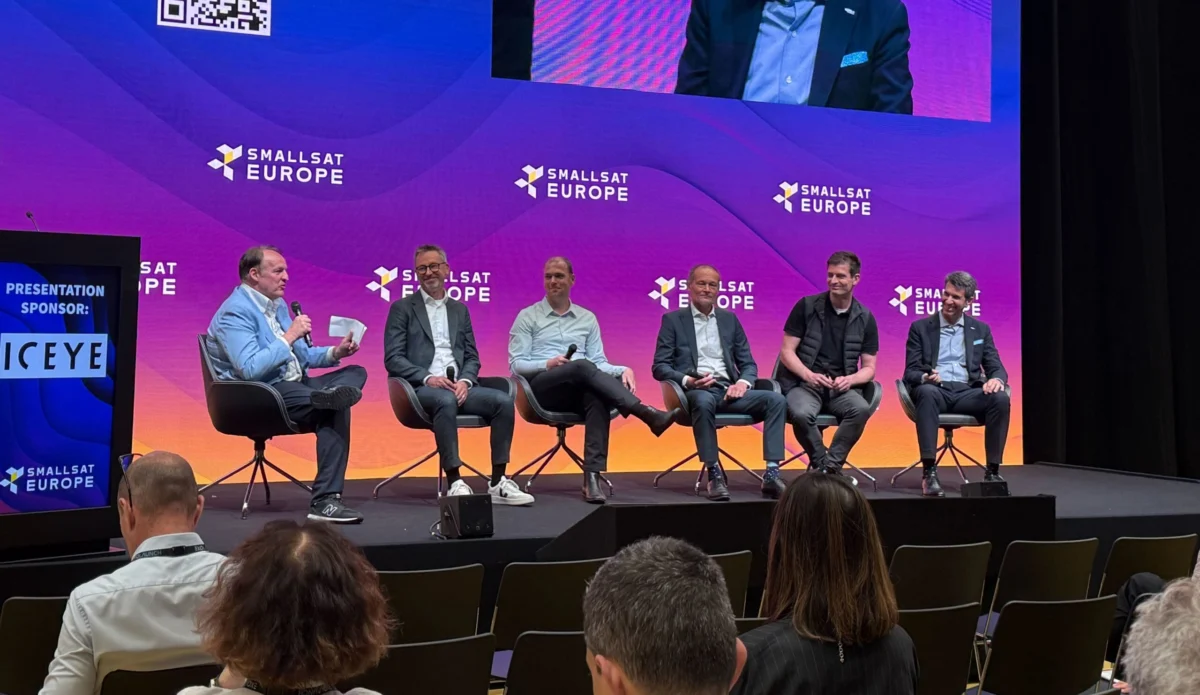

AMSTERDAM — The long-anticipated convergence of the automotive and satellite industries reached a significant milestone this week at the SmallSat Europe conference, where industry leaders signaled that the connected car market is moving beyond conceptual discussion into a phase of concrete implementation. After years of speculation regarding the role of space-based assets in the consumer vehicle sector, a consensus emerged among major German automakers, satellite operators, and space agencies: satellite connectivity is no longer an optional luxury but a fundamental requirement for the next generation of mobility.
The shift in narrative reflects a broader transformation in how vehicles are manufactured and utilized. As cars evolve into "software-defined vehicles" (SDVs), the necessity for constant, ubiquitous connectivity has become a primary engineering challenge. During the panel discussions in Amsterdam, representatives from BMW Group and Porsche Consulting provided a roadmap for this integration, emphasizing that the era of terrestrial-only connectivity is reaching its physical and economic limits.
The BMW Roadmap: From Narrowband to Wideband Connectivity
Olaf Eckart, Senior Expert for Cooperations Research and Development at BMW Group, provided a detailed look at the manufacturer’s internal strategy for space-based integration. BMW currently manages a fleet of more than 20 million connected vehicles globally, all of which rely on digital services delivered via the cloud. However, the reliance on terrestrial cellular networks (4G and 5G) leaves significant coverage gaps, particularly in rural areas, cross-border regions, and mountainous terrain.
Eckart noted that BMW has renewed its focus on satellite technology as a "complementary extension" to fill these coverage voids. The company’s strategy is bifurcated into two distinct phases based on data requirements: narrowband and wideband use cases. Narrowband services, which include emergency messaging, basic telematics, and low-data-rate vehicle status updates, are projected to reach maturity and integration by 2027. Wideband services, capable of handling high-definition map updates, infotainment streaming, and large-scale over-the-air (OTA) software patches, are expected to follow in 2029.
Central to BMW’s approach is the transition toward Non-Terrestrial Network (NTN) standards. Eckart, a founding member of BMW’s NTN team, emphasized that the automotive industry is moving away from proprietary, closed-loop satellite systems. Instead, the focus is now on global mobile standards, such as those defined by the 3rd Generation Partnership Project (3GPP). By utilizing standard-based communications, automakers can ensure that the hardware integrated into vehicles is interoperable across different satellite constellations and terrestrial carriers, driving down costs through economies of scale.
A Chronology of the Connected Car Evolution
The journey toward satellite-integrated vehicles has followed a decades-long trajectory, characterized by shifting technological priorities and market demands.
- The Early Era (1990s–2000s): Connectivity was primarily limited to Global Positioning System (GPS) reception for navigation and basic safety services like GM’s OnStar, which utilized early cellular and analog satellite links for emergency calls.
- The Cellular Expansion (2010s): The proliferation of 4G LTE allowed for more robust infotainment and basic OTA updates. However, connectivity remained tethered to the density of terrestrial cell towers, leaving "dead zones" in less populated areas.
- The NTN Pivot (2020–2023): The satellite industry began launching massive Low Earth Orbit (LEO) constellations. Simultaneously, the 3GPP Release 17 and 18 standards officially integrated satellite links into the 5G ecosystem, providing a technical framework for "Direct-to-Device" (D2D) communication.
- The Implementation Phase (2024–Present): As evidenced by the discussions at SmallSat Europe, the conversation has moved from "if" satellite will be used to "how" it will be implemented. Automakers are now conducting consumer surveys and engineering feasibility studies to determine price points and hardware integration strategies.
Porsche Consulting and the Five P’s of Implementation
While the technical feasibility of satellite-to-car communication is largely proven, the operational challenges remain significant. Georg Heinecke, Senior Manager for Aerospace at Porsche Consulting, highlighted a recent study conducted in collaboration with the European Space Agency (ESA). Heinecke argued that the industry has successfully moved past the "use case" debate—it is now a given that cars will be satellite-connected.
To navigate the transition, Heinecke introduced a framework known as the "Five P’s": Priority, Process, Product, Partners, and People. He noted that for the market to succeed, automotive companies must prioritize space connectivity within their long-term R&D budgets. Furthermore, the production processes of the space industry—traditionally characterized by low-volume, high-cost bespoke engineering—must align with the high-volume, high-efficiency requirements of the automotive supply chain.
The "Partners" aspect is particularly critical. The automotive sector is currently facing a high volume of "change requests" as software and hardware requirements evolve rapidly. Navigating these changes requires a deeply integrated partnership between satellite operators and Original Equipment Manufacturers (OEMs), moving beyond the traditional vendor-client relationship into a collaborative ecosystem.
Infrastructure and Operator Perspectives
The satellite industry has responded to the automotive sector’s demands with a mix of optimism and strategic realignment. Warren Gabbett, Senior Manager of Future Business and Innovation for SES, described the interest from giants like BMW and the Volkswagen Group as "music to his ears." Gabbett clarified that satellite communication (Satcom) is not intended to replace terrestrial networks but to serve as a vital secondary layer.
The rise of Direct-to-Device (D2D) technology is seen as the primary catalyst for unlocking the connected car market. Unlike previous generations of satellite connectivity that required bulky, expensive external antennas, modern D2D developments aim to utilize the existing antenna structures within the vehicle or small, integrated chipsets that can communicate directly with LEO or Medium Earth Orbit (MEO) satellites.
Polyzois Kokkonis, Business Development Manager for OHB, noted that the speed of innovation is accelerating. As vehicle lifecycles shorten due to the shift toward software-centric models, the space industry must match this pace. OHB is currently focusing on shaping its ecosystem to support the rapid rollout of services, ensuring that satellite hardware can be updated or adapted as quickly as the software running the vehicle.
The Role of the European Space Agency (ESA)
The European Space Agency continues to play a pivotal role in harmonizing these two disparate industries. Antonio Franchi, Head of the Space for 5G and 6G Strategic Programme at ESA, emphasized the importance of global standards in achieving mass-market industrialization. Franchi noted that ESA’s mission is to facilitate the commercialization of satellite solutions by fostering stronger ties between the space sector and automotive OEMs.
According to Franchi, the technology is now mature, and the market demand is undeniable. "The ecosystem is converging," Franchi stated, adding that there is significant "political will" in Europe to ensure the region remains a leader in both the automotive and space sectors. ESA’s involvement helps mitigate the risks for private companies by providing a framework for interoperability, ensuring that a BMW or a Porsche can maintain connectivity regardless of whether it is driving through the German Alps or the rural expanses of North America.
Data-Driven Insights: The Economic and Safety Impact
Supporting data suggests that the push for satellite connectivity is driven by both economic potential and safety mandates. Market analysts project that the global connected car market will reach a valuation of over $190 billion by 2030. A significant portion of this growth is attributed to "data-as-a-service" and subscription-based connectivity features.
From a safety perspective, the European Union’s eCall mandate—which requires all new cars to be equipped with hardware that automatically dials emergency services in the event of an accident—highlights the necessity of 100% geographic coverage. In many parts of Europe and North America, terrestrial networks cover less than 70% of the total landmass. Satellite connectivity is the only viable solution to provide the remaining 30% coverage, potentially saving thousands of lives annually by reducing emergency response times in remote areas.
Furthermore, the transition to autonomous driving requires a level of reliability that terrestrial networks alone cannot provide. Autonomous vehicles rely on real-time updates for high-definition maps and "look-ahead" data regarding traffic and weather conditions. A loss of signal in an autonomous mode is not merely an inconvenience; it is a critical safety failure. Satellite links provide the redundancy required to meet the stringent "five-nines" (99.999%) availability standards demanded by safety regulators.
Future Implications: The Road Ahead to 2030
The insights shared at SmallSat Europe suggest that the next five years will be a period of intense industrialization. As the industry moves toward the 2027 and 2029 milestones set by BMW, several key developments are expected:
- Antenna Miniaturization: Engineers are working to integrate electronically steered phased-array antennas into vehicle roofs or glass, allowing for seamless handoffs between terrestrial towers and moving satellites without compromising vehicle aesthetics or aerodynamics.
- Hybrid Billing Models: Consumers may soon see connectivity packages that include "global roaming" via satellite, bundled into the vehicle’s monthly subscription or purchase price, similar to how premium data plans work for smartphones.
- Regulatory Harmonization: Governments will need to address spectrum allocation to ensure that satellite-to-car signals do not interfere with existing terrestrial or scientific frequencies.
The conclusion from the Amsterdam summit is clear: the siloed operation of the automotive and satellite sectors has ended. By aligning on global standards and focusing on the "Five P’s" of implementation, the industry is poised to deliver a truly connected experience that remains unbroken, regardless of the vehicle’s location on the globe. As the ecosystem converges, the car is no longer just a mode of transport; it is becoming a sophisticated node in a global, multi-layered communications network.
