

Amazon Web Services (AWS) has announced the general availability of its groundbreaking AWS DevOps Agent and AWS Security Agent, marking a significant leap in AI-powered cloud operations and cybersecurity. These frontier agents, initially unveiled at the recent re:Invent conference, are designed to autonomously manage complex tasks across cloud, multicloud, and on-premises environments, promising to redefine efficiency and resilience for enterprises worldwide. This pivotal development coincides with AWS’s continued emphasis on fostering robust global communities, highlighted by a recent visit to the energetic AWS Hong Kong User Group, underscoring the company’s dual focus on technological innovation and ecosystem development.
The introduction of these generally available agents represents a strategic acceleration in AWS’s vision for intelligent automation. The concept of "frontier agents" was first articulated as a paradigm shift, moving beyond mere automation scripts to sophisticated AI entities capable of operating continuously, executing multi-step processes, and achieving defined outcomes with minimal human intervention. This vision addresses the growing complexity of modern IT infrastructures, where managing vast, dynamic environments demands more than traditional tools can offer. The journey from conceptual preview to general availability underscores AWS’s rapid development cycle and its commitment to delivering cutting-edge AI capabilities to its global customer base.
Empowering Cloud Operations with AWS DevOps Agent
The AWS DevOps Agent emerges as a critical tool for organizations grappling with the intricacies of cloud operations, offering an intelligent solution to incident management and system reliability. Designed to act as an always-available teammate, this agent automates the demanding processes of investigating incidents, dramatically reducing the time to resolution, and proactively preventing issues before they can escalate into outages. Its operational model involves continuous monitoring and autonomous action, allowing it to perform root cause analysis, diagnose problems, and even initiate corrective measures without constant human oversight.
The challenges in cloud operations are multifaceted, ranging from the sheer volume of telemetry data to analyze, to the pressure of maintaining high availability and performance in complex, distributed systems. Traditional DevOps teams often spend significant time on reactive tasks, manually sifting through logs, tracing dependencies, and coordinating responses across various services. This not only consumes valuable engineering hours but also extends Mean Time To Resolution (MTTR), directly impacting business continuity and customer satisfaction. The AWS DevOps Agent directly targets these pain points by leveraging advanced AI to streamline these processes.
Early adopters have reported substantial improvements in their operational metrics. United Airlines, a global leader in air travel, stands to benefit from accelerated incident response capabilities, ensuring smoother operations and enhanced customer experiences. Western Governors University (WGU), a pioneer in online higher education, has seen incident resolution times plummet from hours to mere minutes, a testament to the agent’s efficiency. T-Mobile, a major telecommunications provider, is also leveraging the DevOps Agent to simplify its large-scale operations. Preview customers collectively reported up to a 75% reduction in MTTR and a 3 to 5 times faster resolution of issues, translating into significant cost savings and improved system reliability. These statistics highlight the transformative potential of autonomous agents in mitigating operational risks and optimizing resource allocation, allowing human engineers to focus on strategic innovation rather than firefighting.
Revolutionizing Application Security with AWS Security Agent
Complementing the operational advancements, the AWS Security Agent introduces a paradigm shift in how organizations approach application security, bringing continuous, context-aware penetration testing directly into the development lifecycle. This agent operates with the sophistication of a human penetration tester, meticulously identifying vulnerabilities and potential exploits in applications from their design phase through to deployment. Its autonomous nature ensures that security assessments are not episodic but an integral, ongoing part of the software development process, embodying the "shift-left" security philosophy.
Traditional penetration testing is often a bottleneck in the software development lifecycle. It’s typically a manual, resource-intensive process conducted late in the development cycle, leading to delays and increased costs if critical vulnerabilities are discovered close to deployment. Furthermore, the scope of manual testing can be limited by human capacity, potentially leaving blind spots. The AWS Security Agent addresses these limitations by providing an automated, scalable, and integrated solution that can continuously scan and test applications for weaknesses, operating silently in the background and providing real-time feedback to development teams.
The benefits realized by customers underscore the agent’s efficacy. LG CNS, a leading IT service provider, estimates over 50% faster testing cycles and approximately 30% lower costs, coupled with a significant reduction in false positives. This efficiency gain allows development teams to iterate faster while maintaining high security standards. HENNGE, a Japanese SaaS provider, and Wayspring, a healthcare technology company, are also experiencing strong results, benefiting from a proactive security posture that integrates seamlessly with their CI/CD pipelines. By automating repetitive and time-consuming security tasks, the agent empowers developers to build more secure applications from the outset, significantly reducing the attack surface and bolstering overall cybersecurity resilience. The ability of both the DevOps and Security Agents to function across AWS cloud, multicloud, and on-premises environments further amplifies their utility, offering a unified approach to managing and securing diverse IT landscapes.
The Strategic Importance of Community Engagement
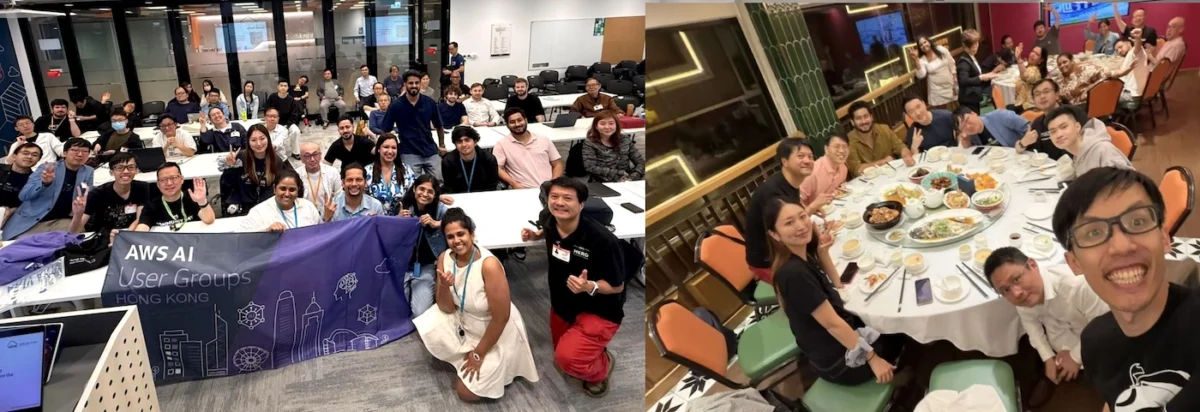
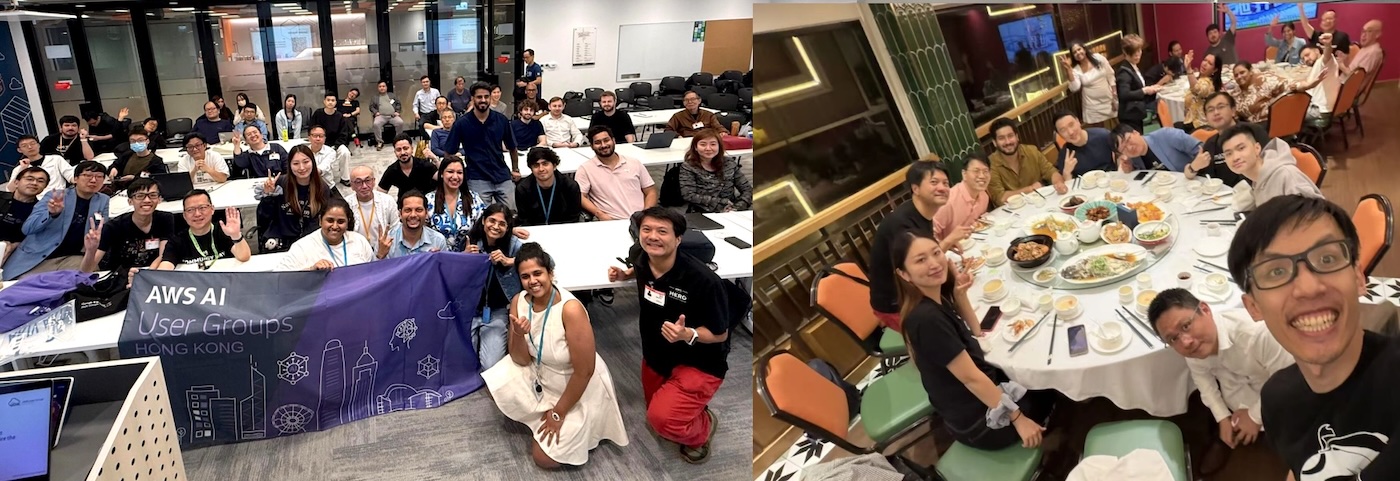
Beyond these technological breakthroughs, AWS continues to emphasize the invaluable role of its global user communities in fostering innovation and adoption. A recent visit by an AWS team to the AWS Hong Kong User Group exemplifies this commitment. Hong Kong, while possessing a geographically smaller community compared to some larger tech hubs, is characterized by its remarkable strength, high energy, and passionate engagement. Such visits are not merely ceremonial; they are crucial opportunities for AWS to strengthen bonds with developers, architects, and IT professionals on the ground, gathering direct feedback and understanding regional nuances.

The Hong Kong User Group’s recent initiative to launch a new AI user group is particularly noteworthy. This development reflects the burgeoning interest and rapid advancements in artificial intelligence and machine learning within the region. AWS actively supports such grassroots efforts, recognizing that vibrant user groups serve as critical platforms for knowledge sharing, skill development, networking, and the organic growth of the AWS ecosystem. These communities often lead to the creation of innovative solutions, best practices, and local expertise that benefit the entire cloud computing landscape. Interactions over shared meals and conversations, as highlighted by the visit, are often where the most valuable insights are exchanged, cementing relationships and fostering a collaborative environment essential for technological progress.
The importance of user groups extends beyond local engagement. They act as a distributed network of advocates and early adopters, providing critical feedback loops that inform AWS’s product development roadmap. By engaging directly with these communities, AWS gains insights into real-world challenges and emerging needs, ensuring that its services remain relevant and impactful. Furthermore, these communities play a vital role in talent development, offering mentorship, training, and opportunities for professionals to hone their cloud skills, which is particularly crucial in a rapidly evolving technological landscape.
Ensuring Operational Continuity: AWS Service Availability Updates
In line with its commitment to transparency and customer support, AWS regularly communicates updates regarding the lifecycle of its services and features. The AWS Product Lifecycle Changes documentation serves as a central resource, providing essential guidance to customers when the availability of an AWS service or feature changes. This includes information on available alternatives and comprehensive support for migration, all aimed at minimizing potential disruptions to customer operations.
The dynamic nature of cloud computing means that services evolve, new offerings emerge, and older ones may be retired or updated. These lifecycle changes, such as those updated on March 31, 2026, are a natural part of a continuously innovating platform. While these changes are necessary for technological advancement and optimization, AWS understands their potential impact on customer infrastructure. Therefore, clear communication and proactive support are paramount. Customers are advised to consult the relevant service documentation or contact AWS Support for specific guidance tailored to their operational needs. This proactive approach ensures that organizations can plan and execute necessary migrations with confidence, maintaining operational continuity and leveraging the latest advancements without undue burden.
Continuous Innovation Across the AWS Ecosystem
The general availability of the DevOps and Security Agents, along with the consistent engagement with global communities, are but two facets of AWS’s relentless pursuit of innovation. The "What’s New with AWS" page stands as a testament to the rapid pace of development, featuring a constant stream of new services, features, and regional expansions. This continuous evolution ensures that AWS remains at the forefront of cloud computing, offering an ever-expanding toolkit for developers and enterprises.
Beyond the major product launches, AWS regularly publishes insightful content through its extensive network of blogs. These blogs delve deeper into specific services, provide architectural guidance, share best practices, and offer thought leadership on various aspects of cloud technology. They serve as a critical resource for the global builder community, offering practical advice and advanced technical knowledge that helps customers maximize their investment in AWS.
Furthermore, AWS actively cultivates a vibrant ecosystem through a diverse array of events. From large-scale AWS Summits and community-driven AWS Community Days to specialized startup and developer-focused events, these gatherings provide invaluable opportunities for learning, networking, and collaboration. Platforms like the AWS Builder Center further empower developers by offering a space to connect with peers, share solutions, and access curated content that supports their ongoing development journeys. These initiatives collectively underscore AWS’s holistic approach to supporting its users, extending beyond just providing cloud infrastructure to fostering a thriving global community that drives innovation forward.
The general availability of the AWS DevOps Agent and AWS Security Agent marks a pivotal moment in the evolution of cloud management and security, ushering in an era of autonomous, AI-driven operations. Coupled with AWS’s unwavering commitment to its global user communities, these advancements reinforce the company’s position as a leader not only in technological innovation but also in fostering a collaborative and supportive ecosystem. As enterprises continue to navigate the complexities of digital transformation, AWS’s integrated approach to intelligent automation and community engagement offers a powerful blueprint for future success.
