
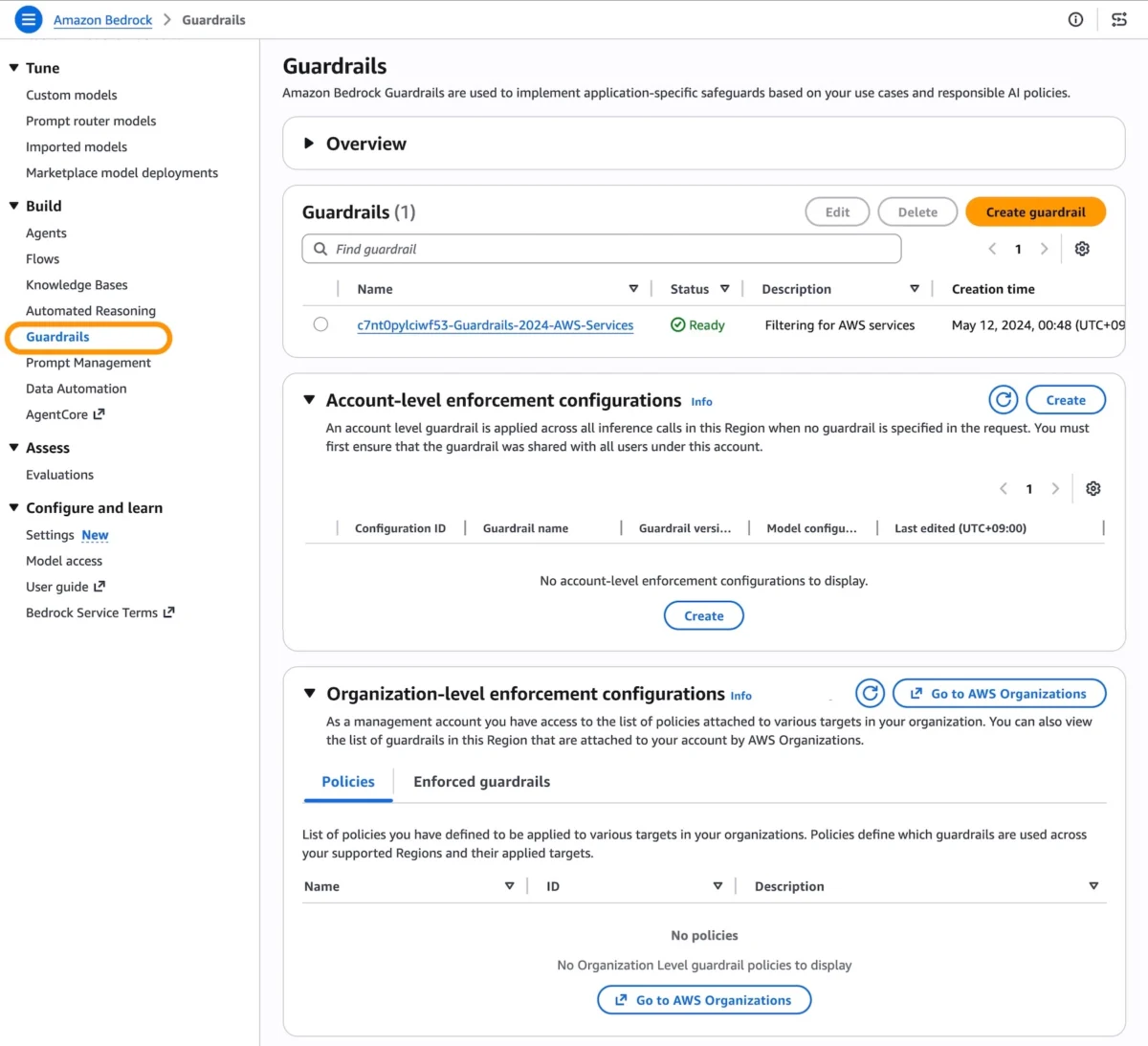

Amazon Web Services (AWS) has announced the general availability of cross-account safeguards in Amazon Bedrock Guardrails, a significant new capability designed to empower organizations with centralized enforcement and management of safety controls across multiple AWS accounts within their infrastructure. This development marks a crucial step forward for enterprises seeking to adopt generative AI responsibly and at scale, addressing critical challenges related to consistent policy application, compliance, and administrative overhead in complex cloud environments.
The Evolution of Responsible AI in the Enterprise
The rapid proliferation of generative AI (GenAI) technologies has opened unprecedented opportunities for innovation, efficiency, and personalized customer experiences across industries. From content generation and code assistance to advanced analytics and conversational interfaces, the potential applications are vast. However, the adoption of GenAI also introduces inherent risks, including the generation of harmful, biased, or inappropriate content; the potential for data leakage; and the challenges of maintaining brand safety and regulatory compliance. Recognizing these complexities, AWS introduced Amazon Bedrock, a fully managed service that provides access to leading foundation models (FMs) from Amazon and third-party AI companies via a single API. Complementing Bedrock, Guardrails were launched to give customers a mechanism to implement responsible AI policies by filtering undesirable content in both user inputs and model outputs.

Initially, Guardrails provided robust safety controls at an individual account or application level. While effective for specific deployments, this approach presented scalability challenges for large enterprises operating with dozens, hundreds, or even thousands of AWS accounts, each potentially hosting numerous generative AI applications. Managing and auditing Guardrail configurations across such a sprawling infrastructure could become a daunting, resource-intensive task, leading to inconsistencies, potential compliance gaps, and increased administrative burden for security and compliance teams.
Addressing the Multi-Account Governance Challenge
The newly released cross-account safeguards directly tackles this multi-account governance dilemma. With this capability, organizations can now specify a guardrail in a new Amazon Bedrock policy within the management account of their AWS organization. This central policy automatically enforces the configured safeguards across all designated member accounts for every model invocation within Amazon Bedrock. This organizational-wide implementation ensures uniform protection, promoting consistent adherence to corporate responsible AI requirements while significantly reducing the administrative burden previously associated with monitoring and verifying configurations for individual accounts and applications.
Before this update, security and compliance teams often faced a manual, error-prone process of ensuring that each AWS account maintained the correct Guardrail settings. This not only consumed valuable time and resources but also exposed organizations to the risk of inconsistent application of safety policies, potentially leading to regulatory non-compliance or reputational damage from unsafe AI outputs. A recent industry report by CloudGuard Research indicated that over 70% of enterprises struggle with inconsistent security policies across their cloud environments, a challenge acutely amplified when integrating nascent technologies like generative AI. Estimates suggest that manual configuration and auditing of security policies in large cloud deployments can consume up to 30% of a security team’s bandwidth. The global market for generative AI is projected to reach $1.3 trillion by 2032, underscoring the urgent need for scalable and robust governance solutions to support this growth responsibly.

Unifying Control and Maintaining Flexibility
The core benefit of this new feature lies in its ability to establish and centrally manage dependable, comprehensive protection through a single, unified approach. This ensures consistent adherence to corporate responsible AI guidelines. For instance, a financial institution can enforce a strict guardrail policy across all its AWS accounts, prohibiting the generation of sensitive financial advice or promoting specific investment products without proper disclaimers, thereby mitigating legal and reputational risks. Similarly, a healthcare provider can ensure that AI models do not generate medical diagnoses or dispense unverified health information across any of its departments, maintaining patient safety and compliance with regulations like HIPAA.
Despite the centralized enforcement, AWS has designed the capability to offer crucial flexibility. Organizations can still apply account-level and application-specific controls, allowing for tailored safeguards based on specific use case requirements that go beyond the baseline organizational policies. This tiered approach ensures that while core safety principles are universally enforced, individual teams or applications can implement more granular or specialized guardrails where necessary, without undermining the overarching organizational framework. For example, a marketing team might have a more permissive guardrail for creative brainstorming applications, while a legal department would enforce extremely strict content generation rules for legal document drafting.
Getting Started: A Step-by-Step Overview
Implementing centralized enforcement in Amazon Bedrock Guardrails involves a structured process, combining configurations within the Amazon Bedrock console and AWS Organizations.
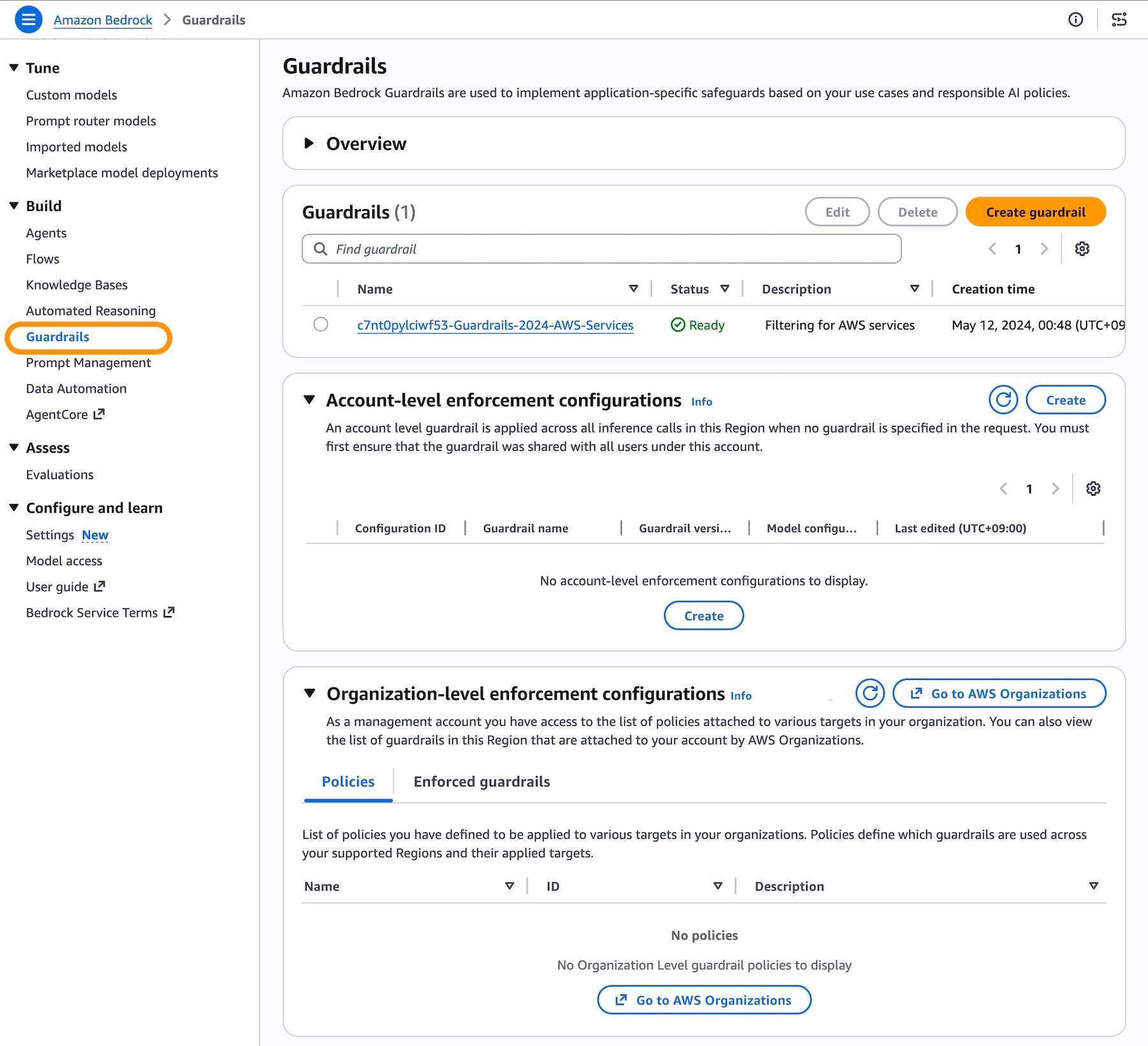
1. Creating and Versioning Guardrails:
Before enforcing a guardrail, users must create it and ensure it has a specific version. This versioning is critical as it renders the guardrail configuration immutable, preventing member accounts from making unauthorized modifications to the enforced policy. Prerequisites for using this new capability include setting up resource-based policies for guardrails to manage access effectively.
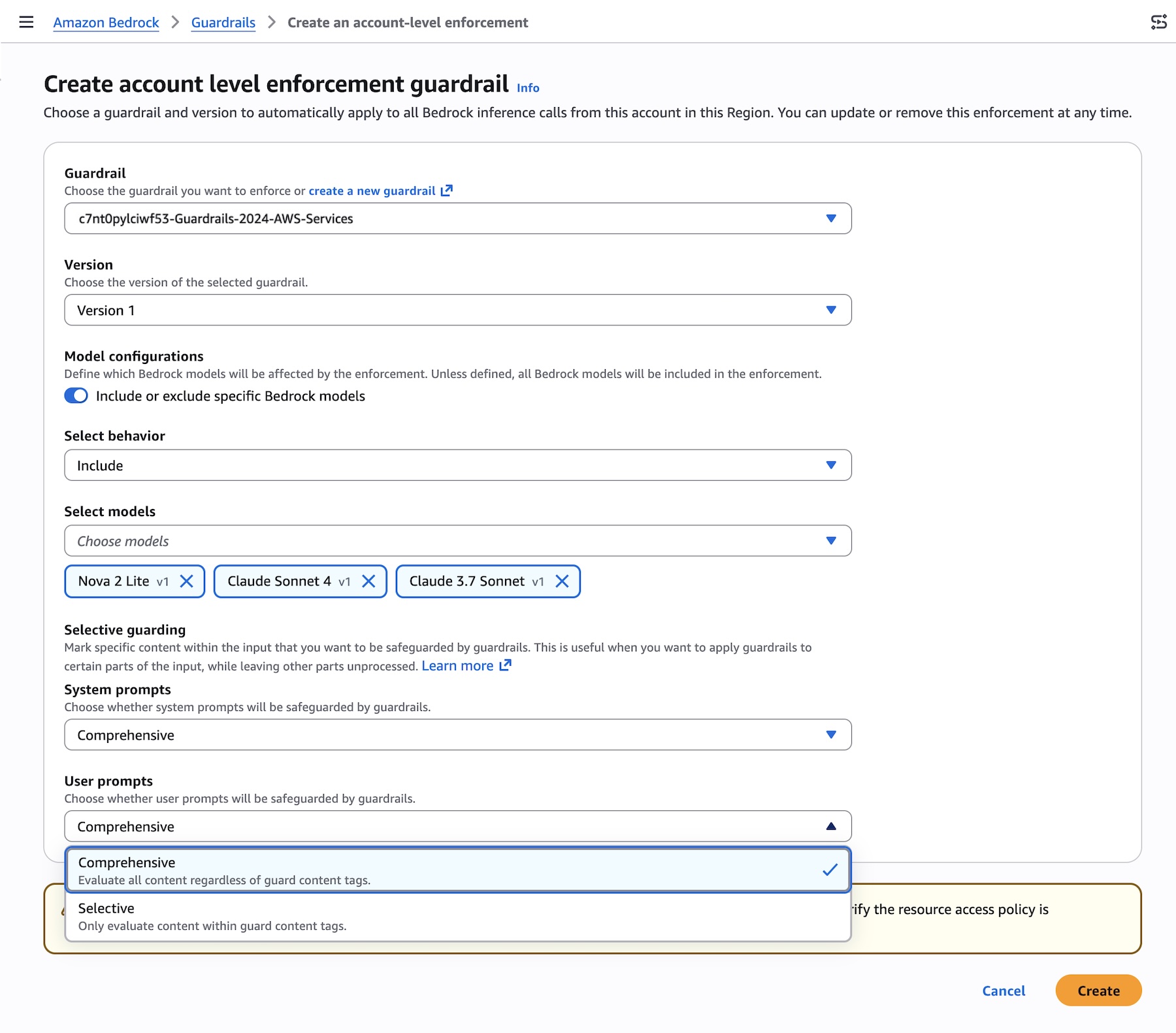
2. Account-Level Enforcement:
For account-level enforcement, users navigate to the Amazon Bedrock Guardrails console and select "Create" under the "Account-level enforcement configurations" section. Here, they can choose the specific guardrail and its version to be automatically applied to all Amazon Bedrock inference calls originating from that account within the selected AWS Region. A new feature introduced with general availability allows users to define which models will be affected by the enforcement through either "Include" or "Exclude" behavior, providing fine-grained control over model scope. Furthermore, users can configure selective content guarding controls for system prompts and user prompts, choosing between "Comprehensive" or "Selective" filtering based on their needs.
After creating the enforcement, testing and verification are crucial. Users can employ a role within their account to test the guardrail. The account-enforced guardrail should automatically apply to both prompts and outputs, with the guardrail assessment information included in the response. This can be verified by making Bedrock inference calls using APIs such as InvokeModel, InvokeModelWithResponseStream, Converse, or ConverseStream.
3. Organization-Level Enforcement:
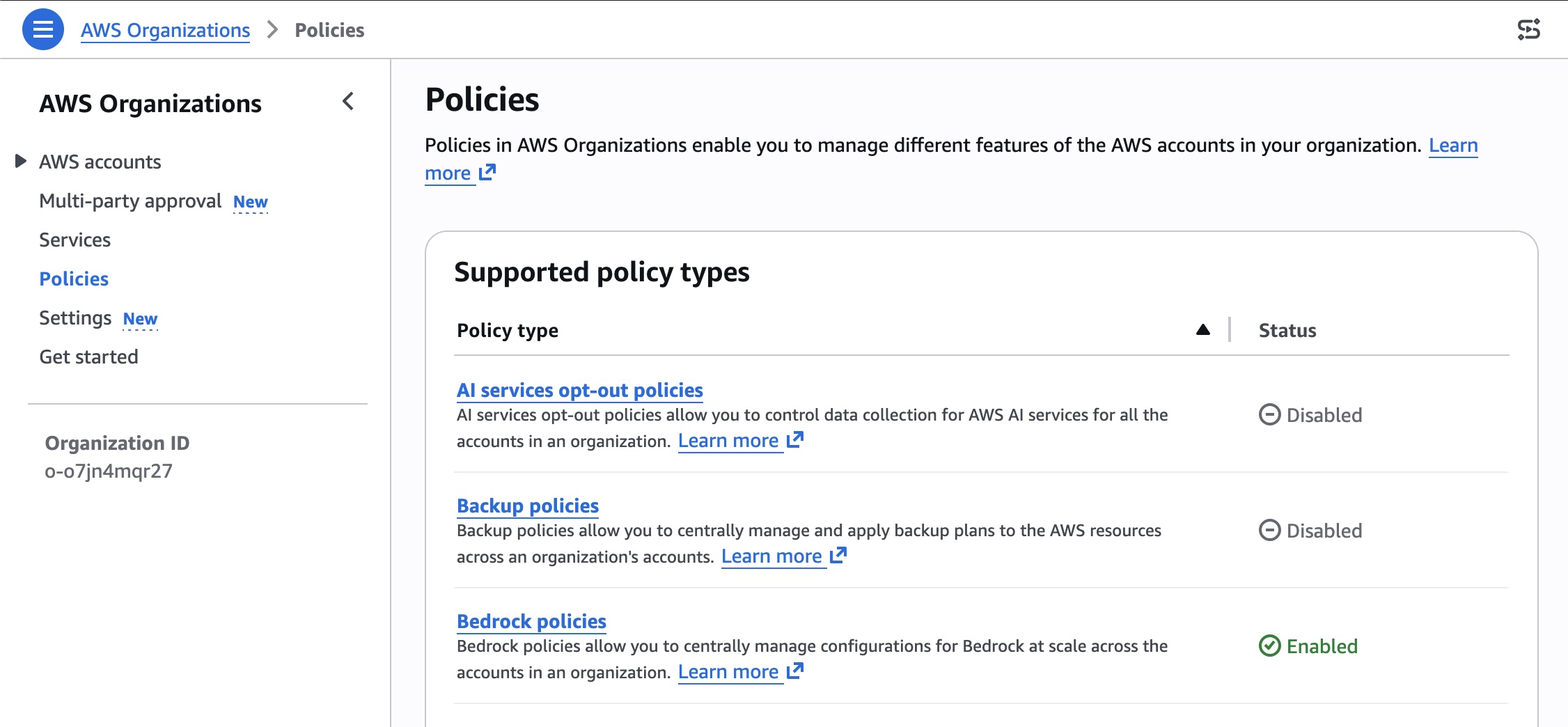
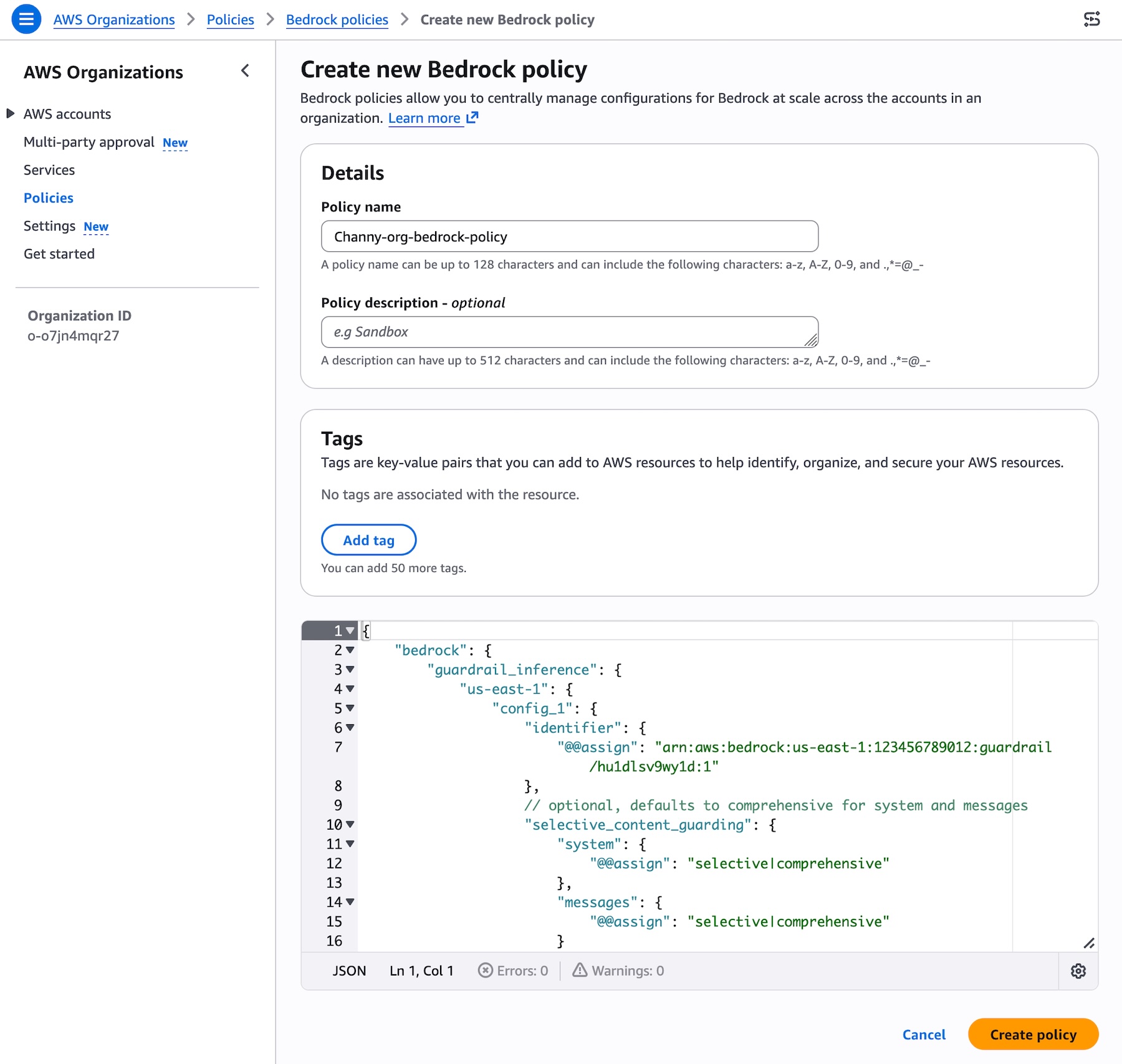
To enable organization-level enforcement, the process integrates with AWS Organizations. Users access the AWS Organizations console and enable "Bedrock policies" under the "Policies" menu. Subsequently, they create a Bedrock policy that specifies the desired guardrail ARN and version, along with input tags settings within AWS Organizations. This policy can then be attached to target accounts, Organizational Units (OUs), or the organization’s root. This hierarchical attachment mechanism allows for broad application of policies across entire segments of the organization or to specific accounts as required.
Once the policy is created and attached, its enforcement on member accounts can be verified. From a member account where the policy is attached, users should observe the organization-enforced guardrail listed under the "Organization-level enforcement configurations" section in the Bedrock console. The underlying safeguards within the specified guardrail are then automatically enforced for every model inference request across all member entities, ensuring consistent safety controls. The flexibility remains to attach different policies with associated guardrails to different member entities through AWS Organizations, accommodating varying requirements of individual teams or applications.
Implications for Enterprise AI Adoption and Governance
This general availability of cross-account safeguards in Amazon Bedrock Guardrails is poised to have significant implications for enterprise AI adoption and governance:
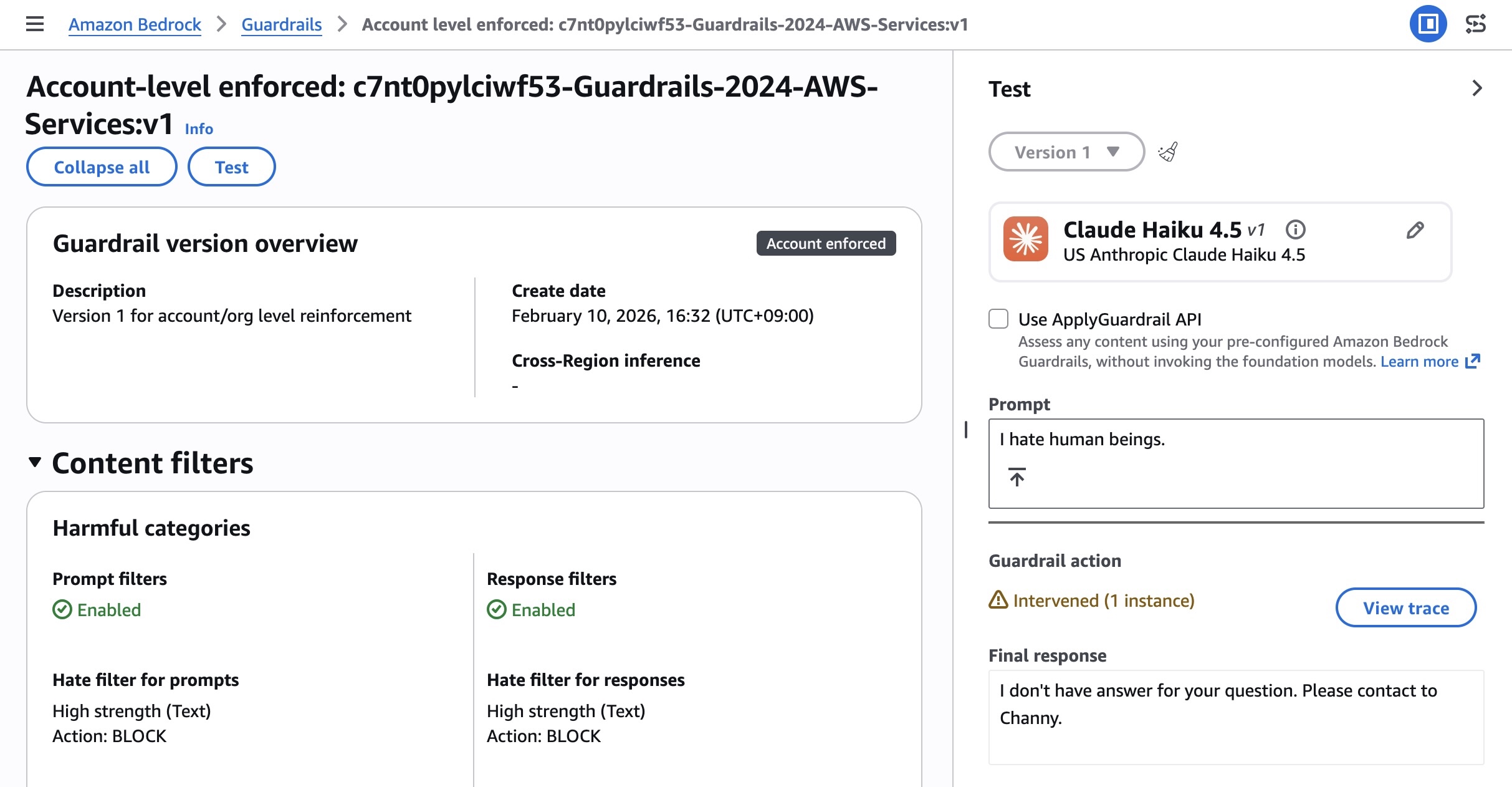
Enhanced Security and Compliance Posture: By providing a centralized mechanism for enforcing AI safety policies, AWS helps organizations strengthen their overall security and compliance posture. This is particularly vital for regulated industries where demonstrating consistent governance over AI deployments is paramount. It simplifies auditing and reporting, making it easier for companies to prove adherence to internal policies and external regulations (e.g., GDPR, CCPA, industry-specific data privacy laws).
Reduced Operational Burden and Cost: Automating the enforcement of guardrails across multiple accounts dramatically reduces the manual effort required from security, compliance, and development teams. This translates into significant operational efficiencies and cost savings, allowing these teams to focus on more strategic initiatives rather than repetitive configuration and verification tasks. The centralized management also minimizes the risk of human error in policy application.
Accelerated and Responsible Innovation: With robust, consistent safety controls in place, developers can innovate with generative AI applications more confidently. They are freed from the burden of individually implementing and verifying safety measures, knowing that organizational guardrails are automatically applied. This fosters faster development cycles and encourages broader experimentation with GenAI, all within a predefined safe operational framework.
Standardization of Responsible AI Practices: This feature promotes the standardization of responsible AI practices across an entire enterprise. By dictating a uniform set of safety policies from a central management account, organizations can ensure that all AI initiatives align with their ethical guidelines and corporate values, mitigating risks associated with bias, fairness, and transparency.
Leadership in AI Governance: AWS’s continuous investment in sophisticated governance tools for its AI services solidifies its position as a leader in enabling responsible AI adoption for enterprises. This capability addresses a core pain point for large organizations, making AWS Bedrock an even more compelling platform for building and deploying generative AI solutions.
Industry Reactions and Future Outlook
Industry analysts and experts have largely welcomed this announcement. Dr. Emily Chen, a lead analyst at CloudTech Insights, commented, "This move by AWS significantly de-risks generative AI deployment for large organizations, addressing key concerns around compliance and consistency that have historically slowed adoption. It’s a critical enabler for enterprises looking to scale their AI initiatives securely." An AWS spokesperson emphasized the company’s commitment to customer success, stating, "Enterprises are eager to leverage the transformative power of generative AI, but robust safety and governance are non-negotiable. This new capability empowers our customers to innovate responsibly at scale, ensuring their generative AI applications align with their values and regulatory obligations."
The cross-account safeguards in Amazon Bedrock Guardrails are now generally available in all AWS commercial and GovCloud Regions where Bedrock Guardrails is offered. Customers are advised that charges apply to each enforced guardrail according to its configured safeguards. Detailed pricing information is available on the Amazon Bedrock Pricing page. This launch underscores AWS’s ongoing commitment to providing comprehensive, scalable, and secure solutions for enterprises navigating the complex landscape of generative AI. Organizations are encouraged to explore this capability within the Amazon Bedrock console and provide feedback through AWS re:Post or their usual AWS Support contacts, contributing to the continuous evolution of these critical safety features.
