
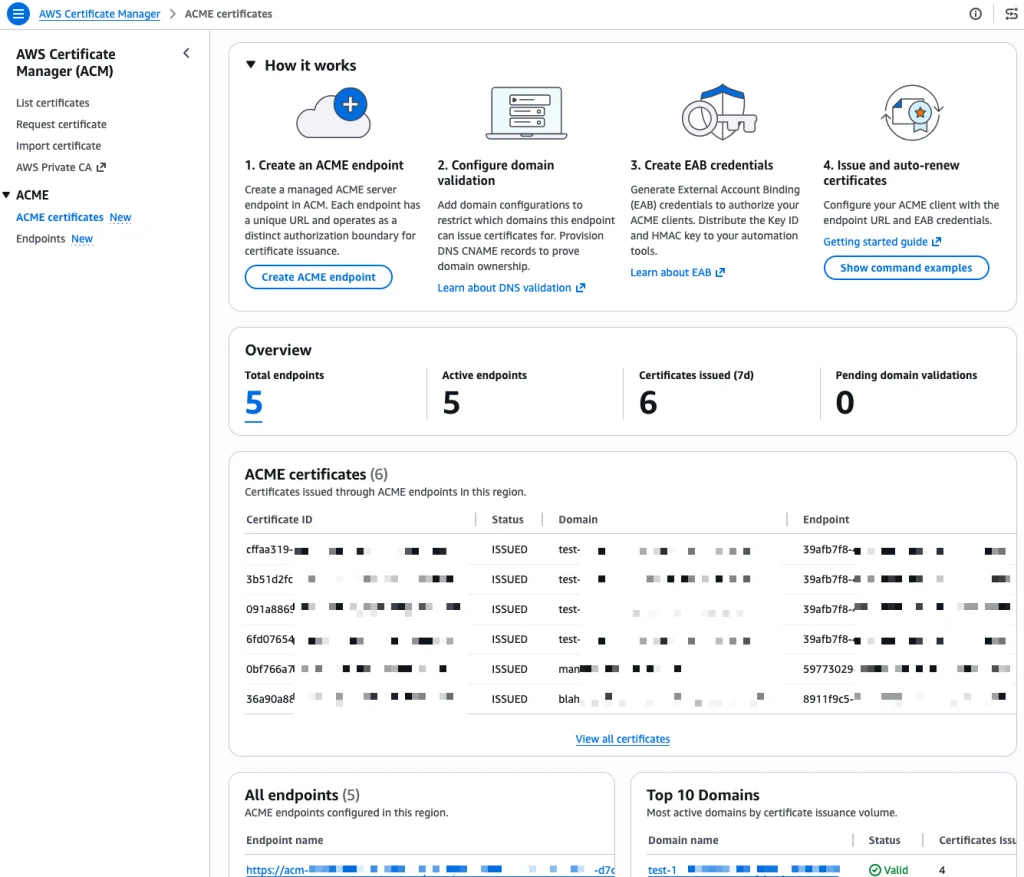

AWS Certificate Manager (ACM) has announced native support for the Automatic Certificate Management Environment (ACME) protocol for public certificates, marking a significant advancement in automated TLS certificate management within the Amazon Web Services ecosystem. This integration directly addresses the escalating challenges faced by organizations in managing the lifecycle of digital certificates, particularly as industry mandates continue to shorten certificate validity periods. The move enables AWS customers to fully automate the issuance, renewal, and revocation of public TLS certificates from Amazon Trust Services, leveraging a widely adopted open protocol and centralizing control within ACM.
The announcement comes at a critical juncture for internet security. The Certification Authority (CA)/Browser Forum, the primary oversight body for TLS certificate practices, has progressively reduced the maximum validity period for public TLS certificates. Starting March 2027, this maximum will shrink to 100 days, further decreasing to a mere 47 days by 2029. These aggressive timelines underscore a clear industry shift towards enhanced security through more frequent key rotation and reduced exposure windows for compromised certificates. However, they simultaneously amplify the operational burden on IT and Public Key Infrastructure (PKI) administrators who traditionally manage these processes manually. The prospect of renewing thousands of certificates every few weeks or months through manual intervention is not only economically unfeasible but also prone to human error, leading to service disruptions, security vulnerabilities, and damaged customer trust. This growing pressure has made robust automation not merely a convenience, but an absolute necessity for maintaining secure and reliable online services.

ACME, an open protocol designed to automate interactions between certificate authorities and web servers, emerged as a solution to this problem years ago, famously powering services like Let’s Encrypt. Its widespread adoption stems from its ability to streamline the entire certificate lifecycle without human intervention, ensuring that applications always have valid TLS certificates. With ACM’s new capability, AWS is now providing a fully managed ACME server endpoint, making it compatible with any ACMEv2-compliant client already in use, such as Certbot, cert-manager for Kubernetes, or acme.sh. This eliminates the previous need for AWS users to rely on external certificate authorities alongside ACM for ACME-driven automation, a scenario that often led to fragmented visibility, disparate management interfaces, and a lack of centralized governance.
Addressing Fragmented Visibility and Control
Prior to this update, organizations operating on AWS that wished to leverage ACME for automated certificate management typically found themselves in a hybrid environment. Some certificates might have been managed natively within ACM, particularly those integrated directly with AWS services like Elastic Load Balancing or CloudFront, while others were obtained and renewed through external ACME providers. This fragmented approach often left PKI administrators with a sprawling inventory of certificates across different platforms, lacking a unified dashboard for monitoring, auditing, or enforcing organizational policies. The absence of centralized control meant limited oversight over who could request certificates, for which domains, or under what security parameters. This posed significant compliance risks and operational inefficiencies, particularly for large enterprises with diverse application portfolios and multiple development teams.

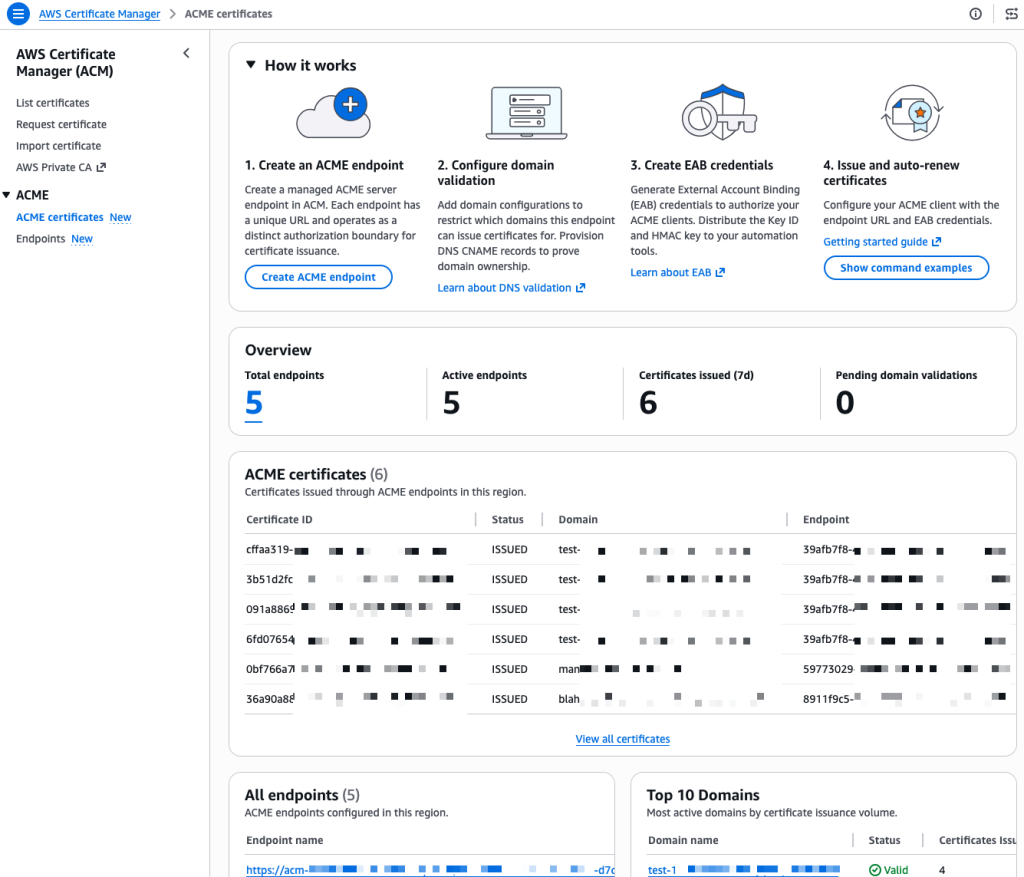
The new ACME support within ACM fundamentally transforms this landscape. It allows organizations to establish one or more managed ACME endpoints directly within their AWS environment, consolidating certificate management and monitoring into a single, unified platform. This brings a host of benefits, particularly for PKI administrators tasked with maintaining stringent security and compliance postures.
Enhanced Governance and Security for PKI Administrators
PKI administrators gain unprecedented centralized controls that extend far beyond basic certificate issuance. A key feature is the ability to bind AWS Identity and Access Management (IAM) roles directly to ACME accounts. This enables fine-grained access control, allowing administrators to dictate precisely which domains each ACME client, and by extension, each application team or developer, is authorized to request certificates for. This level of control is crucial in large organizations where different teams might manage distinct sets of domains.
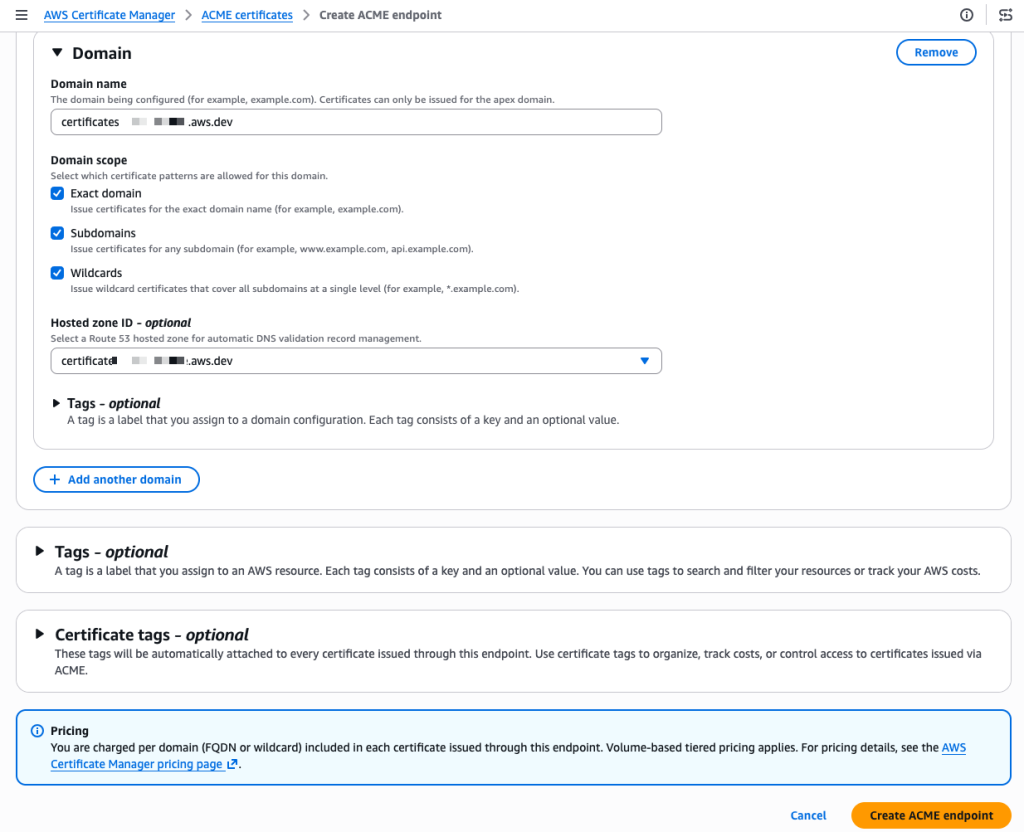
Furthermore, ACM’s ACME endpoints allow administrators to define domain scopes at the endpoint level. This capability enables the enforcement of organization-wide policies, preventing unauthorized certificate requests for sensitive domains or restricting the use of wildcard certificates where a stricter security posture is required. For instance, an administrator can configure an endpoint to only allow "Exact domain" and "Subdomains" certificate requests, explicitly disallowing "Wildcards" for critical production environments. This proactive policy enforcement significantly reduces the risk of misconfigurations or malicious requests.
The security implications of this centralized control are substantial. The process of domain validation, which typically involves proving ownership of a domain to the Certificate Authority, is now streamlined and secured. PKI administrators perform this validation once at the endpoint level, often leveraging existing DNS credentials that remain securely under their control. Crucially, application owners who need certificates never directly handle sensitive DNS keys. They register with an External Account Binding (EAB) credential, and the ACM endpoint then enforces the predefined domain scopes and policies. This innovative separation of duties ensures that certificate automation can be broadly distributed across an organization without simultaneously distributing critical DNS management capabilities, thereby minimizing the attack surface.
Comprehensive Visibility and Auditability
Beyond control, ACM’s integration offers comprehensive visibility and auditability, which are vital for compliance and incident response. Every certificate request made through an ACME endpoint is meticulously logged in AWS CloudTrail, providing a clear audit trail for security teams and compliance officers. This detailed logging allows organizations to track who requested what certificate, for which domain, and when, simplifying forensic analysis and demonstrating adherence to regulatory requirements.
Operational metrics are seamlessly integrated with Amazon CloudWatch, allowing administrators to monitor the health and activity of their ACME endpoints. This includes tracking issuance rates, renewal successes, and potential errors, enabling proactive management and quick identification of issues. Additionally, ACM continues to send expiry notifications when certificates are approaching their renewal date, even for those issued via ACME, ensuring that no certificate inadvertently expires. The unified ACM console now serves as a single pane of glass, allowing PKI teams to search and manage all certificates, regardless of whether they were issued through the console, an API call, or the new ACME interface. This holistic view eliminates the blind spots that often plague hybrid certificate management environments.
How the Integration Works: A Step-by-Step Overview
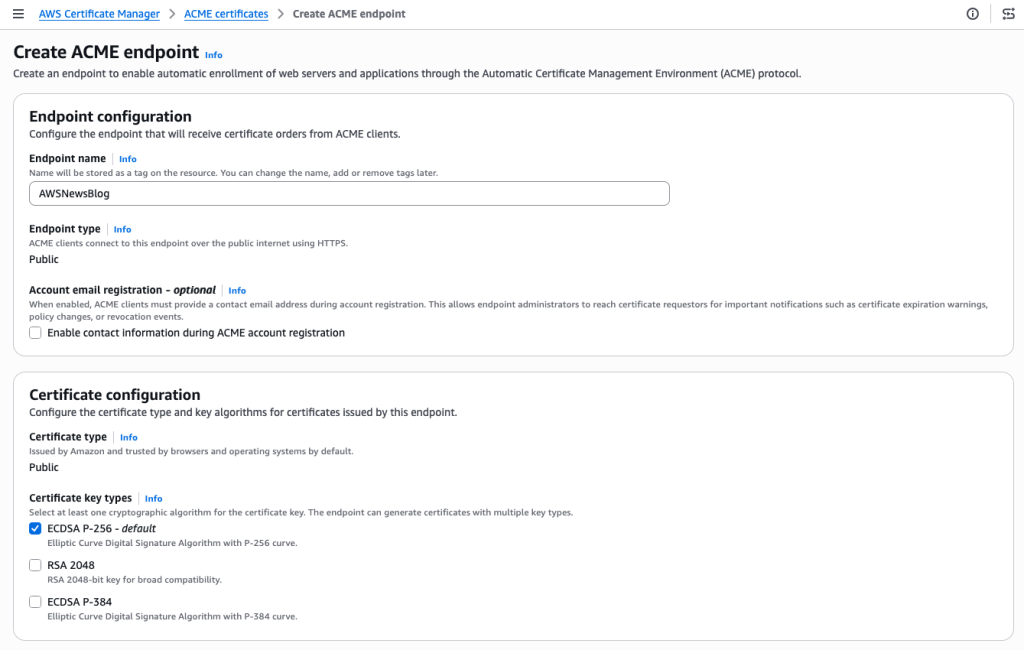
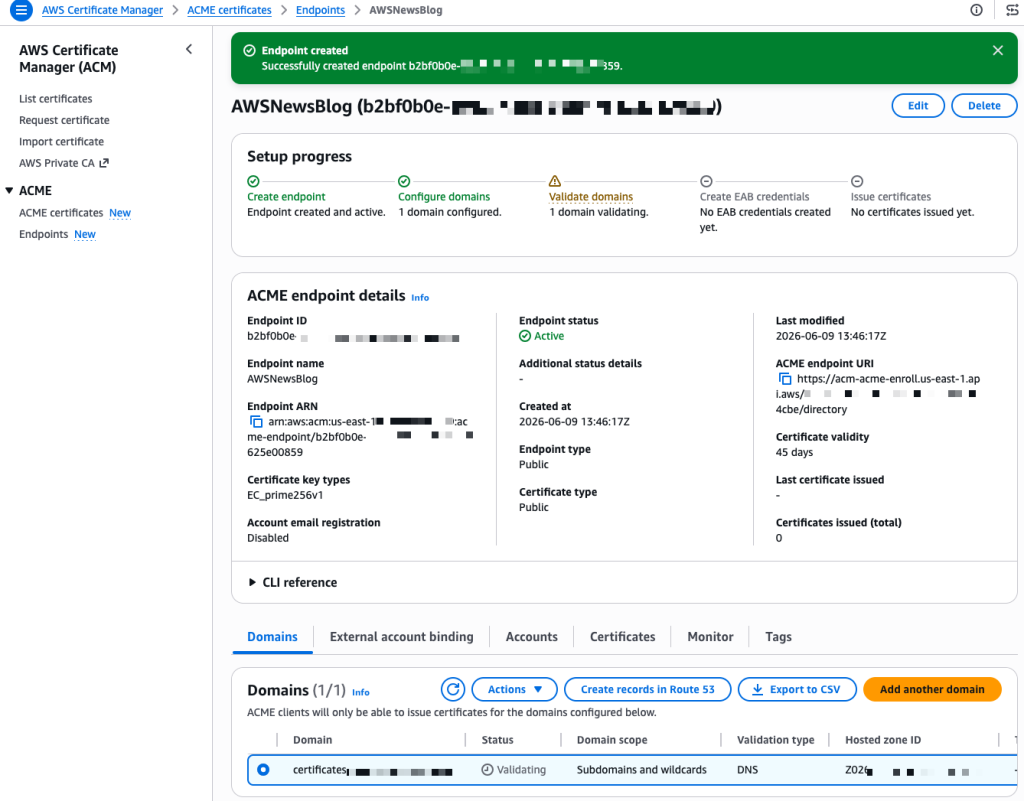
The setup process for leveraging ACME support in ACM is designed to be intuitive while providing robust controls. The journey begins with a PKI administrator setting up a dedicated ACME endpoint within the AWS Certificate Manager console. During this configuration, administrators define the endpoint type (Public), certificate type (Public, issued by Amazon Trust Services), and the desired certificate key type (e.g., ECDSA P-256, RSA 2048, or ECDSA P-384).
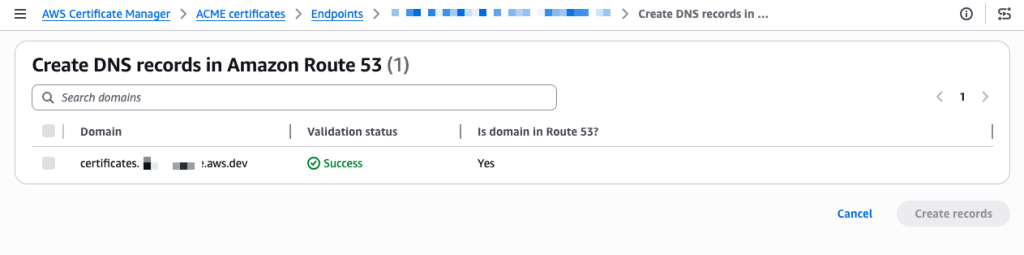
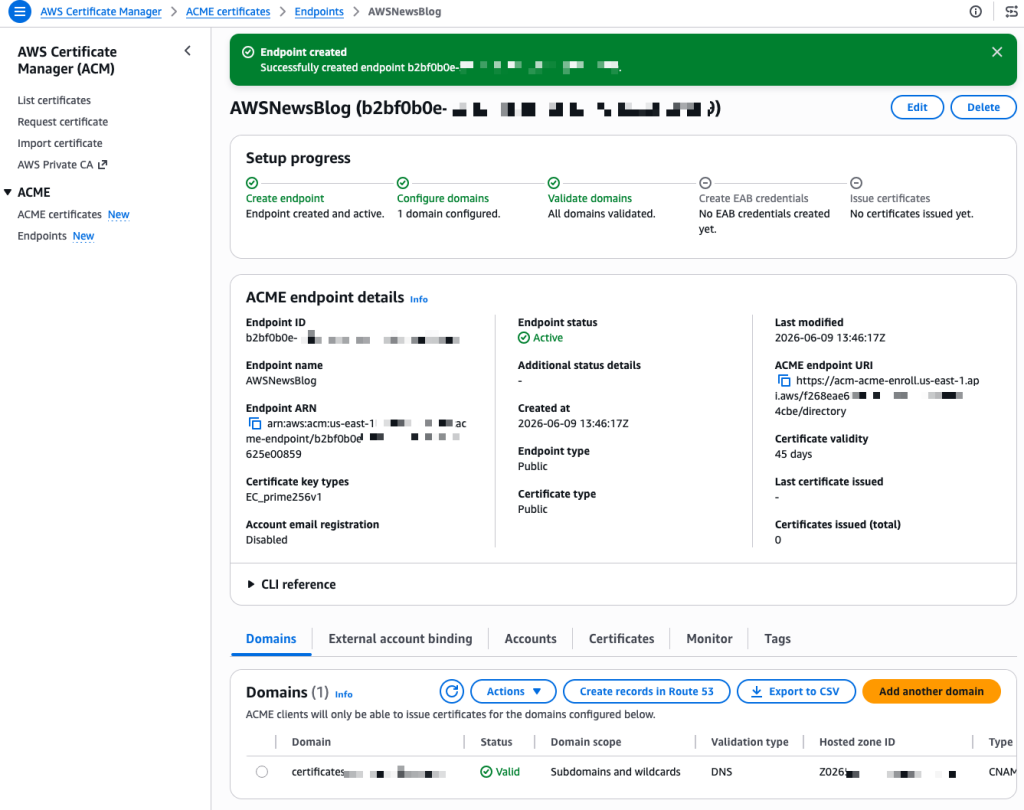
A pivotal step is domain configuration and validation. Administrators enter the domain names for which the endpoint will be authorized to issue certificates and define the allowed domain scopes (Exact domain, Subdomains, Wildcards). If the domain is hosted in Amazon Route 53, ACM can automatically create the necessary DNS CNAME records for domain validation, simplifying the process significantly. For domains hosted externally, the administrator manually creates these CNAME records. This centralized domain validation ensures that only pre-approved domains can receive certificates through that specific endpoint, providing a critical layer of governance.
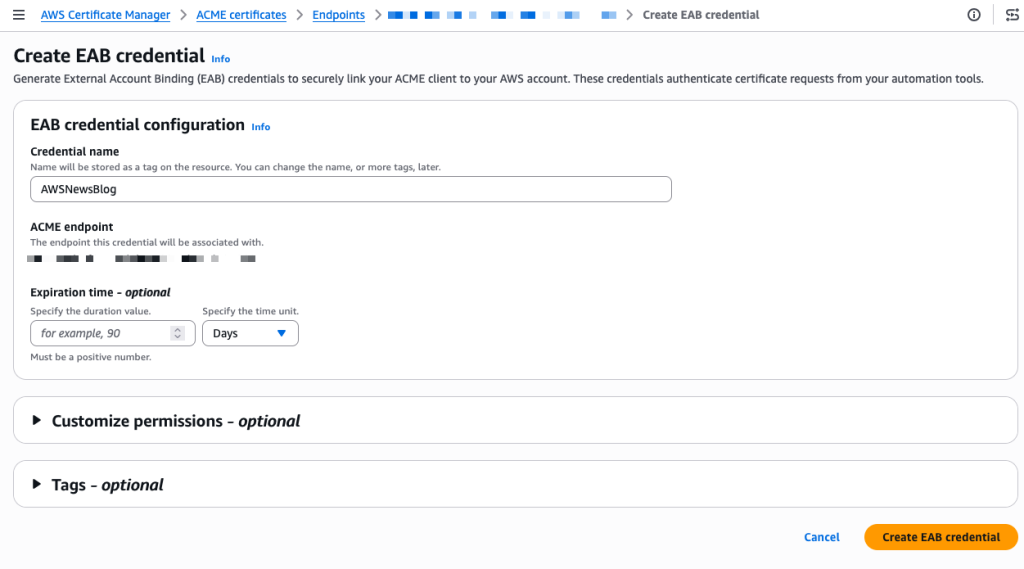
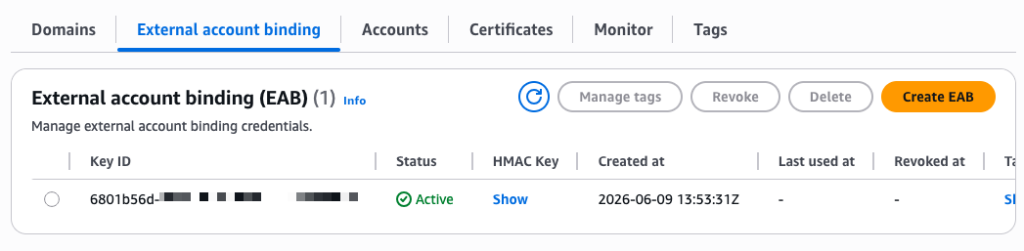
Once the endpoint is validated, the next step involves creating External Account Binding (EAB) credentials. EAB credentials consist of a key identifier (KID) and an HMAC key pair. These are one-time-use credentials that an ACME client uses to register an account with the ACM ACME server. Upon successful registration, the client generates its own asymmetric key pair, which is then used to authenticate all subsequent certificate requests. Administrators can optionally set an expiration time for EAB credentials, ensuring they are used only for the initial client registration.
Finally, application owners or automated systems can configure their existing ACME clients (e.g., Certbot) with the ACM ACME endpoint URL and the generated EAB credentials. The client then interacts with the ACM ACME server using the standard ACME protocol to request, renew, or revoke certificates for the domains permitted by the endpoint’s configuration. The certificates issued are signed by Amazon Trust Services, ensuring they are widely trusted by browsers and operating systems. The newly issued certificates immediately become visible and manageable within the ACM console, alongside all other certificates.
Broader Implications and Industry Impact
This native ACME support in ACM has wide-ranging implications for organizations leveraging AWS.
Operational Efficiency and Cost Savings: By fully automating certificate management, organizations can significantly reduce the manual effort, time, and potential for human error associated with renewals. This translates directly into reduced operational costs and allows IT teams to focus on higher-value tasks rather than repetitive administrative chores. The ability to meet increasingly stringent validity period mandates without scaling up human resources is a major advantage.
Enhanced Security Posture: Automated, frequent certificate rotation inherently improves an organization’s security posture. Shorter-lived certificates reduce the window of exposure if a private key is ever compromised. The centralized controls within ACM, including IAM-based access and domain scoping, provide a robust governance framework that minimizes unauthorized certificate issuance and enforces best practices across the organization.
Simplified Compliance: For industries with strict regulatory requirements, the detailed audit trails in CloudTrail and centralized policy enforcement capabilities simplify compliance efforts. Organizations can easily demonstrate control over their certificate landscape, proving adherence to internal security policies and external regulations.
Accelerated Cloud Adoption and DevOps: For organizations embracing cloud-native architectures and DevOps methodologies, this integration is a natural fit. It removes a significant operational hurdle for deploying and scaling applications that require secure TLS communication, allowing development teams to integrate certificate management directly into their CI/CD pipelines without needing specialized PKI knowledge or relying on external, potentially slower, processes. This fosters greater agility and speeds up time to market for new services.
Competitive Edge: This move positions AWS Certificate Manager as a more comprehensive certificate lifecycle management solution, directly competing with specialized third-party CLM providers and other ACME-based services. By offering a fully integrated, managed service within the AWS ecosystem, Amazon provides a compelling option for customers seeking to consolidate their infrastructure and security tools.
Market Context and Trend Alignment
The demand for automated certificate management solutions has been steadily rising. According to various industry reports, certificate expiration is a leading cause of unplanned outages, with some estimates suggesting that millions of dollars are lost annually due to such incidents. The "HTTPS Everywhere" movement has also driven an explosion in the number of certificates deployed, making manual management increasingly unsustainable. This ACM update aligns perfectly with these market trends, offering a robust, scalable, and integrated solution that addresses a critical pain point for modern enterprises.
While specific official statements were not provided in the original text, the launch itself speaks volumes. It reflects Amazon’s commitment to simplifying complex operational challenges for its customers and strengthening the security capabilities within its cloud platform. This move aligns with industry best practices for robust security and operational resilience, reinforcing the importance of a strong cryptographic foundation for all digital interactions.
Availability and Pricing
ACME support in AWS Certificate Manager is immediately available across all commercial AWS Regions. AWS has also indicated plans to extend this availability to AWS GovCloud (US), the China Regions, and the AWS European Sovereign Cloud partitions at a later date, catering to its diverse global customer base, including those with stringent governmental or sovereign cloud requirements.
The pricing model for ACME-issued certificates within ACM is structured per domain included in each certificate at the time of issuance. Different pricing applies for fully qualified domain names (FQDNs) versus wildcard domains. Volume tiers are calculated based on the total number of domain occurrences across all certificates issued per month within an AWS account, offering cost efficiencies for high-volume users. Detailed pricing information is available on the ACM pricing page.
To begin leveraging this new capability, AWS customers can visit the ACM section on the AWS console or consult the comprehensive documentation provided by AWS. This new feature is poised to significantly simplify the landscape of TLS certificate management for AWS users, offering a powerful, automated, and secure path forward in an increasingly complex digital world.
