
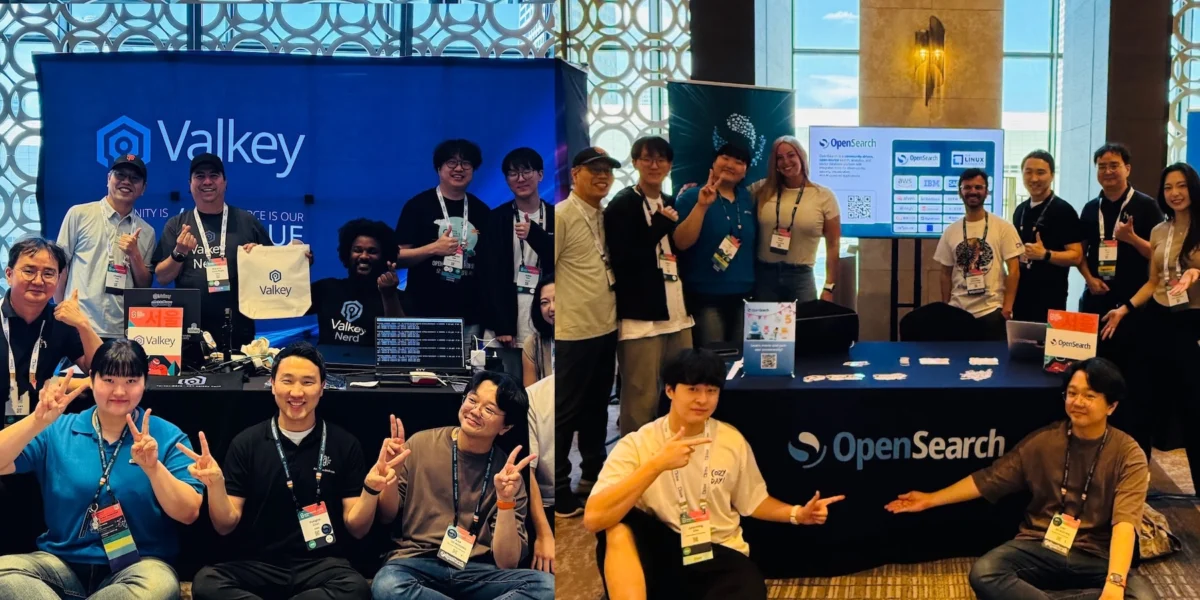

AWS engineering contributors and open-source advocates recently participated in a series of prominent developer gatherings across South Korea, engaging directly with the broader technology ecosystem at Open Source Summit Korea 2026 and the MCP DevSummit Seoul 2026. The four-day Linux Foundation events served as a collaborative hub for developers, architects, and community leaders working on foundational enterprise technologies, specifically highlighting ongoing advancements within the OpenSearch and Valkey open-source projects.
The presence of AWS technical teams at these conferences underscores a broader, long-term industry commitment to collaborative software development, community governance, and decentralized contribution models. By participating in hands-on workshops, technical sessions, and community-led networking events, engineers from diverse corporate backgrounds aimed to align product roadmaps with real-world enterprise requirements.
Strengthening Community Ties in Seoul
Throughout the four-day conference schedule, local technology professionals and regional OpenSearch community leaders played an instrumental role in guiding attendees through technical demonstrations and architectural best practices. Local user group organizers volunteered extensively at the project booths, fostering an environment of peer-to-peer learning and open dialogue.
A central highlight of the week was the dedicated OpenSearch Project Seoul user group meetup, which brought together developers to discuss production deployments, scaling strategies, and integration challenges. These localized gatherings provide critical feedback loops for core maintainers, ensuring that upstream feature development directly addresses the operational realities faced by engineers managing large-scale data infrastructures.
Technical Evolution of OpenSearch 3.7
The dialogues in Seoul coincided with significant technological milestones for OpenSearch, an enterprise-grade search and observability suite designed to manage unstructured data at massive scale. Earlier this summer, on June 9, 2026, the project released OpenSearch 3.7, introducing a comprehensive set of capabilities aimed at unifying log, trace, and metric analysis.
OpenSearch 3.7 introduced streamlined workflows enabling users to query data, configure alerts, and track Service Level Objectives (SLOs) through a single, cohesive interface. Furthermore, architectural optimizations within the release delivered vector search performance improvements of up to 5.5x compared to previous iterations. These enhancements directly address the surging demand for scalable vector databases capable of powering modern generative artificial intelligence and semantic search applications.
Building upon this upstream release, AWS made OpenSearch 3.7 generally available on Amazon OpenSearch Service starting July 30, 2026. Managed service deployments benefit directly from these core performance enhancements, offering enterprise customers upgraded vector search speeds, elevated search relevance metrics, and advanced Query Insights capabilities without requiring deep re-architecting of existing search clusters.
Performance Gains and Multi-Tenant Scaling in Valkey 9.1
Alongside search and observability, high-performance caching and in-memory data management took center stage through the Valkey community tracks. Valkey, an open-source high-performance key-value datastore frequently deployed for caching, message queuing, and primary data storage, has experienced rapid enterprise adoption following its establishment as an independent Linux Foundation project.
On May 19, 2026, the Valkey community announced the release of Valkey 9.1. This major version introduced a redesigned input/output (I/O) threading model that boosts aggregate throughput by up to 17%. Additionally, Valkey 9.1 implemented memory optimization algorithms that reduce memory footprint consumption for string data types under 128 bytes by up to 20%. These architectural refinements allow organizations to maximize hardware utilization, lower infrastructure expenditures, and handle denser concurrent workloads.
To bring these improvements to cloud architectures, Amazon ElastiCache introduced support for Valkey 9.1 in node-based clusters beginning June 23, 2026. This managed integration provides managed service users with heightened transaction throughput, superior memory efficiency, and robust access control mechanisms—features that are particularly critical for secure multi-tenant cloud environments and high-velocity microservices architectures.
Broader Implications for Enterprise Open Source
The convergence of global cloud providers and regional open-source communities at events like Open Source Summit Korea and MCP DevSummit Seoul illustrates the evolving nature of enterprise software development. Modern infrastructure relies heavily on community-driven components that balance rapid innovation with enterprise-grade stability.

Industry analysts note that as organizations increasingly adopt cloud-native architectures, the boundary between proprietary software and community-managed open-source projects continues to blur. By actively contributing code, documentation, and engineering resources to upstream projects like OpenSearch and Valkey, cloud providers help ensure long-term project sustainability, prevent vendor lock-in, and foster healthy developer ecosystems globally.
Furthermore, regional tech hubs such as Seoul have emerged as critical nodes in the global developer network. Active participation from local user groups demonstrates the decentralized nature of modern open-source governance, where regional insights directly influence global software roadmaps.
Future Outlook and Community Engagement
As the technology landscape continues to evolve, ongoing collaboration between maintainers, cloud architects, and enterprise users remains vital. Upcoming community events scheduled across the OpenSearch and Valkey ecosystems offer further opportunities for developers to engage with core maintainers, review upcoming release milestones, and contribute code or feedback.
AWS engineering teams have indicated plans to maintain an active presence at upcoming global and regional developer conferences, emphasizing transparency and collaborative engineering. Developers interested in connecting with contributors or participating in upcoming technical sessions can monitor the official OpenSearch and Valkey event calendars, as well as the AWS Builder Center and regional AWS Summits.
