
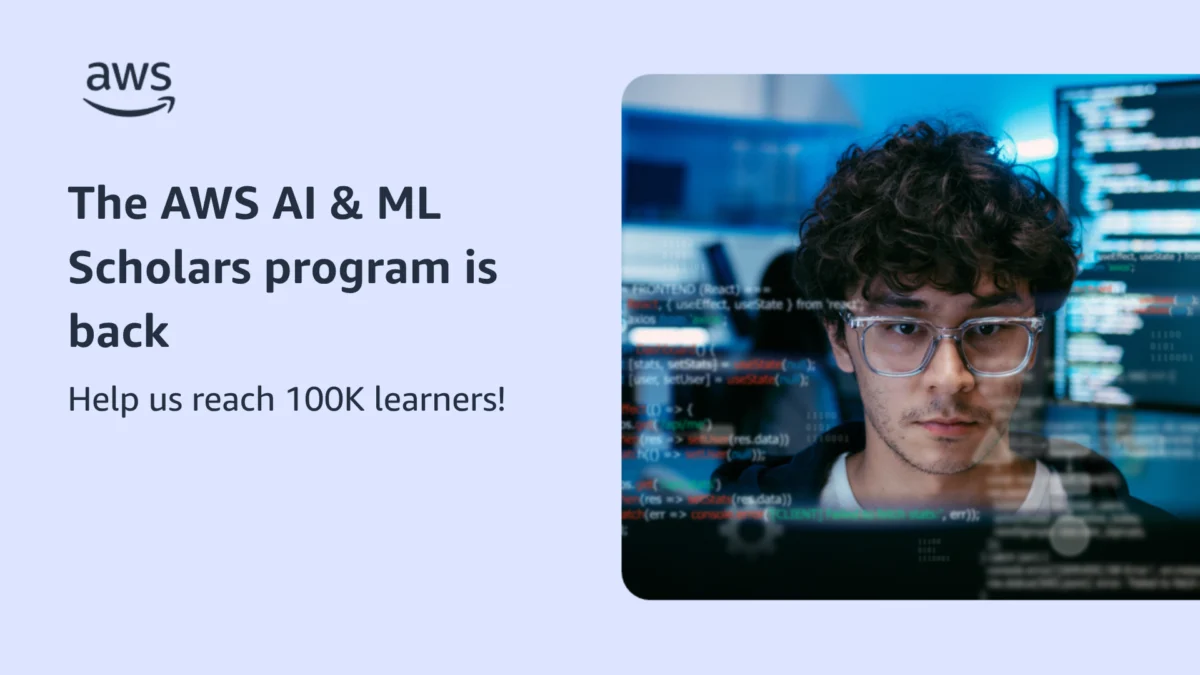

Amazon Web Services (AWS) has initiated a substantial global effort to cultivate AI and Machine Learning (ML) talent with the launch of the 2026 AWS AI & ML Scholars program, an initiative poised to provide free AI education to up to 100,000 learners worldwide. This ambitious program, announced by Swami Sivasubramanian, Vice President of AWS Agentic AI, underscores AWS’s commitment to democratizing access to cutting-edge technology skills and addressing the rapidly growing global demand for AI expertise. Concurrently, AWS is commencing its annual series of regional Summits, with events slated for Paris on April 1st and London on April 22nd, serving as vital in-person forums for cloud and AI education, collaboration, and networking among builders and innovators.
The AWS AI & ML Scholars Program: A Strategic Investment in Global Talent
The newly launched AWS AI & ML Scholars program for 2026 represents a significant expansion of AWS’s educational outreach, building upon previous successful initiatives. The program is meticulously designed to cater to a broad audience, requiring no prior AI or ML experience, thereby fostering inclusivity within the rapidly evolving tech landscape. Its structure comprises two distinct phases aimed at progressively developing foundational and advanced generative AI capabilities.
The initial phase, termed the "Challenge Phase," is an online, self-paced learning module focusing on foundational generative AI skills. Participants will engage with core concepts such as understanding large language models (LLMs), prompt engineering techniques, basic model architecture principles, and the ethical considerations surrounding AI development and deployment. This phase is crucial for establishing a solid theoretical and practical groundwork, enabling learners from diverse backgrounds to grasp the complexities of generative AI without being hindered by prior technical knowledge gaps. The online format ensures global accessibility, removing geographical barriers to high-quality AI education.
Following the Challenge Phase, the top 4,500 performers will be invited to participate in a fully funded, three-month Udacity Nanodegree program. This advanced phase offers a deeper dive into applied AI and ML, providing participants with industry-recognized credentials. Udacity Nanodegrees are renowned for their project-based learning approach, which allows scholars to gain hands-on experience in building and deploying AI models, working with real-world datasets, and mastering advanced algorithms. The curriculum typically covers areas such as deep learning, reinforcement learning, natural language processing, and computer vision, often with a strong emphasis on leveraging AWS services and tools. This intensive training is designed to transform foundational knowledge into practical, job-ready skills, preparing graduates for roles in an increasingly AI-driven economy.
The program’s eligibility criteria, which stipulate applicants must be 18 years or older with no prior AI or ML experience, reflect a deliberate strategy to broaden the talent pool. This open-door policy aims to attract individuals from various professional backgrounds, including those looking to reskill or upskill, thereby promoting diversity within the tech sector. The application window for the 2026 program is currently open, with a deadline set for June 24, 2026. Prospective scholars are encouraged to visit the official AWS AI & ML Scholars webpage for detailed information and application procedures.
Background and Implications of the AI Skills Gap
The launch of such a large-scale educational program is directly correlated with the escalating global demand for AI and ML professionals. Reports from institutions like the World Economic Forum consistently highlight a significant skills gap in advanced technological areas, particularly AI. As industries across sectors – from healthcare and finance to retail and manufacturing – increasingly integrate AI into their operations, the need for skilled practitioners capable of developing, deploying, and managing these sophisticated systems has surged. LinkedIn data, for instance, has shown a dramatic increase in job postings requiring AI and ML skills, often outstripping the supply of qualified candidates.
AWS’s investment in this program is not merely philanthropic; it is a strategic move to foster a robust ecosystem around its cloud services. By training a new generation of AI/ML experts familiar with AWS platforms, the company ensures a steady supply of professionals who can leverage its extensive suite of AI services, including Amazon SageMaker, Amazon Comprehend, Amazon Rekognition, and the rapidly evolving generative AI services like Amazon Bedrock. This mutually beneficial relationship strengthens AWS’s market position while empowering individuals with high-demand skills.
Swami Sivasubramanian’s leadership in Agentic AI at AWS further underscores the company’s commitment to pushing the boundaries of AI. Agentic AI refers to the development of AI systems capable of autonomous reasoning, planning, and execution of complex tasks, moving beyond reactive responses to proactive problem-solving. By providing free education in generative AI, AWS is laying the groundwork for future innovations in this advanced field, ensuring that a diverse group of thinkers contributes to its evolution.
AWS Summits: Regional Hubs for Cloud and AI Innovation
Parallel to its educational initiatives, AWS is kickstarting its highly anticipated AWS Summit season. These in-person events are crucial components of AWS’s global engagement strategy, offering localized opportunities for learning, networking, and direct interaction with AWS experts and partners. The season officially begins with AWS Summit Paris on April 1st, swiftly followed by AWS Summit London on April 22nd. These events mark the start of a global tour that will see AWS hosting Summits in major cities across continents, including anticipated stops in regions like North America, Asia-Pacific, and Latin America later in the year.
AWS Summits are designed to be comprehensive, free-to-attend gatherings that cater to a wide audience, from seasoned cloud architects and developers to business leaders and aspiring innovators. The agenda typically features a keynote address by AWS executives, unveiling new services, features, and strategic directions. This is complemented by a rich selection of breakout sessions covering a spectrum of topics, including cloud architecture best practices, security, data analytics, machine learning, serverless computing, and enterprise solutions. Hands-on labs and workshops provide practical experience with AWS technologies, allowing attendees to apply their learning in real-time under expert guidance.
A core component of the Summits is the expo hall, where AWS partners showcase their solutions and services built on the AWS cloud. This provides attendees with opportunities to explore a vast ecosystem of third-party tools, applications, and consulting services that extend the capabilities of AWS. Networking opportunities are also a significant draw, enabling attendees to connect with peers, industry leaders, and AWS solution architects, fostering a vibrant community of cloud professionals.
The emphasis on "Cloud and AI" at these Summits directly aligns with the broader industry trends and AWS’s strategic focus. Sessions often delve into how organizations can leverage AWS’s AI/ML services to drive innovation, improve operational efficiency, and create new customer experiences. Discussions frequently cover topics like generative AI applications, responsible AI development, and the integration of machine learning into existing business workflows.

Synergy Between Education and Events
The simultaneous launch of the AWS AI & ML Scholars program and the AWS Summit season highlights a synergistic approach to talent development and community engagement. The Scholars program addresses the fundamental need for skilled professionals, while the Summits provide platforms for these professionals to deepen their knowledge, discover new services, and connect with the broader AWS ecosystem. A scholar graduating from the program might attend a Summit to explore career opportunities, learn about advanced use cases, or even present their own innovative projects.
This integrated strategy reinforces AWS’s long-term vision: to be not just a provider of cloud infrastructure but also a catalyst for global innovation. By investing in education, AWS cultivates a talent pipeline that can effectively utilize its services, thereby driving cloud adoption and fostering a continuous cycle of technological advancement. The Summits, in turn, act as vital feedback loops, allowing AWS to understand regional needs, gather insights from its user base, and tailor its offerings to meet evolving market demands.
Broader Context of AWS Innovations and Community Initiatives
The news shared in the weekly roundup format is indicative of AWS’s relentless pace of innovation. While specific launches from "last week" were not detailed in the original brief, typical AWS announcements span a wide array of categories. These often include new services for computing, storage, networking, databases, analytics, machine learning, security, and developer tools. Feature enhancements to existing services, regional expansions of data centers, pricing updates, and new industry-specific solutions (e.g., for healthcare, financial services, media & entertainment) are also common. This continuous stream of updates ensures that the AWS platform remains at the forefront of cloud computing capabilities.
Beyond these product and service launches, AWS actively nurtures its developer community through various channels. The AWS Builder Center, for instance, serves as a hub for connecting builders, facilitating the sharing of solutions, and providing access to content that supports professional development. This platform complements the formal learning pathways offered by programs like the AI & ML Scholars and the in-person engagement of the Summits, creating a holistic support system for anyone working with AWS technologies. Furthermore, the extensive calendar of AWS Events and Webinars ensures that continuous learning opportunities, both virtual and in-person, are always available, ranging from introductory sessions to deep-dive technical workshops.
Conclusion
The launch of the 2026 AWS AI & ML Scholars program and the commencement of the AWS Summit season collectively signify a period of intense focus for Amazon Web Services on both talent development and community engagement. By committing to educate 100,000 learners in generative AI and providing accessible forums for innovation and networking, AWS is not only addressing critical skills gaps but also strengthening its global ecosystem. These initiatives are foundational to driving the next wave of cloud and AI innovation, ensuring that a diverse and highly skilled workforce is prepared to tackle the technological challenges and opportunities of the future. The emphasis on free education and inclusive access underscores a broader commitment to democratizing advanced technology, paving the way for a more innovative and equitable digital landscape. As applications for the Scholars program open and Summits kick off around the world, the impact of these efforts is poised to resonate across industries and geographies, shaping the future of AI and cloud computing.
