
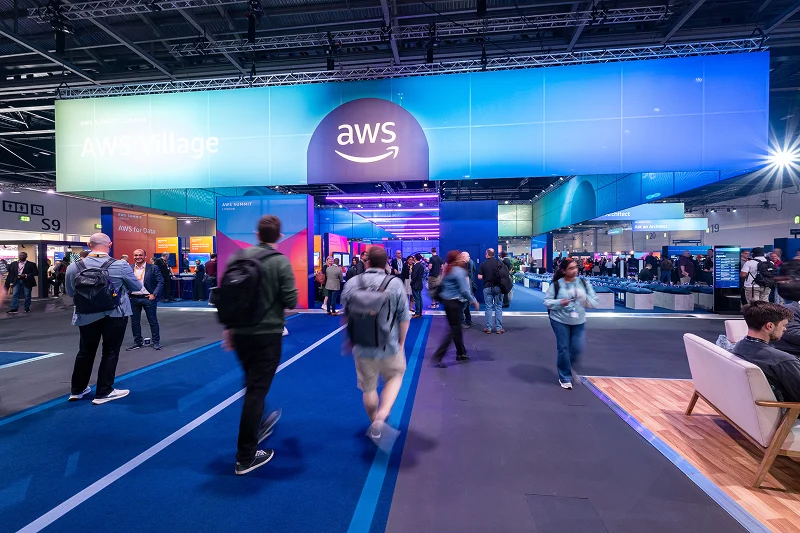

New York City is currently hosting the highly anticipated AWS Summit at the iconic Javits Center, a gathering designed to unite cloud builders, customers, and Amazon Web Services (AWS) teams for an intensive day of pivotal announcements, live demonstrations, and in-depth technical sessions. This year’s summit, scheduled for June 2026, underscores AWS’s relentless pursuit of innovation, particularly in the burgeoning fields of artificial intelligence (AI), developer tooling, and cloud security. The event serves as a critical platform for unveiling the latest advancements that promise to reshape enterprise cloud strategies and development workflows for the coming years. For those unable to attend in person, the keynote address is made available via livestream on June 17, featuring Dr. Swami Sivasubramanian, Vice President of Agentic AI, and Chet Kapoor, Vice President of Security Services and Observability. Their joint presentation is set to delve into new capabilities across developer tools, AI infrastructure, and the ever-critical domain of cloud security, providing a comprehensive outlook on AWS’s strategic direction.
Keynote Insights: Charting the Future of Agentic AI and Cloud Security
The keynote address, a traditional highlight of AWS Summits, this year places a strong emphasis on the intersection of AI and security, reflecting two of the most significant challenges and opportunities facing modern enterprises. Dr. Swami Sivasubramanian, a leading voice in AWS’s AI strategy, is expected to elaborate on the concept of "Agentic AI" – an advanced paradigm where AI systems are designed to autonomously perform complex tasks, make decisions, and interact with environments, significantly enhancing human productivity and innovation. His insights into developer tools and AI infrastructure are particularly pertinent given the rapid evolution of generative AI and its integration into software development life cycles. The focus will likely be on how AWS is empowering developers to build, deploy, and scale AI-native applications with unprecedented efficiency.
Complementing this vision, Chet Kapoor, VP of Security Services and Observability, will address the paramount importance of security in an increasingly complex cloud landscape. As AI capabilities expand and cloud environments become more intricate, the need for robust, proactive security measures becomes critical. Kapoor’s segment is anticipated to cover advancements in AWS’s security portfolio, including new tools and services designed to protect AI workloads, ensure data privacy, and maintain compliance across diverse regulatory frameworks. The combined expertise of Dr. Sivasubramanian and Mr. Kapoor at the keynote highlights AWS’s integrated approach: fostering innovation while embedding security and operational excellence as foundational tenets.
Revolutionizing Development: The Rise of AI-Native Frontier Teams
A central theme emerging from AWS’s recent announcements, and directly addressed by Dr. Swami Sivasubramanian in a detailed blog post, is the concept of "frontier teams" and their role in reinventing AI-native development. This strategic shift is not merely an incremental improvement but a fundamental re-evaluation of how software is conceptualized, built, and deployed, driven by the transformative power of AI agents. Sivasubramanian’s post, drawing on extensive data from experiments conducted across hundreds of Amazon engineering teams, offers a blueprint for organizations seeking to accelerate their AI adoption and achieve significant productivity gains.
The Imperative for AI Transformation
In today’s hyper-competitive technological landscape, the ability to rapidly integrate AI into products and operations is no longer an advantage but a necessity. Traditional software development methodologies, often characterized by lengthy cycles and resource-intensive processes, can hinder this acceleration. AWS’s research indicates that by embracing AI-native development practices, teams can dramatically reduce time-to-market and optimize resource allocation. The urgency to adopt these practices stems from the need for enterprises to stay agile, responsive, and innovative in a market increasingly defined by AI capabilities.
Amazon’s Internal R&D: Unprecedented Productivity Gains
The findings from Amazon’s internal engineering teams provide compelling evidence of the efficacy of these new approaches. A standout example cited by Sivasubramanian is a six-engineer team that successfully rebuilt the Amazon Bedrock inference engine in a mere 76 days. This project had originally been scoped for a team of 30 developers over a period of 12 to 18 months, representing an astounding acceleration in development velocity. Across structured pilots with various Amazon Stores teams, the median productivity gain observed was 4.5 times in normalized deployment velocity, with some teams achieving gains exceeding 10 times.
These efficiencies translate into tangible business benefits. For instance, the "Perfect Order Experience" team saw its feature cycle compressed from two weeks to shipping in a single afternoon. Similarly, the Worldwide Grocery team drastically cut the time required for design document creation from five days to just a few hours. Such dramatic improvements highlight the potential for AI-native development to not only accelerate product delivery but also to free up engineering talent for more complex, strategic initiatives.
The Five Pillars of Frontier Team Success
Sivasubramanian distills these revolutionary results into five core practices that define a frontier team:
- Invest in Agent Context: Before writing production code, teams must meticulously build "agent context." This includes developing comprehensive steering files, establishing clear coding standards, and structuring repositories in a way that AI agents can easily interpret and leverage. This foundational work ensures that AI agents operate within defined parameters, leading to more accurate and reliable code generation.
- Expect an Initial Slowdown and Push Through It: The transition to AI-native workflows is not without its challenges. Sivasubramanian advises teams to anticipate an initial slowdown as existing workflows are restructured and new paradigms are adopted. Perseverance during this phase is crucial, as the long-term benefits in efficiency and innovation far outweigh the temporary dip in velocity. This period is essential for establishing new best practices and overcoming initial resistance to change.
- Maintain a Steady Backlog of Well-Scoped Tasks: To maximize the efficiency of AI agents, teams must ensure a consistent pipeline of clearly defined and manageable tasks. A steady backlog allows agents to operate in parallel, minimizing idle time and reducing the need for constant human supervision. This approach aligns with agile principles, enabling continuous integration and delivery.
- Make Intent Explicit Through Structured Specifications: Before any code generation commences, the intent of the desired output must be articulated with absolute clarity through structured specifications. This eliminates ambiguity, reduces rework, and ensures that the AI agents generate code that precisely meets the project requirements. Detailed specifications act as a critical bridge between human intent and AI execution.
- Shift Testing Left: Integrating testing early into the development cycle allows AI agents to self-correct errors before code progresses further into the pipeline. This "shift-left" approach significantly reduces the cost and effort associated with bug fixing, improves code quality, and accelerates the overall development process. Early detection by agents transforms the testing paradigm from reactive to proactive.
Strategic Implications for Enterprise Development
The implications of these findings are profound for the software development industry. They suggest a future where AI agents become integral members of development teams, augmenting human capabilities and enabling unprecedented levels of productivity. Companies that embrace these frontier team practices stand to gain a significant competitive advantage, not just in terms of speed but also in the quality and innovation of their offerings. This shift necessitates a re-evaluation of skill sets, organizational structures, and investment priorities within IT departments globally. The promise of a follow-up post covering release management, operations, security operations, and End-of-Life (EOL) upgrades further underscores the holistic nature of this transformation, indicating that AI’s influence will extend beyond initial code generation to encompass the entire software lifecycle.
Mastering Cloud Economics: Introducing the AWS FinOps Agent
In parallel with advancements in AI-native development, AWS is also addressing the critical and increasingly complex challenge of cloud cost management with the preview launch of the AWS FinOps Agent. This new AI-powered agent is designed to be a dedicated assistant for FinOps practitioners and engineering teams, providing sophisticated capabilities for answering cost-related questions, identifying optimization opportunities, investigating cost anomalies, and automating recurring FinOps workflows. The introduction of such a specialized agent reflects the growing maturity of FinOps as a discipline and AWS’s commitment to providing intelligent tools for cloud financial management.
Addressing the Growing Challenge of Cloud Cost Management
As organizations scale their cloud footprints, managing and optimizing cloud expenditures can become a formidable task. Cloud sprawl, hidden costs, and the dynamic nature of cloud resource consumption often lead to inefficient spending. FinOps, a cultural practice that brings financial accountability to the variable spend model of cloud, requires collaboration between finance, engineering, and business teams. However, manual data analysis and report generation can be time-consuming and prone to human error. The AWS FinOps Agent aims to alleviate these pain points by leveraging AI to automate and intelligentize key FinOps processes. Industry data consistently shows that a significant percentage of cloud spend is wasted due to under-optimized resources, making tools like the FinOps Agent crucial for achieving cost efficiency.

Core Capabilities: From Anomaly Detection to Automated Optimization
The AWS FinOps Agent is equipped with a suite of features designed to provide comprehensive financial oversight and actionable insights:
- Cost Querying and Reporting: Users can leverage the agent to query their AWS costs in natural language, generating detailed cost reports tailored for various stakeholders, from finance departments to individual engineering teams. This capability enhances transparency and facilitates data-driven decision-making.
- Optimization Recommendations: The agent surfaces intelligent recommendations for cost optimization, drawing insights from AWS Cost Optimization Hub and AWS Compute Optimizer. These recommendations include rightsizing instances, identifying idle resources, and suggesting suitable Savings Plans to maximize discounts.
- Automated Action Integration: A significant feature is the agent’s ability to automate operational tasks. Based on identified recommendations, the FinOps Agent can automatically open Jira tickets on behalf of the team, streamlining the process of implementing cost-saving measures and ensuring accountability.
- Cost Anomaly Detection and Investigation: The agent continuously monitors cloud spend for anomalies. Upon detecting an unusual spike or deviation, it can automatically initiate an investigation into the root cause, providing insights into potential misconfigurations, unexpected usage patterns, or other cost drivers. The findings can then be posted directly to designated Slack channels, enabling real-time alerts and rapid response from relevant teams.
Driving Efficiency and Accountability
The AWS FinOps Agent empowers organizations to move beyond reactive cost management to a proactive, intelligent approach. By automating routine tasks and providing deep analytical capabilities, it frees up FinOps practitioners and engineers to focus on higher-value strategic initiatives. The integration with existing tools like Jira and Slack ensures seamless adoption into current operational workflows. This agent not only helps in reducing cloud waste but also fosters a culture of cost awareness and accountability across engineering teams, aligning technical decisions with financial objectives. The preview status allows early adopters to provide feedback, ensuring the agent evolves to meet the diverse and complex needs of the global FinOps community.
Broader Impact and AWS’s Strategic Vision
The announcements at the AWS Summit NYC 2026, particularly the focus on AI-native development and advanced FinOps, underscore AWS’s unwavering commitment to innovation and customer success. These developments are not isolated but form part of a broader strategic vision to provide a comprehensive, intelligent, and secure cloud ecosystem. By enabling developers to build faster with AI and empowering organizations to manage costs more effectively, AWS is solidifying its position as a leader in the cloud computing market.
The emphasis on "Agentic AI" signifies a pivotal shift in how AWS views the future of cloud computing – a future where intelligent agents play a more autonomous and integrated role across various cloud services. This strategic direction aims to democratize access to advanced AI capabilities, making them more accessible and impactful for businesses of all sizes. Moreover, by addressing cloud financial management with sophisticated AI tools, AWS acknowledges and responds to a critical pain point for many enterprises, further strengthening its value proposition.
Looking Ahead: The Evolving Landscape of Cloud Innovation
As the AWS Summit NYC 2026 concludes, the ripple effects of these announcements are expected to resonate across the global technology landscape. The principles of AI-native development and the functionalities of the AWS FinOps Agent represent significant steps forward in the evolution of cloud computing. They promise a future where software development is dramatically more efficient, and cloud resource management is intelligently optimized, driving unprecedented levels of productivity and cost efficiency.
AWS continues to foster a vibrant community of builders through initiatives like the AWS Builder Center, encouraging collaboration and knowledge sharing. The ongoing series of AWS-led events, both in-person and virtual, ensures that developers and enterprises remain at the forefront of cloud innovation. The focus on AI, security, and financial optimization at this year’s summit reaffirms AWS’s dedication to providing the tools and services necessary for organizations to navigate the complexities of the digital future and harness the full potential of the cloud. The journey towards a more intelligent, autonomous, and cost-efficient cloud environment is clearly underway, with AWS leading the charge.
