

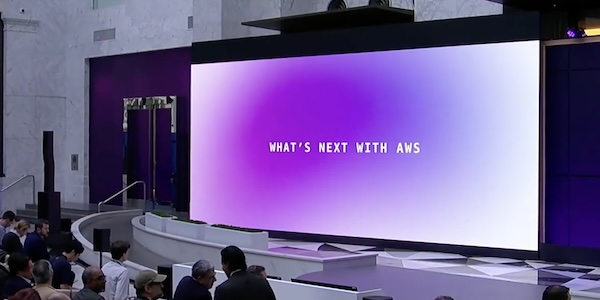
Seattle, WA – Amazon Web Services (AWS) today announced a significant suite of new offerings and a deepened strategic partnership with OpenAI, marking a pivotal moment in the acceleration of artificial intelligence (AI) integration across enterprise operations. The announcements, made at the "What’s Next with AWS" event, underscore AWS’s commitment to delivering practical, agentic AI solutions designed to transform how businesses operate, from individual productivity to complex supply chain management. The event featured key insights from AWS CEO Matt Garman, SVP of Amazon Applied AI Solutions Colleen Aubrey, CMO of AWS Julia White, and leaders from OpenAI, all emphasizing the profound impact of AI agents on the future of work.
A Strategic Shift Towards Agentic AI
The "What’s Next with AWS" event serves as a crucial platform for the cloud computing giant to articulate its vision and introduce innovations that will shape the industry. Following major product reveals at its annual re:Invent conference, this event focused specifically on the immediate and tangible applications of AI, particularly the concept of "agentic AI." This refers to intelligent systems capable of understanding complex requests, breaking them down into actionable steps, interacting with various tools and data sources, and executing tasks autonomously on behalf of a user or system. The overarching theme highlighted how these AI agents are moving beyond simple chatbots to become proactive, integrated components of enterprise workflows, promising unprecedented levels of automation and efficiency.
The strategic emphasis on agentic AI reflects a broader industry trend where businesses are increasingly looking to leverage AI not just for data analysis or content generation, but for automating complex, multi-step processes that traditionally required human intervention. This evolution is driven by the growing sophistication of large language models (LLMs) and the development of robust orchestration frameworks that allow these models to interact with real-world systems. AWS’s announcements are a direct response to this demand, positioning the company as a leader in providing the foundational infrastructure and application-level services necessary for widespread enterprise AI adoption.
Introducing Amazon Quick: The Enterprise AI Assistant
A cornerstone of the announcements was the official launch and expanded availability of Amazon Quick, an innovative AI assistant designed specifically for the workplace. Amazon Quick is positioned as an indispensable tool for enhancing individual and team productivity by connecting to disparate enterprise applications, learning user preferences and critical business context, and taking proactive action on their behalf. This goes beyond simple conversational AI; Quick aims to become an integral part of daily work, streamlining tasks and providing intelligent support.
Starting today, Amazon Quick is available via a new desktop application, signaling AWS’s intent to embed the AI assistant directly into the daily workflow of knowledge workers. The introduction of Free and Plus pricing plans makes the technology accessible to a broader range of businesses, from small teams to large enterprises. The Free plan likely offers basic functionalities to encourage adoption, while the Plus plan provides advanced features and capabilities tailored for more demanding business environments. A significant enhancement is the ability to generate visual assets directly within the chat interface, expanding Quick’s utility beyond text-based interactions to include multimedia content creation, which is crucial for marketing, design, and internal communications. Furthermore, AWS announced expanded connectivity, allowing Quick to integrate with an even wider array of third-party and proprietary business applications, ensuring it can operate seamlessly within existing IT ecosystems.
The market for enterprise AI assistants is rapidly expanding, with major players like Microsoft (Copilot) and Google (Gemini for Workspace) actively vying for market share. Amazon Quick’s entry into this competitive arena highlights AWS’s strategy to differentiate itself through deep integration with its cloud services and a focus on actionable intelligence within complex enterprise environments. Analysts suggest that Quick’s success will depend on its ability to truly understand context across diverse applications, its ease of integration, and its demonstrable impact on reducing cognitive load and automating time-consuming tasks for professionals. For instance, Quick could automate meeting summaries, draft emails based on contextual project information, or even initiate purchase orders by interacting with ERP systems, all while learning from user interactions to refine its performance over time. This push into the desktop environment suggests a direct challenge to incumbent productivity suites, aiming to transform how employees interact with their digital tools.
Amazon Connect Expands into Agentic AI Solutions
Building on its established success in contact center solutions, AWS announced a strategic evolution for Amazon Connect, transforming it from a singular product into a comprehensive suite of four specialized agentic AI solutions. This expansion signifies a broader ambition for Connect, moving beyond customer service into core operational areas of an enterprise. These new solutions are designed to work seamlessly within existing workflows, leveraging AI agents to drive efficiency and intelligence across diverse business functions.
The four new agentic AI solutions under the Amazon Connect umbrella are:
- Amazon Connect Decisions (Supply Chains): This solution is aimed at revolutionizing supply chain management. By leveraging AI agents, businesses can optimize logistics, predict potential disruptions, automate procurement processes, and enhance inventory management. Imagine an AI agent monitoring global shipping routes, weather patterns, and supplier performance, proactively identifying potential delays and suggesting alternative strategies or re-routing options. This promises to bring unprecedented agility and resilience to complex global supply chains. Supporting data indicates that supply chain disruptions cost global businesses billions annually, making AI-driven predictive and prescriptive capabilities highly valuable.
- Amazon Connect Talent (Hiring): Addressing the complexities of human resources and recruitment, Connect Talent employs AI agents to streamline the entire hiring lifecycle. This can include automating candidate screening based on defined criteria, personalizing candidate communications, scheduling interviews, and even assisting with onboarding processes. By reducing the manual workload associated with recruitment, organizations can focus human talent teams on strategic decision-making and candidate engagement, ultimately leading to faster and more effective hiring outcomes. The global talent acquisition market is highly competitive, and AI tools are becoming essential for managing applicant volumes and identifying best-fit candidates efficiently.
- Amazon Connect Customer (Customer Experience): While Amazon Connect has always focused on customer experience, this new iteration leverages advanced agentic AI to elevate it further. AI agents can provide more personalized and proactive customer service, anticipate customer needs, resolve complex issues more efficiently, and manage omnichannel interactions seamlessly. This moves beyond traditional chatbots to agents that can understand sentiment, access historical data, and even initiate follow-up actions without human intervention, ensuring a consistently high-quality customer journey. The customer service industry is experiencing a massive shift towards AI, with studies showing significant improvements in resolution times and customer satisfaction when AI is effectively deployed.
- Amazon Connect Health (Health Care): This specialized solution targets the unique demands of the healthcare sector. Connect Health can assist with patient management, automate administrative tasks such as appointment scheduling and billing inquiries, and potentially support clinical workflows by providing relevant information to healthcare professionals (while strictly adhering to regulatory and ethical guidelines regarding patient care). The healthcare industry, often burdened by administrative overhead, stands to gain substantially from AI-driven automation, freeing up medical staff to focus on direct patient care. The global digital health market is projected to reach trillions, with AI playing a critical role in its growth.
This strategic expansion positions Amazon Connect as a comprehensive suite for enterprise-wide AI-driven automation, moving it beyond a single-point solution to an integrated platform for operational excellence across diverse verticals. Colleen Aubrey, SVP of Amazon Applied AI Solutions, likely emphasized how these solutions are designed for seamless integration: "These new agentic solutions for Amazon Connect are designed to seamlessly integrate into existing workflows, providing intelligent automation where it matters most – from supply chains to customer engagement. Our goal is to empower businesses to unlock new levels of efficiency and innovation by embedding intelligent agents directly into their core processes."
Deepening the AWS and OpenAI Partnership
Perhaps one of the most significant announcements of the day was the extended partnership between AWS and OpenAI, solidifying a strategic alliance that brings cutting-edge AI capabilities to AWS’s vast enterprise customer base. This collaboration is set to significantly impact how businesses access and deploy frontier AI models, offering them through the trusted and scalable infrastructure of Amazon Bedrock.
The expanded partnership includes several key initiatives, all launching in limited preview:

- Bringing the Latest OpenAI Models to Amazon Bedrock: This allows AWS customers to access OpenAI’s most advanced large language models directly through Amazon Bedrock. Bedrock, AWS’s fully managed service that makes foundation models from Amazon and leading AI startups accessible via an API, will now offer a broader choice of models, including those from OpenAI. This is critical for enterprises that require the power and sophistication of OpenAI’s models but prefer to deploy and manage them within the secure, compliant, and familiar AWS environment. This move makes Bedrock an even more compelling platform for developers and businesses looking to build generative AI applications.
- Launching Codex on Amazon Bedrock: OpenAI’s Codex, the AI model that powers GitHub Copilot and translates natural language into code, will also be available on Amazon Bedrock. This is a game-changer for software development, allowing developers to leverage advanced code generation capabilities within their AWS workflows. Codex can significantly accelerate development cycles, assist with debugging, and even help non-developers generate code snippets, fostering innovation and reducing time-to-market for new applications.
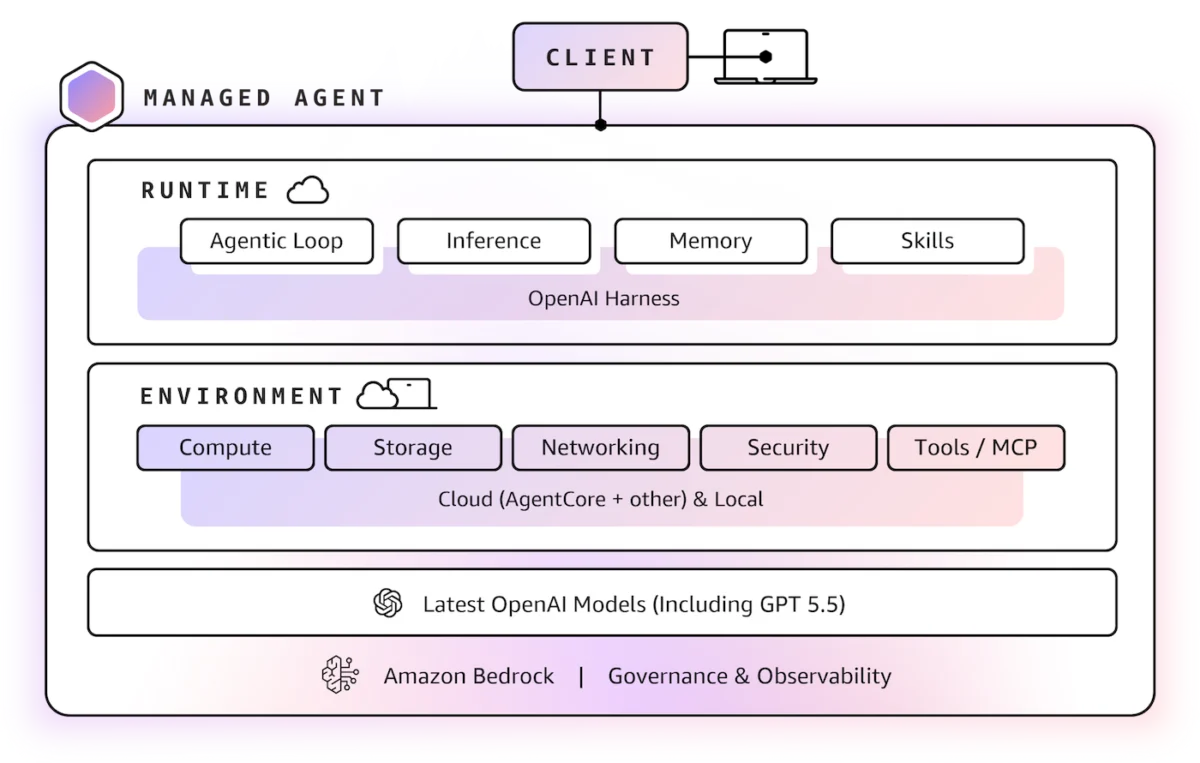
- Launching Amazon Bedrock Managed Agents, Powered by OpenAI: This is a particularly impactful announcement. AWS will offer managed agents within Bedrock that are powered by OpenAI’s models. Managed agents simplify the creation of complex AI applications by handling the orchestration, tool integration, memory management, and safety considerations that are typically challenging for developers. For enterprises, this means they can build sophisticated AI agents that interact with their internal systems, external APIs, and proprietary data with significantly less effort and specialized AI expertise. These managed agents will be capable of autonomously performing multi-step tasks, retrieving information, making decisions, and interacting with users or other systems, all while leveraging the advanced intelligence of OpenAI’s models within AWS’s secure framework.
The core message behind this extended partnership is to provide "frontier intelligence on trusted infrastructure." This phrase encapsulates the value proposition: enterprises gain access to the most advanced AI models from a recognized leader like OpenAI, combined with the unparalleled security, reliability, scalability, and enterprise-grade features of AWS’s cloud infrastructure. This strategic alignment addresses a critical need in the market, where businesses are eager to adopt cutting-edge AI but are often constrained by concerns around data privacy, governance, operational complexity, and the need for a robust underlying platform.
From OpenAI’s perspective, the partnership significantly expands its reach to AWS’s vast global customer base, accelerating the adoption and deployment of its models in production environments across industries. For AWS, it strengthens Bedrock’s position as a leading platform for generative AI, offering customers unparalleled choice and integration capabilities, making it more competitive against other cloud providers that also offer access to diverse foundation models. Matt Garman, CEO of AWS, likely reiterated the company’s commitment to customer choice and innovation: "Our goal is to democratize advanced AI, making it accessible and actionable for businesses of all sizes, allowing them to innovate faster and operate more efficiently. The deepened partnership with OpenAI through Bedrock is a testament to this, providing our customers with the best of both worlds: cutting-edge AI on the most reliable cloud infrastructure." OpenAI leaders, such as Brad Lightcap, COO of OpenAI, might have added, "Our partnership with AWS is crucial for bringing the most advanced AI models to enterprises globally, ensuring they can build and deploy powerful AI applications on a secure and scalable infrastructure that meets their demanding requirements."
Broader Impact and Implications
The announcements from "What’s Next with AWS" signify a profound shift in how AI is being integrated into the enterprise. The focus on "agentic AI" represents a move beyond simple tools to more autonomous systems capable of complex task execution. This paradigm shift will empower businesses to automate a wider range of processes, free up human capital for higher-value tasks, and derive deeper insights from their data.
For enterprises, these new offerings lower the barrier to entry for adopting sophisticated AI. Amazon Quick provides an accessible entry point for individual productivity, while the expanded Amazon Connect solutions offer industry-specific, AI-driven automation for critical business functions. The deepened partnership with OpenAI via Bedrock ensures that businesses can leverage the very latest in AI model innovation without compromising on security, scalability, or the robust management capabilities expected from a leading cloud provider. This comprehensive approach positions AWS as a one-stop shop for enterprise AI, from foundational models to application-level assistants and specialized solutions.
The competitive landscape in cloud AI is intensifying, with Microsoft leveraging its OpenAI investment heavily and Google pushing its Gemini and Vertex AI platforms. AWS’s strategy, particularly with the Bedrock model, emphasizes choice and flexibility, allowing customers to select the best-fit models for their specific needs, whether from Amazon, third-party providers, or now, OpenAI. This approach caters to enterprises that prioritize vendor neutrality and the ability to switch models as AI technology evolves. The move to offer managed agents also addresses a critical pain point for many organizations: the complexity of building, deploying, and managing AI agents at scale. By abstracting away much of this complexity, AWS is making advanced AI more attainable for mainstream enterprise adoption.
Looking ahead, these developments pave the way for a future where AI agents become ubiquitous across all business functions, fundamentally altering the nature of work. While the immediate benefits include enhanced productivity and cost savings, the long-term implications involve re-imagining business models, fostering unprecedented innovation, and enabling organizations to respond with greater agility to market changes. As with any powerful technology, the responsible deployment of these AI agents, with careful consideration for ethical implications, data privacy, and human oversight, will remain a critical area of focus for AWS and its customers. These announcements reinforce AWS’s ambition not just to provide cloud infrastructure, but to be the foundational platform for the intelligent, automated enterprise of tomorrow.
