
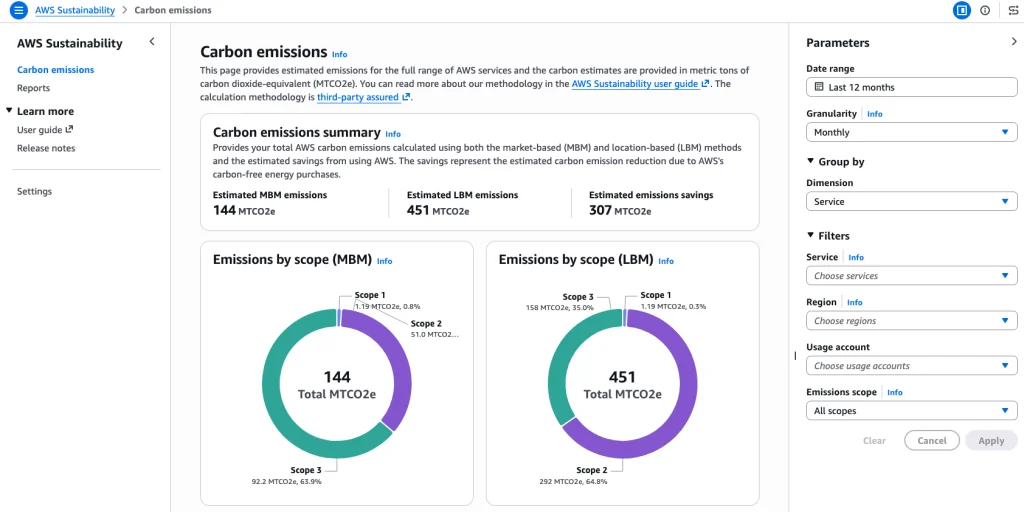

Amazon Web Services (AWS) has announced the launch of its new Sustainability Console, a standalone service designed to consolidate all AWS sustainability reporting and resources into a single, accessible platform. This strategic development marks a significant step forward in AWS’s commitment to both its own environmental goals and assisting its customers in measuring and reducing the environmental footprint of their cloud workloads. The console, now available to all AWS users at no additional cost, empowers sustainability professionals and reporting teams with direct access to crucial carbon emissions data, independent of traditional billing permissions.
Enhanced Accessibility and Granular Reporting Capabilities
The AWS Sustainability Console builds upon the foundation of the existing Customer Carbon Footprint Tool (CCFT), previously embedded within the AWS Billing Console, but introduces a suite of advanced capabilities addressing long-standing customer requests. Foremost among these is a distinct permissions model. Historically, accessing carbon footprint data necessitated billing-level permissions, creating a practical impediment for sustainability professionals who typically do not require, nor should they have, access to sensitive cost and billing information. This often resulted in complex permission structures and delays in data retrieval. The new console resolves this by offering its own, independent permissions, ensuring that sustainability and reporting teams can access emissions data directly and efficiently.
The console provides a detailed breakdown of Scope 1, 2, and 3 emissions attributed to AWS usage. This data can be segmented by AWS Region and specific services, including prominent offerings like Amazon CloudFront, Amazon Elastic Compute Cloud (Amazon EC2), and Amazon Simple Storage Service (Amazon S3). While the underlying data and calculation methodologies remain consistent with those used by the CCFT, the console drastically improves how users can access, visualize, and interact with this vital information. Emissions are expressed in metric tons of carbon dioxide equivalent (MTCO2e), offering a standardized measure for environmental impact.
Recognizing the increasing complexity of modern sustainability reporting, the console also introduces a robust Reports page. Users can now download preset monthly and annual carbon emissions reports, encompassing both market-based method (MBM) and location-based method (LBM) data. Furthermore, the platform offers the flexibility to build custom comma-separated values (CSV) reports, allowing users to select specific fields, define time granularity, and apply various filters to tailor data exports to their precise needs. This level of customization is invaluable for organizations facing diverse internal and external reporting requirements.

A notable feature addressing a common friction point for finance and sustainability teams is the ability to configure the console to match an organization’s fiscal year. When set, all data views and exports within the console reflect the custom fiscal year and quarters, streamlining internal processes and removing the need for manual calendar-to-fiscal year conversions.
For advanced integration and automation, the console provides a new API and support for AWS SDKs. This allows organizations to programmatically pull emissions data directly into their own reporting pipelines, custom dashboards, or compliance workflows. This capability is particularly beneficial for large enterprises managing numerous AWS accounts, needing to aggregate data across complex organizational structures that may not align with their existing AWS Organizations setup, or requiring real-time data feeds for dynamic environmental performance monitoring.
AWS’s Commitment to Sustainability: A Deeper Dive
The launch of the Sustainability Console is deeply rooted in Amazon’s overarching environmental commitment, encapsulated by The Climate Pledge. Launched in 2019, The Climate Pledge commits signatories to reach net-zero carbon across their operations by 2040 – a decade ahead of the Paris Agreement’s 2050 target. Amazon co-founded The Climate Pledge with Global Optimism, and it has since grown to include over 400 signatories across 35 countries, representing a significant portion of the global economy. This commitment serves as a guiding principle for how AWS designs, builds, and operates its global data centers and services.
AWS has consistently invested in sustainable infrastructure. This includes optimizing power usage effectiveness (PUE) in its data centers, deploying energy-efficient hardware, and continuously innovating in cooling technologies. A key pillar of Amazon’s sustainability strategy, and by extension AWS’s, is a commitment to powering its operations with 100% renewable energy. Originally aiming for 2030, Amazon accelerated this goal and achieved 100% renewable energy across its operations in 2025, five years ahead of schedule. This is accomplished through direct investments in utility-scale wind and solar projects, which add new, clean energy to the grids where Amazon operates. These investments significantly reduce the Scope 2 emissions associated with AWS’s operations.
The evolution from the embedded CCFT to a standalone Sustainability Console reflects AWS’s understanding of the growing importance of sustainability data. The initial CCFT provided a basic overview, but as corporate sustainability strategies matured and regulatory pressures mounted, the need for a more comprehensive, accessible, and flexible tool became evident. The console represents the latest iteration in AWS’s journey to not only operate more sustainably itself but also to empower its vast customer base – from startups to large enterprises – to achieve their own environmental objectives within the cloud.

Understanding Carbon Emissions: Scopes and Methodologies
For a robust understanding of the data presented in the console, it is crucial to grasp the widely accepted GHG Protocol Corporate Standard, which categorizes greenhouse gas emissions into three scopes:
- Scope 1 Emissions: These are direct emissions from sources owned or controlled by the reporting entity. In the context of AWS, this would typically include emissions from fuel combustion in owned or controlled data center facilities (e.g., backup generators, company vehicles).
- Scope 2 Emissions: These are indirect emissions from the generation of purchased energy consumed by the reporting entity. For AWS, this primarily relates to electricity purchased for its data centers. The console reports Scope 2 emissions using two distinct methodologies:
- Market-Based Method (MBM): Reflects emissions from electricity that companies have purposefully chosen (or purchased) through instruments such as renewable energy certificates (RECs) or power purchase agreements (PPAs). This method accounts for contractual instruments that convey information about the emissions associated with electricity generation.
- Location-Based Method (LBM): Reflects the average emissions intensity of the grids where electricity consumption occurs. This method uses regional or national grid average emissions factors, irrespective of any contractual instruments.
- Scope 3 Emissions: These are all other indirect emissions that occur in a company’s value chain, both upstream and downstream. For AWS, Scope 3 includes a broad range of emissions, such as those from the manufacturing of servers and other hardware used in data centers, data center construction, employee commuting, business travel, and waste generated in operations. Calculating Scope 3 emissions is often the most challenging due to their indirect nature and complexity across the supply chain.
AWS’s methodology for calculating these emissions is detailed in its publicly available methodology document, which has been independently verified by Apex, a reputable third-party consultant. This independent verification adds a layer of credibility and assurance to the data provided by the console, crucial for organizations relying on this information for their own external reporting and audits.
Strategic Importance and Broader Implications
The launch of the AWS Sustainability Console carries significant implications for various stakeholders and the broader digital ecosystem:
- Empowering Sustainability Professionals: By decoupling permissions from billing, AWS is directly addressing a key pain point for sustainability teams. This empowers them to take ownership of their cloud environmental data, integrate it seamlessly into their workflows, and provide timely, accurate reports to internal and external stakeholders without bottlenecks.
- Driving Corporate ESG Strategies: Environmental, Social, and Governance (ESG) performance has become a critical metric for investors, regulators, and customers alike. The console provides enterprises with a robust tool to track and report on their environmental footprint, directly contributing to their ESG disclosure requirements and helping them meet internal sustainability targets. The ability to export data in various formats and integrate via API is vital for comprehensive ESG reporting frameworks.
- Facilitating Regulatory Compliance: With increasing global momentum towards mandatory ESG reporting (e.g., the EU’s Corporate Sustainability Reporting Directive – CSRD, or proposed climate disclosure rules by the SEC in the US), companies face heightened pressure to provide verifiable environmental data. The AWS Sustainability Console provides a structured, independently verified source of cloud emissions data, simplifying compliance efforts for customers operating in regulated environments.
- Fostering Sustainable Cloud Adoption: By making carbon footprint data transparent and actionable, AWS encourages customers to optimize their cloud workloads for sustainability. Understanding which services or regions contribute most to emissions can guide architectural decisions, leading to more energy-efficient and cost-effective cloud deployments. This also aligns with the shared responsibility model, where AWS manages the sustainability of the cloud, and customers manage sustainability in the cloud.
- Competitive Differentiator in Cloud Computing: As environmental consciousness grows, a strong sustainability offering becomes a competitive advantage for cloud providers. The AWS Sustainability Console positions AWS as a leader in providing comprehensive tools for customers to manage their environmental impact, potentially attracting environmentally conscious businesses and solidifying relationships with existing clients. Industry analysts are likely to view this as a significant enhancement to AWS’s overall value proposition.
- Promoting Transparency and Accountability: The console’s ability to provide granular, verified data promotes greater transparency in cloud consumption. This allows organizations to be more accountable for their digital environmental impact and to communicate their efforts credibly to their stakeholders.
Future Outlook and Immediate Availability
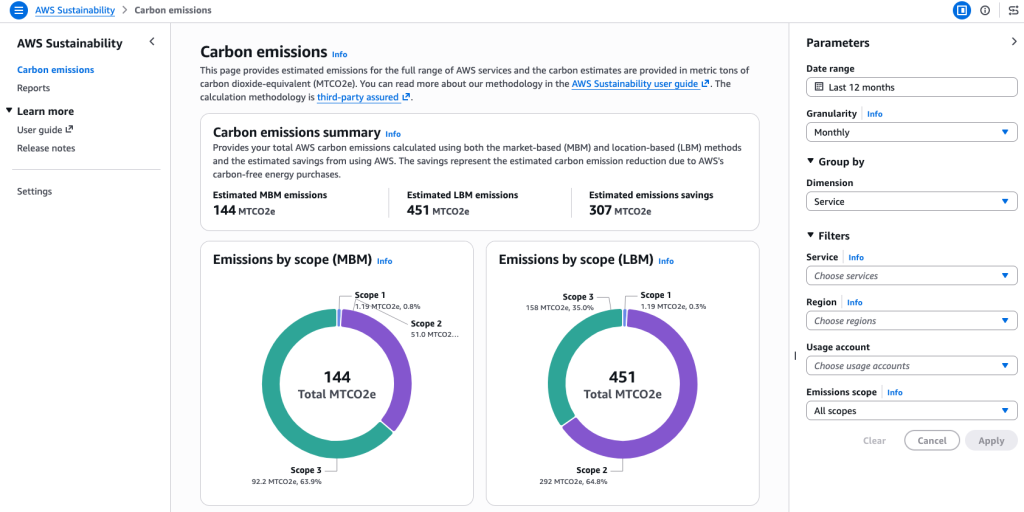
AWS has indicated that the Sustainability Console is designed to evolve, with plans to continuously release new features and expand its capabilities based on customer feedback and emerging industry needs. This commitment to ongoing development suggests a long-term vision for the console as a central hub for all cloud-related sustainability management.
The AWS Sustainability Console is available immediately, accessible directly from the AWS Management Console. Users can begin exploring their emissions trends right away, as historical data is available going back to January 2022. This immediate access to historical data allows organizations to establish baselines, analyze past performance, and identify trends crucial for setting future sustainability goals.
The combination of a user-friendly visual console, flexible reporting options, and a powerful API provides customers with unprecedented control and insight into their cloud carbon footprint. By democratizing access to this critical data and integrating it into daily workflows, AWS is not only reinforcing its own sustainability commitments but also equipping its global customer base with the tools necessary to build a more sustainable future in the cloud. This initiative underscores the growing imperative for technology providers to offer tangible solutions that enable their customers to meet their environmental responsibilities effectively.
