

Amazon Web Services has officially announced the general availability of Cluster Mode for AWS Elastic Beanstalk, marking a significant evolution in how organizations manage distributed application portfolios at scale. Fifteen years after the initial debut of Elastic Beanstalk in 2011—a service designed to abstract infrastructure operations away from developers writing in Java, .NET, Python, Node.js, PHP, Ruby, and Go—AWS is fundamentally upgrading the platform’s operational engine. The newly introduced Cluster Mode leverages Amazon Elastic Kubernetes Service (Amazon EKS) to offer a unified, fully managed infrastructure layer. This allows engineering teams to deploy, scale, patch, monitor, and upgrade multiple microservices and workloads under a single operational baseline, dramatically reducing administrative overhead and per-application resource costs as portfolios grow.
A Decade and a Half of Evolution: From Simple Deploys to Intelligent Automation
Since its inception, AWS Elastic Beanstalk has served as a cornerstone for developers seeking to bypass the complexities of provisioning servers, load balancers, and scaling groups. By shouldering the burden of routine infrastructure maintenance, the service allowed countless startups and enterprise teams to focus squarely on core business logic. Over the past fifteen years, however, the architectural requirements of modern software development have shifted dramatically. The monolithic and single-stack environments of the early 2010s have largely given way to complex, containerized microservices architectures built on top of orchestrators like Kubernetes.
Recognizing this paradigm shift, AWS has systematically overhauled the foundational architecture of Elastic Beanstalk. Recent months have seen the rollout of a series of robust capabilities designed to modernize the platform. Among these are AI-powered environment analysis tools capable of automatically diagnosing health issues and suggesting precise fixes, as well as native GitHub Action integrations that enable seamless deployments directly from existing CI/CD pipelines via simple YAML configurations. Furthermore, the underlying infrastructure has been rebuilt to incorporate OpenTelemetry-based observability, advanced traffic-splitting deployments with automated rollback mechanics, event-driven autoscaling capabilities, streamlined secrets management through AWS Secrets Manager, and HTTPS enabled by default via AWS Certificate Manager.
The launch of Cluster Mode represents the culmination of these engineering efforts, bridging the gap between the extreme simplicity of traditional Beanstalk deployments and the enterprise-grade power and flexibility of Kubernetes.
Architecture and Mechanics of Cluster Mode
At its core, Elastic Beanstalk Cluster Mode is engineered specifically for organizations operating a diverse portfolio of applications rather than isolated single-stack workloads. Historically, running multiple discrete applications often necessitated maintaining separate operational pipelines, monitoring setups, and resource allocations, which could quickly introduce administrative friction and bloat infrastructure expenses.

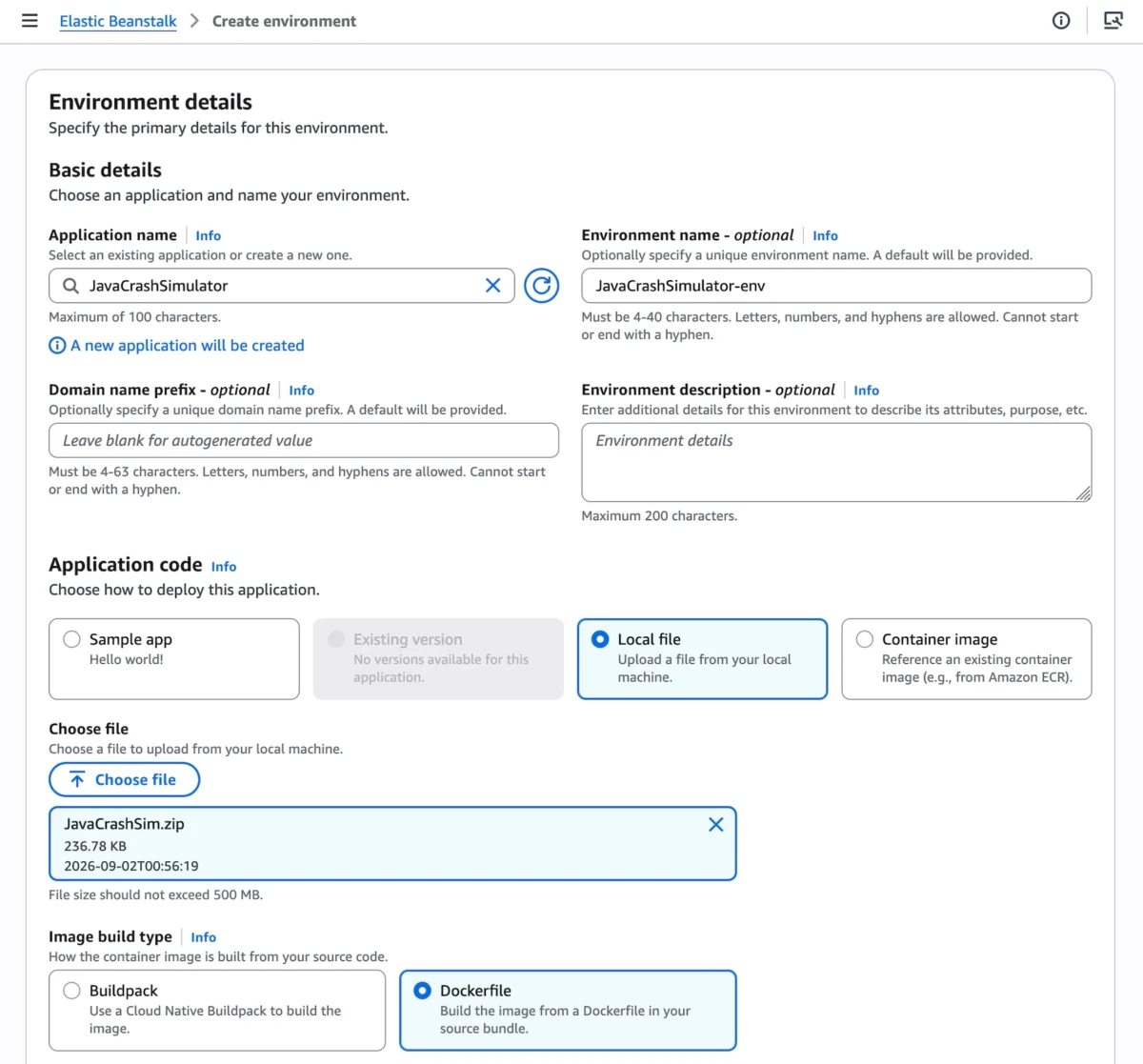
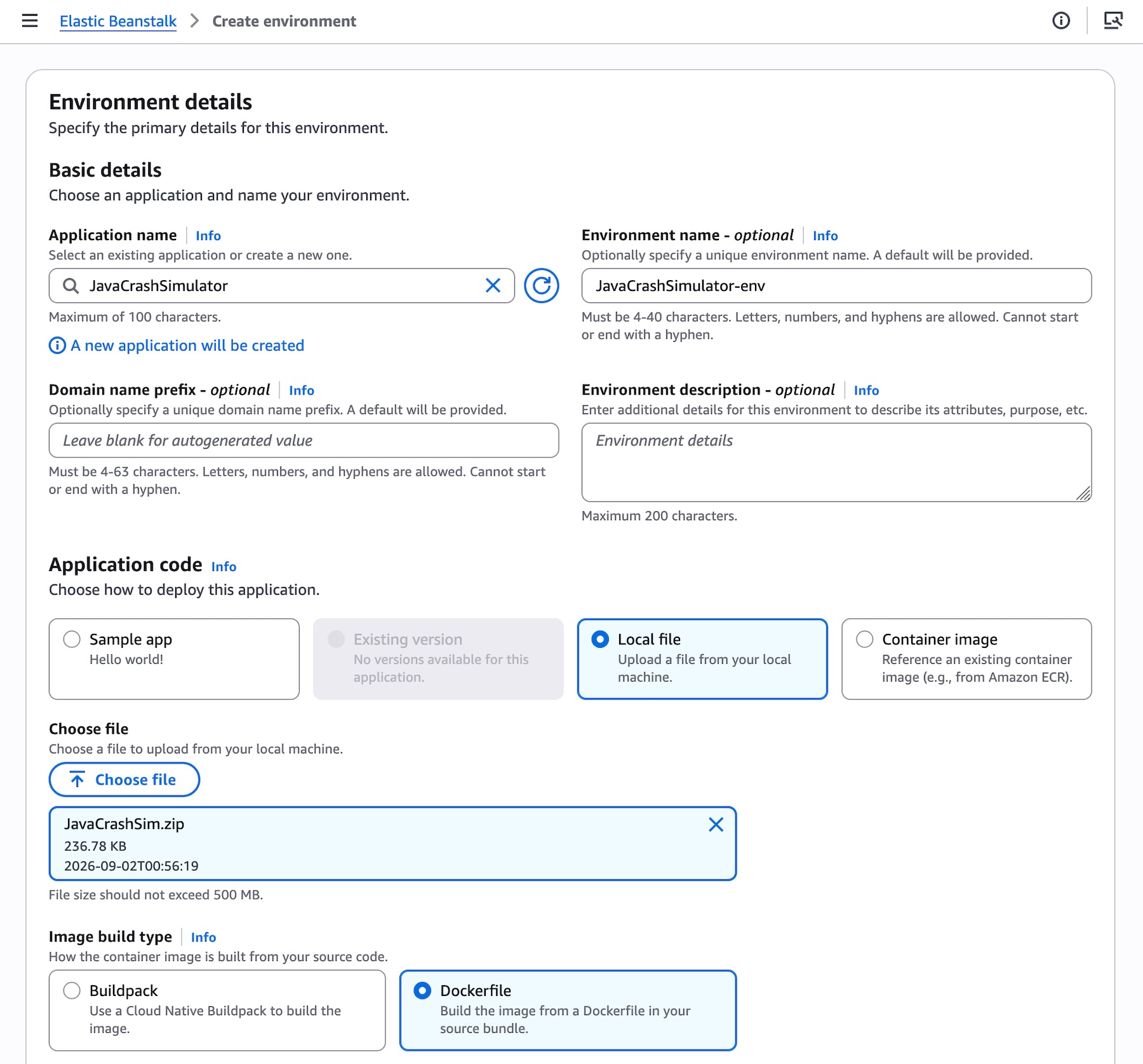
With Cluster Mode, multiple applications and microservices can share a unified infrastructure powered by Amazon EKS while retaining distinct configuration boundaries. Teams can bring their workloads in whatever format best suits their current development lifecycle—whether that involves raw source code, Dockerfiles, or pre-built container images stored in repositories such as Amazon Elastic Container Registry (Amazon ECR).
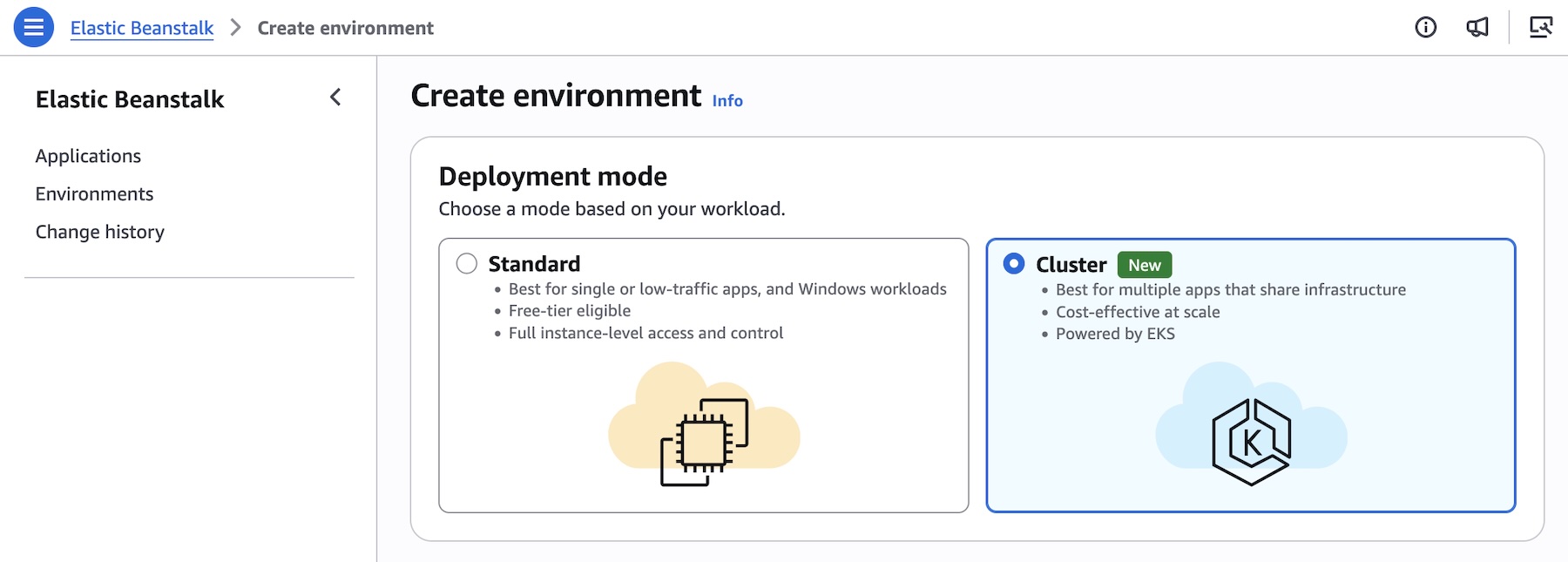
When initiating a deployment via the Elastic Beanstalk console, developers simply select Cluster within the deployment type parameters. Upon initial creation across a designated set of subnets, the service automatically provisions the underlying EKS cluster—a process that typically requires approximately ten minutes. Subsequent deployments and updates execute substantially faster by leveraging the pre-existing cluster architecture.
For teams relying on automation, the provisioning and lifecycle management of these environments can be executed programmatically via the AWS Command Line Interface (AWS CLI), the specialized EB CLI, or standard AWS SDKs. Complex microservices architectures—spanning distinct frontend interfaces, cart services, payment processors, and shipping engines—can be registered as discrete application versions and assigned granular configurations. For instance, ingress components like Application Load Balancers (ALBs) can be configured selectively for internet-facing services, while internal microservices remain securely isolated. Concurrently, precise resource boundaries, including CPU allocations, memory limits, and autoscaling replicas, can be defined via straightforward JSON namespaces.
Coexistence with Standard Mode and Migration Pathways
To ensure a frictionless transition for existing customers, AWS has confirmed that Elastic Beanstalk Standard Mode—powered by Amazon Elastic Compute Cloud (EC2)—will remain fully supported and operational. Standard Mode and the new Cluster Mode are designed to run side by side within the same Elastic Beanstalk application structure. This architectural decision enables engineering organizations to migrate their legacy environments incrementally at their own preferred pace, rather than being forced into disruptive, wholesale platform shifts.
Before any changes or migrations are executed, automated validation checks assess compatibility to ensure that existing workloads will transition smoothly. AWS emphasizes that Standard Mode remains an optimal fit for specific monolithic or traditional stateful workloads that do not naturally map onto container orchestration paradigms. By supporting both deployment models concurrently, AWS provides a flexible continuum that accommodates diverse architectural maturity levels across different enterprise teams.
Industry Implications and Expert Analysis
Cloud computing analysts and industry observers have noted that the introduction of Cluster Mode addresses a persistent friction point in enterprise IT: the operational overhead of managing containerized fleets. While Kubernetes offers unmatched scalability and portability, its steep learning curve and day-two operational demands—such as cluster upgrades, security patching, and ingress management—often require dedicated platform engineering teams.
By wrapping Amazon EKS inside the familiar, highly automated management wrapper of Elastic Beanstalk, AWS is effectively democratizing Kubernetes for development teams that lack specialized cluster administrators. This abstraction layer allows developers to harness the resilience and density of Kubernetes without needing to write or maintain complex raw manifests, Helm charts, or custom continuous deployment pipelines. Consequently, smaller engineering organizations can punch above their weight, deploying highly distributed, resilient microservices architectures with the operational safety nets traditionally reserved for large technology enterprises.
Furthermore, the integration of advanced observability via OpenTelemetry and automated AI-driven diagnostics reflects a broader industry trend toward self-healing, artificially assisted cloud infrastructure. As organizations face mounting pressure to optimize cloud spend, the resource-sharing efficiencies inherent in Cluster Mode provide a compelling economic argument. By pooling workloads onto shared EKS clusters managed under a single operational baseline, per-application infrastructure costs scale down efficiently as the application portfolio expands.
Regional Availability, Pricing, and Getting Started
AWS Elastic Beanstalk Cluster Mode is generally available immediately across all commercial AWS Regions where Elastic Beanstalk is currently supported. Organizations seeking detailed regional roadmaps or specific capability matrices can consult the AWS Capabilities by Region portal. Additionally, development teams looking to interact programmatically with documentation, retrieve API specifications, or troubleshoot deployment anomalies can utilize the AWS MCP Server and associated plugins within their preferred AI-assisted development tools.
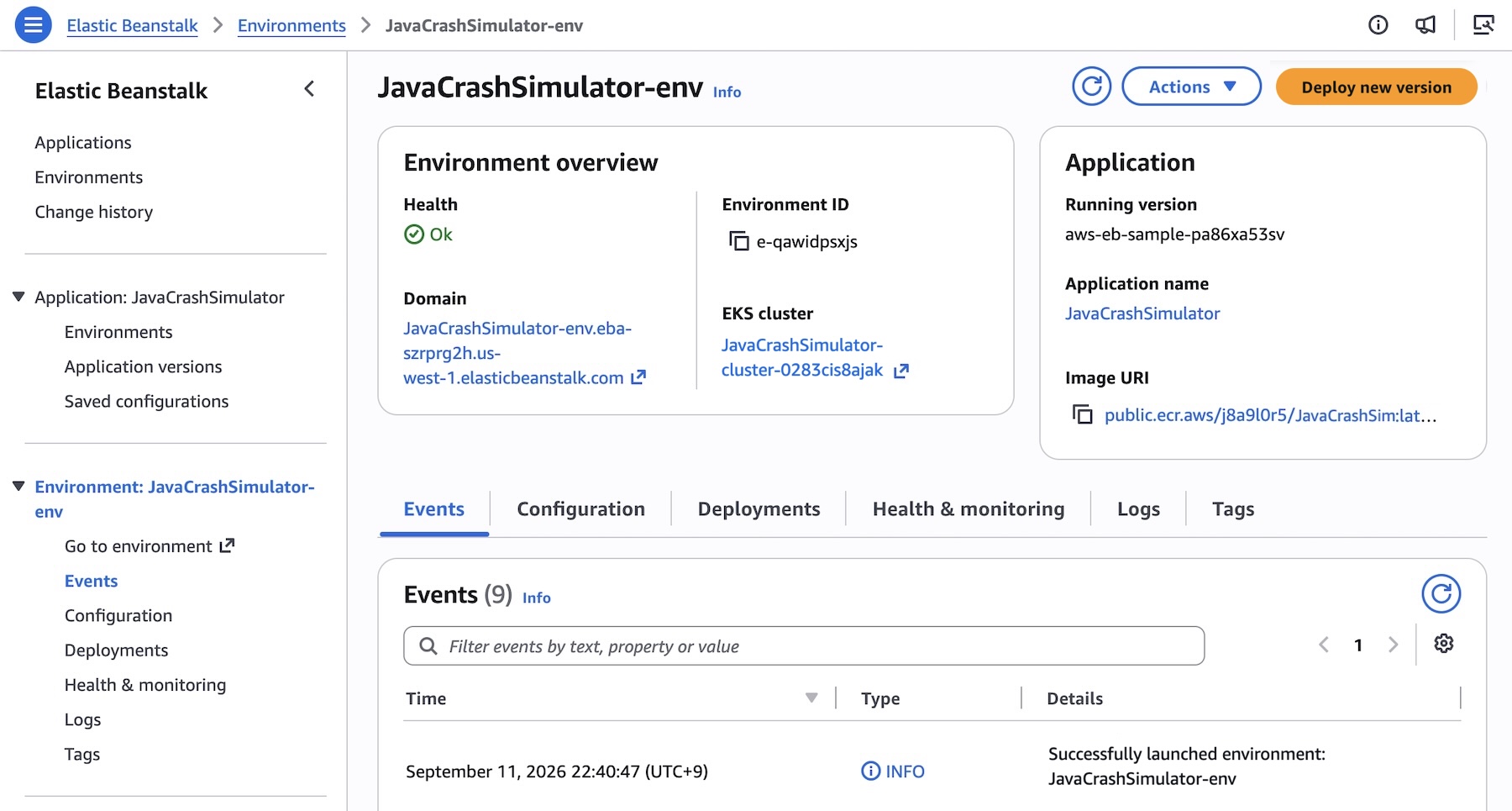
Regarding pricing economics, AWS has structured Cluster Mode to ensure transparent resource consumption. There is no additional software surcharge specifically for utilizing Elastic Beanstalk Cluster Mode. Instead, customers pay strictly for the underlying AWS resources consumed by their applications. This includes standard fees associated with the EKS control plane, EKS Auto Mode compute resources, Amazon ECR storage, and Amazon CloudWatch telemetry. Prospective users should note that Elastic Beanstalk Cluster Mode is not eligible for the AWS Free Tier. Comprehensive pricing details and cost calculators are accessible via the official AWS Elastic Beanstalk Pricing page.
Engineering teams interested in evaluating the new capability can initiate deployments directly through the AWS Elastic Beanstalk Management Console. Community feedback, architectural discussions, and peer troubleshooting for the new feature are actively supported through AWS re:Post for AWS Elastic Beanstalk, alongside traditional enterprise AWS Support channels.
