

Amazon Web Services (AWS) today announced the launch of the next generation of AWS Resilience Hub, a significant expansion designed to empower organizations in achieving and maintaining robust application availability and operational resilience. This advanced offering integrates a new application model, sophisticated dependency discovery assessment, generative AI-powered failure mode analysis, modular resilience policies, and comprehensive organization-wide reporting, setting a new benchmark for managing application uptime at enterprise scale.
The Imperative of Resilience in Modern Enterprises
In an era defined by digital transformation and ever-increasing reliance on cloud-native applications, maintaining high availability and resilience has become a paramount concern for businesses across all sectors. Downtime, even for a few minutes, can translate into substantial financial losses, severe reputational damage, customer churn, and potential regulatory penalties. Industry reports frequently highlight the staggering costs associated with outages; some estimates place the average cost of an hour of downtime for large enterprises in the millions of dollars, not including the intangible costs of lost trust and productivity.
Despite this critical need, many organizations, particularly those operating hundreds or thousands of applications, face significant hurdles in consistently defining resilience goals, measuring progress, and demonstrating compliance across their vast and often heterogeneous portfolios. Teams frequently operate in silos, employing disparate tools and standards, leading to a fragmented view of resilience posture and making it arduous to ascertain whether applications genuinely meet desired expectations. This inconsistency not only introduces operational risk but also impedes innovation and increases the overhead for Site Reliability Engineers (SREs) and development teams.
The evolution of AWS Resilience Hub directly addresses these complex challenges. The initial iteration of Resilience Hub provided foundational capabilities for assessing and improving application resilience. However, the next generation represents a strategic leap, moving beyond individual resource assessment to a holistic, enterprise-wide framework that leverages advanced technologies like artificial intelligence to proactively identify and mitigate risks. It aims to bridge the gap between policy definition and actual implementation, enabling a structured and scalable approach to operational resilience.
A Unified Framework for Enterprise Resilience
The next generation of AWS Resilience Hub is engineered to provide SREs and development teams with a cohesive and structured methodology. This enables them to align on resilience policy expectations, empowers application teams to meet these standards, and facilitates the demonstration of compliance through rigorous testing and continuous assessment. Crucially, its deep integration with AWS Organizations allows enterprises to evaluate resilience at an unprecedented scale, uncover subtle failure modes, detect previously hidden dependencies, and generate comprehensive reports on progress across the entire organizational footprint.

This unified approach is built around several core concepts that guide users through their resilience journey:
- New Application Model: Shifting from a resource-centric view, the new model allows for the logical grouping of related applications into "systems" and their constituent "services." This mirrors how businesses actually operate, providing a more intuitive and manageable framework for resilience assessment.
- Dependency Discovery Assessment: A critical enhancement, this feature automatically identifies the intricate web of interdependencies between resources and services. Many outages stem from failures in unseen or misunderstood dependencies, and this automated discovery mitigates that risk significantly.
- Generative AI-powered Failure Mode Analysis: Leveraging the power of generative AI, this feature intelligently analyzes application configurations, topologies, and operational data to predict potential failure modes and their cascading effects. It moves beyond rule-based checks to provide more nuanced and context-aware insights.
- Modular Resilience Policies: Organizations can now define granular, reusable resilience policies with specific Service Level Objectives (SLOs), Recovery Time Objectives (RTOs), and Recovery Point Objectives (RPOs). These policies can be tailored for different application tiers or business criticality, promoting standardization and consistency.
- Organization-Wide Reporting: Through integration with AWS Organizations, the hub provides a consolidated view of resilience posture across all accounts within an enterprise. This simplifies compliance reporting and provides senior leadership with a clear, actionable overview of their resilience landscape.
Putting the Next-Generation AWS Resilience Hub into Action
The journey with the next generation of AWS Resilience Hub begins with foundational setup and moves through policy definition, system creation, assessment, and remediation.
1. Initial Setup and Governance:
Before diving into assessments, organizations must configure the necessary AWS Identity and Access Management (IAM) roles. This includes the invoker IAM role, which grants Resilience Hub read-only access to AWS resources. For multi-account environments, cross-account roles are established if not utilizing AWS Organizations, or Service-Linked Roles (SLRs) are deployed with AWS Organizations. A key feature for large enterprises is the ability to enable organization-wide resilience management from a single delegated administrator account within AWS Organizations. This eliminates the need for SREs or administrators to log into individual accounts, centralizing resilience posture assessment and management across the entire enterprise. Detailed prerequisites are available in the AWS Resilience Hub User Guide.
2. Defining Resilience Policies:
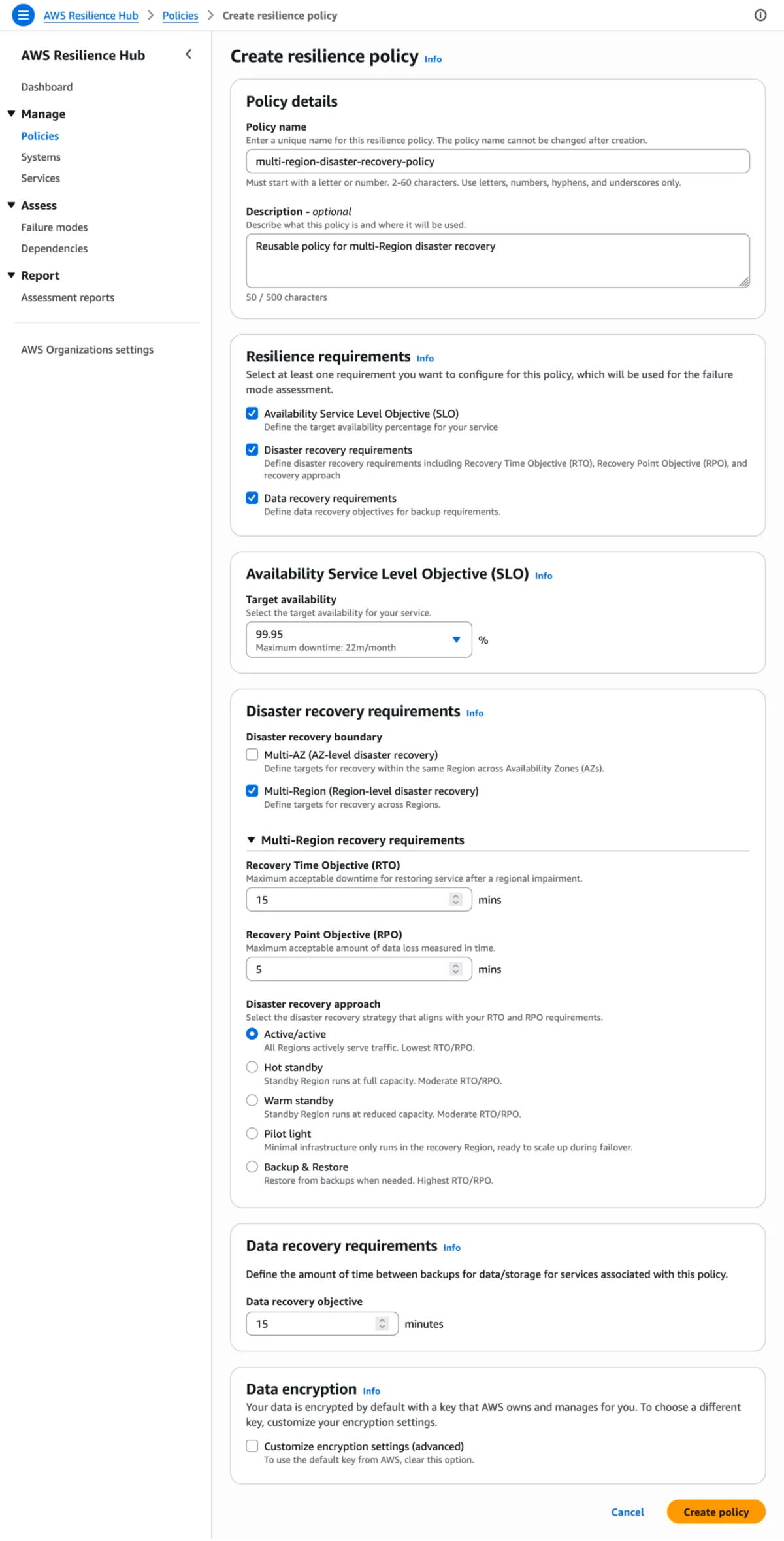
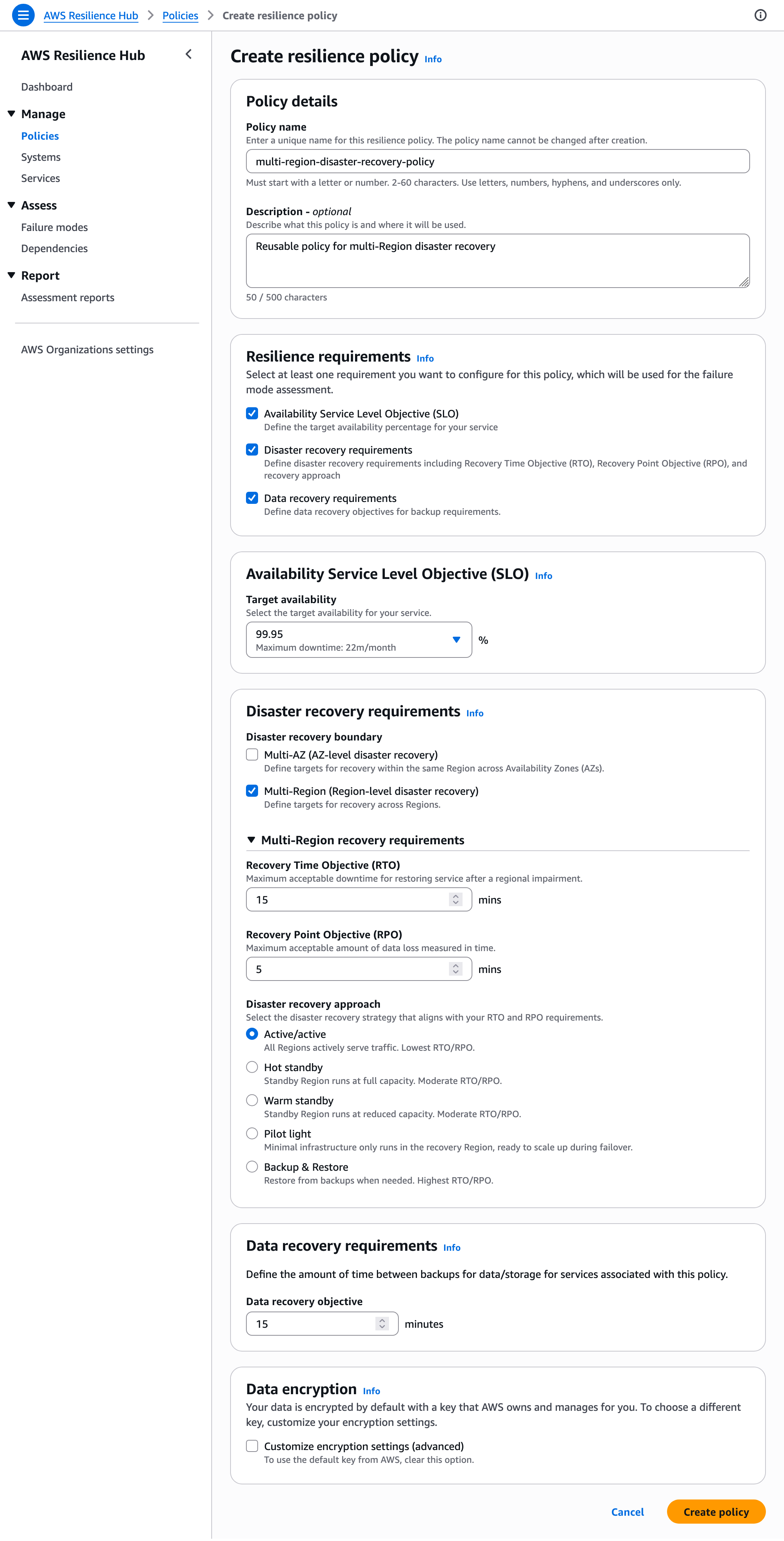
The first practical step involves configuring a resilience policy through the AWS Resilience Hub console. Users define a policy name, provide a description, and select their specific resilience requirements. For instance, an organization might create a reusable policy for mission-critical financial applications requiring multi-Region disaster recovery, stipulating a 99.95% availability SLO, a 15-minute RTO, and a 5-minute RPO. This modular approach allows for the creation of distinct policies tailored to varying business criticality and disaster recovery strategies. If data recovery is a requirement, the policy allows for the definition of data recovery time objectives (RTOs) for restoring from backups for each associated service.
3. Establishing Systems and Services:
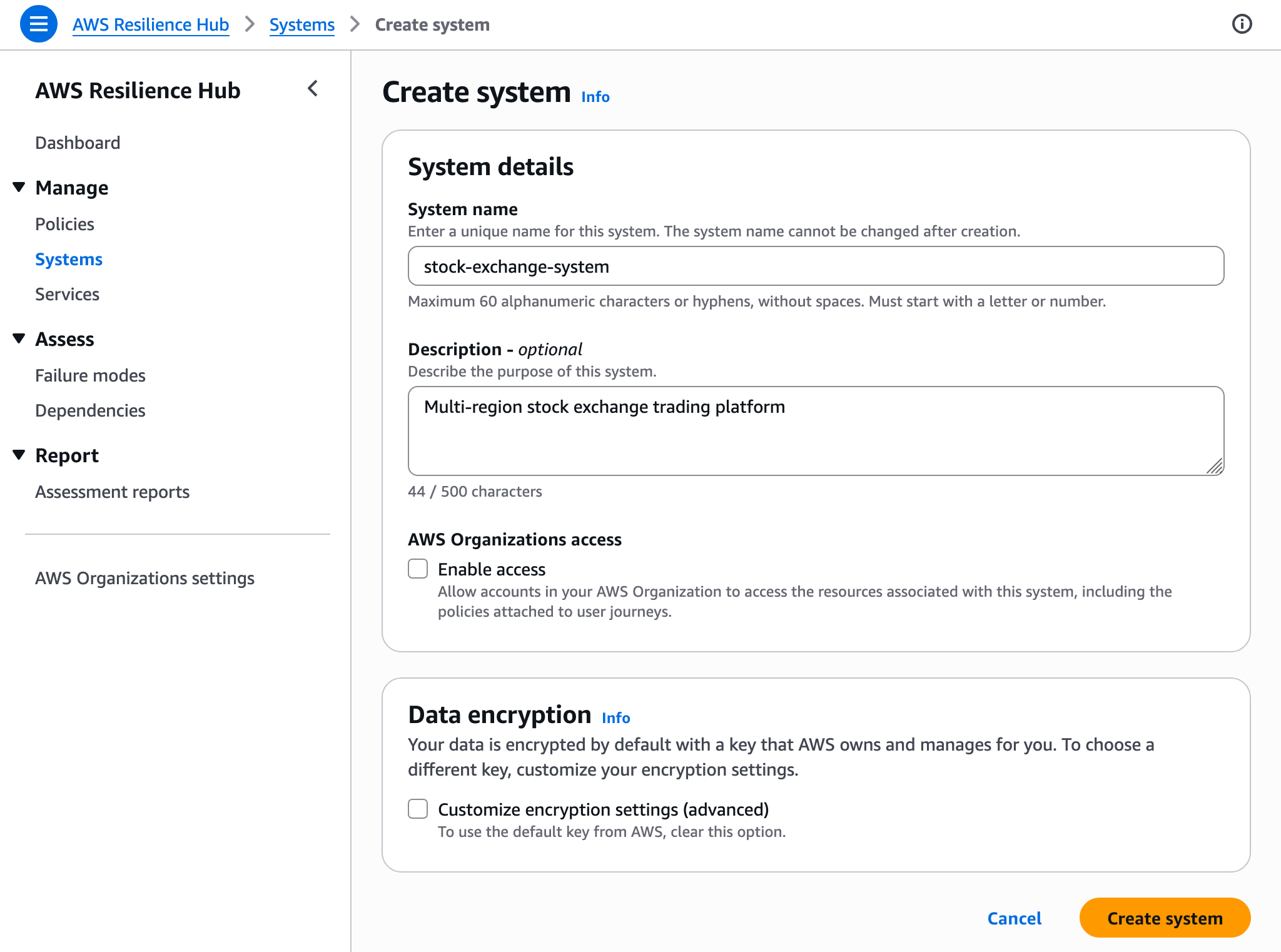
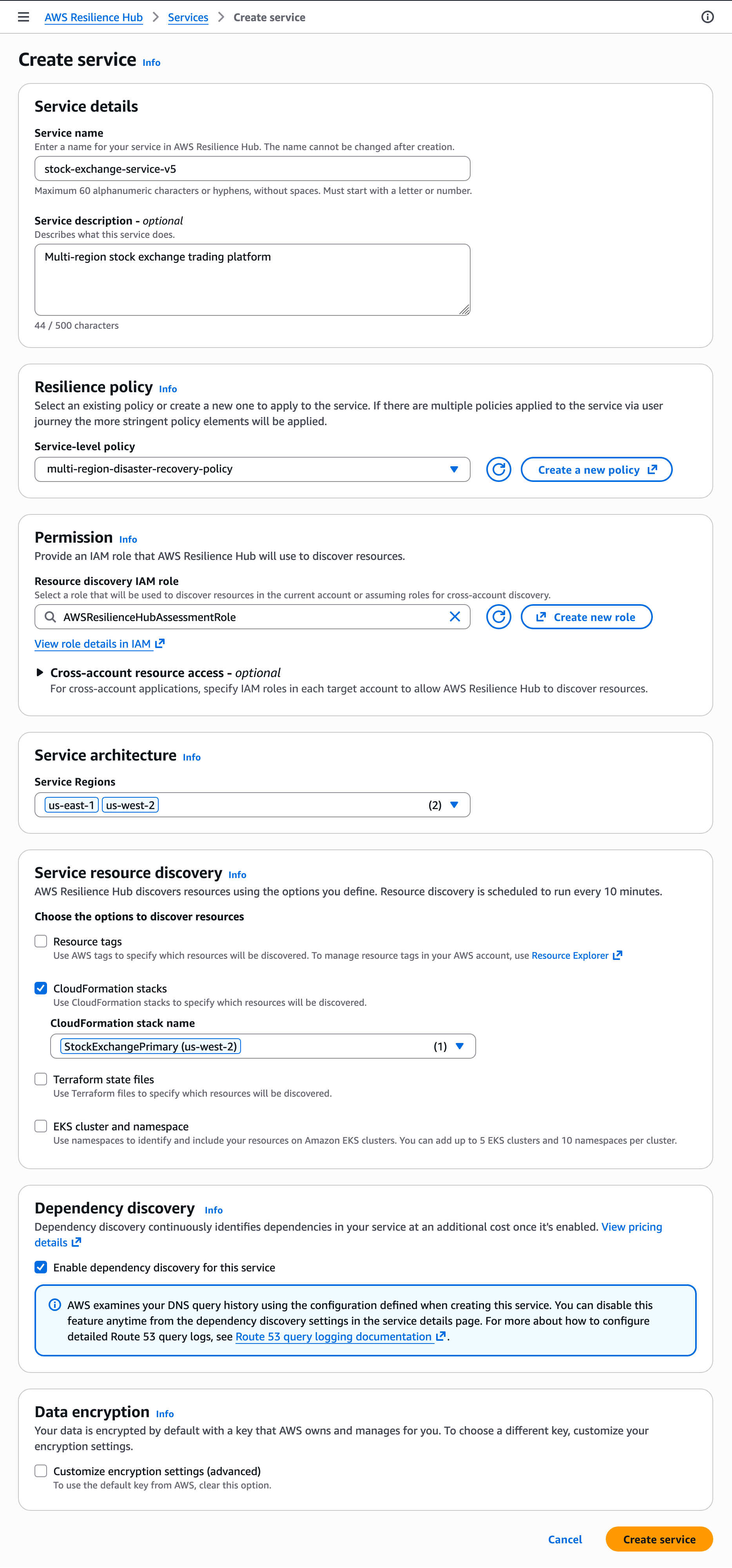
The new application model introduces the concepts of "systems" and "services." Users create a "system" to represent a business application or a logical grouping of related applications. Optionally, AWS Organizations account access can be enabled for this system, further streamlining multi-account management. Within each system, "services" are created, representing deployable units such as microservices or distinct application components. When creating a service, users specify its name (e.g., stock-exchange-service), associate it with a predefined resilience policy, and provide the invoker AWS IAM role name. Crucially, users also tell Resilience Hub where to find the service’s resources, which can be defined via resource tags, AWS CloudFormation stacks, Terraform state file locations, or Amazon EKS clusters and namespaces.
4. Activating Dependency Discovery:
A significant advancement is the ability to enable dependency discovery for each service. Upon activation, AWS intelligently examines Virtual Private Cloud (VPC) query logs associated with the resources within the service. This process automatically maps connections between resources, identifying hidden dependencies that might otherwise go unnoticed. This automated mapping of application topology, including data flow, containment relationships, and permissions, is vital for a comprehensive understanding of potential failure points. This feature can be disabled at any time from the service details page.
5. Executing Failure Mode Assessments:
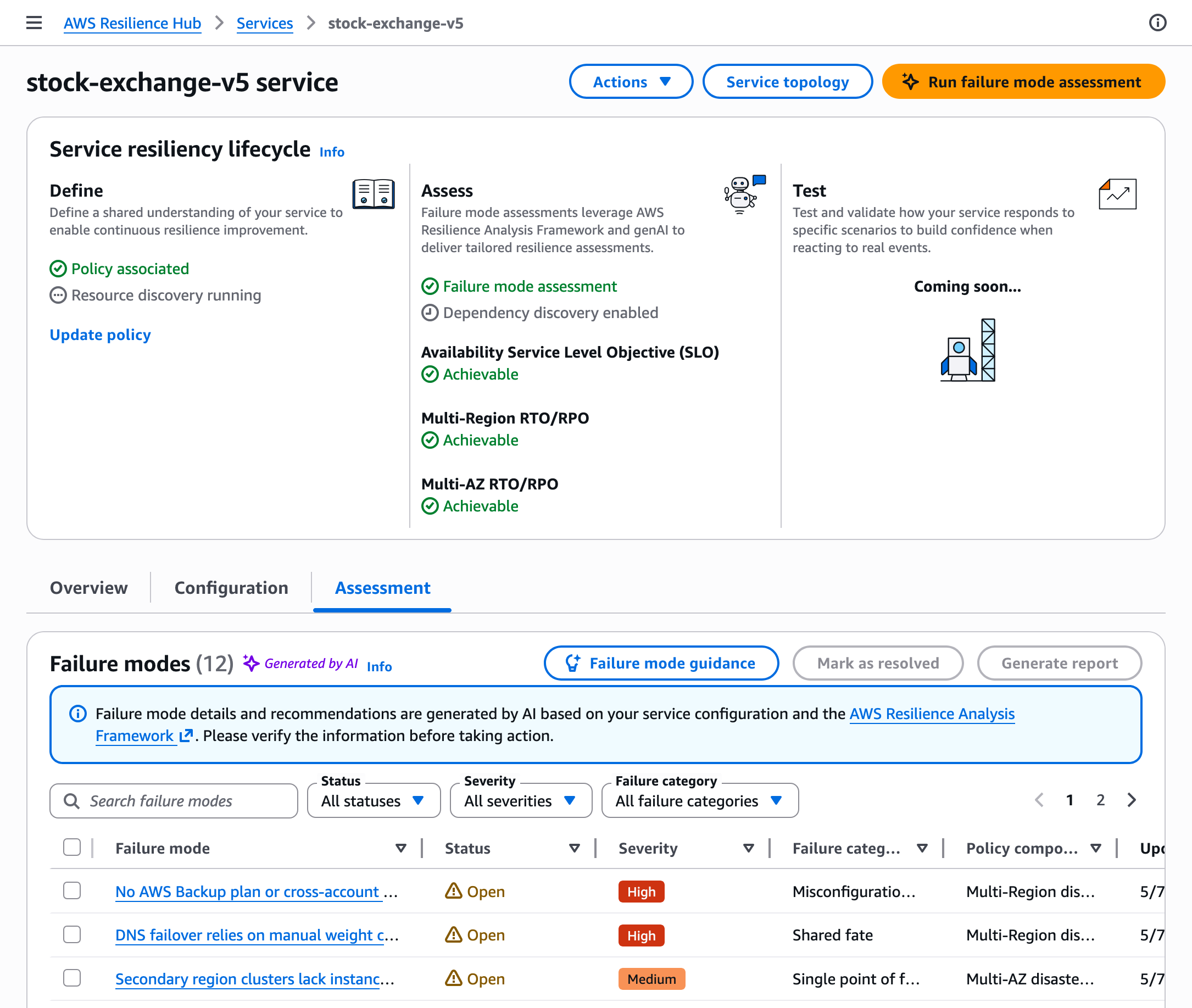
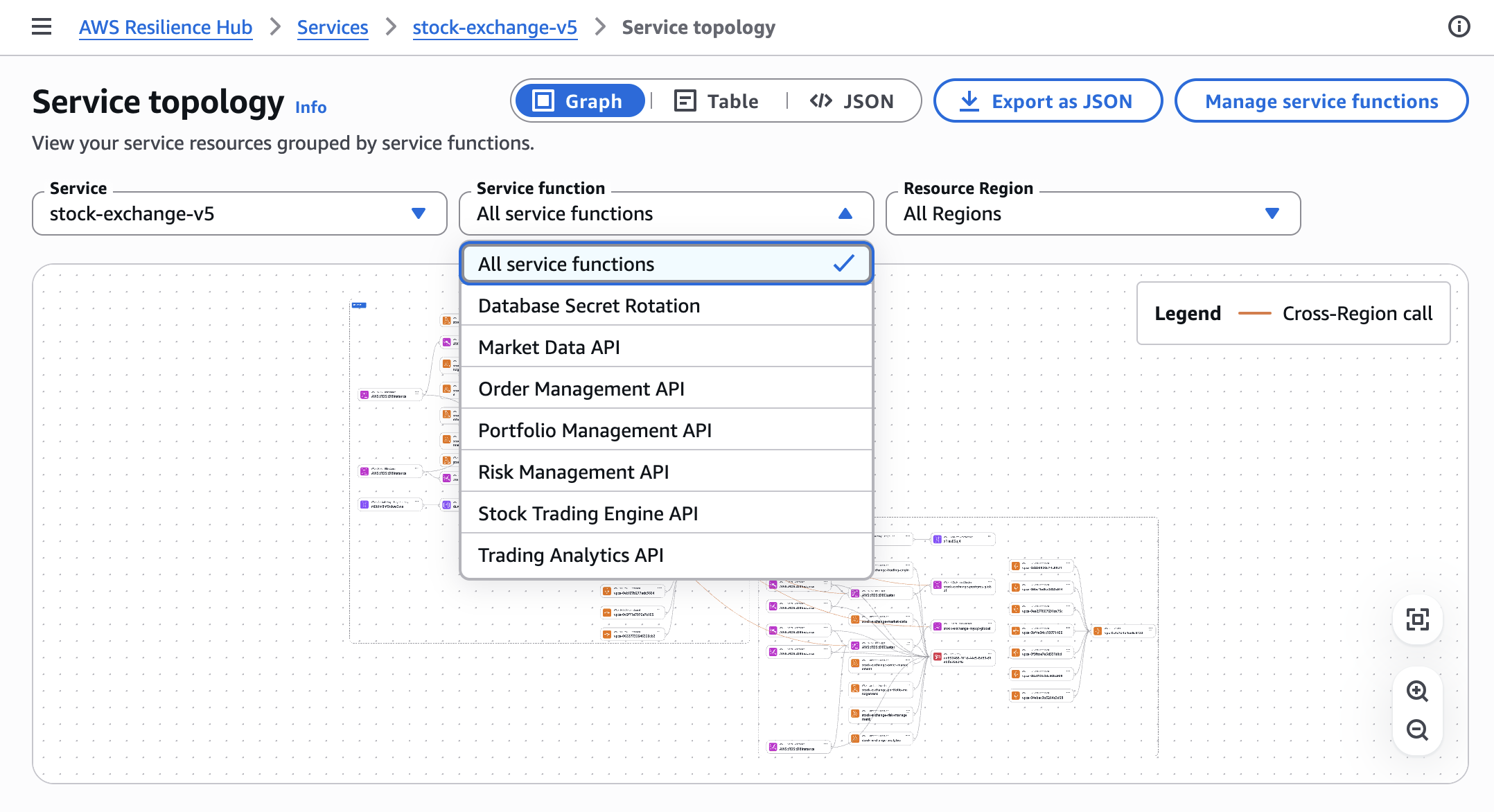
Once a service is created and a policy applied, the core assessment process can be initiated by selecting "Run failure mode assessment" from the service page. During this assessment, Resilience Hub assumes the configured invoker role, reads resources from the specified input sources, identifies parent-child relationships, and queries the application topology service. The result is a detailed topology view, available in graph, table, or JSON format, showing service resources grouped by their functions. Users can also leverage "Failure mode guidance," which involves adding assertions—either generated by the AI agent or manually added by users—to guide the assessment and improve its accuracy.
6. Reviewing Findings and Implementing Remediation:
Upon completion of the assessment, findings and recommendations are presented in the "Assessment" tab of the service page. Each finding is highly actionable, detailing the specific failure mode, explaining its significance for the architecture, providing clear steps on how to fix it, and explicitly linking it to a relevant policy requirement. Users can then choose to "Mark as resolved" once a recommendation has been implemented or "Mark as irrelevant" if a finding does not apply to their specific use case, ensuring a tailored and practical approach to resilience improvement.
Migration for Existing Customers
For organizations already utilizing the previous version of AWS Resilience Hub, AWS has provided migration APIs to ensure a seamless transition. These APIs are designed to convert existing assessment policies into the new modular resilience policies and map previous applications to the updated system and service model. This facilitates a smooth upgrade path, allowing existing users to leverage the enhanced capabilities without rebuilding their resilience posture from scratch.
Broader Impact and Strategic Implications
The release of the next generation of AWS Resilience Hub carries significant implications for businesses, the cloud industry, and the broader landscape of operational excellence.
For Businesses:
- Reduced Downtime and Costs: By proactively identifying and mitigating failure modes with AI-driven insights and comprehensive dependency mapping, organizations can significantly reduce the incidence and duration of costly outages.
- Enhanced Compliance and Governance: The unified policy framework and organization-wide reporting capabilities simplify the process of meeting stringent regulatory requirements and internal governance standards, providing auditable proof of resilience.
- Accelerated Innovation: With a standardized and automated approach to resilience, development teams can focus more on building new features and innovating, confident that the underlying operational robustness is being systematically managed.
- Improved Operational Efficiency: Automating complex assessment processes frees up valuable time for SREs and operational teams, allowing them to concentrate on strategic initiatives rather than manual, repetitive tasks.
- Data-Driven Decision-Making: The hub provides actionable data and insights into an organization’s resilience posture, enabling leaders to make informed decisions about resource allocation, architectural improvements, and risk management.
For the Cloud Industry:
This release sets a new standard for resilience tooling in the cloud. It underscores the growing trend of integrating advanced AI capabilities directly into cloud management services, moving beyond reactive monitoring to proactive, predictive operational intelligence. It highlights AWS’s commitment to providing comprehensive solutions that address the full lifecycle of application management, from development to resilient operation.
Competitive Landscape and Future Outlook:
By offering a deeply integrated, AI-powered, and organization-wide resilience management solution, AWS further solidifies its position as a leader in cloud infrastructure and services. This advancement will likely spur further innovation in the competitive cloud market, pushing other providers to enhance their own resilience offerings. Looking ahead, the foundation laid by this next generation suggests a future where cloud environments could move towards more predictive resilience, potentially even self-healing systems, further minimizing human intervention in maintaining uptime.
Statements from Stakeholders
"The next generation of AWS Resilience Hub represents a significant leap forward in empowering our customers to build and maintain highly available and resilient applications," stated an AWS spokesperson, emphasizing the strategic importance of the update. "By integrating generative AI, automating dependency discovery, and providing a unified organizational view, we’re not just offering a tool, but a comprehensive framework for operational excellence that scales with the most complex enterprises."
Echoing this sentiment, a hypothetical SRE lead from a global financial institution commented, "For SRE teams grappling with complex, distributed systems and stringent regulatory demands, this update is a game-changer. The ability to consistently define policies, automatically uncover hidden risks, and get AI-driven remediation guidance across our entire application portfolio will dramatically improve our uptime, streamline our compliance efforts, and free up valuable engineering time to focus on strategic initiatives."
Availability and Pricing
The next generation of AWS Resilience Hub is now generally available in all AWS commercial Regions where Resilience Hub is currently offered. For detailed information on regional availability and the future roadmap, interested parties can consult the AWS Capabilities by Region page.
AWS has also introduced a new service-based pricing model for the updated Resilience Hub. This model includes two failure mode assessments per month for services, with optional automated dependency assessment. To encourage adoption, AWS offers a free tier, allowing organizations to experience the benefits of the new Resilience Hub capabilities. Comprehensive pricing details are available on the AWS Resilience Hub pricing page.
Organizations are encouraged to explore the new capabilities of AWS Resilience Hub via the Resilience Hub console and provide feedback through AWS re:Post for Resilience Hub or their established AWS Support channels. This continuous feedback loop ensures that the service evolves to meet the dynamic needs of modern enterprises striving for unparalleled operational resilience.
