

Amazon Web Services (AWS) has unveiled a groundbreaking new capability within its AWS WAF (Web Application Firewall) service, designed to empower digital content owners and publishers with a novel method for monetizing access to their protected web content by AI bots and agents directly at the network edge. This significant development addresses a growing challenge in the digital publishing landscape, allowing content providers to establish per-request pricing based on content path, bot category, or verification tier without requiring modifications to their origin infrastructure or writing complex application code. The feature enables granular access policies, facilitates payment collection in stablecoins to a preferred wallet, and offers comprehensive monitoring of revenue and bot activity from a unified dashboard, marking a pivotal shift in how intellectual property is valued and accessed in the age of generative artificial intelligence.
The Evolving Landscape of Web Traffic and AI’s Impact
The digital ecosystem has undergone a dramatic transformation in recent years, with automated bot traffic now constituting a dominant force. For many content providers, AI bot traffic alone now accounts for more than 50% of total web traffic, a figure underscored by an astonishing growth rate of AI-specific crawlers exceeding 300% year-over-year. This surge is largely driven by the proliferation of sophisticated AI models that require vast amounts of data to train and operate, leading them to constantly crawl and consume web content.
Historically, web crawlers, predominantly from traditional search engines, played a crucial role in indexing content, thereby driving measurable referral traffic back to publisher websites. This referral traffic, in turn, translated into page views, ad impressions, and often subscription conversions, which served to offset the considerable infrastructure costs associated with serving web content. However, the new generation of AI bots operates under a fundamentally different paradigm. These advanced agents consume content not to index it for search, but to extract information, generate summaries, and formulate responses directly within AI interfaces, such as chatbots or AI-powered search engines. The critical distinction is that this consumption rarely, if ever, results in referral traffic back to the original source. Consequently, publishers continue to bear the full infrastructure costs of serving this substantial traffic volume, yet they are deprived of the traditional monetization avenues that once justified these expenditures. This economic imbalance has created a pressing need for innovative solutions that enable content owners to reclaim the value of their digital assets.
AWS WAF Bot Control: A Foundation for Monetization
Before the introduction of AI traffic monetization, AWS WAF already provided robust tools for managing automated traffic through its Bot Control feature. Launched to give customers enhanced visibility into bot activity and the ability to mitigate undesirable traffic, AWS WAF Bot Control offered capabilities such as blocking malicious bots or rate-limiting excessive requests. While effective in managing bot behavior, it did not provide a mechanism for content owners to monetize access for legitimate, albeit non-referring, AI agents. The absence of a built-in method for setting pricing and collecting payments from these AI entities represented a significant gap in the digital value chain.
The new AI traffic monetization capability directly addresses this deficiency. It integrates seamlessly with the existing Bot Control framework, leveraging its advanced agent classification system. This means content owners no longer need to build custom payment infrastructure, engage in complex one-off licensing negotiations with AI developers, or modify their core application code. Instead, they can configure pricing rules directly through the intuitive AWS WAF console, with payments from AI agents facilitated through third-party payment integrations. The initial rollout leverages Coinbase’s x402 Facilitator for payment settlement and verification flows, with future plans to integrate Stripe for direct account payments and support for the Machine Payments Protocol (MPP). This strategic integration positions AWS WAF as a critical enabler for a new era of machine-to-machine commerce for digital content.
How AI Traffic Monetization Works: A Technical Overview
The core of AI traffic monetization lies in its ability to classify incoming AI bot requests and apply predefined pricing and access policies at the network edge, specifically for web ACLs associated with Amazon CloudFront distributions. This edge-based implementation minimizes latency and ensures that policies are enforced before requests reach the origin server, optimizing resource utilization.
To begin monetizing, content owners must first ensure that AWS WAF Bot Control is enabled at either the Common or Targeted level on the web ACL linked to their CloudFront distribution. Bot Control’s sophisticated classification engine, which identifies over 650 distinct AI bot and agent types (including prominent names like GPTBot, Claude-Web, and Perplexity-Bot), is fundamental, as monetization rules are contingent upon these classifications. Each identified bot is assigned a verification tier, which typically includes categories such as "Verified Bot," "Unverified Bot," and potentially others based on the bot’s known behavior, reputation, and adherence to web standards.

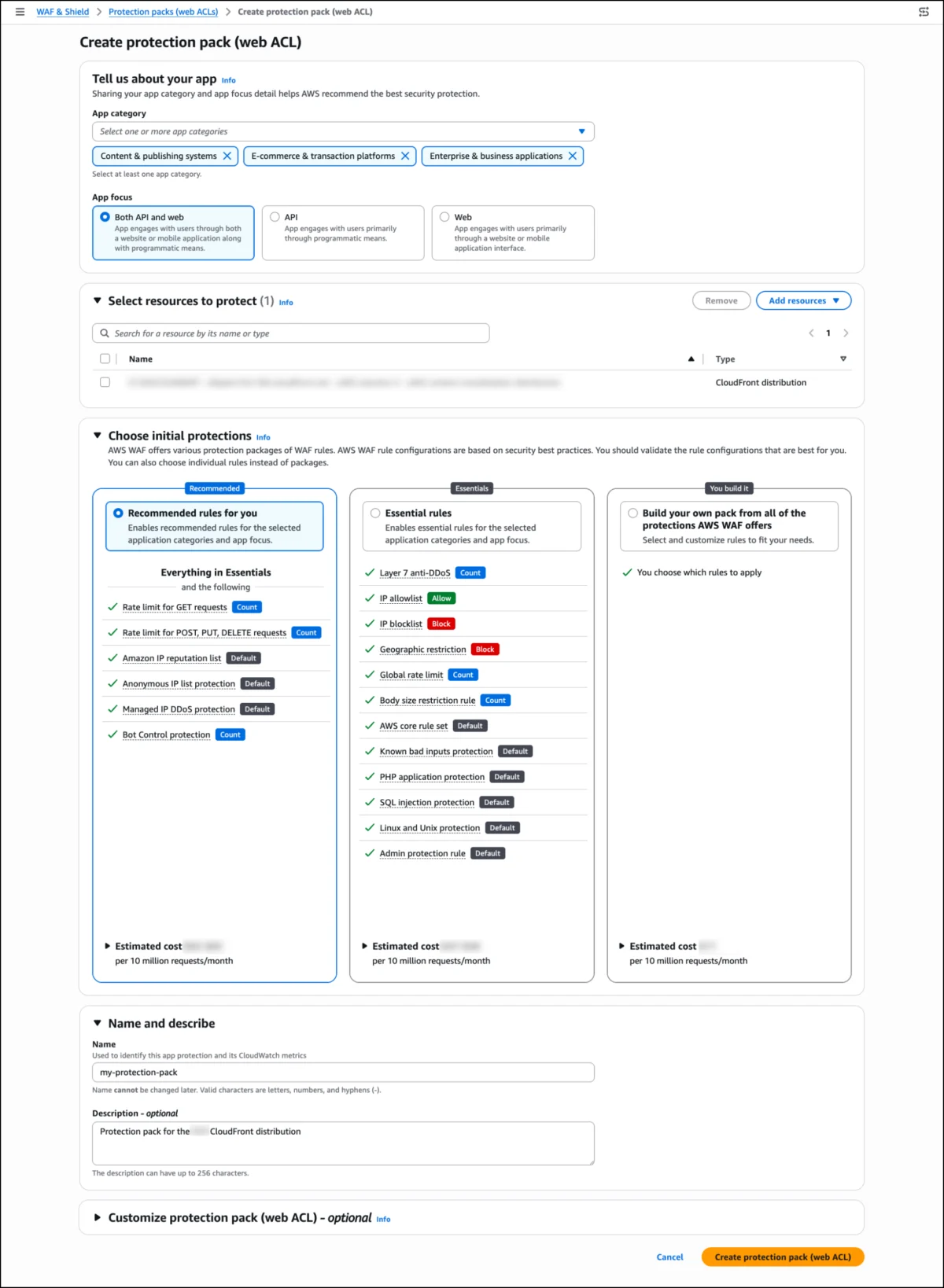
The central configuration unit for AI traffic monetization is the "protection pack." A protection pack allows publishers to define which content paths are subject to monetization, the charges for each agent verification tier, the accepted payment methods, and the applicable license terms. When creating a protection pack, content owners specify app categories (e.g., "Content & publishing systems") and an "App focus," which helps AWS WAF recommend suitable security protections. Resources like CloudFront distributions are then associated with this pack.
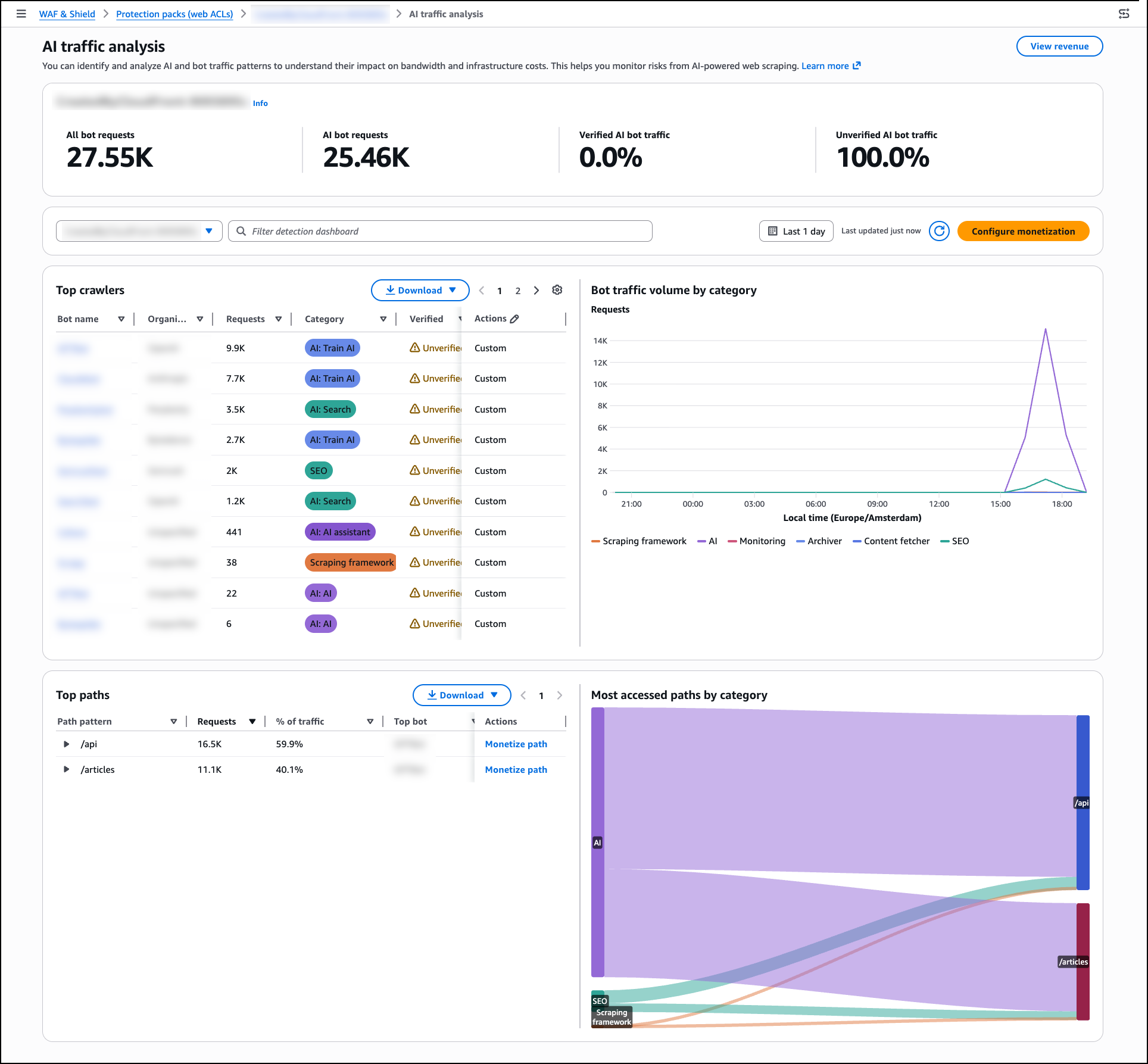
Crucially, the customization options within the protection pack allow for granular control over pricing tiers and payment methods. Before implementing a live pricing strategy, publishers are strongly encouraged to utilize the AI traffic analysis dashboard. This dashboard provides invaluable insights into the impact of AI bot traffic on their content, breaking down requests into categories like "All bot requests," "AI bot requests," "Verified AI bot traffic," and "Unverified AI bot traffic." It also surfaces critical infrastructure impact metrics, including bandwidth consumed, estimated monthly costs, and peak request rates. A per-path heatmap visually represents AI bot activity across different content segments by hour, providing the data necessary for informed, data-driven pricing decisions.
Once traffic patterns are understood, publishers can return to their protection pack settings to configure AI monetization. For each agent verification tier, six distinct actions can be assigned:
- Monetize: This action returns an HTTP 402 Payment Required response, indicating that payment is necessary for access.
- Allow: Grants free access to the content.
- Block: Denies access entirely.
- Count: Logs the request without charging or blocking, useful for analytics.
- CAPTCHA: Presents a human verification challenge.
- Challenge: Runs a silent check to verify the client is a browser, not a bot.
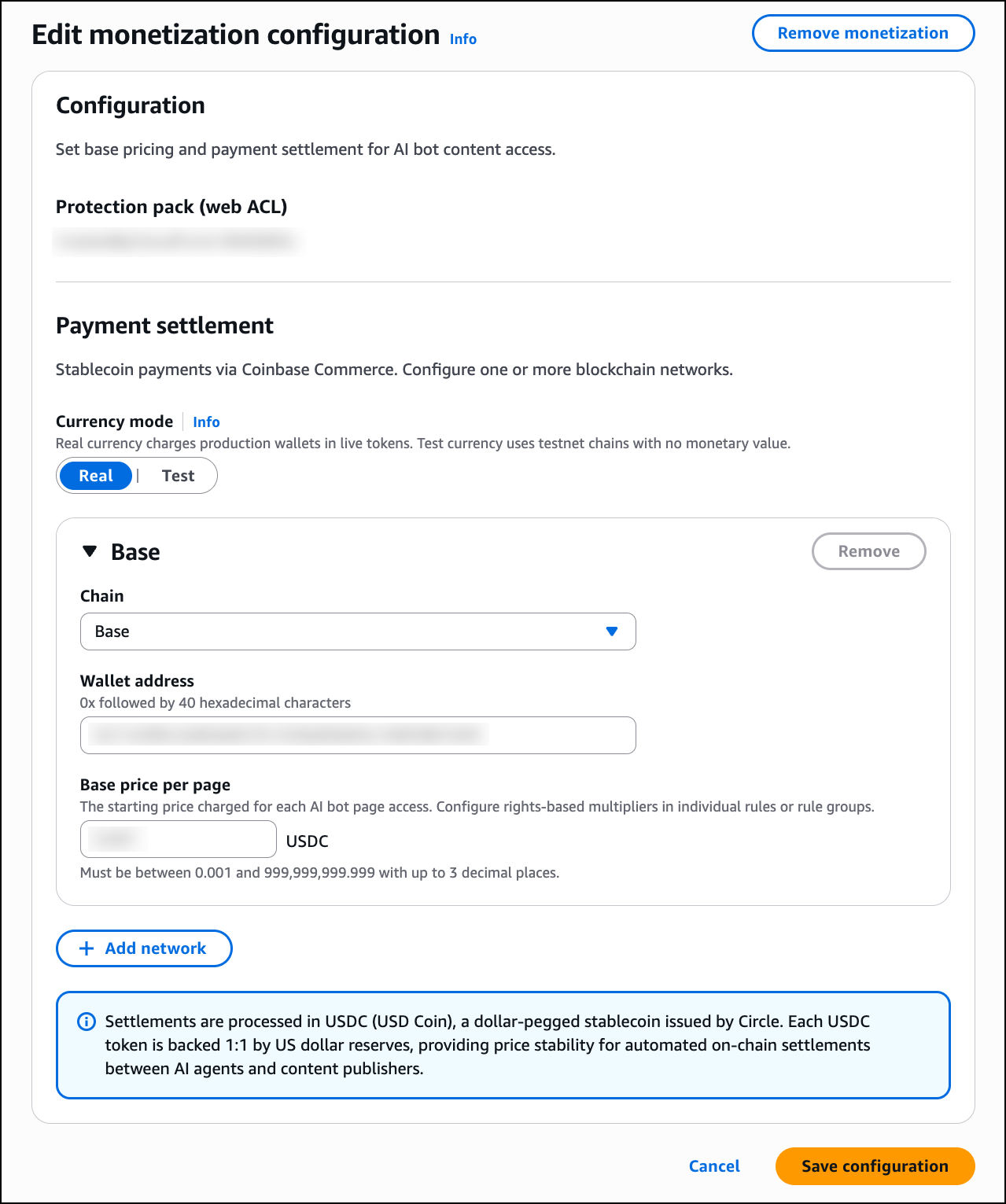
When the "Monetize" action is selected, content owners configure payment settlement details. This involves choosing one or more blockchain networks (e.g., Base, Solana) for stablecoin payments and providing a wallet address for each. A "Base price per page" in USDC (USD Coin) is then set. AWS WAF does not directly process payments or levy fees on content revenue; instead, it facilitates the connection between the AI agent and the publisher’s chosen wallet provider or self-managed wallet.
Upon a "Monetize" rule match, AWS WAF issues an HTTP 402 response containing a machine-readable price manifest in JSON format, adhering to the x402 open protocol for machine-to-machine payments. This manifest details the content price in USDC, the accepted blockchain networks, the destination wallet address, a maximum payment timeout, and the payment scheme. Any x402-compatible AI agent runtime can then autonomously complete the payment flow: the client submits a signed payment authorization on their chosen payment network, AWS WAF verifies it, integrates with third-party facilitator services (like Coinbase’s x402 Facilitator) to settle the payment on-chain, and finally serves the requested content. This entire process is designed to be seamless and automated, eliminating manual intervention.
Implementing AI Traffic Monetization: A Step-by-Step Guide
For publishers looking to integrate this new monetization capability, the process is streamlined through the AWS Management Console.
- Prerequisites: Confirm that AWS WAF Bot Control is enabled on the web ACL associated with your CloudFront distribution. Bot Control’s classification is essential for the monetization rules. Documentation on adding the AWS WAF Bot Control managed rule group is readily available in the AWS Developer Guide.
- Accessing the Console: Navigate to the WAF & Shield section in the AWS Management Console and select Protection packs (web ACLs) from the left navigation pane.
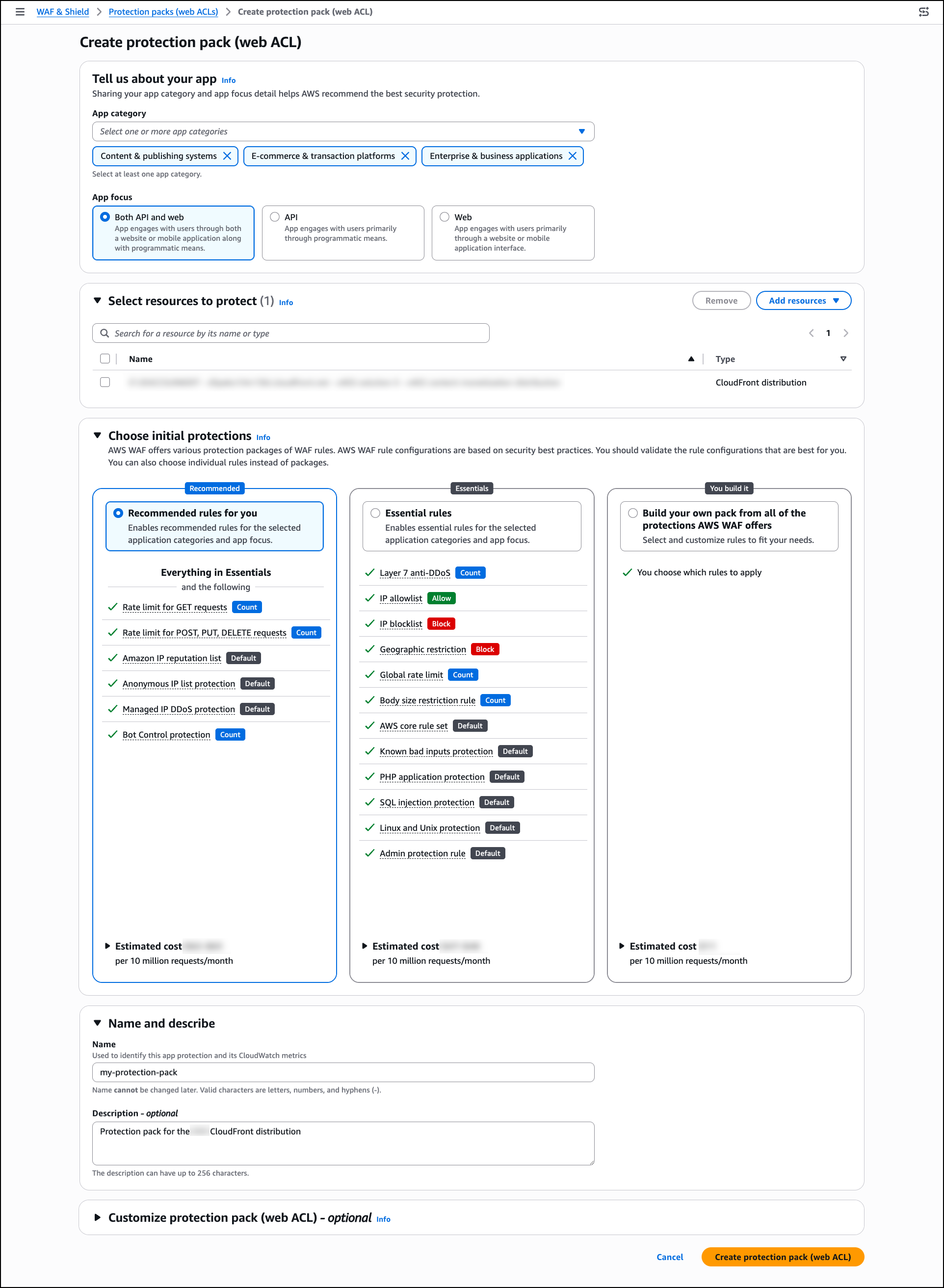
- Creating a Protection Pack: Choose Create protection pack (web ACL). This pack is the central configuration unit for all monetization settings.
- Application Details: In the Tell us about your app section, specify one or more categories that describe your content (e.g., "Content & publishing systems," "E-commerce & transaction platforms," "Enterprise & business applications") and an App focus. These selections help AWS WAF recommend appropriate security protections.
- Resource Association: Under Select resources to protect, add the regional or global resources, such as CloudFront distributions, that this protection pack will safeguard. This step can be deferred and resources added later.
- Initial Protections: In Choose initial protections, select from AWS WAF managed rule packages or individual rules based on your application category and resource choices.
- Naming and Description: Provide a descriptive name and an optional description for your protection pack.
- Customization: Optionally, expand Customize protection pack (web ACL) to configure advanced settings, including pricing tiers, payment methods, content scope, and license terms.
- Finalizing Creation: Complete the process by choosing Create protection pack (web ACL).
- Traffic Analysis: Before defining a pricing strategy, it is crucial to review the AI traffic analysis dashboard. Access this by going to AI traffic analysis in the left navigation pane and selecting your newly created protection pack from the dropdown. This dashboard will provide vital metrics on bot activity, infrastructure impact, and a per-path heatmap showing AI bot hotspots.
- Configuring Monetization Policies: Once traffic patterns are understood, return to Protection packs (web ACLs), select your pack, and choose Configure AI monetization from the right panel. Here, you will set pricing and access policies for each agent verification tier. This allows for flexible pricing strategies across different content zones or for different types of AI agents.
- Payment Settlement: Under Payment settlement, select your preferred blockchain networks for stablecoin payments. Provide your wallet address for each network and set a Base price per page in USDC. Multiple networks can be added.
- Testing: Crucially, the Currency mode toggle allows switching between Real and Test modes. Before deploying to production, use Test mode on non-production traffic to validate pricing, wallet configuration, and x402 payment flows. In Test mode, payments are made on testnets (e.g., Base Sepolia, Solana Devnet) using test funds, but the full x402 payment flow is enforced and logged with
CurrencyMode: TEST. - Go Live: Once satisfied with the configuration, toggle Currency mode back to Real to begin processing live payments.
- Real-time Monitoring: After going live, the AI access monetization dashboard in the left navigation pane provides real-time tracking of monetization outcomes, reflecting only activity from real currency mode. This dashboard shows total revenue, revenue broken down by verified and unverified bots, and average revenue per request. It also identifies top revenue sources by bot category and ranks content paths by generated revenue. The Settlements tab helps reconcile payments and review payment method distribution and any failed attempts.
Strategic Implications for Content Publishers
The introduction of AI traffic monetization by AWS WAF represents a significant strategic shift for digital content publishers. It directly addresses the long-standing challenge of uncompensated content consumption by AI models, opening up entirely new revenue streams. Publishers can now actively participate in the burgeoning AI economy, transforming what was once a cost center (serving AI bot traffic) into a potential profit center.
This capability encourages publishers to rethink their content strategy, potentially creating premium content tiers specifically designed for AI consumption, or dynamically adjusting pricing based on content value, freshness, or exclusivity. For niche content providers or those with highly valuable proprietary data, this could unlock substantial new income. Furthermore, by formalizing payment for AI access, it establishes a clearer framework for intellectual property rights in the AI era, providing publishers with more control over how their content is used by machine intelligences.
The use of stablecoins and the x402 open protocol also positions publishers at the forefront of Web3 and decentralized finance innovations. This approach offers transparency, efficiency, and potentially lower transaction costs compared to traditional payment rails, aligning with a future where machine-to-machine transactions become commonplace.
The Role of Decentralized Payments and Web3
The choice of stablecoins and the x402 open protocol for payment settlement is a deliberate and forward-looking move. Stablecoins, like USDC, offer the stability of fiat currencies combined with the efficiency and transparency of blockchain technology. This allows for near-instantaneous, global transactions with reduced intermediary fees, a critical advantage for high-volume, micro-transaction environments that characterize AI content consumption.
The x402 protocol, an open standard for machine-to-machine payments, ensures interoperability and facilitates automated transactions between AI agents and content providers. This standardization is vital for scaling machine payments across diverse platforms and applications, creating a robust infrastructure for the "programmable economy." By embracing these technologies, AWS WAF is not just solving a current monetization problem but is also laying the groundwork for future economic models where autonomous agents routinely engage in financial transactions for digital services and content.
The integration with Coinbase’s x402 Facilitator provides a reliable and compliant bridge between the AWS WAF enforcement layer and the underlying blockchain networks. The future support for Stripe, a widely adopted traditional payment processor, indicates a pragmatic approach to cater to a broader range of payment preferences, while the planned Machine Payments Protocol (MPP) support further solidifies AWS’s commitment to standardizing and streamlining automated financial interactions.
Availability and Future Outlook
The AI traffic monetization capability is now available for Amazon CloudFront customers at no additional charge beyond standard AWS WAF pricing. This makes the feature accessible and cost-effective for a wide range of digital content providers already leveraging AWS’s global content delivery network. The capability is deployed across all edge locations where AWS WAF web ACLs are associated with Amazon CloudFront distributions, ensuring global coverage and minimal latency for monetization enforcement.
This launch by AWS WAF is more than just a new feature; it is a strategic response to the evolving digital economy and the profound impact of artificial intelligence on content creation, distribution, and consumption. By providing publishers with robust tools to monetize AI access, AWS is helping to rebalance the economic equation, ensuring that the creators of valuable digital content are fairly compensated in the age of intelligent machines. The future is likely to see further refinements and expansions of this capability, potentially including more sophisticated pricing models, integrations with a wider array of payment providers, and enhanced analytics to help publishers optimize their AI monetization strategies. As AI continues to grow its presence across the internet, such innovations will be crucial for fostering a sustainable and equitable digital content ecosystem.
