
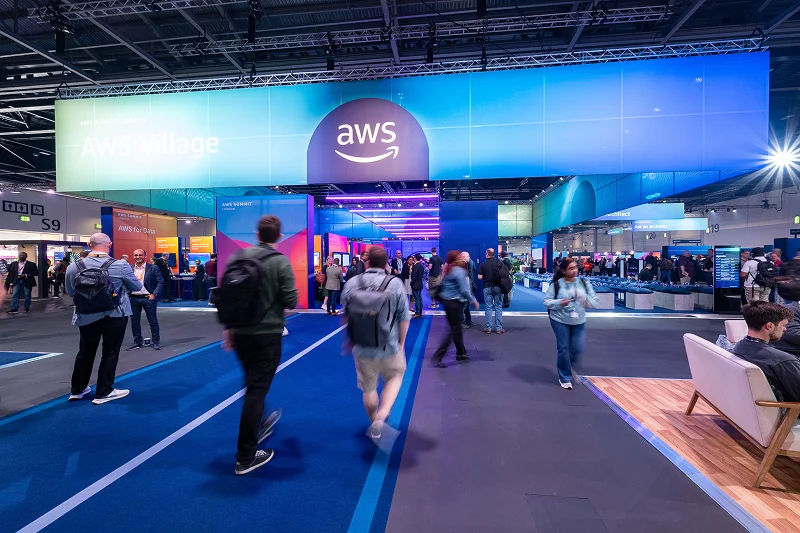

New York City, a global epicenter for technological innovation, played host this week to the highly anticipated AWS Summit, drawing thousands of builders, customers, and Amazon Web Services teams to the iconic Javits Center. This full-day event served as a crucial platform for significant announcements, live demonstrations, and in-depth technical sessions, collectively outlining AWS’s strategic direction in cloud computing, particularly focusing on advancements in developer tools, cutting-edge AI infrastructure, and robust security services. The keynote address, a highlight of the Summit, was delivered by Dr. Swami Sivasubramanian, Vice President of Agentic AI at AWS, and Chet Kapoor, Vice President of Security Services and Observability. Their joint presentation offered a compelling vision of the future, emphasizing how generative AI and enhanced cloud financial operations are poised to redefine enterprise technology landscapes. For those unable to attend in person, the entirety of the keynote address was made available via livestream on June 17, ensuring broad access to these pivotal discussions and unveilings.
The AWS Summit: A Convergence of Innovation and Collaboration
AWS Summits are integral components of Amazon Web Services’ global outreach strategy, designed to bring the latest cloud technologies and best practices directly to regional audiences. The New York City event, strategically located within one of the world’s most vibrant tech ecosystems, underscores the critical role of the East Coast in driving digital transformation. These Summits serve multiple purposes: they are a forum for AWS to showcase its newest services and features, a learning environment through hands-on labs and technical deep dives, and a networking opportunity for cloud professionals to connect with peers, AWS experts, and partners. Attendees typically range from individual developers and architects to enterprise IT decision-makers and C-suite executives, all seeking to leverage the cloud for greater agility, efficiency, and innovation. The Javits Center, renowned for its capacity to host large-scale technology conferences, provided an ideal venue for the extensive array of sessions, exhibitor booths, and interactive experiences that defined the Summit. The event’s schedule was meticulously crafted to cover a spectrum of topics, from foundational cloud concepts to advanced applications of machine learning, data analytics, and security, reflecting the diverse needs and interests of the AWS community.
Keynote Highlights: Charting the Future with AI and Security
The keynote address delivered by Dr. Swami Sivasubramanian and Chet Kapoor was the centerpiece of the AWS Summit NYC, offering a strategic overview of the company’s latest innovations and its forward-looking vision. Dr. Sivasubramanian, a leading voice in artificial intelligence, focused on the transformative potential of agentic AI and how it is fundamentally reshaping software development paradigms. His segment delved into the practical applications and profound impact of AI-native development, presenting compelling evidence of unprecedented productivity gains observed across various Amazon engineering teams. Complementing this, Chet Kapoor addressed the ever-critical domain of cloud security and observability, outlining new capabilities designed to enhance the resilience, transparency, and governance of cloud environments. Together, their presentations painted a comprehensive picture of an AWS ecosystem increasingly driven by intelligent automation and fortified by advanced security measures, all aimed at empowering developers and organizations to build more securely and efficiently. The emphasis on developer tools, AI infrastructure, and security reflected AWS’s commitment to providing a holistic platform that not only enables rapid innovation but also ensures the operational integrity and financial prudence of cloud deployments.
Revolutionizing Development: The Rise of AI-Native Teams
A cornerstone announcement from the Summit, elaborated in a detailed blog post by Dr. Sivasubramanian, highlighted groundbreaking insights into "how frontier teams are reinventing AI-native development." This discourse was not merely theoretical but grounded in extensive data gleaned from experiments conducted across hundreds of Amazon’s own engineering teams. The findings presented a compelling case for a paradigm shift in software development, demonstrating how the strategic integration of generative AI agents can dramatically accelerate development cycles and enhance team productivity.
One of the most striking examples cited was the complete rebuild of the Amazon Bedrock inference engine. This monumental project, initially estimated to require a team of 30 developers over a period of 12 to 18 months, was astonishingly accomplished by a lean six-engineer team in a mere 76 days. This reduction in both human resources and timeline by orders of magnitude underscores the profound efficiency gains achievable through AI-native development practices. Beyond this singular achievement, structured pilot programs conducted with Amazon Stores teams revealed a median productivity gain of 4.5x in normalized deployment velocity. Certain pioneering teams within these pilots even surpassed a 10x improvement, setting new benchmarks for development speed and agility. Concrete instances of this accelerated delivery included the "Perfect Order Experience" initiative, which saw its feature cycle compressed from two weeks to shipping in a single afternoon. Similarly, the Worldwide Grocery team experienced a drastic reduction in design document creation, shrinking from five days to just a few hours. These examples serve as powerful testimonials to the transformative power of AI-native methodologies when applied strategically within large-scale engineering organizations.
Dr. Sivasubramanian’s post distilled these remarkable results into five actionable practices for organizations aspiring to cultivate "frontier teams":
-
Invest in Agent Context: This foundational practice emphasizes the importance of meticulously preparing the environment for AI agents. Before any production code is written, teams must invest time in building comprehensive steering files, establishing clear coding standards, and structuring repositories in an organized manner. This pre-computation of context ensures that AI agents operate with a deep understanding of project requirements, architectural guidelines, and existing codebases, minimizing misinterpretations and enhancing the quality of generated output. The implication is that a well-defined context acts as a force multiplier for AI agent efficiency.
-
Expect an Initial Slowdown and Push Through It: Adopting AI-native workflows represents a significant shift from traditional development practices. Dr. Sivasubramanian cautioned that teams should anticipate an initial period of reduced velocity as existing workflows are restructured, new tools are integrated, and team members adapt to collaborative models with AI agents. This "trough of disillusionment" is a natural phase in technological adoption. The key, he stressed, is to acknowledge this initial dip and maintain a steadfast commitment to pushing through it, recognizing that the long-term benefits far outweigh the temporary challenges.
-
Maintain a Steady Backlog of Well-Scoped Tasks: For AI agents to operate efficiently and in parallel, they require a continuous stream of clearly defined, granular tasks. A steady backlog of well-scoped tasks ensures that agents can work autonomously on distinct components without requiring constant human supervision or frequent clarification. This approach maximizes agent utilization, prevents bottlenecks, and allows human developers to focus on higher-level architectural design, complex problem-solving, and strategic oversight.
-
Make Intent Explicit Through Structured Specifications: Before code generation commences, the intent of the desired functionality must be articulated with absolute clarity. This involves creating structured specifications that leave no room for ambiguity. By providing precise, unambiguous instructions, developers guide AI agents to generate code that accurately reflects the intended behavior and meets functional requirements. This practice minimizes iterative refinements and corrections, streamlining the development process significantly.
-
Shift Testing Left: Integrating testing early into the development lifecycle is crucial for AI-native teams. By enabling AI agents to self-correct and identify potential issues before code is even committed to the main pipeline, teams can drastically reduce the cost and effort associated with defect remediation. This "shift left" approach empowers agents to perform preliminary checks, static analysis, and even generate basic test cases, ensuring a higher quality of code reaches the human review stage and subsequent integration phases.
The blog post concluded by noting that commit velocity, while impressive, represents only one facet of the overall productivity picture. A forthcoming follow-up, it was hinted, would delve into equally critical aspects such as release management, operational efficiency, security operations, and End-of-Life (EOL) upgrades, offering a more holistic view of the AI-native development lifecycle. The analysis of these findings strongly suggests that AWS is not just offering AI tools but also pioneering a new methodology for their effective integration, potentially setting a new industry standard for developer productivity in the age of generative AI. This strategic push is poised to empower enterprises to accelerate their digital transformation initiatives and maintain a competitive edge in rapidly evolving markets.
Optimizing Cloud Spend: Introducing the AWS FinOps Agent
Another significant unveiling at the AWS Summit was the preview of the AWS FinOps Agent, a new intelligent tool designed to empower FinOps practitioners and engineering teams in managing and optimizing their cloud expenditures. In an era where cloud costs can rapidly escalate and become complex to track, the FinOps Agent represents a crucial step towards automated, intelligent financial governance in the cloud.
The agent’s capabilities are comprehensive, addressing several critical pain points in cloud cost management. It is engineered to answer complex cost-related queries, providing granular insights into spending patterns. A core feature is its ability to surface optimization opportunities, going beyond simple reporting to actively recommend actions that can lead to significant cost savings. This includes investigating cost anomalies, which are often difficult and time-consuming for human teams to identify and diagnose. Furthermore, the FinOps Agent can execute recurring FinOps workflows on a predefined schedule, ensuring continuous monitoring and optimization without manual intervention.
Specifically, users can leverage the agent to:

- Query AWS Costs: Gain immediate, detailed answers to questions about current and historical cloud spending, allowing for better budget tracking and financial forecasting.
- Generate Cost Reports: Produce customized cost reports tailored for both finance and engineering teams, facilitating clearer communication and accountability across departments.
- Surface Recommendations: Proactively identify opportunities for rightsizing resources, detecting idle or underutilized resources, and recommending Savings Plans based on usage patterns. These recommendations are drawn from AWS Cost Optimization Hub and AWS Compute Optimizer, ensuring they are backed by AWS’s deep expertise.
- Automate Actionable Insights: A significant advancement is the agent’s ability to open Jira tickets on behalf of the user based on these recommendations. This integration with popular project management tools streamlines the implementation of cost-saving measures, ensuring that identified opportunities are acted upon promptly.
- Automated Anomaly Investigation: When a cost anomaly is detected, the FinOps Agent can automatically initiate an investigation into the root cause, providing immediate insights into unexpected spending spikes. It can then post these findings directly to a designated Slack channel, enabling rapid communication and collaborative problem-solving among relevant teams.
The introduction of the AWS FinOps Agent reflects the growing maturity of the FinOps discipline, which seeks to bring financial accountability to the variable spend model of cloud computing. By automating the identification of cost-saving opportunities and the investigation of anomalies, the agent promises to reduce manual overhead, improve cost transparency, and foster a culture of cost-consciousness within organizations. This tool is particularly relevant for large enterprises with complex cloud footprints, where manual FinOps processes can become unwieldy and prone to error. The FinOps Agent is set to become an indispensable tool for ensuring that cloud investments yield maximum value, aligning technical operations with financial objectives.
Broader Innovations and Ecosystem Developments
While the AI-native development insights and the FinOps Agent were headline features, the AWS Summit NYC typically encompasses a broader spectrum of announcements and updates. The presence of Chet Kapoor, VP of Security Services and Observability, on the keynote stage signals AWS’s continued emphasis on strengthening its security posture and providing comprehensive observability tools. This likely included updates on services like AWS Security Hub, Amazon GuardDuty, AWS CloudTrail, and perhaps new features enhancing threat detection, compliance, and incident response capabilities. Given the increasing sophistication of cyber threats and the regulatory landscape, AWS consistently rolls out innovations to ensure its customers can operate securely in the cloud. Similarly, advancements in observability, covering metrics, logs, and traces, are crucial for maintaining application performance and diagnosing issues in complex distributed systems, hinting at potential enhancements to Amazon CloudWatch and AWS X-Ray.
The Summit also serves as a platform for AWS to reiterate its commitment to its developer community, often featuring updates on popular services, new SDKs, and integrations that streamline the development process. The broader AWS news cycle frequently includes new features for compute services (EC2, Lambda), storage solutions (S3, EBS), database offerings (Aurora, DynamoDB), and networking enhancements. These incremental but continuous improvements are vital for maintaining AWS’s leadership in the cloud market and supporting the diverse needs of its vast customer base.
The Strategic Vision of AWS
The announcements at the AWS Summit New York City collectively underscore AWS’s strategic vision: to democratize advanced technologies like generative AI and sophisticated financial operations, making them accessible and actionable for organizations of all sizes. By providing powerful, intelligent tools that enhance developer productivity and optimize cloud spend, AWS is not merely offering infrastructure; it is building an intelligent, efficient, and secure ecosystem that empowers its customers to innovate faster and operate more cost-effectively. The focus on "frontier teams" and AI-native development signals a fundamental shift in how software will be built, potentially leading to unprecedented levels of innovation and market responsiveness. Concurrently, the FinOps Agent addresses a critical challenge in cloud adoption, ensuring that the financial aspects of cloud utilization are as optimized and automated as the technical ones. This dual focus on accelerating creation and optimizing consumption positions AWS as a pivotal partner for enterprises navigating the complexities and opportunities of the digital age.
Looking Ahead: Upcoming Events and Community Engagement
AWS consistently fosters a vibrant community of builders and innovators. Beyond the Summit, the AWS Builder Center remains a valuable resource for connecting with other developers, contributing solutions, and discovering resources that aid continuous building. The platform offers a rich repository of knowledge, tutorials, and community forums. Furthermore, AWS maintains an extensive calendar of upcoming events, including both AWS-led in-person and virtual conferences, as well as developer-focused sessions. These events provide ongoing opportunities for the community to stay abreast of the latest developments, acquire new skills, and engage directly with AWS experts. The momentum generated by the New York Summit is expected to carry forward into future regional events and digital initiatives, continuing AWS’s mission to drive global cloud innovation. This commitment to ongoing education and community building is a testament to AWS’s understanding that technological advancement is a collaborative journey, shared with its vast network of customers and partners.
