

For many modern developers, constructing an application directly from a natural language AI prompt has firmly transitioned from a futuristic novelty to a routine part of the daily workflow. However, the true bottleneck in contemporary software engineering is rarely the initial creation of code. Instead, the persistent challenge lies in transforming that nascent, AI-generated proof-of-concept into a robust, secure, and maintainable asset that an entire engineering organization can rely upon, iterate, and scale. This operational hurdle requires a comprehensive ecosystem: reliable staging infrastructure, transparent code review mechanisms, rigorous testing protocols, and the absolute confidence that subsequent updates will not inadvertently break production environments.
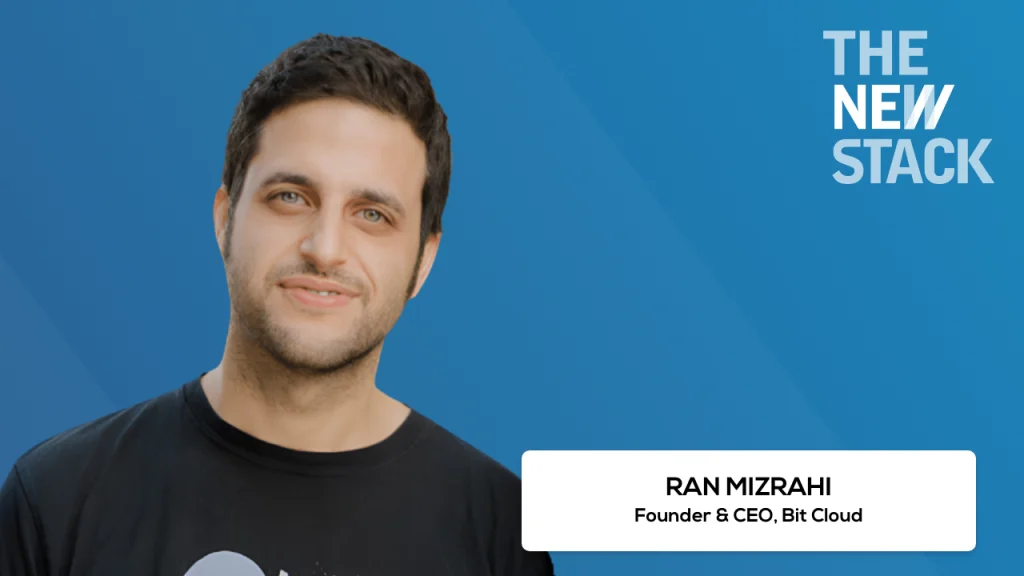
This exact architectural gap is the focal point of Bit Cloud 2.0 and Hope, the company’s newly introduced built-in artificial intelligence builder. In a recent episode of The New Stack podcast, Ran Mizrahi, founder and chief executive officer of Bit Cloud, sat down with industry analysts to dissect how modern platforms are bridging the widening chasm between rapid application prototyping and sustainable enterprise software engineering. The ensuing conversation illuminates a transformative trajectory for the software development lifecycle (SDLC), imagining a near-future landscape where developers minimize repetitive plumbing tasks and dedicate their cognitive bandwidth to writing genuinely useful, high-impact business logic, supported by unified infrastructure that seamlessly connects creation, execution, and integration.
The Cost of Reinventing the Wheel in Modern Software
To understand the profound operational friction in current software development, consider a ubiquitous enterprise requirement: the internal corporate dashboard. Viewed in isolation, building a functional internal dashboard appears straightforward. Yet, beneath the surface interface lies a complex web of non-negotiable engineering dependencies. A production-ready dashboard mandates secure user authentication, a reliable underlying database, role-based access control policies, and seamless integrations with disparate external SaaS platforms or legacy internal APIs to ensure safety and utility.
Now, scale that scenario across a fast-moving enterprise. Imagine a second, entirely separate product team that requires a structurally similar dashboard, albeit populated with different departmental metrics, unique compliance priorities, and customized data visualization layers. Historically, organizations have suffered from profound architectural redundancy in these moments. Teams frequently rebuild authentication flows, database connectors, and API middleware from scratch, duplicating effort, wasting valuable AI compute tokens, and bloating the overall codebase with redundant logic.
Mizrahi and the engineering team at Bit Cloud designed their latest iteration specifically to dismantle this cycle of repetitive engineering. Bit Cloud 2.0 fundamentally reimagines component discoverability and composability. Within this ecosystem, developers author foundational, modular software components, subject them to rigorous automated testing, and publish them to a secure registry. From there, colleagues across disparate teams can discover, import, and adapt these pre-built modules to jumpstart new applications.
According to platform telemetry and architectural analysis, this component-driven reuse model yields compounding dividends. By leveraging pre-tested modules, organizations significantly reduce duplicate development efforts, drive down the financial and environmental token costs associated with redundant large language model (LLM) queries, and drastically shrink the volume of new code that human engineers must manually review and audit before deployment.
Democratizing the Software Lifecycle: Cross-Functional Collaboration
Beyond raw engineering efficiency, this modular paradigm fundamentally alters the sociology of product development. Traditional software development often suffers from siloed communication channels: product managers write requirements, designers craft visual layouts in design systems, and developers translate those designs into code, while business stakeholders remain disconnected until the final product review.
Bit Cloud 2.0 and the Hope AI builder open the door to a genuinely unified collaborative environment. Because components are modular, transparent, and bound to clear semantic contracts, developers, UI/UX designers, product managers, and business stakeholders can operate from a single, shared source of truth. A product manager can prompt an AI builder to draft a workflow using verified company components, knowing the underlying architecture adheres to organizational security and design standards. The practical result of this structural alignment is a dramatic acceleration in time-to-market, enabling a broader array of organizational stakeholders to transform validated concepts into functional, production-grade applications securely and swiftly.
Remarkably, this expanded operational capacity is no longer strictly tethered to multi-monitor developer workstations. During his podcast demonstration, Mizrahi showcased the surprising capabilities of mobile-first development workflows within the Bit Cloud ecosystem.
Mobile Code Governance: Bringing the Laptop Workstation to the Smartphone
The traditional industry consensus has long categorized shipping software as quintessential "laptop work"—demanding local integrated development environments (IDEs), terminal windows, and complex command-line interfaces. However, Mizrahi demonstrated that modern cloud-native toolchains are aggressively decentralizing code governance.
Within the updated mobile integration framework, developers and technical leads can execute meaningful staging previews, trigger automated build checks, and perform granular code reviews directly from a mobile device. This capability transforms downtime into productive oversight, allowing authorized team members to inspect proposed code modifications, evaluate automated test outcomes, and approve or reject pull requests while away from their primary desks. For engineering leadership and senior developers accustomed to being chained to physical workstations to unblock deployments, this represents a paradigm shift in how continuous integration and continuous deployment (CI/CD) pipelines can be safely monitored and managed on the go.
Interoperability with Modern AI Coding Assistants
The broader software development landscape has experienced an unprecedented explosion in AI-assisted coding tools over the past twenty-four months, marked by the widespread adoption of specialized coding agents and integrated sidebar assistants such as Anthropic’s Claude Code, Cursor, and GitHub Copilot. Addressing this evolving ecosystem, the discussion on The New Stack emphasized that Bit Cloud is intentionally engineered to coexist harmoniously with these external developer utilities rather than lock users into a proprietary walled garden.
Teams can seamlessly ingest existing codebases into the Bit Cloud environment, leveraging external AI tools for local code generation while utilizing Bit Cloud for downstream governance, component sharing, and cloud execution. During live demonstrations accompanying the platform’s release, engineers showcased end-to-end workflows: one demonstration traced the evolution of an Instagram-style multimedia prototype into a scalable, enterprise-grade application architecture, while a separate demonstration illustrated how automated test suites gracefully surface critical regressions and architectural vulnerabilities long before code ever touches production environments.
Industry Implications and the Road Ahead
As the software engineering discipline continues to absorb the seismic shocks of generative artificial intelligence, platforms like Bit Cloud 2.0 signal a mature phase in AI adoption. The initial wave of AI coding tools focused intensely on generation—helping individual coders write isolated functions or boilerplate scripts faster. The emerging second wave, championed by infrastructure providers and platform engineers alike, centers squarely on governance, integration, and sustainable software architecture.
By emphasizing the intrinsic value of institutional code reuse, organizations can mitigate technical debt while scaling output exponentially. Every application built within a composable, modular framework inherently contributes foundational building blocks to the organization’s broader digital asset library, turning every completed project into a strategic springboard for the next enterprise initiative.
Industry analysts note that as token pricing fluctuates and enterprise security demands tighten, platforms that successfully marry autonomous AI generation with rigorous, human-in-the-loop component governance will likely capture significant market share. Bit Cloud’s holistic approach—spanning from natural language prompts via the Hope builder to mobile-accessible code review and cross-functional component sharing—underscores a pivotal maturation point in cloud-native development tooling. For engineering organizations striving to balance blistering release velocities with uncompromised software integrity, the future of development is modular, collaborative, and increasingly omnipresent.
