
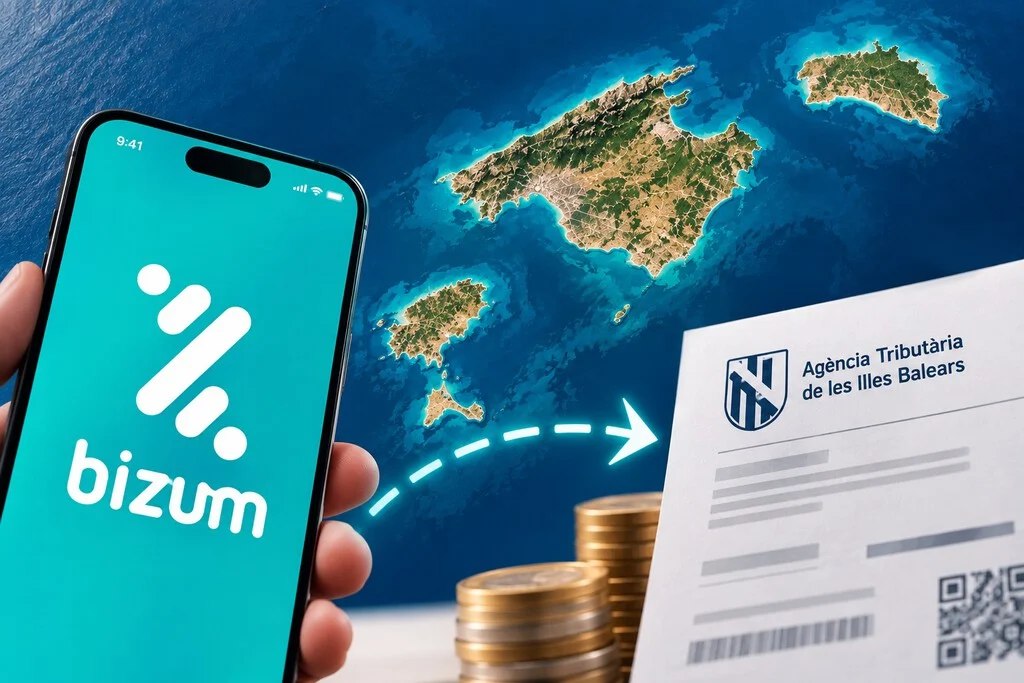

The digitalization of public administration in Spain has found a powerful ally in the Balearic Islands, where the regional tax authority, the Agencia Tributaria de les Illes Balears (ATIB), has successfully integrated Bizum as a primary payment gateway. Since its implementation on August 21, 2023, this mobile-first payment solution has transformed the way citizens fulfill their fiscal obligations, moving away from traditional banking procedures toward a streamlined, instantaneous digital experience. As of August 7, 2026, the ATIB has registered a total of 188,240 transactions, amounting to exactly 22,208,264.58 euros, reflecting a significant shift in taxpayer behavior toward mobile convenience.
The rapid adoption of this platform underscores a broader trend in the Spanish public sector: the transition toward "frictionless" tax collection. By aligning government services with the habits of the average consumer—who is already accustomed to using Bizum for peer-to-peer transfers and e-commerce—the Balearic government has managed to reduce the administrative burden associated with tax payments, such as vehicle transfer taxes, local levies, and the sustainable tourism tax.
A Chronology of Rapid Adoption
The trajectory of Bizum usage within the ATIB infrastructure has been nothing short of exponential. When the service was first launched in late August 2023, it served as a pilot phase for the remaining four months of the year. During that initial period, the agency processed 18,298 payments, totaling 2,625,068.63 euros. This foundational period provided the necessary data to scale the service for the subsequent fiscal years.
By 2024, the first full year of operation, the efficacy of the system became clear. The ATIB processed 47,211 operations, generating 5,907,538.85 euros in revenue. The momentum accelerated further in 2025, a year that saw 71,345 payments and a total volume of 8,254,035.25 euros. As of the cut-off date of August 7, 2026, the agency had already recorded 51,386 transactions worth 5,421,621.85 euros.
While the 2026 figures cover only a partial year, they represent approximately 72% of the total transaction volume observed in 2025, suggesting that 2026 is on track to surpass previous records. Interestingly, while the volume of transactions has risen, the average ticket size per operation has seen a downward trend, shifting from roughly 143 euros in 2023 to 106 euros in the current year. This decline in the average transaction value indicates that Bizum is increasingly being utilized for smaller, routine payments rather than large-scale tax settlements, suggesting that the platform has successfully penetrated the daily routines of Balearic taxpayers.
The Mechanism of Digital Tax Payments
The ATIB has established a specific operational framework for Bizum, setting a maximum limit of 1,500 euros per transaction. This cap serves as a security buffer and is consistent with the standard limits often applied by financial institutions to business-to-consumer (B2C) transactions. The integration is accessible across the ATIB’s primary digital touchpoints: the official web portal, the electronic office (sede electrónica), and the dedicated mobile applications for both iOS and Android.
The user experience is designed for simplicity. Upon selecting the Bizum option within the ATIB payment gateway, the taxpayer is prompted to enter the mobile phone number associated with their bank account. Once the request is sent, the taxpayer authenticates the transaction through their banking app. Upon successful completion, the debt is instantly marked as settled within the ATIB’s ledger, and the system generates an official receipt. This immediacy eliminates the typical delays associated with traditional bank transfers, which often require multiple business days to process and reconcile.
Crucially, the ATIB emphasizes that this is not a personal money transfer but an official administrative payment. As such, the underlying rules governing tax liability, payment deadlines, and late-payment penalties remain unchanged. Using Bizum does not provide any tax advantage; it merely provides an alternative, more efficient method of payment. The agency continues to offer traditional alternatives, including credit/debit cards and standard bank wire transfers, ensuring that taxpayers who prefer or require other methods retain access to them.
Official Perspectives and Digital Strategy
Antoni Costa, the Vice President of the Balearic Government and Conseller of Economy, Finance, and Innovation, has championed the adoption of this technology as a cornerstone of the regional administration’s modernization strategy. According to Costa, the success of the initiative lies in its psychological and functional alignment with modern habits. "The system is successful because it adapts to a habit that taxpayers have already incorporated into their daily lives," Costa stated. His department has confirmed that the expansion of digital services will remain a priority, with plans to further integrate automated payment systems to enhance the relationship between the administration and the public.
From an administrative standpoint, the integration of Bizum represents a significant reduction in operational costs. Automating the reconciliation of small-to-medium-sized tax payments reduces the manual oversight required by the ATIB’s accounting department, allowing public employees to focus on more complex fiscal matters.
Addressing Misconceptions and Fiscal Obligations
Despite the convenience, the use of Bizum for tax payments has occasionally sparked confusion regarding the broader implications of digital payments on personal taxation. It is vital to distinguish between a payment made to a public authority and a peer-to-peer transfer. The Spanish Tax Agency (Agencia Tributaria) has frequently clarified that the method of payment—be it Bizum, credit card, or cash—does not alter the tax status of the underlying transaction. The fiscal obligation is determined by the nature of the income or the transaction itself, not by the tool used to transfer the funds.
In the context of the annual income tax return (Declaración de la Renta), taxpayers are often cautioned to be mindful of the "origin" of funds. While legitimate tax payments made via the ATIB portal are straightforward, the use of Bizum for commercial transactions or between individuals must still adhere to transparency requirements. As the digital economy grows, the regulatory framework governing these payments has become increasingly stringent, with the central tax authorities keeping a close watch on transactions that may indicate undisclosed business activity.
Best Practices and Potential Pitfalls
As the volume of transactions continues to grow, the ATIB has issued guidance for taxpayers to avoid common errors. One of the most frequent issues is the "double payment" scenario, where a user authorizes a transaction through their bank app before the ATIB portal confirms the success of the payment, leading the user to repeat the process.
To mitigate this, the agency advises:
- Verification: Always confirm the recipient agency, the reference number, and the total amount before clicking "authorize" on the banking app.
- Post-Transaction Validation: If the banking app confirms the charge but the ATIB website does not generate a downloadable receipt, taxpayers are urged to wait for the status to synchronize or contact the ATIB directly. Repeating the payment is discouraged, as it necessitates a formal, time-consuming refund process.
- Data Security: Users should only perform payments through the official ATIB channels, avoiding links sent via unsolicited emails or SMS, which may be part of phishing attempts targeting taxpayers.
Broader Implications for the Public Sector
The successful integration of Bizum by the Balearic tax authority serves as a blueprint for other regional governments across Spain. The ability to collect over 22 million euros in less than two years proves that there is a significant appetite for digital-native financial solutions in the public sphere. As other autonomous communities observe the outcomes in the Balearic Islands, it is highly probable that similar initiatives will be rolled out nationwide.
The long-term impact of this shift is twofold: it improves the liquidity of the public treasury by accelerating payment cycles, and it fosters a more positive perception of government services by reducing the bureaucratic "friction" that citizens often associate with taxes. For the Balearic Islands, the project has successfully moved past its experimental phase, establishing itself as a robust, scalable, and highly utilized component of the regional fiscal landscape. As the administration continues to refine its digital ecosystem, the integration of such tools will likely expand, further entrenching the role of mobile finance in the future of public administration.
