
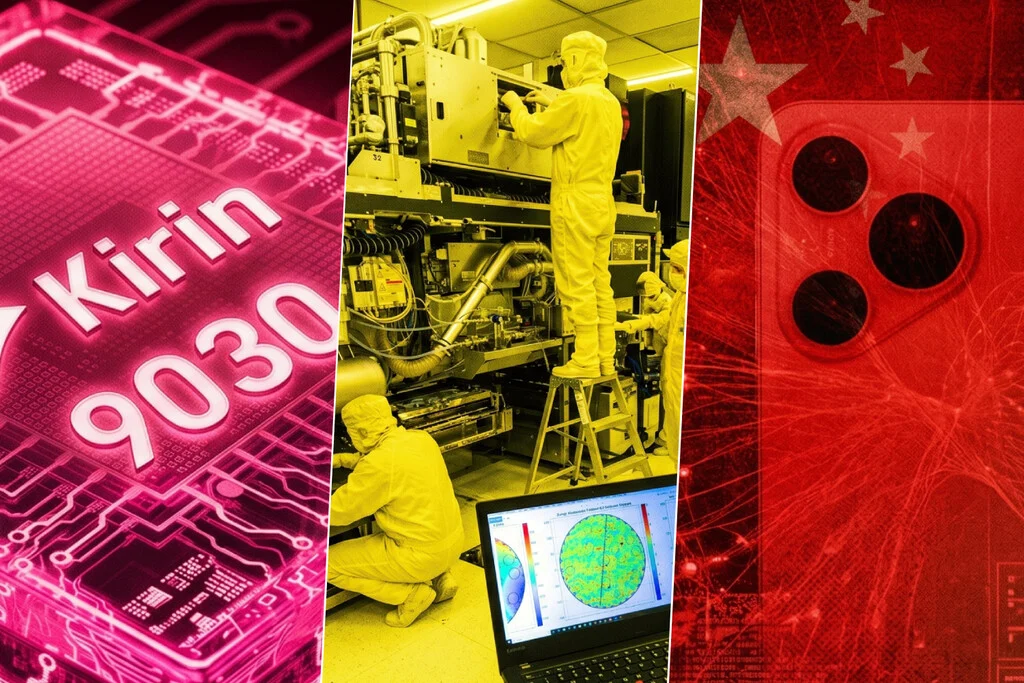

A decade ago, China unveiled its ambitious "Made in China 2025" strategic plan, setting a challenging target that was met with considerable skepticism in the West: to domestically produce 70% of the chips consumed within the country’s borders. Today, official data confirms that China has not achieved this specific numerical goal. However, the commercial embargoes and technology export restrictions imposed by the United States and its allies, far from crippling China’s burgeoning semiconductor industry, appear to have inadvertently catalyzed a profound transformation. The newly presented 15th Five-Year Plan, covering the period from 2026 to 2030, signals a critical shift in national strategy, moving beyond mere market share quotas to explicitly prioritize preparedness for "extreme contingencies." This directive underscores a singular, unwavering path: complete technological self-sufficiency in critical sectors, especially semiconductors.
The Genesis of Ambition: Made in China 2025
Launched in 2015, the "Made in China 2025" initiative was designed to transform China from the "world’s factory" into a high-tech manufacturing powerhouse. It identified ten key sectors for strategic development, including advanced information technology, robotics, new energy vehicles, aerospace equipment, and, crucially, integrated circuits. The 70% domestic chip production target by 2025 was a cornerstone of this vision, aimed at reducing China’s heavy reliance on foreign technology and fostering indigenous innovation. At the time of the plan’s inception, China’s domestic chip production accounted for less than 10% of its total consumption, making the 70% target appear extraordinarily audacious. Western nations, particularly the United States, viewed "Made in China 2025" with alarm, interpreting it as a state-backed strategy to dominate global high-tech industries, often through what they perceived as unfair trade practices, intellectual property theft, and forced technology transfers. These concerns laid the groundwork for the escalating trade and technology disputes that would follow.
The Catalyst: US Sanctions and the Tech War
The geopolitical landscape shifted dramatically with the onset of the US-China trade war, which rapidly evolved into a comprehensive technology rivalry. A pivotal moment occurred in May 2019 when the US Department of Commerce placed Huawei Technologies, China’s leading telecommunications equipment provider, on its Entity List, effectively restricting its access to American technology, software, and components. This move was followed by a cascade of further restrictions, targeting other prominent Chinese tech firms and, critically, expanding to the semiconductor sector. In 2020, Semiconductor Manufacturing International Corporation (SMIC), China’s largest chip foundry, was added to the Entity List, limiting its ability to acquire advanced manufacturing equipment.
The most sweeping measures came in October 2022, when the Biden administration implemented comprehensive export controls designed to hobble China’s ability to develop advanced chips and supercomputers. These rules restricted the sale of specific high-end chips, chip-making equipment (including advanced lithography tools from companies like ASML), and even the employment of US citizens in Chinese semiconductor firms. The stated rationale behind these aggressive policies was national security, aimed at preventing China from using advanced technologies for military modernization and human rights abuses. These sanctions sent shockwaves through the global semiconductor supply chain, forcing Chinese companies to confront an unprecedented challenge: to innovate or stagnate.
Resilience Under Pressure: China’s Parallel Ecosystem Emerges
Contrary to initial Western assumptions that China’s semiconductor industry would collapse without access to cutting-edge Western technology, the sanctions have acted as a powerful accelerant for domestic development. The immediate reality for the Chinese industry is a complex tableau of significant achievements, veiled projects, and academic breakthroughs aimed at fundamentally altering computing paradigms. While many assumed that achieving sub-10 nanometer (nm) process nodes was impossible without the advanced extreme ultraviolet (EUV) lithography machines produced exclusively by the Dutch firm ASML, China has systematically dismantled this myth.
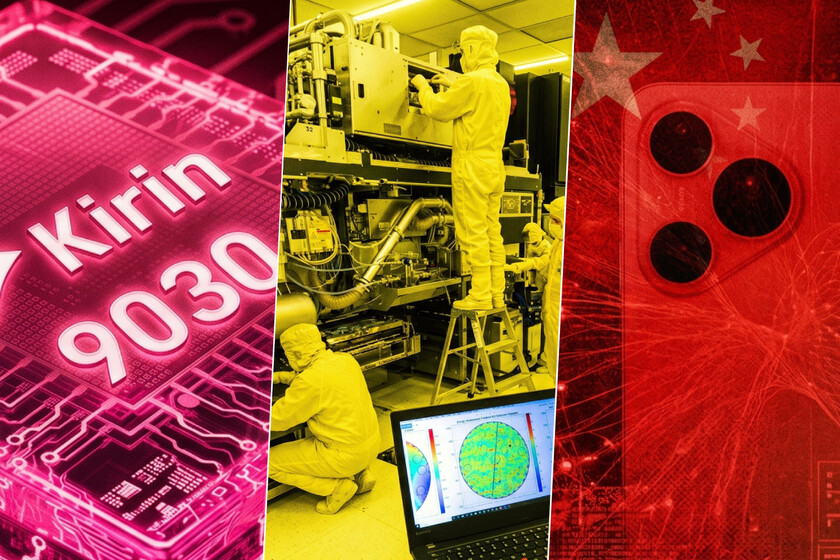
Chinese foundries have demonstrated remarkable ingenuity in pushing the limits of older, deep ultraviolet (DUV) lithography machines. Through sophisticated multi-patterning techniques and relentless optimization, firms like SMIC have enabled Huawei to launch chips produced at processes approaching 5nm. A notable example is the Kirin 9030 System-on-Chip (SoC) found in Huawei’s Mate 80 series, which analysts estimate to be manufactured on an advanced 5nm-class process. Furthermore, reports confirm that Huali Microelectronics has become the second Chinese foundry to successfully produce chips at the 7nm node. While these DUV-based methods are considerably more expensive and complex than using state-of-the-art EUV, they provide a crucial lifeline for domestic firms, ensuring access to advanced chips for high-demand applications such as AI servers, smartphones, and PCs, thereby mitigating the impact of foreign supply restrictions. This parallel ecosystem, built under duress, is designed not just for survival but for eventual technological leadership.
Project Manhattan: Accelerating Domestic Innovation
Recognizing that relying on "tricking" older generation machines is not a sustainable long-term strategy, the Chinese government has initiated a series of ambitious, state-funded projects to develop indigenous advanced lithography capabilities. These efforts are often referred to as "China’s Project Manhattan," reflecting the urgency and strategic importance placed on achieving technological independence, akin to the US wartime effort to develop the atomic bomb.
One of the most significant developments, according to international media outlets like Reuters, involves a clandestine effort in Shenzhen where former ASML engineers, operating under various guises, have reportedly assembled a functional prototype of an EUV machine developed through reverse engineering. Analysts suggest this hybrid equipment could begin producing test chips as early as 2028. This achievement, if confirmed, represents a monumental leap in China’s indigenous lithography capabilities.
Beyond this specific prototype, the government is reportedly backing at least two additional "Project Manhattan" initiatives. One focuses on a more conventional engineering approach to develop domestic lithography systems, systematically addressing each component of the complex manufacturing chain. The other, more futuristic and potentially disruptive, aims to harness a synchrotron (a particle accelerator) to generate the high-energy light required for advanced semiconductor fabrication. This latter approach represents a radical departure from traditional lithography techniques and could potentially offer a unique, independent pathway to cutting-edge chip production, sidestepping reliance on existing foreign technologies. These multi-pronged efforts underscore China’s unwavering commitment to building a self-sufficient and globally competitive semiconductor industry from the ground up.
Beyond Emulation: Disruptive Chinese Innovations
China’s ambition extends beyond merely replicating existing Western technologies; there is a growing push towards fundamentally rethinking chip manufacturing and computing paradigms. Huawei, for instance, is not just seeking to build EUV machines similar to ASML’s, but is exploring entirely novel approaches. Patent filings reveal Huawei’s research into creating laser-guided plasma to generate EUV light, a method distinct from ASML’s process of melting tin droplets. This innovative pathway suggests an intent to develop proprietary solutions that could bypass existing intellectual property barriers and offer unique advantages.
In an even more radical development, researchers at Beihang University have reported initial success in producing the first chips that break from the 80-year-old rule of the binary system. These "non-binary" chips promise increased efficiency and could potentially be inherently more resilient to traditional design vulnerabilities, offering a path to computing architectures that are fundamentally different from those currently dominant globally. Such innovations, while still in early stages, highlight China’s long-term strategy to not just catch up, but to potentially redefine the rules of the game in semiconductor technology, creating solutions that are inherently "sanction-proof" and optimized for future computing demands.
Tangible Gains: Reshaping the Global Landscape
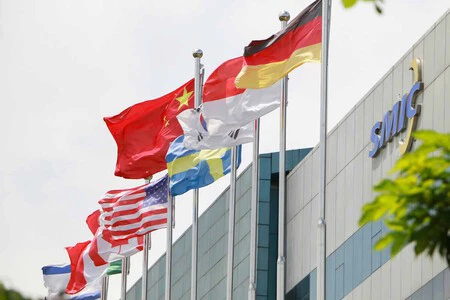
The strategic shift and massive investment are already yielding tangible results that are reshaping the global semiconductor landscape. In a mere four years, China has transitioned from being a marginal player in semiconductor equipment manufacturing to a significant force. The country now boasts three firms within the top 20 global manufacturers of equipment for semiconductors, a testament to rapid domestic scaling and innovation. This surge in domestic capability has directly impacted foreign suppliers; by 2025, an estimated 35% of the machinery used in China’s chip fabrication plants was of national origin, a substantial increase from negligible levels just a few years prior.
This growing self-reliance is causing a ripple effect across the industry. Some American and European equipment manufacturers have reported declining sales as Chinese foundries increasingly turn to domestic alternatives. Furthermore, Chinese companies like Pulin Technology are reportedly delivering their first nanoimprint lithography (NIL) equipment. NIL is a promising alternative to traditional photolithography, capable of manufacturing chips at the 5nm node at potentially a tenth of the cost of ASML’s EUV machines. While NIL has its own challenges and applications, its development signifies China’s multi-faceted approach to achieving advanced chip production through various technological pathways, further eroding the monopolistic advantage of Western suppliers.
A Frank Self-Assessment and the Moving Target
Despite these undeniable advancements, there is a notable undercurrent of pragmatism and even self-criticism within China’s high-tech circles. A recent analysis published in an official scientific journal by founders of prominent Chinese companies, including SMIC, candidly described the domestic semiconductor industry as "small, dispersed, and weak" when compared to its Western counterparts. Their proposed solution is direct and ambitious: to consolidate efforts and resources to create a "Chinese ASML." Intriguingly, these experts contend that achieving this goal is not as daunting as it appears, arguing that ASML itself is merely a "simple integrator" of technologies from various global suppliers, implying that China could replicate this integration with sufficient investment and coordination.
However, the target that China is attempting to emulate is not static; it is in constant motion, driven by relentless innovation from global leaders. While China strives to master current-generation technologies, ASML is already pushing the boundaries of the next. The Dutch giant recently announced a significant breakthrough: plans to increase the power of its most advanced EUV machines to 1,000 watts, aiming to boost chip production capacity by 50% per hour by the end of the decade. This continuous advancement means that even if China successfully develops its own advanced lithography systems, it will be entering a market where the global technological frontier has already moved significantly forward. China is effectively running a marathon where the finish line continuously recedes, demanding an extraordinary pace of innovation and investment to even maintain a relative position.
Broader Implications and The Road Ahead
The saga of China’s semiconductor quest, fueled by sanctions and driven by an imperative for self-sufficiency, carries profound implications for geopolitics, global economics, and technological development. For China, the journey underscores a deep national commitment to technological independence, viewed as essential for economic security, military modernization, and strategic autonomy. The forced decoupling has accelerated domestic R&D, fostered a resilient ecosystem, and potentially diversified global technological pathways with innovations like non-binary chips. However, it also comes at a significant cost in terms of efficiency, global collaboration, and the potential for technological divergence.
For the global semiconductor industry, the situation signals an era of increased competition, market fragmentation, and heightened geopolitical risk. While some Western companies may suffer short-term losses in the Chinese market, the pressure to innovate and diversify supply chains will likely intensify worldwide. The long-term implications include the potential for distinct technological standards and ecosystems, leading to a more complex and potentially less integrated global tech landscape.
Looking ahead, the "marathon where the finish line keeps moving" metaphor aptly captures the challenge facing China. While its progress has been remarkable, the relentless pace of innovation by established players like ASML ensures that achieving true parity, let alone leadership, will require sustained, massive investment and breakthrough discoveries. The ultimate question remains whether China can not only catch up but also define a new future for semiconductor technology, or if a new form of technological interdependence, albeit with different power dynamics, will eventually emerge from this intense period of competition and isolation. The coming decade will undoubtedly be critical in shaping the answer.
