

The Rise of Agentic AI and the Design Imperative
The field of AI is rapidly transitioning from static, task-specific models to dynamic, autonomous agents that can tackle multifaceted problems. Agentic architectures, characterized by their ability to perceive, reason, act, and learn, represent a significant leap forward, promising to automate complex workflows, enhance decision-making, and create more adaptive systems. Companies across various sectors, from finance to healthcare, are investing heavily in developing AI agents that can perform tasks ranging from sophisticated data analysis and content generation to customer service and autonomous system management.
However, this rapid evolution also introduces significant design complexities. A common pitfall observed in early adoption phases is the arbitrary selection of an agentic pattern based on familiarity or perceived impressiveness, rather than a rigorous assessment of the problem at hand. Developers might implement an elaborate multi-agent system for a task that a simpler, well-prompted agent with a few tools could handle efficiently. Conversely, underestimating a task’s complexity can lead to overly simplistic designs that fail to scale or adapt in production, necessitating expensive and time-consuming redesigns under pressure. Such misalignments not only inflate development costs and timelines but also compromise the reliability and effectiveness of the deployed AI system.
Introducing the Decision Tree: A Strategic Framework for AI Design
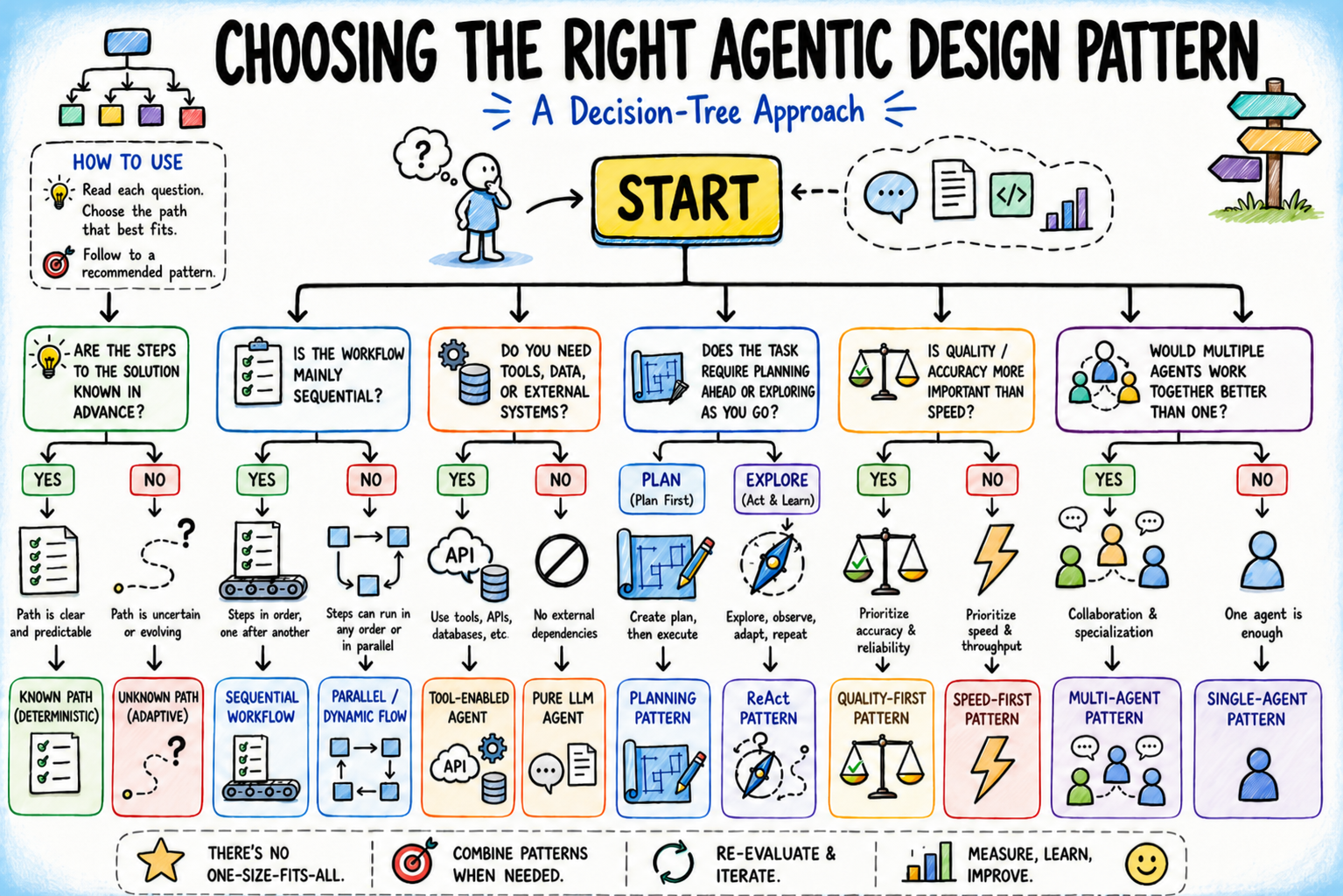
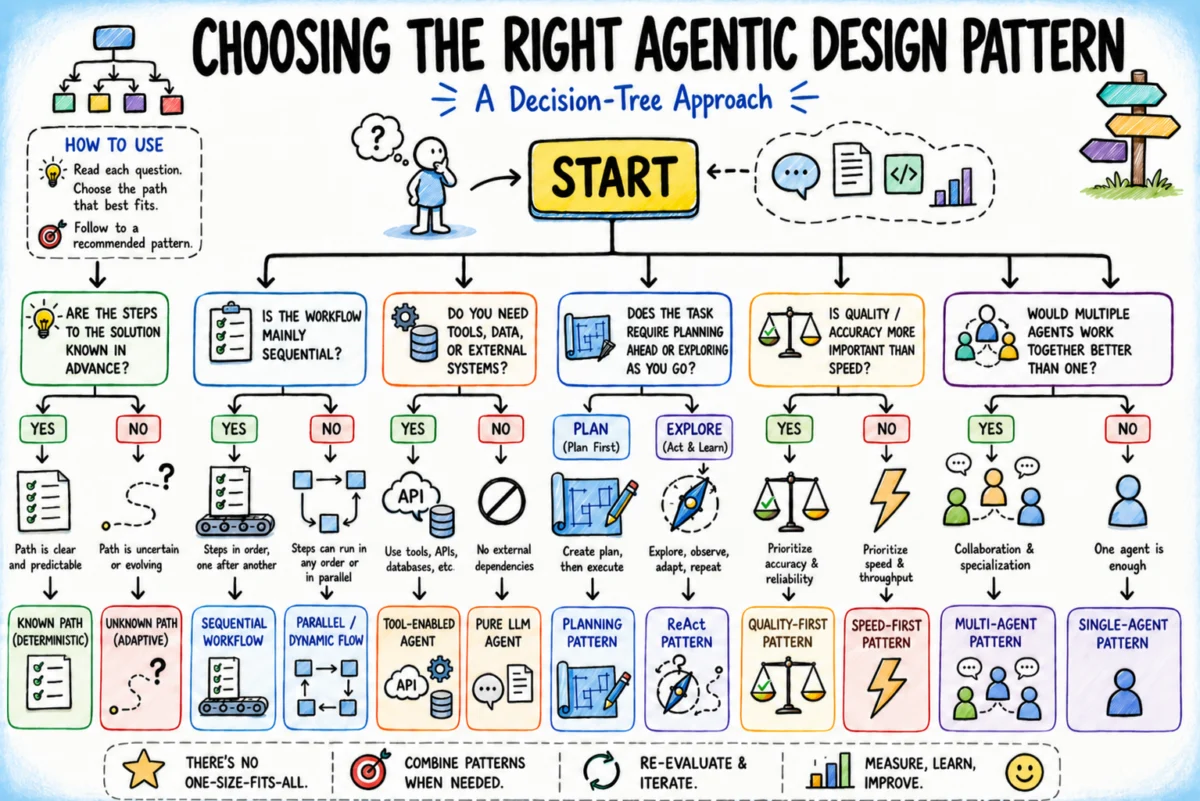
To address these challenges, leading AI researchers and practitioners are advocating for structured methodologies, such as the decision tree presented here, to guide the selection of agentic design patterns. This approach transforms pattern selection from an intuitive guess into a principled, evidence-based process. The decision tree functions as a series of diagnostic questions about the task’s inherent properties, operational constraints, and acceptable trade-offs. It serves not as a definitive endpoint but as a robust starting point, providing a clear rationale for initial design choices that can be revisited and refined as the system evolves and real-world feedback accumulates. This systematic approach is poised to professionalize AI development, ensuring greater consistency, efficiency, and success in deploying agentic systems.
Navigating the Decision Tree: A Deep Dive into Key Questions
The decision tree comprises five branching questions, each designed to progressively narrow down the optimal pattern space by focusing on concrete properties of the task.
Question 1: Is the Solution Path Known in Advance? Sequential vs. Adaptive Workflows
The initial determinant in agentic design is whether the complete step-by-step process for a task can be fully defined before execution begins.
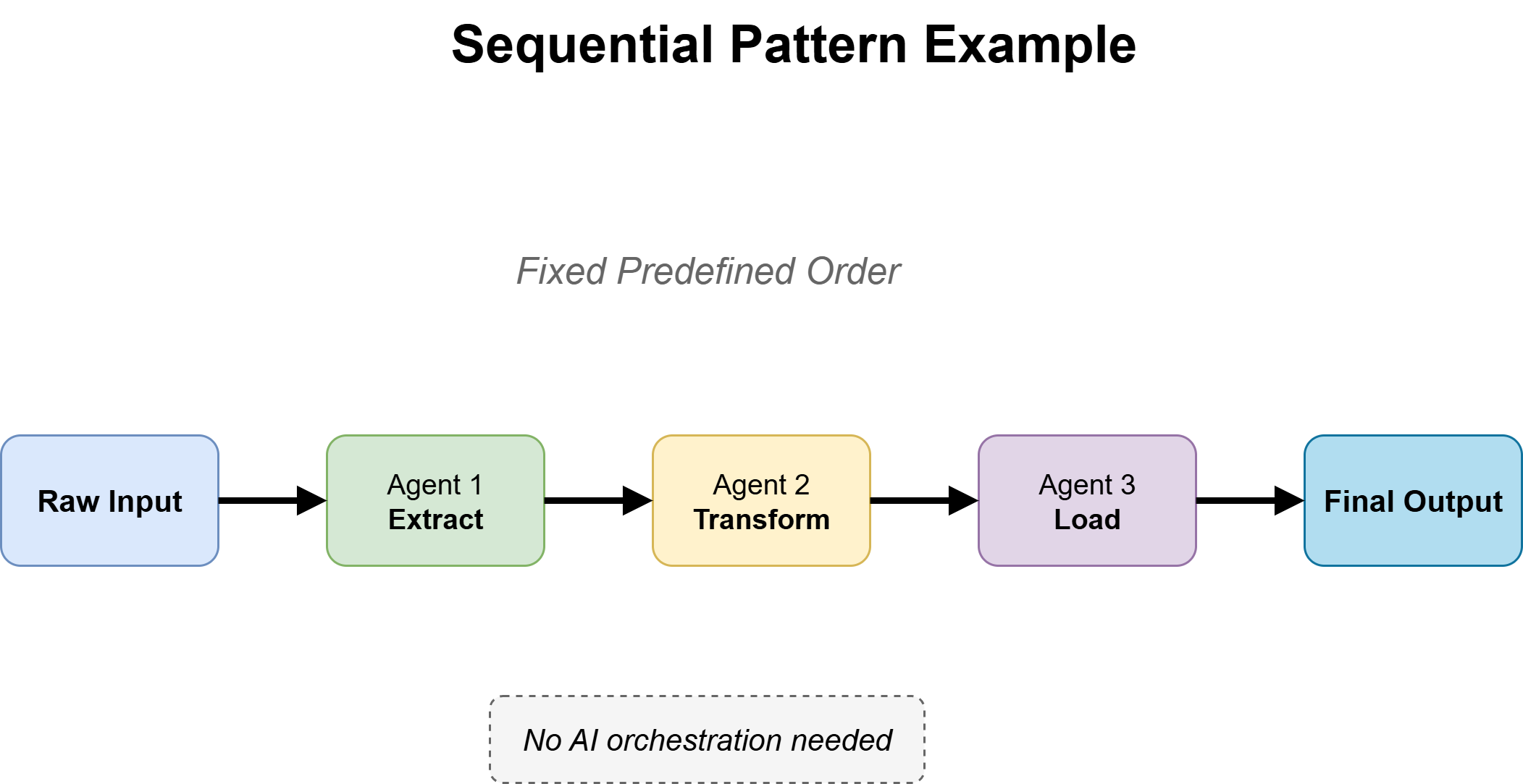
- Known Solution Path: This indicates a predictable, fixed workflow where the sequence of operations remains consistent across executions. Examples include routine data processing pipelines, automated report generation following a template, or a defined sequence of API calls. For such scenarios, a sequential workflow pattern is highly efficient. The agent executes explicit, ordered steps, passing outputs from one stage to the next. The core principle here is to leverage the AI model primarily for tasks requiring interpretation or generation, while deterministic code handles all other predefined operations. This approach maximizes speed, predictability, and cost-efficiency, avoiding the overhead of complex reasoning where it’s not needed. The primary failure mode is over-engineering, such as implementing iterative reasoning (like ReAct) for a task that is entirely deterministic.
- Unknown Solution Path: This signifies tasks where each subsequent step depends critically on the outputs or observations of previous steps. Examples include dynamic customer support interactions, exploratory research, or debugging processes where hypotheses shift based on results. Such tasks necessitate adaptive workflows.
If the path is known, the design leans towards Question 2a (Fixed Workflow). If unknown, it proceeds to Question 2b.
Question 2a: Is This a Fixed Workflow?
(Note: The original article implicitly merges 2a into 1. I’ll make 2a explicitly about the Sequential Workflow pattern.)
For tasks with a known, stable solution path, the sequential workflow pattern is the recommended choice. This pattern dictates that the agent follows explicit, predefined steps in a specific order, passing the output of one stage as input to the next until the task is complete. This design is optimal when the process is highly predictable and rarely deviates. The critical design decision within this pattern is to delineate precisely where the AI model’s reasoning capabilities are truly necessary (e.g., for interpreting user intent or generating creative text) versus where traditional deterministic code can handle the logic. Over-engineering, such as embedding complex reasoning loops in every step of an inherently fixed process, should be avoided to maintain speed and cost-efficiency. If the workflow begins to falter on edge cases or requires new, undefined steps, it signals a need to reconsider and potentially move towards more adaptive patterns, akin to those addressed in Question 2b.
Question 2b: The Ubiquity of Tool Access
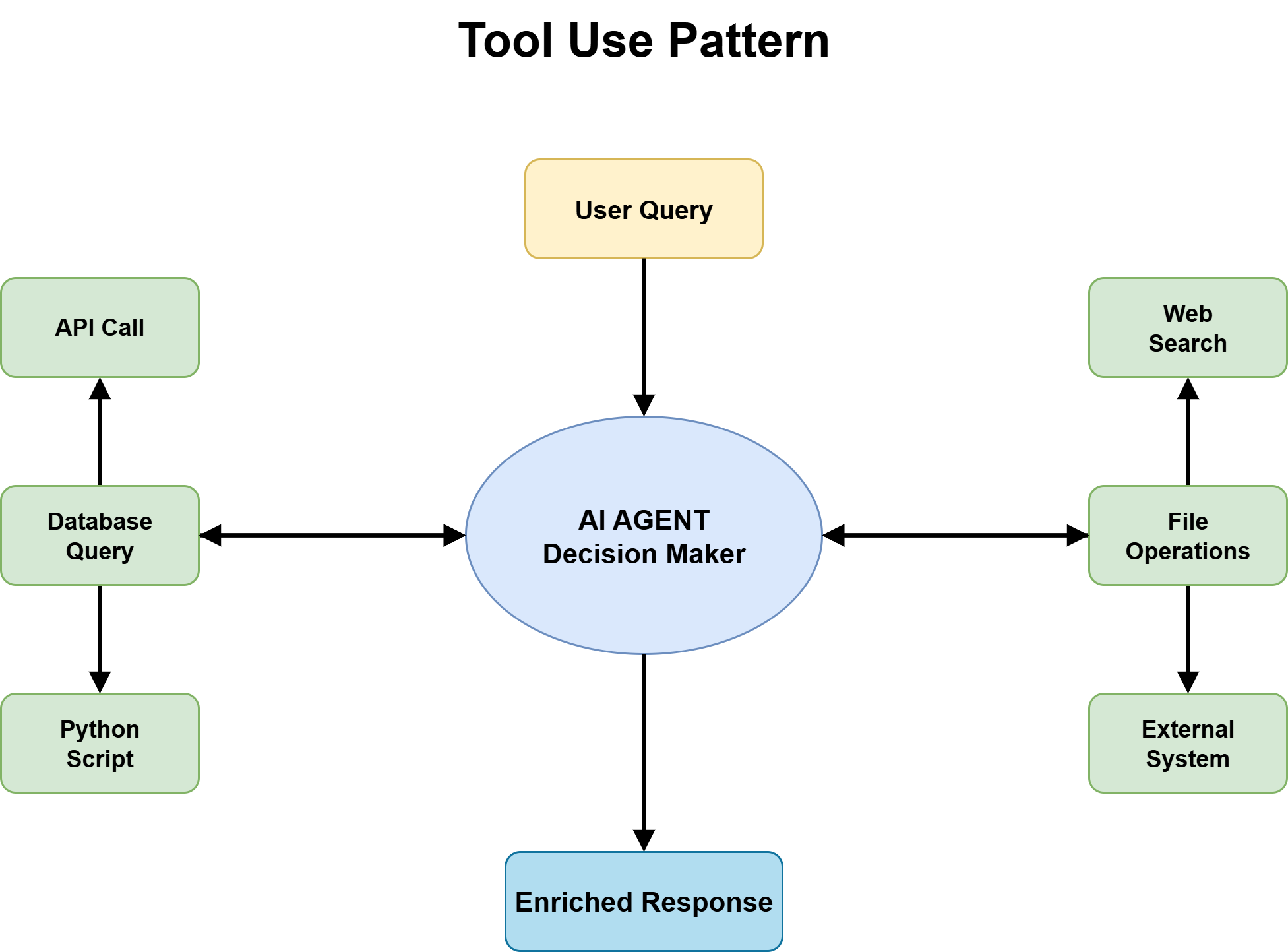
For tasks with unknown solution paths, the next crucial question is whether the agent requires interaction with the external world. This encompasses querying databases, calling APIs, retrieving documents, executing code, or any action beyond operating solely on information present in its immediate context or training data. In most real-world AI applications, the answer is an emphatic "yes."
Tool use is almost always a prerequisite for practical agentic systems. An agent confined to its training data and conversational context can only address a narrow range of problems. The moment a task involves current information, dynamic external states, or system-level actions (e.g., sending an email, updating a record), tool use becomes fundamental. While effective tool design—with clear contracts, inputs, and outputs—is vital for implementation, for pattern selection, the key takeaway is that tools augment an agent’s capabilities without fundamentally altering its core reasoning pattern. A ReAct agent utilizing tools remains a ReAct agent; a planning agent with tools remains a planning agent. Tools operate under the reasoning layer, providing the agent with the means to act and gather information, rather than dictating the reasoning process itself. Therefore, the decision tree generally assumes tool use for adaptive tasks and proceeds to Question 3.
Question 3: Articulating Task Structure: Planning vs. ReAct
This question differentiates between two fundamental adaptive patterns: Planning and ReAct. It’s a distinction often overlooked, leading many developers to default to ReAct.
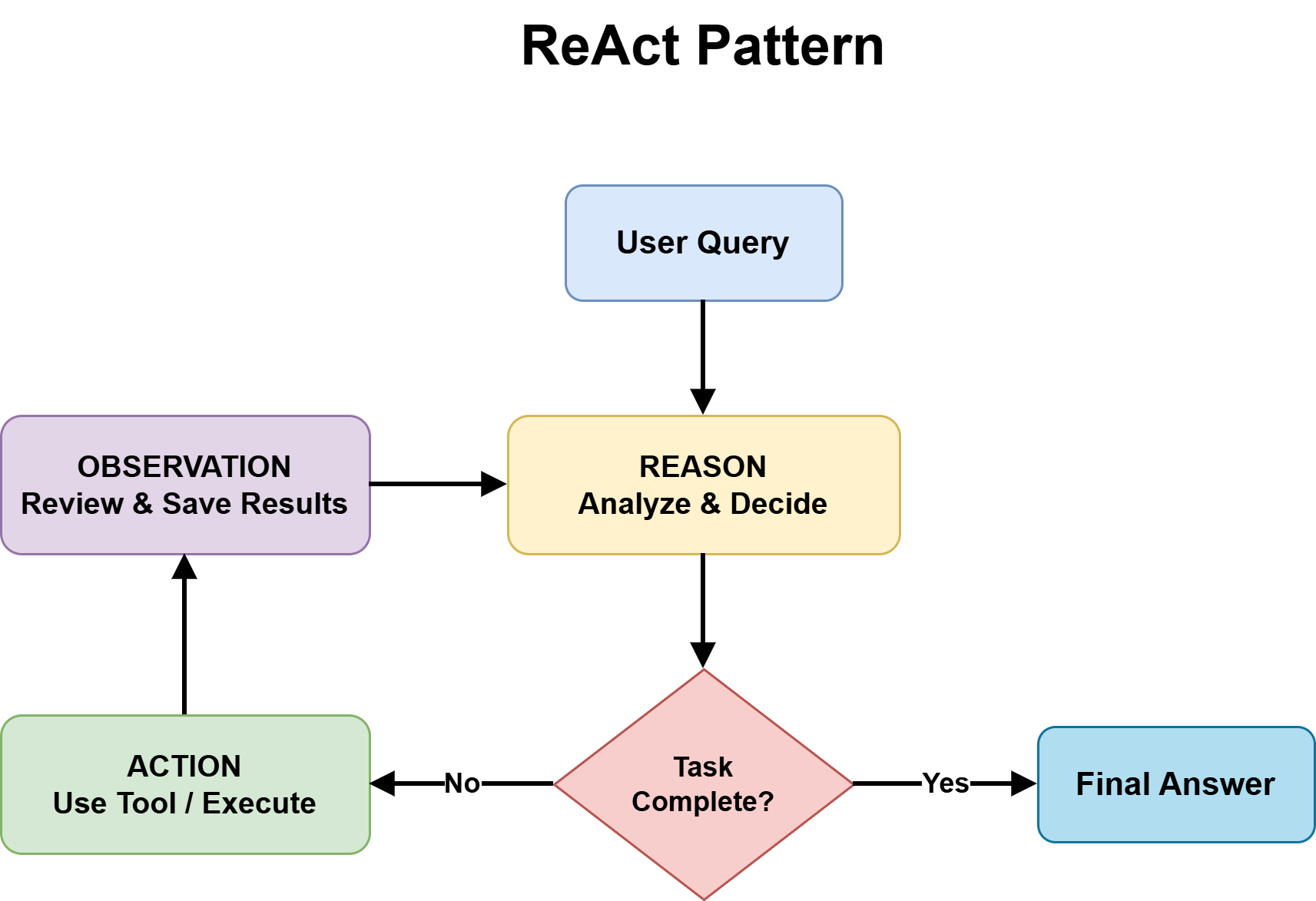
- ReAct Pattern: ReAct (Reasoning and Acting) agents iteratively alternate between internal reasoning steps (Thought) and external actions (Action), using the observations (Observation) from each action to inform the next step until a stopping condition is met. This pattern is highly flexible and excels when the task structure emerges dynamically through interaction and feedback. It’s ideal for tasks where the full sequence of steps cannot be known upfront and requires constant adaptation.
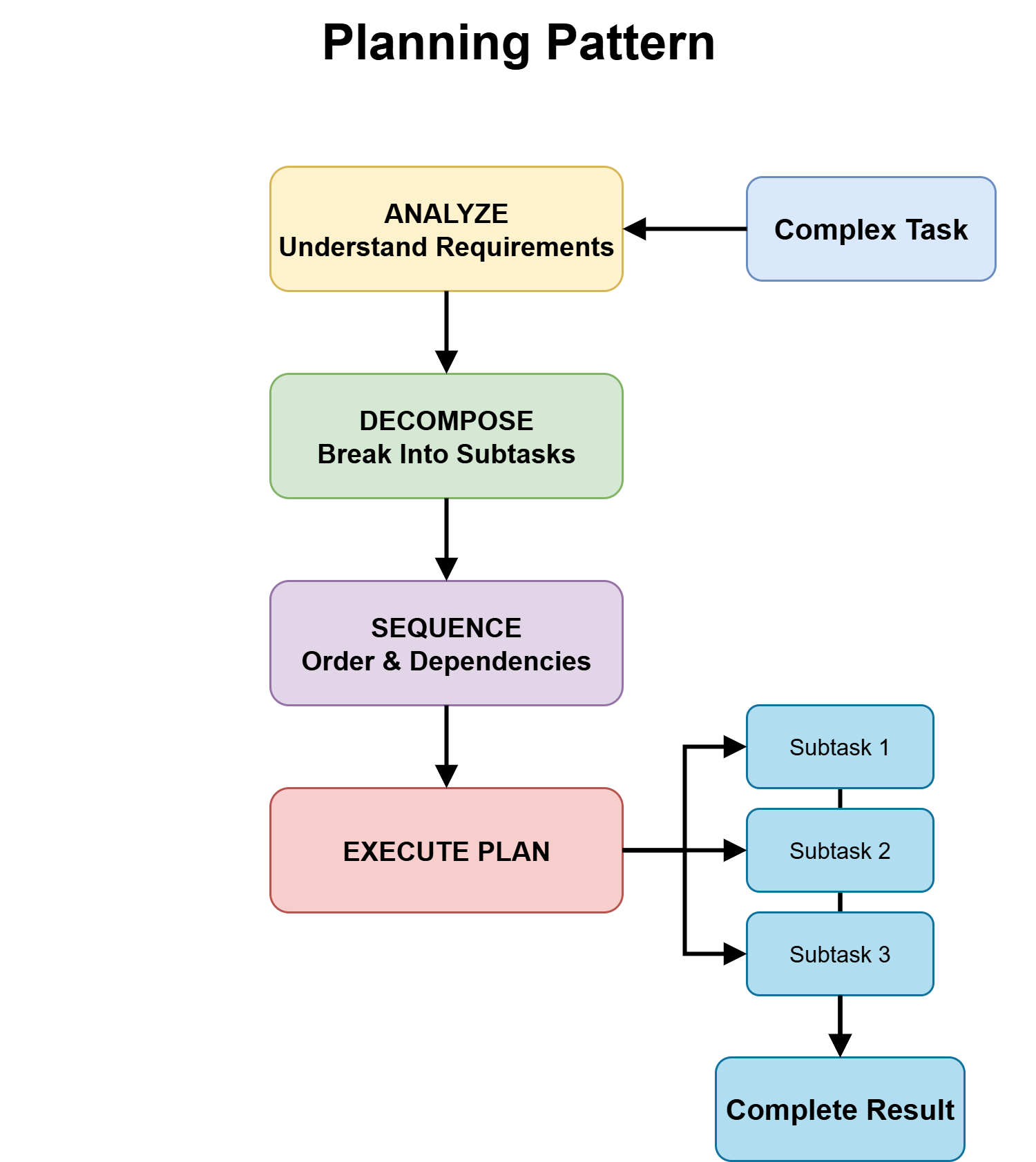
- Planning Pattern: A task is considered structurally articulable when it can be decomposed into ordered subtasks with clear dependencies before execution. While the granular details of each subtask might be unknown, the overarching stages and their sequence are predictable. Examples include developing a software feature (design -> implement -> test), provisioning infrastructure (network -> compute -> storage), or generating a comprehensive research report (information gathering -> synthesis -> drafting). The planning pattern thrives in such scenarios, allowing the agent to define a high-level plan upfront, anticipate dependencies, and avoid costly mid-execution course corrections. This reduces the likelihood of the agent pursuing irrelevant paths or discovering critical errors late in the process.
However, planning also comes with trade-offs: an additional upfront planning step, a reliance on the quality of that initial plan, and reduced flexibility if real-world conditions diverge significantly from expectations. If the task structure is clear and stable, Planning with ReAct inside steps is effective, where the planner defines the stages and ReAct handles adaptive execution within each stage. If the structure emerges dynamically during execution, ReAct is the preferred choice, and the decision proceeds to Question 4.
Question 4: Balancing Quality and Speed: The Role of Reflection
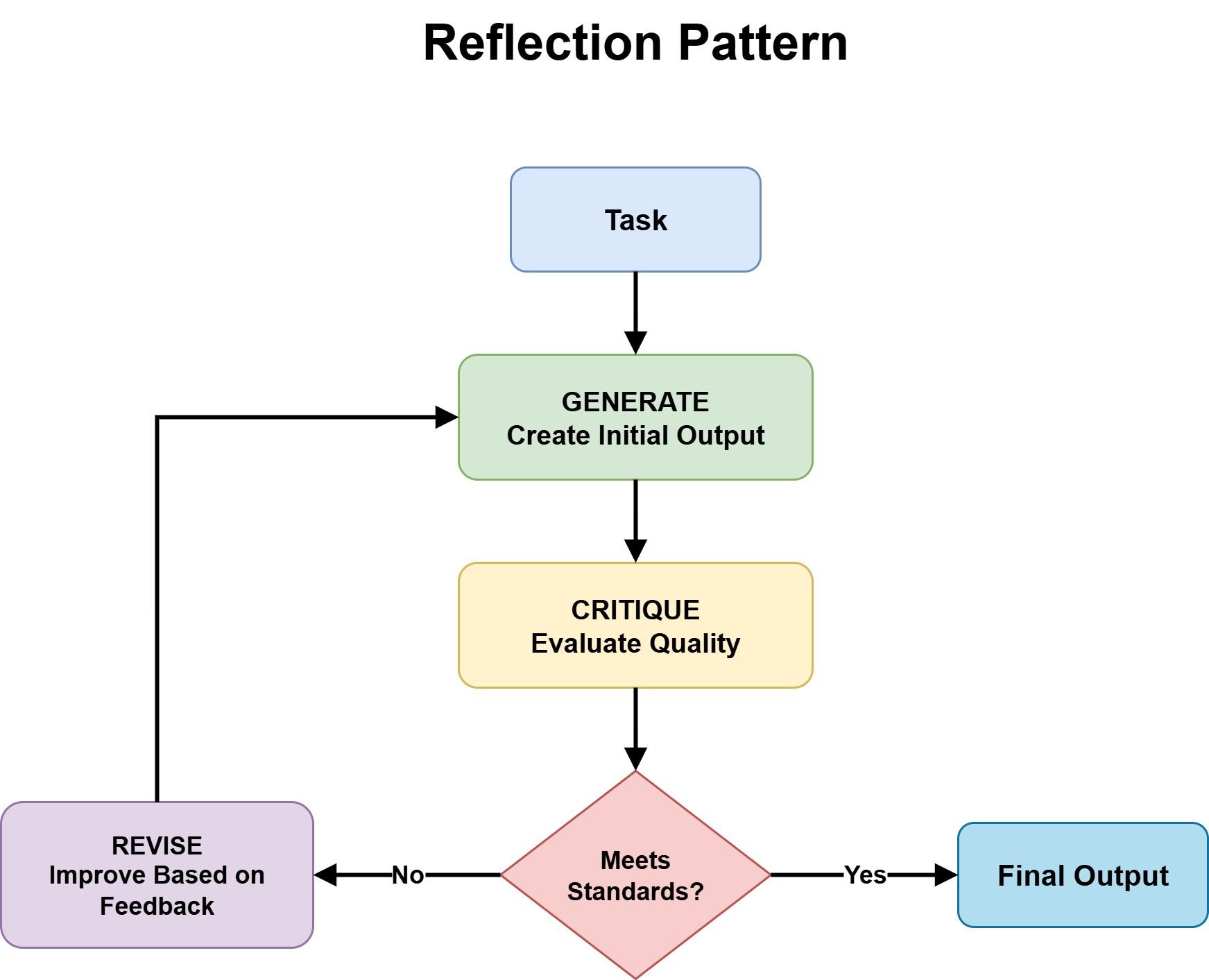
This question introduces the reflection pattern, which involves a generate-critique-refine cycle, and determines its suitability as an enhancement to the chosen pattern. Reflection is particularly valuable when two conditions are met:
- High-Quality Output is Paramount: The task demands exceptional accuracy, completeness, or adherence to specific criteria, where a single-pass generation might be insufficient.
- Clear Evaluation Criteria Exist: There are objective, explicit metrics or guidelines against which the output can be reliably judged.
Reflection involves an agent generating an initial output, then critically evaluating it against predefined criteria, and finally refining the output based on the critique. This iterative refinement significantly boosts output quality and correctness. However, it is not universally beneficial. Without clear evaluation criteria, the critic’s feedback can be vague or misleading. Furthermore, reflection inherently adds latency due to the multiple passes, making it unsuitable for real-time systems or high-throughput tasks where response speed is critical. A key design consideration for effective reflection is ensuring critic independence—the critic should not simply echo the generator. This often requires a separate framing, distinct prompts, or even a different model for the critique phase to provide an unbiased assessment. For high-stakes applications like legal document drafting or medical diagnostic support, reflection is invaluable, often incorporating human-in-the-loop checkpoints.
If quality is paramount and criteria are clear, adding Reflection is recommended. If speed is prioritized or evaluation criteria are ambiguous, reflection is skipped, and the tree moves to Question 5.
Question 5: Specialization and Scale: When Multi-Agent Systems are Essential
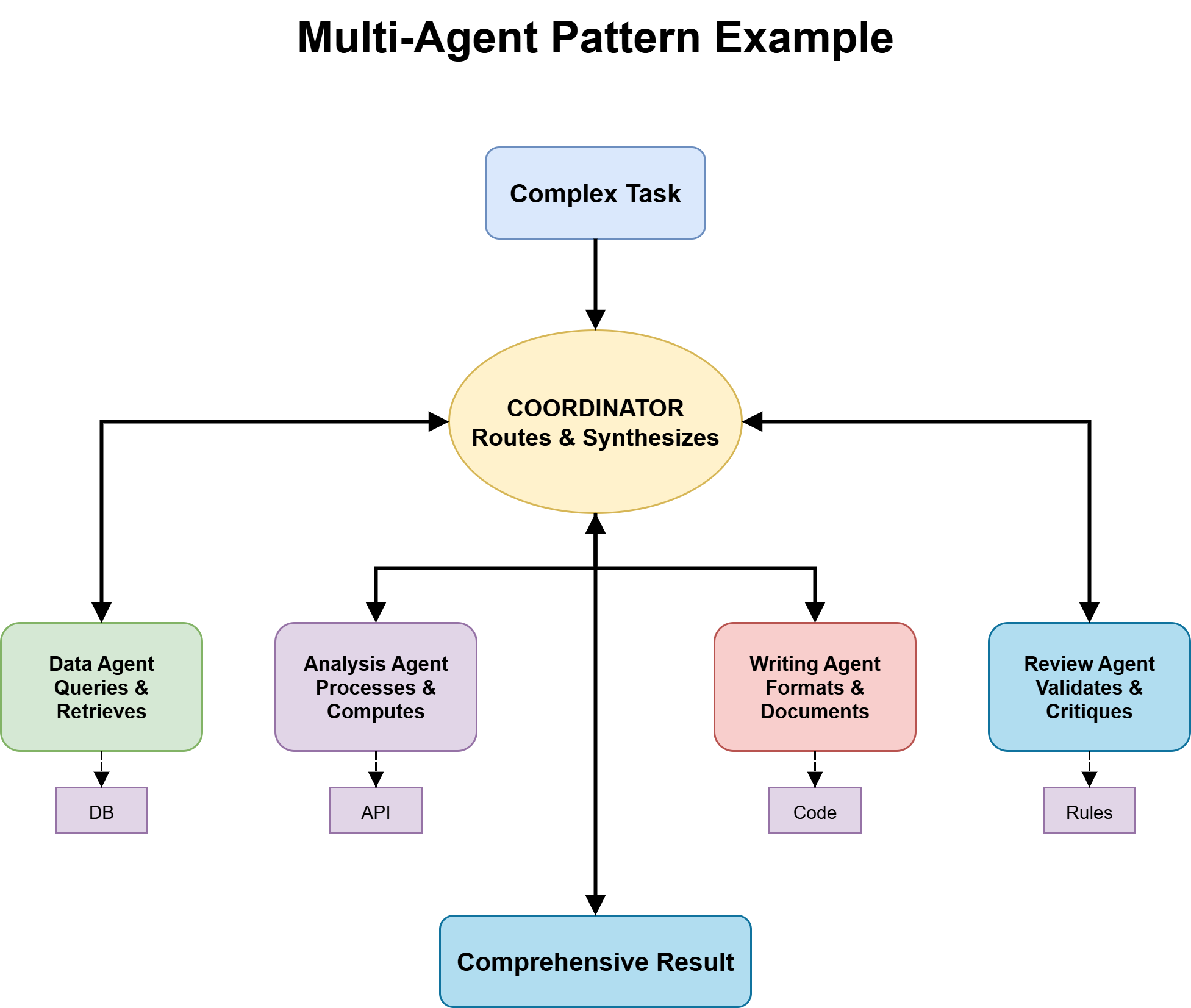
This final question addresses whether a multi-agent architecture is necessary, a decision that should only be made after carefully evaluating the preceding factors. Multi-agent systems involve multiple specialized agents collaborating to achieve a common goal. They are justified when tasks exhibit:
- Specialization Needs: Different parts of the task require distinct types of expertise or reasoning styles that cannot be efficiently encapsulated within a single agent (e.g., legal analysis combined with financial modeling, or software development paired with security auditing).
- Scale Problems: The task is too large to fit within a single agent’s context window, or requires parallel execution to meet performance demands, thereby avoiding unnecessary serialization.
While multi-agent systems can significantly improve performance by distributing work among specialists and enabling parallelism, they also introduce substantial overhead. This includes increased coordination complexity, the need for robust shared state management, and a greater number of potential failure points. If a single, well-designed agent can handle the task, the added complexity of a multi-agent system often outweighs the benefits. The impetus for adopting a multi-agent approach should always stem from a demonstrable bottleneck that specialization or parallel processing can effectively resolve, rather than a mere architectural preference.
Key design considerations for multi-agent systems include defining clear task ownership, establishing robust routing logic to direct subtasks to the appropriate specialist, and selecting an effective topology for agent interaction (e.g., sequential, parallel, or debate-style coordination). Frameworks like Microsoft’s AutoGen or CrewAI are emerging to facilitate the development and orchestration of such complex systems.
Synthesis: Mapping Decision Tree Outcomes to Agent Patterns
Working through these five questions systematically leads to one of four primary agentic design patterns, which serve as principled starting points:
| Resulting Agent Pattern | When to Use | Why It Works |
|---|---|---|
| Single Agent + Tools + ReAct | Unknown solution path, no clear upfront structure, no strict quality constraints, no specialization needs. | This is the most flexible and often the default for real-world tasks. It allows for adaptive exploration via tool use and step-by-step reasoning, making it robust for emergent problems and facilitating inexpensive failure detection and iterative improvement. |
| Planning Agent + ReAct Execution | Task structure is knowable upfront, but each step requires adaptive reasoning during execution. | The planner defines the high-level stages and dependencies, while ReAct handles local uncertainty and execution within each step. This hybrid approach significantly reduces mid-execution failures caused by hidden complexity and ensures structured progress. |
| Single Agent + Reflection | High-quality output required, and latency is an acceptable trade-off. | The generate-critique-refine loop dramatically improves correctness and adherence to specific criteria. It is most effective when clear, explicit, and verifiable evaluation criteria are available to guide the critique process. |
| Multi-Agent Specialist System | Strong specialization needs or scale requirements exceed a single agent’s capacity. | A coordinator routes tasks to specialized agents, enabling parallel execution and leveraging diverse domain expertise. While adding coordination overhead and system complexity, it is essential for tackling highly complex or large-scale problems. |
It’s important to note that these are foundational patterns. In practice, many production-grade agents evolve into hybrid systems, layering elements of multiple patterns as their requirements mature.
Addressing Common Design Pitfalls and Remedies
Even with a structured selection process, agentic systems can encounter challenges. Recognizing the signals of misalignment between a chosen pattern and the task is crucial for timely course correction.
| Signal | What It Means | Suggested Fix |
|---|---|---|
| ReAct looping excessively | The agent is stuck in repetitive cycles, revisiting resolved questions, or exhibiting uncertainty about progress or task structure. | The task likely possesses more inherent structure than initially assumed, or the agent’s tools and stopping conditions are poorly defined. Consider implementing planning, improving tool clarity, or refining the stopping criteria. |
| Planning agent abandoning plan | The agent creates a plan but consistently deviates from it during execution, failing to adhere to the predefined stages. | This indicates the task is less structured or more dynamic than initially believed. The initial plan might be too rigid. Switch to a more lightweight planning approach combined with flexible ReAct execution, or reconsider the entire planning phase. |
| Reflection not improving output | The critique cycles fail to yield meaningful improvements in output quality, or the refined output is still unsatisfactory. | The evaluation criteria are likely unclear, vague, or the critic agent is too closely aligned with the generator, leading to biased feedback. Refine the critique setup by providing more explicit criteria, or consider using a different model for the critic. |
| Multi-agent routing failures | Tasks are consistently routed to the wrong specialist, or outputs from different agents don’t integrate coherently downstream. | The routing logic is flawed or over-reliant on LLM interpretation for predictable cases. Implement more deterministic rules for routing clear-cut tasks and ensure robust communication protocols for combining agent outputs effectively. |
The Broader Implications for AI Development
The adoption of structured decision-making frameworks for agentic design patterns signifies a maturing phase in AI engineering. By making pattern selection explicit and systematic, developers can avoid the "wild west" approach of trial and error, leading to more predictable development cycles, reduced operational costs, and higher-quality AI deployments. This shift also has implications for:
- AI Governance and Ethics: Structured design promotes transparency and auditability, as the reasoning behind architectural choices becomes clear. This aids in understanding system behavior and addressing potential biases or unintended consequences.
- Developer Productivity: Providing clear guidelines empowers developers to make informed choices, reducing time spent on rework and increasing confidence in their designs.
- Innovation: By abstracting away the initial design guesswork, teams can focus more on refining agent capabilities, developing novel tools, and pushing the boundaries of what agentic AI can achieve.
For high-stakes applications, integrating human-in-the-loop (HITL) checkpoints remains paramount, particularly where reliability, safety, or nuanced judgment calls are critical. The decision tree provides a robust foundation, but human oversight ensures ethical alignment and performance in complex, real-world scenarios.
Ultimately, the patterns themselves are stable, but the art lies in their correct application. By letting the decision tree guide the initial choices and allowing continuous feedback and operational results to inform evolution, organizations can build agentic AI systems that are not only powerful but also robust, scalable, and truly fit for purpose.
