
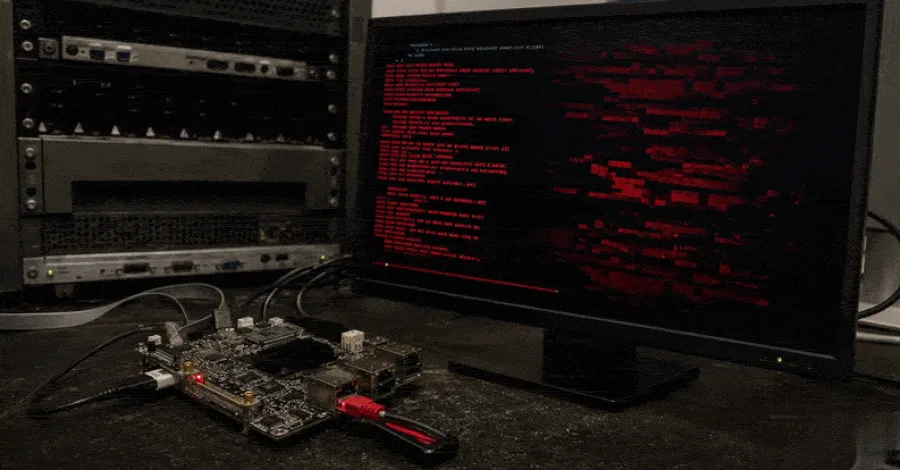

Firmware security experts at Binarly have uncovered a series of six critical vulnerabilities within U-Boot, a widely deployed open-source bootloader that forms the foundational software for an immense array of hardware, spanning from common consumer devices like home routers and smart cameras to sophisticated infrastructure components such as the management chips (BMCs) found in data-center servers. These newly identified flaws, four of which can induce device crashes and two enabling arbitrary code execution, pose a significant threat by allowing attackers to compromise systems at the earliest stage of the boot process, prior to any integrity checks, thereby subverting the entire chain of trust.
The Foundational Role of U-Boot and the Nature of the Threat
U-Boot (Universal Boot Loader) is an essential piece of firmware that initializes a device’s hardware and loads its operating system. Its pervasive use across diverse embedded systems means that vulnerabilities at this level can have far-reaching consequences, affecting industries from telecommunications and automotive to industrial control and critical infrastructure. The very essence of a secure boot process relies on the bootloader’s integrity; if an attacker can introduce malicious code before the bootloader verifies the legitimacy of subsequent software components, they gain a stealthy and persistent foothold, effectively bypassing higher-level operating system security measures. This "below the OS" compromise makes detection and remediation exceptionally challenging, as standard security tools operating within the OS may not be able to identify or remove the threat.
Binarly’s investigation specifically targeted the signature verification mechanisms within U-Boot, which are designed to ensure that the software being loaded is authentic and untampered. Their findings reveal that most of the vulnerable code has been present in U-Boot since version v2013.07, affecting over 50 stable releases and, by extension, countless vendor firmwares built upon this ubiquitous bootloader. This long-standing presence underscores the systemic nature of the issue and the potential breadth of its impact. The discovered bugs are tracked under Binarly advisories BRLY-2026-037 through BRLY-2026-042, with no official CVE identifiers assigned as of this report.
Detailed Breakdown of the Vulnerabilities
The six flaws identified by Binarly fall into two primary categories based on their potential impact: those that can lead to remote code execution (RCE) and those that cause the bootloader to crash. The two RCE-capable vulnerabilities, BRLY-2026-037 and BRLY-2026-038, are particularly alarming. Both trace their origins to an unchecked return value from fdt_get_name, a lookup function within the device-tree parsing library that U-Boot utilizes. When processing a malformed image, this function can return a null pointer and a negative length value. Critically, U-Boot proceeds to use these values without adequate validation.
- BRLY-2026-037 (Null Pointer Dereference leading to Stack Buffer Overflow): This vulnerability occurs when the system attempts to perform a memory copy operation using the returned null pointer. On devices where address zero is mapped, this can result in a stack buffer overflow. A carefully crafted malicious input could leverage this overflow to inject and execute arbitrary code.
- BRLY-2026-038 (Negative Length leading to Return Address Overwrite): The second RCE flaw arises from the unchecked negative length value being fed into pointer arithmetic. This operation causes the pointer to walk backward in memory, potentially overwriting a saved return address on the stack. In environments with a suitable memory layout, an attacker could manipulate this to redirect program execution flow to their own malicious code, effectively achieving pre-boot code execution.
The remaining four vulnerabilities, while less severe than RCE, can still disrupt device operation by causing the bootloader to crash, leading to denial-of-service. These include:
- BRLY-2026-039 and BRLY-2026-041 (Out-of-Bounds Reads): These bugs allow an attacker to read past the allocated memory boundaries of an image by providing controlled, untrusted size or offset values. Such out-of-bounds reads can lead to system instability and crashes.
- BRLY-2026-040 (Null Pointer Dereference): This flaw involves the dereferencing of a null pointer returned by an older image format, which U-Boot fails to check, resulting in a crash.
- BRLY-2026-042 (Stack Exhaustion): Triggered by a deeply nested image structure, this vulnerability causes an early validation step to recursively call itself until the stack is exhausted, leading to a bootloader crash.
Binarly has publicly demonstrated proof-of-concept images and reproduction steps for each flaw against standard U-Boot builds, confirming their exploitability. While there have been no reported instances of these vulnerabilities being exploited in real-world attacks to date, the potential for code execution at such a fundamental level necessitates immediate attention and remediation.
The Significance of Pre-Boot Compromise: Undermining the Chain of Trust

The criticality of these U-Boot flaws lies in their ability to compromise a device’s "chain of trust." In modern computing, secure boot mechanisms are designed to establish an unbroken chain of cryptographic verification from the hardware root of trust up through the bootloader, operating system, and application layers. Each stage verifies the integrity and authenticity of the next. When a vulnerability like those found in U-Boot allows an attacker to execute code before the bootloader completes its signature verification of the operating system image, this entire chain is fundamentally broken.
An attacker gaining pre-boot code execution can:
- Install Persistent Malware: Implant rootkits or bootkits that are extremely difficult to detect or remove, residing below the operating system and surviving OS reinstallation.
- Bypass Secure Boot: Render hardware-backed security features like Secure Boot ineffective, as the malicious code executes before these protections can fully engage.
- Exfiltrate Sensitive Data: Access and exfiltrate data from memory or storage before the operating system even starts.
- Remotely Brick Devices: Beyond crashing, a sophisticated attacker could permanently damage the device’s firmware, requiring physical access and specialized tools for recovery, potentially leading to widespread infrastructure disruption.
Attack Vector: From Physical Access to Remote Exploitation
While many bootloader vulnerabilities traditionally require physical access to a device to inject a malicious image (e.g., via USB or direct memory access), the threat landscape has evolved. Binarly highlights that the "catch for an attacker is delivery: these bugs only bite once a malicious image reaches the boot path, which usually takes physical access or a privileged foothold." However, this foothold is not always local.
A crucial precedent for remote exploitation of such flaws was established in Binarly’s earlier research on Supermicro’s Baseboard Management Controllers (BMCs). In that instance, researchers demonstrated how an attacker with remote access to the BMC’s management interface could leverage the device’s own firmware update process to flash a malicious image without ever physically touching the hardware. This scenario underscores that critical infrastructure, network devices, and IoT systems with remote management capabilities are particularly vulnerable, as an initial network compromise could be escalated to a full system takeover at the firmware level.
Widespread Impact and Prevalence: A Systemic Issue
U-Boot’s open-source nature and robust feature set have made it a de facto standard for embedded systems. Its adoption extends across:
- Networking Equipment: Routers, switches, firewalls.
- IoT Devices: Smart home devices, industrial IoT sensors, wearables.
- Single Board Computers (SBCs): Raspberry Pi, BeagleBone, etc.
- Automotive Systems: Infotainment, telematics, ECUs.
- Industrial Control Systems (ICS): PLCs, RTUs, embedded controllers.
- Server Hardware: Baseboard Management Controllers (BMCs) in enterprise servers, which manage server operations independently of the main CPU.
The fact that the vulnerable code has persisted for over a decade means that an incredibly vast and diverse ecosystem of devices could be affected. Each vendor that incorporates U-Boot into their products must now individually assess and patch their specific implementations. This creates a significant supply chain security challenge, as the burden of remediation falls on hundreds, if not thousands, of manufacturers globally.
Timeline of Discovery and Remediation Efforts
Binarly’s research culminated in the discovery and responsible disclosure of these vulnerabilities. The U-Boot project maintainers acted swiftly, merging the necessary six patches into the upstream codebase in June. However, due to the typical development cycle, the July release (v2026.07) had already been frozen in April, meaning it shipped without these critical fixes. Users and administrators will need to await the next scheduled release, v2026.10, which is not anticipated until October, for an official stable version incorporating these patches.

For vendors and maintainers of U-Boot-based products, waiting for the v2026.10 release is not an option. Binarly strongly advises them to pull the upstream fixes immediately, referencing the commit links provided in each Binarly advisory. Tracking these by their advisory IDs (BRLY-2026-037 through BRLY-2026-042) is crucial given the absence of assigned CVE identifiers at this time.
For the end-users of devices built on U-Boot, the responsibility for applying the fix ultimately rests with their product vendor. This means monitoring for and promptly installing firmware updates released by device manufacturers. The speed and diligence of these vendors in rolling out patches will dictate the exposure window for millions of devices.
Historical Context: A Recurring Theme in Firmware Security
These U-Boot flaws are not isolated incidents but rather part of a broader, persistent pattern of vulnerabilities found in bootloaders and firmware. The same signature logic within U-Boot was previously affected months earlier by CVE-2026-33243, which U-Boot patched in April. This earlier flaw involved a property meant to list what the signature covers not being signed itself, allowing for tampered components to be swapped in without verification. The related barebox bootloader, which shares similar image tooling, was also impacted by this prior bug.
Furthermore, the fdt_get_name helper function, implicated in the two most severe RCE bugs, originates from libfdt (the flattened-device-tree library). This library is not exclusive to U-Boot; it is also shared with the Linux kernel, barebox, and other critical system components. This shared codebase means that the same "unchecked-return mistake" could potentially manifest in other software that uses libfdt, expanding the potential blast radius of this class of error.
Other notable firmware security incidents underscore the gravity of such vulnerabilities:
- LogoFAIL (2023): As extensively covered by The Hacker News, LogoFAIL was a collection of image-parsing bugs in PC firmware that allowed attackers to execute code during the boot process, even before Secure Boot could initiate its checks. This affected virtually every major PC brand, highlighting how seemingly innocuous image-parsing routines can become critical attack surfaces.
- BootHole (2020): This widely publicized GRUB2 bootloader vulnerability demonstrated how a single flaw could compromise Secure Boot across an entire ecosystem. BootHole underscored the immense logistical challenge of distributing patches to millions of devices running various iterations of a bootloader.
These historical examples serve as stark reminders that while the cryptographic signatures get considerable attention in secure boot discussions, the underlying "plumbing" — the code that processes images and runs before verification — remains a prime target for sophisticated attackers. The process of writing the patch is often the easiest part; the real challenge lies in the complex and often slow process of getting those patches deployed onto the millions of diverse devices dependent on these foundational software components.
Conclusion: An Urgent Call for Proactive Security Measures
The discovery of six new critical flaws in U-Boot by Binarly is a potent reminder of the ongoing vulnerabilities at the firmware level. With the potential for remote code execution, these bugs represent a significant threat to the integrity and security of countless embedded systems and critical infrastructure components worldwide. The long-standing nature of the vulnerable code, coupled with U-Boot’s ubiquitous adoption, necessitates an urgent and coordinated response from vendors, maintainers, and end-users. Proactive patching, rigorous firmware update strategies, and a sustained focus on secure development practices for foundational software components are paramount to mitigating these persistent and evolving threats to the digital ecosystem.
