
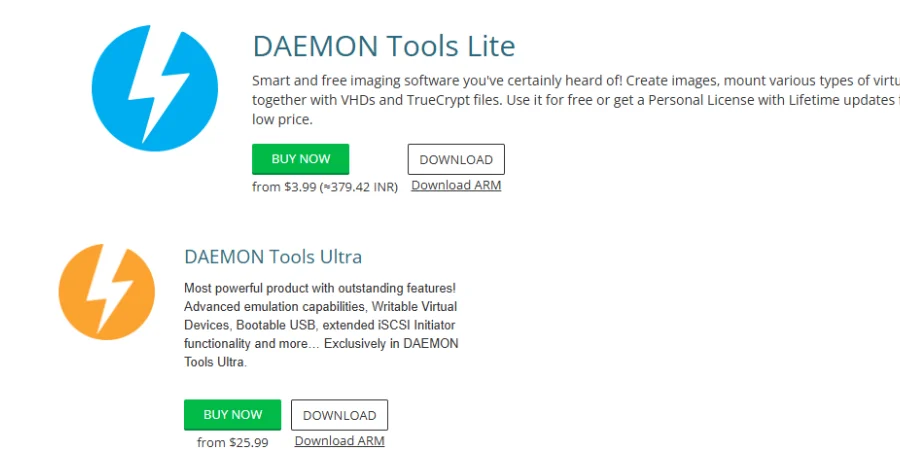

A newly identified and highly sophisticated supply chain attack has targeted the widely used DAEMON Tools software, compromising its official installers to distribute a potent malicious payload, according to detailed findings released by cybersecurity firm Kaspersky. This incident represents a significant breach of trust, as the trojanized installers were distributed directly from the legitimate DAEMON Tools website and bore valid digital certificates belonging to the software’s developers, making detection incredibly challenging for unsuspecting users and traditional security systems.
Unpacking the Attack Vector: The DAEMON Tools Compromise
The core of this attack lies in the compromise of the software development and distribution pipeline of DAEMON Tools, a popular utility for mounting disk images and virtual drives. Cybercriminals infiltrated the developer’s infrastructure, enabling them to inject malicious code directly into the legitimate software installers. Kaspersky researchers Igor Kuznetsov, Georgy Kucherin, Leonid Bezvershenko, and Anton Kargin, who unveiled the details, highlighted the critical nature of this method, stating, "These installers are distributed from the legitimate website of DAEMON Tools and are signed with digital certificates belonging to DAEMON Tools developers." This use of legitimate channels and trusted digital signatures is a hallmark of advanced persistent threats (APTs) and sophisticated cybercrime operations, designed to bypass conventional perimeter defenses and exploit the inherent trust users place in official software.
The compromise window for the DAEMON Tools installers began on April 8, 2026. Versions ranging from 12.5.0.2421 to 12.5.0.2434 have been identified as carrying the malicious payload. As of the time of Kaspersky’s report, the supply chain attack remained active, indicating an ongoing threat to users downloading or updating the software. AVB Disc Soft, the developer behind DAEMON Tools, has been promptly notified of the breach, initiating an urgent investigation into the integrity of their build and distribution systems.
Specifically, the attackers tampered with three distinct components of the DAEMON Tools software package. While the precise nature of these components was not fully detailed in the initial report, it is highly probable that these were core binaries or dynamic-link libraries (DLLs) critical for the software’s operation. By embedding their malicious code within these essential files, the attackers ensured that the malicious implant would be executed as part of the normal software installation and subsequent system operations, often with elevated privileges. This level of integration allows the malware to persist and operate stealthily, mimicking legitimate system processes.
Chronology of Deception: A Timeline of the Attack
The timeline of this sophisticated attack reveals careful planning and execution by the threat actors:
- March 27, 2026: The command-and-control (C2) domain, "env-check.daemontools[.]cc," crucial for the malware’s communication, was registered. This pre-registration of infrastructure indicates that the attackers had already laid the groundwork for their operation weeks before deploying the trojanized installers.
- April 8, 2026: The first trojanized versions of DAEMON Tools installers, specifically starting from version 12.5.0.2421, began to be distributed from the official DAEMON Tools website. This marked the active phase of the supply chain compromise, where unsuspecting users started downloading and installing the tainted software.
- April 8, 2026 – Present (as of report): The compromised installers continued to be distributed, leading to "several thousand" observed infection attempts across a vast geographical area. During this period, Kaspersky researchers initiated their investigation and analysis, leading to the discovery of the ongoing attack.
- Early May 2026 (Implied): Kaspersky publicly disclosed their findings, informing the cybersecurity community and DAEMON Tools’ developers (AVB Disc Soft) about the breach. This disclosure typically triggers rapid response efforts from affected vendors and heightened vigilance from users.
The period between the C2 domain registration and the deployment of the malicious installers suggests a methodical approach, allowing the attackers to set up their infrastructure, test their implants, and prepare for widespread distribution. The active status of the attack at the time of reporting underscores the urgency for users and organizations to take immediate protective measures.
The Malicious Payload: Dissecting the Threat
The modus operandi of the malicious payload is designed for stealth and flexibility. Any time one of the compromised DAEMON Tools binaries is launched—a common occurrence during system startup or regular software use—an initial implant is activated on the compromised host. This implant serves as the first stage of the attack, designed to establish covert communication with the attacker’s infrastructure.
Upon activation, the implant sends an HTTP GET request to the pre-registered external server, "env-check.daemontools[.]cc." This initial communication is a beacon, signaling a successful infection and awaiting further instructions. The server, controlled by the attackers, then responds with a shell command. This command is executed on the victim’s system using the "cmd.exe" process, a standard Windows command-line interpreter, allowing the attackers to leverage legitimate system utilities for malicious purposes.
The shell command, in turn, is engineered to download and execute a series of executable payloads. These subsequent payloads are the core components of the attacker’s toolkit, tailored for various malicious activities. While the specific names of all payloads were not explicitly listed, typical examples in such sophisticated attacks include:

- Information Stealers: Designed to harvest sensitive data such as login credentials, financial information, browser history, and documents.
- Remote Access Trojans (RATs): Like the QUIC RAT identified in this attack, these provide attackers with full remote control over the compromised system, allowing for arbitrary command execution, file manipulation, and surveillance.
- Reconnaissance Modules: Used to map out the victim’s network, identify valuable assets, and gather intelligence for further stages of the attack.
- Persistence Mechanisms: Tools to ensure the malware survives system reboots and continues its operation undetected.
One particularly notable payload delivered via this backdoor is the QUIC RAT. This remote access trojan is characterized by its advanced communication capabilities, supporting a wide array of command-and-control (C2) protocols. These include HTTP, UDP, TCP, WSS (WebSocket Secure), QUIC (Quick UDP Internet Connections), DNS, and HTTP/3. The support for modern and diverse protocols like QUIC and HTTP/3 is significant, as these can often bypass network security monitoring tools that are not configured to inspect such traffic, thus enhancing the malware’s stealth and resilience. Furthermore, the QUIC RAT comes equipped with sophisticated capabilities to inject its malicious code into legitimate Windows processes, specifically "notepad.exe" and "conhost.exe." Process injection is a common evasion technique that allows malware to operate under the guise of trusted applications, making it harder for endpoint detection and response (EDR) solutions to flag suspicious activity.
Beyond the QUIC RAT, Kaspersky also observed the deployment of a C++ implant. This specialized backdoor was delivered to a lone victim: an educational institution located in Russia. The use of a custom-developed implant, particularly one written in a low-level language like C++, suggests a high degree of technical proficiency from the attackers and often indicates a highly targeted objective that requires bespoke functionality not available in off-the-shelf malware.
Global Reach, Targeted Precision: Scale and Scope of Infections
Kaspersky’s telemetry data painted a dual picture of the attack’s scale: widespread initial compromise attempts coupled with highly selective follow-on targeting. The Russian cybersecurity company reported "several thousand infection attempts" involving DAEMON Tools software across its global network. These attempts impacted individuals and organizations in more than 100 countries worldwide, reflecting the broad distribution of DAEMON Tools. Countries with notable infection attempts included Russia, Brazil, Turkey, Spain, Germany, France, Italy, and China, illustrating the global footprint of the initial compromise.
However, a critical observation made by Kaspersky was that the next-stage backdoor, which includes sophisticated payloads like the QUIC RAT, was delivered to only a dozen hosts. This stark contrast between the thousands of initial infections and the handful of secondary compromises clearly indicates a highly targeted approach by the threat actors. Instead of a broad, indiscriminate attack, the attackers appear to be carefully selecting their ultimate victims after initial reconnaissance.
The systems that received the follow-on, more potent malware were flagged as belonging to high-value targets. These included organizations in the retail, scientific research, government, and manufacturing sectors. Geographically, these specific targets were concentrated in Russia, Belarus, and Thailand. This precise targeting suggests that the attackers were not merely interested in mass infection but rather in gaining deep access to specific organizations, likely for purposes of intelligence gathering, industrial espionage, or financially motivated "big game hunting." The single instance of the C++ implant being deployed against an educational institution in Russia further underscores this tailored approach, suggesting a specific interest in that particular entity or its data.
Attribution and Adversary Profile
While Kaspersky’s investigation did not formally attribute the activity to any known threat actor or group, the evidence gathered points strongly to it being the work of a Chinese-speaking adversary. This assessment is typically based on an analysis of various artifacts observed during the attack, such as code characteristics, choice of tools, infrastructure patterns, language used in internal malware strings, and historical attack methodologies associated with specific geopolitical regions.
The sophisticated nature of the supply chain compromise, the use of custom malware like the C++ implant, the ability to maintain persistence, and the broad range of C2 protocols supported by the QUIC RAT all suggest an adversary with significant resources, technical expertise, and operational maturity. Such capabilities are often indicative of state-sponsored groups or highly organized cybercriminal syndicates.
Kaspersky noted that the ultimate intent behind the attack—whether it is cyberespionage (gathering intelligence from government, scientific, or manufacturing targets) or "big game hunting" (high-value financial extortion or data theft from retail and other sectors)—is currently unclear. However, the selective targeting of specific industries and geographies, combined with the capabilities of the deployed malware, strongly suggests an objective beyond mere opportunistic exploitation.
Official Response and Expert Insights
Kaspersky’s role in detecting, analyzing, and disclosing this complex supply chain attack has been paramount. Their research team’s ability to uncover the compromise, despite the use of legitimate digital certificates and distribution channels, highlights the importance of advanced threat intelligence and behavioral analysis.
Igor Kucherin, a senior security researcher at Kaspersky GReAT, emphasized the inherent dangers of such attacks: "A compromise of this nature bypasses traditional perimeter defenses because users implicitly trust digitally signed software downloaded directly from an official vendor." This trust factor is precisely what makes supply chain attacks so insidious and effective. Kucherin further added, "Because of that, the DAEMON Tools attack has gone unnoticed for about a month. This period of time, in turn, indicates that the threat actor behind this attack is sophisticated and has advanced offensive capabilities." The month-long undetected period underscores the stealth and precision of the operation, giving the attackers ample time to establish a foothold and conduct initial reconnaissance on compromised systems.

In response to the notification from Kaspersky, AVB Disc Soft, the developer of DAEMON Tools, is expected to initiate a thorough internal investigation. A plausible statement from the company would likely include an acknowledgment of the breach, an apology for the inconvenience and risk to their users, and a commitment to swiftly remediate the vulnerability, secure their development pipeline, and provide clean versions of their software. They would also likely advise users to immediately update their software to trusted, verified versions and to conduct security scans.
Cybersecurity experts broadly echo Kaspersky’s concerns. The use of valid digital certificates for malicious purposes is a recurring and escalating problem. It fundamentally undermines the trust model that much of internet security is built upon. Organizations and individuals alike are increasingly vulnerable to threats that leverage legitimate credentials and trusted sources.
Broader Implications: The Shadow of Supply Chain Attacks
The DAEMON Tools compromise is not an isolated incident but rather the latest in a growing and alarming trend of software supply chain attacks observed in the first half of 2026. This year has already seen several high-profile breaches leveraging similar methodologies, including:
- eScan in January: An antivirus software vendor whose update servers were reportedly compromised.
- Notepad++ in February: A popular text editor that had its update mechanism hijacked.
- CPUID in April: A utility for hardware monitoring that was used to distribute the STX RAT.
These incidents collectively paint a grim picture of the evolving threat landscape. Supply chain attacks are particularly potent because they exploit the trust relationships between software vendors and their users. By compromising a single, trusted source, attackers can potentially distribute malware to hundreds of thousands or even millions of downstream users, bypassing traditional security measures that rely on known bad signatures or untrusted origins.
The implications for software security are profound. Organizations and individual users must now operate with a heightened level of vigilance, understanding that even software downloaded from official websites and signed with legitimate certificates can no longer be implicitly trusted without additional verification. This paradigm shift places a significant burden on both software developers to secure their entire development and distribution pipelines, and on users to implement robust security practices.
Recommendations and Mitigation Strategies
Given the severity and ongoing nature of the DAEMON Tools supply chain attack, immediate action is crucial for both individual users and organizations:
For DAEMON Tools Users:
- Immediate Isolation: Any machine with DAEMON Tools software installed, particularly versions 12.5.0.2421 to 12.5.0.2434, should be immediately isolated from corporate networks to prevent further lateral movement of the malware.
- Security Sweeps: Conduct comprehensive security sweeps using reputable antivirus and endpoint detection and response (EDR) solutions. Look for indicators of compromise (IoCs) related to the C2 domain "env-check.daemontools[.]cc" and any unusual network activity.
- Verify Downloads: Once AVB Disc Soft releases verified clean installers, users should download only from official, trusted sources and cross-reference checksums if provided.
- Credential Reset: Consider resetting credentials for critical accounts if there’s any suspicion of information theft.
For Organizations and Software Vendors:
- Supply Chain Risk Management: Implement robust software supply chain risk management strategies. This includes rigorous security audits of third-party components, secure development lifecycle (SDLC) practices, and continuous monitoring of build environments.
- Integrity Checks: Employ integrity verification mechanisms for all software updates and installations. This could involve cryptographically verifying binaries before deployment.
- Threat Intelligence Integration: Integrate advanced threat intelligence feeds, like those from Kaspersky, into security operations to detect emerging threats and IoCs proactively.
- Advanced Endpoint Security: Deploy advanced EDR solutions capable of behavioral analysis and anomaly detection to identify malicious activity that bypasses traditional signature-based defenses, especially process injection and unusual network communications.
- Network Segmentation: Implement strict network segmentation to limit the blast radius of any potential compromise.
- Zero-Trust Architecture: Adopt a Zero-Trust security model, where no user, device, or application is implicitly trusted, regardless of its location or origin. All access requests should be continuously verified.
- Digital Certificate Monitoring: Monitor the usage of digital certificates within the organization and for critical software, looking for any unauthorized signing or misuse.
The DAEMON Tools supply chain attack serves as a stark reminder that the battle for cybersecurity is constantly evolving. As attackers grow more sophisticated, leveraging trust and legitimate channels, the onus falls on both developers and users to fortify their defenses, embrace continuous vigilance, and adapt to an increasingly complex threat landscape where traditional security boundaries are continuously challenged. The path forward demands a multi-layered approach, combining advanced technical controls with proactive threat intelligence and an unwavering commitment to security best practices.
