
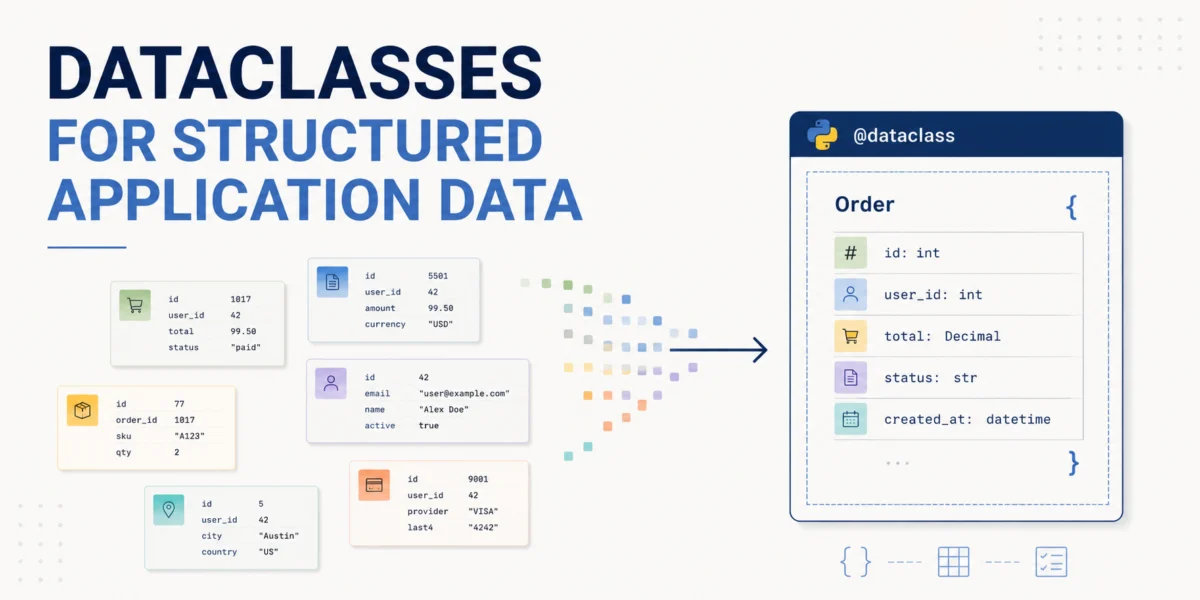

The evolution of modern software development has increasingly favored type safety and structured data handling over the loose, ad-hoc paradigms that characterized early scripting. For years, Python developers relied on dictionaries—a versatile, mutable, and ubiquitous data structure—to manage application configurations and batch job parameters. However, the inherent lack of schema enforcement in dictionaries has historically led to silent failures, misspelled keys, and inconsistent state management across large-scale codebases. The introduction of the dataclass decorator in Python 3.7, as outlined in PEP 557, marked a significant shift in how developers handle internal data modeling, providing a standardized, readable, and maintainable alternative to traditional dictionary-based configurations.
The Problem with Dictionary-Based Configurations
In many enterprise-level applications, configuration dictionaries serve as the backbone for operational parameters. While flexible, these structures are notoriously fragile. A configuration object might be initialized in one module, passed through several middleware layers, and eventually accessed in a data-processing pipeline. If a developer mistypes a key or assumes a nested dictionary structure that was modified elsewhere, the error often fails to trigger an immediate exception. Instead, the application may default to unintended values or process data with incorrect parameters, leading to "silent failures" that are notoriously difficult to debug in production environments.
The architectural debt accumulated by these dictionaries is often invisible until a critical failure occurs. Because dictionaries are essentially unstructured, there is no inherent "contract" between the producer and the consumer of the data. This lack of rigidity necessitates excessive defensive programming—such as repeated get() calls with hardcoded fallbacks—which clutter the codebase and obscure the actual business logic.
Chronology and Evolution of Python Data Models
Before 2018, Python developers were forced to choose between simple dictionaries or creating full-blown classes with manually defined __init__, __repr__, and __eq__ methods. The latter was technically robust but required significant boilerplate code, which discouraged adoption. The Python Software Foundation recognized this inefficiency, leading to the adoption of PEP 557, which proposed the dataclasses module.
Since its inclusion in the Python 3.7 standard library, the dataclass decorator has streamlined the process of defining classes that primarily exist to hold data. By automatically generating boilerplate methods, the decorator allows developers to focus on the structure and constraints of their data models. This transition represents a broader trend in the Python ecosystem: a movement toward "type-hinted" code that enables better static analysis and IDE support, significantly reducing the probability of runtime errors.
Implementing Structured Models: A Practical Shift
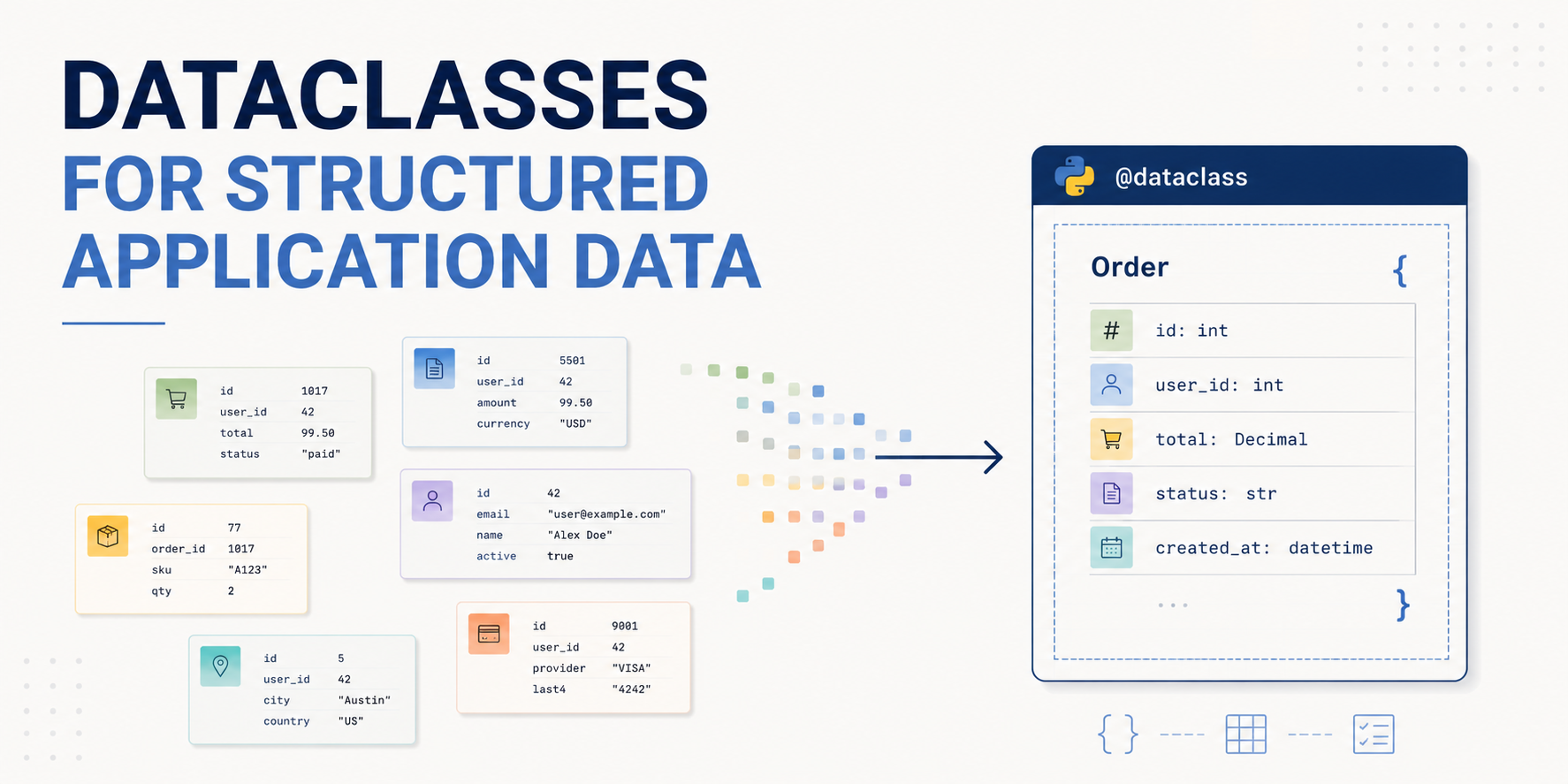
The transition from a dictionary to a dataclass is straightforward. By replacing a dictionary with a class decorated with @dataclass, a developer transforms a string-indexed collection into an object with fixed attributes. This change enables static type checkers like MyPy and Pyright to identify errors—such as typos in attribute names—before the code is ever executed.
Consider a batch processing job. A dictionary-based approach might look like:
config = "batch_size": 500, "max_attempts": 3.
In a complex system, if a developer attempts to access config["batchsize"], the program would return a default value rather than throwing an error, silently proceeding with the wrong parameter. By contrast, a JobConfig dataclass enforces that batch_size must be explicitly defined, and any attempt to access a non-existent attribute raises an AttributeError immediately.
The Role of Composition and Nesting
As applications scale, configuration requirements inevitably grow. A single, flat structure is rarely sufficient. The power of dataclasses lies in their ability to use composition. By nesting smaller, specialized dataclasses—such as a RetryPolicy or an OutputConfig—within a parent JobConfig, developers can modularize their data models.
This hierarchical approach ensures that each component remains responsible for a specific slice of the configuration. It also improves testability, as individual components can be unit-tested in isolation. However, a critical distinction remains: dataclasses do not automatically cast nested dictionaries into objects. Developers must handle the instantiation logic, ensuring that the transition from raw input (like JSON) to a structured model is explicit and predictable. This deliberate approach is a feature, not a bug; it ensures that the application developer maintains full control over how data is parsed and validated at the boundary.
Managing Defaults and Invariants
A key advantage of dataclasses is the ability to define default values and business logic invariants within the class definition itself. Through the use of field(default_factory=...), developers can safely handle mutable defaults—a common pitfall in Python where shared state can lead to unexpected side effects across instances.
Furthermore, the __post_init__ method provides a clean hook for runtime validation. By placing constraints (such as range checks or non-empty string requirements) within this method, developers can ensure that an object is never in an invalid state after construction. This fail-fast mechanism is essential for maintaining system integrity in complex, distributed architectures where configuration is often passed across multiple services.
Strategic Immutability and State Management
In high-reliability systems, configuration should be treated as immutable once a process begins. Dataclasses facilitate this through the frozen=True parameter. By setting this flag, any attempt to modify an attribute after instantiation results in a FrozenInstanceError. This design pattern protects the system from accidental state mutation, which is a frequent source of race conditions and intermittent bugs in concurrent applications. When a modification is necessary, the dataclasses.replace() function provides a safe way to create a copy with updated values, maintaining the integrity of the original instance while allowing for controlled updates.
Balancing Trade-offs: Dataclasses vs. Pydantic
While dataclasses provide significant benefits for internal application structures, they have clear boundaries. They are not designed for data validation or coercion of untrusted input. For scenarios involving complex validation, external API responses, or user-provided data, specialized libraries like Pydantic are often preferred.
The decision-making process for choosing the right tool follows a simple logic:
- Plain Dictionaries: Suitable for short-lived, low-complexity data where overhead is undesirable.
- Dataclasses: Ideal for internal, application-owned data where trust is high and the structure is stable.
- Pydantic: Necessary when handling external, untrusted, or highly complex data that requires automated coercion and robust error reporting.
The following table summarizes the operational differences:
| Feature | Dictionary | Dataclass | Pydantic |
|---|---|---|---|
| Primary Use Case | Flexible, local data | Trusted internal structures | External/Untrusted data |
| Runtime Validation | None | Limited to __post_init__ |
Comprehensive/Automatic |
| Dependencies | None | Standard Library | Third-party |
| Serialization | Native | Manual/Explicit | Built-in |
Broader Implications for Software Engineering
The adoption of structured data models via dataclasses reflects a broader shift toward "defensive coding" in the Python ecosystem. By moving away from the convenience of dictionaries toward the rigor of defined schemas, developers are reducing the long-term cost of maintenance. While this requires more upfront effort to define models, the return on investment is realized through faster debugging, better tooling support, and a more robust codebase that is resistant to the "silent failures" that plague less structured systems.
Ultimately, the choice to use dataclasses is a choice to prioritize clarity and contract-based programming. In an industry where software complexity is increasing exponentially, these minor adjustments in how data is modeled can have a profound impact on the stability and scalability of software systems. By treating configuration as a formal contract rather than a loose collection of keys, engineering teams can build systems that are not only more predictable but also easier for future developers to understand and maintain.
