
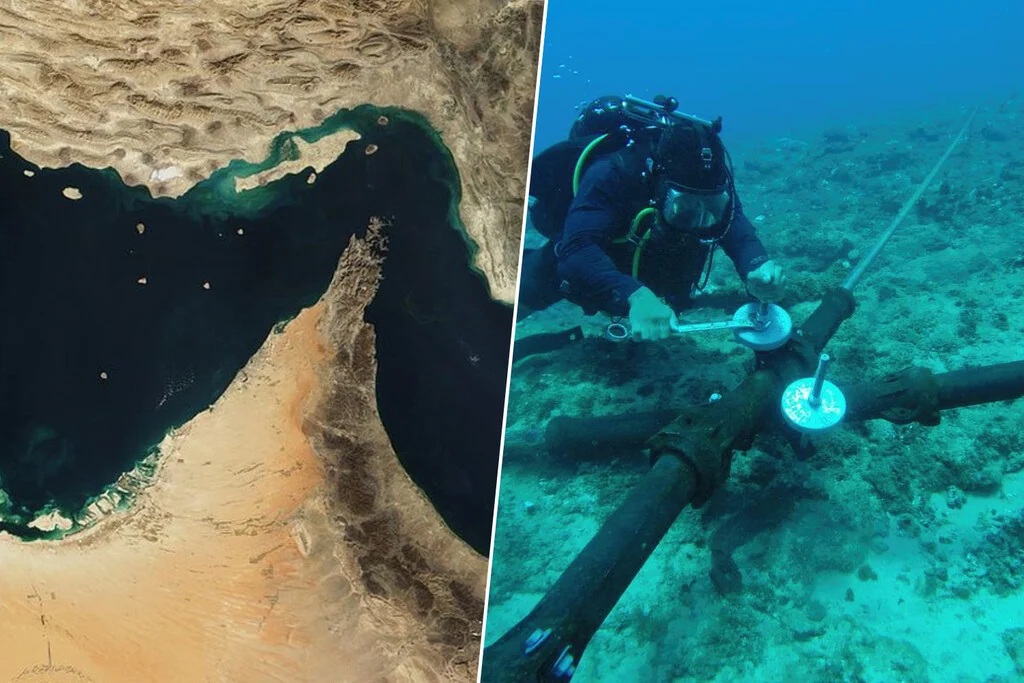

The Strait of Hormuz, a critical maritime artery that has been partially closed to commercial traffic by Iran since late February amidst escalating regional conflict, is now at the precipice of a qualitative shift in its strategic importance. While global attention has predominantly focused on the disruption of oil supplies and the scarcity of raw materials like helium gas – an invisible yet vital component potentially capable of paralyzing the semiconductor industry – a far more insidious threat lurks beneath the waves. The Achilles’ heel of Western and global connectivity in this volatile region does not float on the surface; it rests on the seabed: the intricate network of fiber optic submarine cables that are the backbone of the internet.
Recent reports emanating from media outlets closely aligned with Iran’s Islamic Revolutionary Guard Corps (IRGC) have ignited alarm across the boardrooms of major technology companies worldwide. The audacious proposition: compel tech giants such as Google, Meta, Microsoft, and Amazon to pay a "toll" or licensing fee for the passage of their submarine cables through waters claimed by Iran. This unprecedented demand raises critical questions about its legal viability and, more disturbingly, the potential consequences should Iran decide to sever these vital digital lifelines. This article aims to dissect the layers of this emerging threat, exploring its implications for global internet access, the world economy, and the delicate balance of international law.
The Strait of Hormuz: A Geopolitical and Digital Chokepoint
The Strait of Hormuz is not merely a narrow stretch of water; it is one of the world’s most strategically significant chokepoints, connecting the Persian Gulf with the Arabian Sea and the open ocean. Historically, its primary importance has revolved around energy, with approximately 20% of the world’s petroleum and a substantial portion of its liquefied natural gas (LNG) transiting through its waters daily. Control over this waterway has long been a source of geopolitical tension, particularly between Iran and the United States, given Iran’s strategic location along its northern coast.
The current escalation in the region, stemming from the broader Middle East conflicts including the Israel-Hamas war and the Red Sea shipping crisis instigated by Houthi attacks, has amplified Iran’s leverage. While the initial concerns revolved around traditional shipping lanes and the flow of physical goods, the focus has now sharply shifted to the invisible infrastructure of the digital age. The closure of the Strait to commercial traffic in late February, an action Iran has justified as a response to perceived threats and a display of its sovereignty, set the stage for this new digital gambit. This act of asserting control over a vital international waterway, even if partial, demonstrated Iran’s willingness to use its geographic position as a strategic tool.
The Invisible Threat: Submarine Cables as the Internet’s Backbone
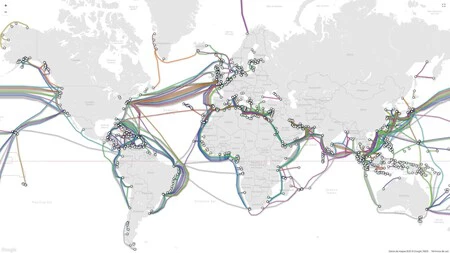
To understand the gravity of Iran’s potential actions, one must grasp the fundamental role of submarine fiber optic cables. These aren’t just redundant pathways; they are the primary conduits for nearly 99% of all intercontinental data traffic. From streaming video to financial transactions, cloud computing, and instant messaging, almost every digital interaction that spans continents relies on these fragile threads laid across the ocean floor.
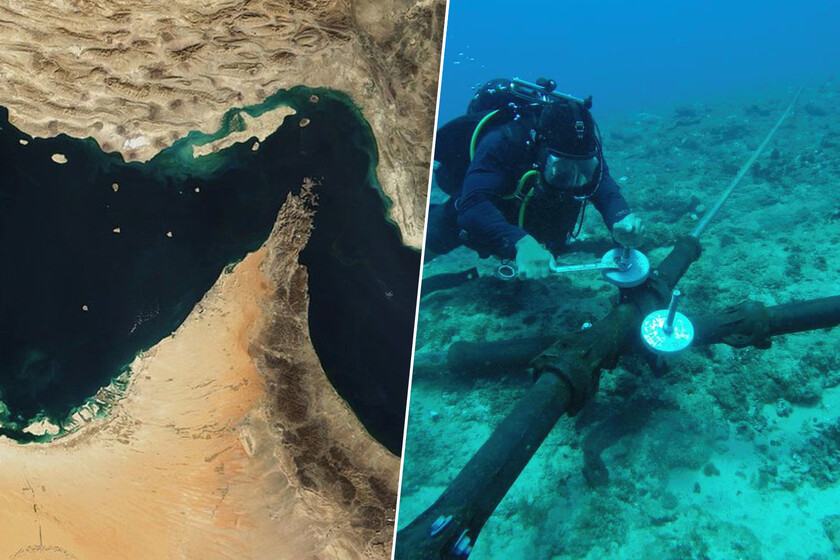
The Strait of Hormuz, much like the Strait of Malacca in Southeast Asia or the Suez Canal, functions as an indispensable digital funnel, connecting Europe and the Americas to Asia and the Middle East. Multiple critical cables, including major arteries like the Asia-Africa-Europe-1 (AAE-1) and the FALCON network, traverse this area. These cables are not owned by single entities but are typically part of consortia involving dozens of telecommunications companies and, increasingly, tech giants like Google and Meta, who invest billions in building and maintaining their own global networks. The sheer volume of data these cables carry is staggering, measured in terabits per second, supporting trillions of dollars in global commerce annually.
Iran’s Maritime Gambit: Toll or Sabotage?
The proposal, amplified by Iranian news agencies Tasnim and Fars, suggests that Iran could leverage its sovereign claims over the seabed within its territorial waters to demand licensing fees from the multinational corporations operating these cables. This move echoes the precedent set by Egypt, which levies fees on ships transiting the Suez Canal – a critical chokepoint for both physical and digital traffic, though the legal basis for charging for undersea cables within international straits is significantly different. Iran’s demand goes further, insisting that these multinational corporations operate under Iranian law and collaborate with local Iranian companies for maintenance, effectively seeking to establish a degree of control and economic benefit from infrastructure that is globally vital.
Maritime law experts, however, largely concur that Iran’s legal standing for such a toll on international submarine cables passing through an international strait is tenuous at best. The United Nations Convention on the Law of the Sea (UNCLOS), widely recognized as the foundational document for maritime governance, grants coastal states sovereign rights over their territorial seas, including the seabed. However, it also upholds the right of "innocent passage" for all vessels and, crucially, the right for all states to lay submarine cables on the continental shelf beyond territorial waters, and even within territorial waters under certain conditions that ensure freedom of navigation and communication. For international straits used for international navigation, specific provisions further ensure unimpeded transit. Iran, while not a signatory to UNCLOS, has historically adhered to many of its principles as customary international law.
Despite the dubious legal basis, the critical question remains: Is Iran capable of executing this threat? The unanimous answer from security analysts and maritime experts is a resounding yes. While the cables do not technically belong to the Persian nation, Iran possesses complete military control over its territorial waters within the Strait. NetBlocks Director of Research, Alp Toker, among others, has explicitly warned that direct sabotage is a tangible option well within Iran’s military capabilities. This could be achieved through various means, including highly trained naval divers equipped to cut cables, or more overtly, by utilizing naval assets to drag anchors across the seabed, a common cause of accidental cable damage. Furthermore, the ongoing conflict itself presents an elevated risk: a damaged vessel, adrift or struggling, could inadvertently drag its anchor and sever a cable. The thin, armored cables, while robust, are vulnerable to such impacts.
The Digital Fallout: A Global Service Degradation
The immediate consequence of severed cables would not be a complete "internet blackout" in Europe or other connected regions. The global internet infrastructure is designed with a degree of redundancy, featuring multiple cables and alternative routes. However, the degradation of service would be instant, severe, and globally noticeable. The sheer volume of data rerouted would overwhelm alternative pathways.
The implications extend far beyond mere inconvenience for leisure activities:
- Economic Collapse: Financial transactions, which rely on near-instantaneous data transfer, would face significant delays or outright failure. Stock markets, interbank transfers, and credit card payments would be severely impacted. Cloud services, upon which thousands of businesses depend for everything from email to critical enterprise applications, would experience widespread outages.
- Communication Breakdown: Video calls would drop, streaming platforms would buffer endlessly, and messaging apps would suffer severe latency. This would affect not only personal communication but also critical business and governmental communications.
- Supply Chain Disruptions: Modern supply chains are intricately linked by digital communication. Delays in data flow would translate into delays in logistics, manufacturing, and trade, exacerbating existing vulnerabilities.
- Geopolitical Instability: Such a digital attack would be perceived as an act of aggression, potentially leading to severe international condemnation and retaliatory measures, further destabilizing an already volatile region.
Internet Service Providers (ISPs) could attempt to reroute traffic through terrestrial cables or alternative submarine routes, but these pathways have significantly limited capacity compared to the primary arteries passing through Hormuz. This would inevitably lead to slower speeds for users across affected continents. Newer connection technologies, such as satellite internet, are not a viable comprehensive alternative. While beneficial for remote areas or specific applications, experts agree that current satellite networks lack the bandwidth and capacity to absorb the immense volume of data required by the intercontinental economy. Starlink, OneWeb, and similar constellations are not designed to replace the core internet backbone provided by fiber optics.
Repairing the Damage: A Costly and Perilous Endeavor
Should cables be cut, the process of repair is inherently complex, time-consuming, and expensive. Typically, repairing a submarine cable involves specialized ships, remotely operated vehicles (ROVs), and highly skilled technicians. Under normal circumstances, such repairs can take weeks, costing millions of dollars per incident. However, in a conflict zone like the Strait of Hormuz, the challenges would multiply exponentially.
The presence of military activity, potential blockades, and the inherent dangers of operating in a hostile environment could delay repairs for months. Insurance costs for such operations would skyrocket, and the availability of specialized repair vessels willing to enter a war zone would be severely limited. The extended downtime would prolong the economic and social disruption, making the threat a potent tool of leverage for Iran.
Broader Implications and the Quest for Resilience
The threat to submarine cables in the Strait of Hormuz is a stark reminder of the fragile nature of global connectivity and the increasing weaponization of critical infrastructure. This isn’t an isolated incident; there have been previous instances of cable damage, both accidental (e.g., fishing trawlers, anchor drags) and intentional (e.g., suspected sabotage in the Red Sea). However, the explicit demand for a toll or the implied threat of state-sponsored sabotage in such a strategically vital chokepoint elevates the situation to an unprecedented level.
The incident highlights the urgent need for enhanced global digital resilience. This includes:
- Diversification of Routes: Continued investment in new submarine cable routes that bypass traditional chokepoints, though finding entirely new, economically viable paths is challenging. Projects like the planned cables connecting Spain and Italy (the "Mediterranean electric bridge") represent efforts to enhance European connectivity, but the global network remains highly reliant on a few key passages.
- Increased Redundancy: Building more redundancy within existing networks, ensuring that multiple pathways are available even if one segment is compromised.
- International Cooperation: Strengthening international frameworks and agreements for the protection of critical submarine infrastructure, potentially through UN bodies or dedicated international consortia.
- Cybersecurity and Physical Security: Enhancing both digital and physical security measures around cable landing stations and known vulnerable points.
- Diplomatic Engagement: Employing robust diplomatic channels to de-escalate tensions and deter actions that could disrupt global digital infrastructure.
The Iranian proposal, whether a genuine attempt to extract economic concessions or a calculated geopolitical maneuver to assert dominance and pressure Western powers, cannot be dismissed as mere bluster. It represents a tangible risk that, if realized, would not only strain the digital infrastructure of half the planet but also set a dangerous precedent for the weaponization of the internet’s physical backbone. As the world becomes increasingly interconnected and reliant on seamless digital flow, the vulnerability of these undersea cables in volatile regions like the Strait of Hormuz demands urgent attention and a concerted global response. The digital fate of billions, and trillions in economic value, literally rests on the seabed.
