

The "What’s Next with AWS" event, a pivotal gathering for cloud and artificial intelligence enthusiasts, saw Amazon Web Services (AWS) make a series of groundbreaking announcements today, fundamentally reshaping the landscape of enterprise AI. Led by AWS CEO Matt Garman, SVP of Amazon Applied AI Solutions Colleen Aubrey, CMO of AWS Julia White, and key leaders from OpenAI, the discussions centered on the transformative potential of agentic AI and its role in revolutionizing business operations. The event’s core revelations included the launch of Amazon Quick, an intelligent AI assistant for work; a significant expansion of Amazon Connect into four specialized agentic AI solutions; and a landmark deepening of the strategic partnership between AWS and OpenAI, integrating advanced OpenAI models and managed agents into Amazon Bedrock. These developments signal a concerted effort by AWS to democratize sophisticated AI capabilities, making them accessible, integrated, and actionable for enterprises across diverse sectors.
The Dawn of Agentic AI: A Strategic Imperative for Enterprise Transformation
The central theme permeating the "What’s Next with AWS" event underscored a profound shift in the artificial intelligence paradigm: the emergence and strategic importance of "agentic AI." Unlike conventional AI tools that respond to specific prompts or perform isolated tasks, agentic AI systems are designed to operate autonomously, understand complex goals, plan multi-step actions, interact with various tools and systems, and execute tasks on behalf of users or organizations. This represents a significant leap from reactive AI to proactive, goal-oriented intelligence, promising to unlock unprecedented levels of automation and efficiency across the enterprise landscape.
AWS’s strategic embrace of agentic AI is a natural evolution of its long-standing commitment to artificial intelligence and machine learning. For years, AWS has provided foundational AI services, including machine learning infrastructure like Amazon SageMaker, vision services like Amazon Rekognition, and natural language processing with Amazon Comprehend. However, the generative AI boom of the past few years, spurred by large language models (LLMs), has rapidly accelerated the potential for AI to move beyond analytical tasks into creative and autonomous functions. The "What’s Next with AWS" event served as a definitive declaration of AWS’s intent to lead this next wave, providing the infrastructure, services, and partnerships necessary for enterprises to harness agentic capabilities securely and at scale.
The discussions at the event highlighted that businesses are no longer just looking for tools to process data; they are increasingly seeking intelligent partners that can actively contribute to decision-making, optimize workflows, and drive tangible outcomes. This demand has spurred innovation in agent design, enabling AI to perform complex operations such as automating supply chain logistics, streamlining hiring processes, enhancing customer support, and even assisting in intricate healthcare scenarios. The emphasis on "working within your existing workflows" reveals AWS’s pragmatic approach, aiming to integrate these advanced AI agents seamlessly into current enterprise systems rather than requiring wholesale overhauls. This strategy is crucial for accelerating adoption, as businesses often face significant hurdles in integrating new technologies into their established operational frameworks, particularly those involving sensitive data and mission-critical processes. Industry analysts project that the global market for AI agents will expand dramatically, with some estimates suggesting a compound annual growth rate exceeding 30% over the next five to seven years, underscoring the urgency and strategic value of AWS’s announcements.
Amazon Quick: Your Proactive AI Assistant for Enhanced Work Productivity
One of the most anticipated announcements from the "What’s Next with AWS" event was the official introduction of Amazon Quick, a sophisticated AI assistant engineered to revolutionize individual and team productivity within the workplace. Positioned as an intelligent companion that seamlessly connects to all of an individual’s applications, learns what matters to them, and takes proactive action on their behalf, Amazon Quick represents AWS’s vision for the future of personal and professional automation.
Starting today, Amazon Quick is available with a new dedicated desktop application, making it readily accessible to users directly from their primary workspace. This move signifies a commitment to deeply embedding the AI assistant into daily routines, moving beyond web-based interfaces to a more integrated and persistent desktop experience. The introduction of both Free and Plus pricing plans is strategically designed to democratize access, allowing individuals and small teams to explore its capabilities without significant upfront investment, while offering more robust features, enhanced support, and scalability for larger organizations with advanced needs. This tiered approach is expected to accelerate adoption across diverse business sizes and user segments.
A particularly compelling new feature of Amazon Quick is its multimodal capability: the ability to generate visual assets directly within the chat interface. This extends the assistant’s utility beyond text-based interactions, enabling users to quickly create images, graphics, or other visual content based on natural language prompts. This can significantly accelerate creative workflows, marketing material generation, presentation preparation, and internal communications, eliminating the need to switch between multiple applications or rely on external design tools for basic to intermediate needs. Furthermore, AWS announced that Quick can now easily connect to an even wider array of third-party applications and services, reinforcing its role as a central orchestrator of digital tasks across disparate software ecosystems. This expansive connectivity is vital for an agentic AI, as its effectiveness hinges on its ability to access, process, and interact with the full spectrum of tools and data sources a user employs daily, from email clients and calendar applications to CRM systems and project management platforms.
A significant update on April 29th further enriched Amazon Quick’s capabilities, adding a powerful feature that allows users to build custom applications using natural language. This development positions Quick not just as an assistant, but as a low-code/no-code development platform, empowering business users without specialized programming skills to create tailored AI solutions for their unique needs. For example, a marketing manager could describe a workflow for tracking campaign performance, generating weekly reports, and scheduling social media posts, and Quick could build a custom application to automate these complex, multi-step tasks. This capability dramatically lowers the barrier to entry for custom automation, potentially fostering a wave of grassroots innovation within enterprises and allowing domain experts to directly implement AI-driven solutions for their specific challenges.
Analysts project that tools like Amazon Quick will become indispensable, particularly as the demand for knowledge worker productivity continues to rise amidst increasing data volumes and digital complexity. With the global market for AI assistants projected to reach tens of billions of dollars in the coming years, driven by the imperative for operational efficiency and personalized digital experiences, Amazon Quick enters a highly competitive yet rapidly expanding arena. Its unique blend of deep integration, proactive agency, multimodal capabilities, and custom application building positions it as a strong contender in the evolving landscape of enterprise AI, promising to redefine how individuals interact with technology to accomplish their work.
Amazon Connect Expands with Specialized Agentic AI Solutions
Building on its established success in cloud contact center services, AWS announced a transformative expansion of Amazon Connect, evolving it from a single product into a suite of four specialized agentic AI solutions. These new offerings are meticulously designed to embed advanced AI capabilities directly into existing workflows, targeting critical business functions: Amazon Connect Decisions (for supply chains), Talent (for hiring), Customer (for customer experience), and Health (for healthcare). This strategic segmentation allows AWS to address industry-specific challenges with tailored AI agents, moving beyond generic applications to highly optimized, domain-specific intelligence, thereby significantly enhancing operational efficiency and strategic decision-making.
Amazon Connect, originally lauded for its scalability, flexibility, and cost-effectiveness in managing customer interactions, is now leveraging its robust infrastructure and existing AI capabilities (such as Contact Lens for sentiment analysis and Amazon Lex for conversational AI) to deploy more autonomous and intelligent agents. Each new solution is engineered to understand complex operational contexts and execute multi-step processes, thereby enhancing efficiency and effectiveness in its respective domain.
-
Amazon Connect Decisions (Supply Chains): In the intricate and often volatile world of supply chain management, disruptions can have cascading effects, leading to significant financial losses and reputational damage. This agentic solution aims to provide real-time insights, predictive analytics, and automated decision support. Imagine an AI agent continuously monitoring inventory levels, predicting potential bottlenecks based on geopolitical events, weather patterns, or unexpected demand surges, and automatically rerouting shipments or adjusting production schedules. It could analyze vast datasets of supplier performance, logistics routes, market trends, and historical demand forecasts to optimize operations, mitigate risks, and ensure business continuity. The global supply chain analytics market alone is projected to exceed $10 billion by 2027, underscoring the critical demand for such intelligent automation.
-
Amazon Connect Talent (Hiring): The hiring process is notoriously time-consuming, resource-intensive, and often prone to human biases. Amazon Connect Talent seeks to streamline recruitment by automating various stages. An AI agent could efficiently screen thousands of resumes, identify top candidates based on specific criteria, schedule interviews, send personalized communications, and even conduct preliminary skill assessments. This not only significantly reduces the workload on HR departments but also aims to improve candidate experience through faster responses and reduce unconscious bias in initial screening, leading to more efficient, equitable, and ultimately more effective hiring outcomes. The global talent acquisition technology market, valued at over $30 billion, highlights the significant potential for AI-driven solutions in this space.

-
Amazon Connect Customer (Customer Experience): This solution elevates the traditional contact center by empowering agents with sophisticated AI tools for proactive and personalized customer interactions. Beyond simply answering queries, an AI agent could anticipate customer needs, offer tailored product recommendations based on purchase history and browsing behavior, resolve complex issues through automated workflows, and even engage in proactive outreach based on predictive analytics of customer behavior patterns. This promises to transform customer service from a reactive cost center into a proactive value driver, fostering loyalty, reducing churn, and significantly improving overall customer satisfaction. With customer experience being a primary differentiator for businesses, the demand for advanced AI in this area is immense, with the CX software market projected to reach over $50 billion.
-
Amazon Connect Health (Health Care): The healthcare sector faces immense pressure to improve efficiency, reduce administrative burden, and enhance patient care while navigating complex regulatory environments. Amazon Connect Health introduces AI agents capable of assisting with a comprehensive range of tasks, from patient scheduling and administrative support to providing information on treatment options and managing follow-up care. These agents could help streamline patient intake, automate insurance claim processing, provide personalized health reminders, and even assist clinicians by accurately surfacing relevant patient data and research findings from vast medical databases. The potential for AI to improve operational efficiency and patient outcomes in healthcare is vast, with the market for AI in healthcare projected to reach hundreds of billions of dollars by the end of the decade.
The common thread across these specialized solutions is their design to "work within your existing workflows." This emphasis on seamless integration is critical for enterprise adoption, as it minimizes disruption, leverages existing investments in IT infrastructure, and accelerates the time-to-value for new AI capabilities. By providing these purpose-built agents, AWS is enabling organizations to inject sophisticated AI capabilities directly into their operational core, promising to drive significant efficiencies, improve decision-making, and unlock new avenues for growth and innovation across these vital sectors.
AWS and OpenAI: A Landmark Expansion of Partnership
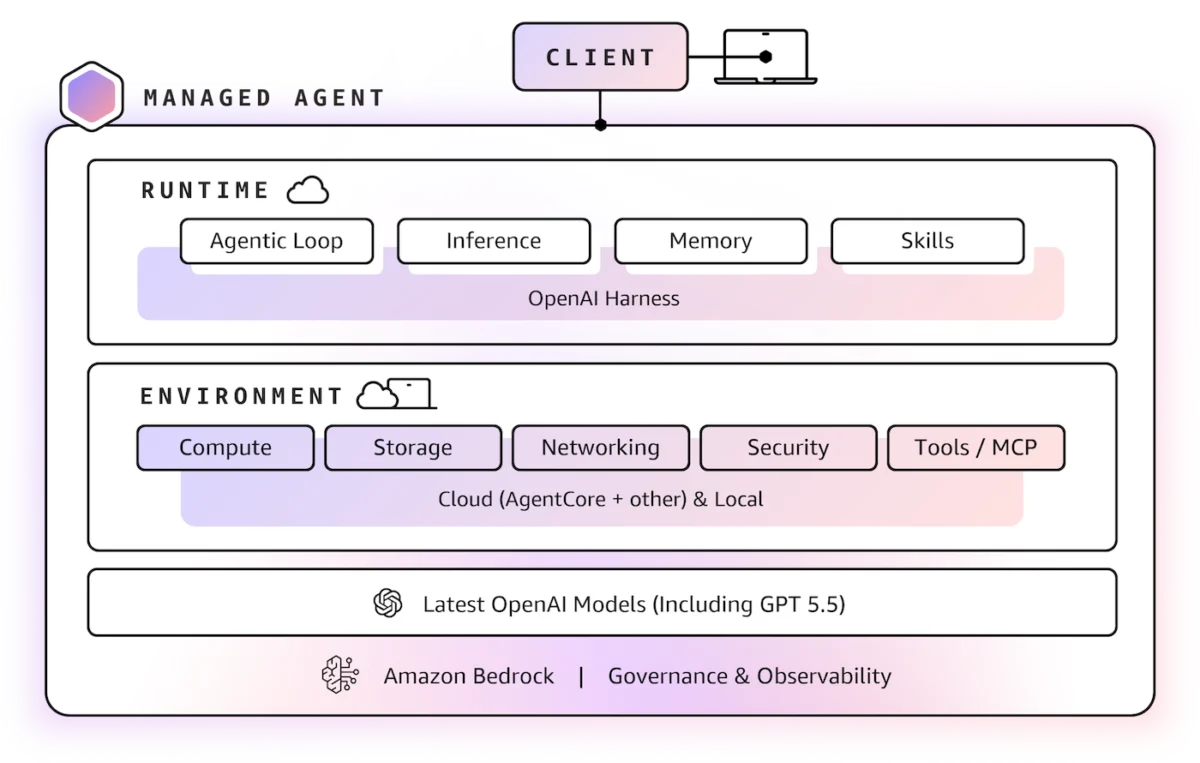
Perhaps the most significant announcement from the "What’s Next with AWS" event was the substantial expansion of the strategic partnership between AWS and OpenAI. This collaboration signifies a pivotal moment in the generative AI landscape, bringing together OpenAI’s frontier intelligence with AWS’s robust, enterprise-grade cloud infrastructure. The core elements of this expanded partnership include making the latest OpenAI models available on Amazon Bedrock, launching Codex on Amazon Bedrock, and introducing Amazon Bedrock Managed Agents powered by OpenAI – all initially available in limited preview.
This partnership addresses a critical need for enterprises: access to cutting-edge AI models combined with the security, scalability, and managed services they trust. Historically, AWS has developed its own foundation models (e.g., Amazon Titan) and forged deep partnerships with other leading AI companies like Anthropic (with its Claude models) on Bedrock. The inclusion of OpenAI’s models marks a strategic broadening of choice for AWS customers, allowing them to leverage the widely recognized capabilities of models like the GPT series within their existing AWS environment. This move is particularly impactful given OpenAI’s leadership in generative AI and the widespread adoption of its models across various applications.
- **OpenAI
