
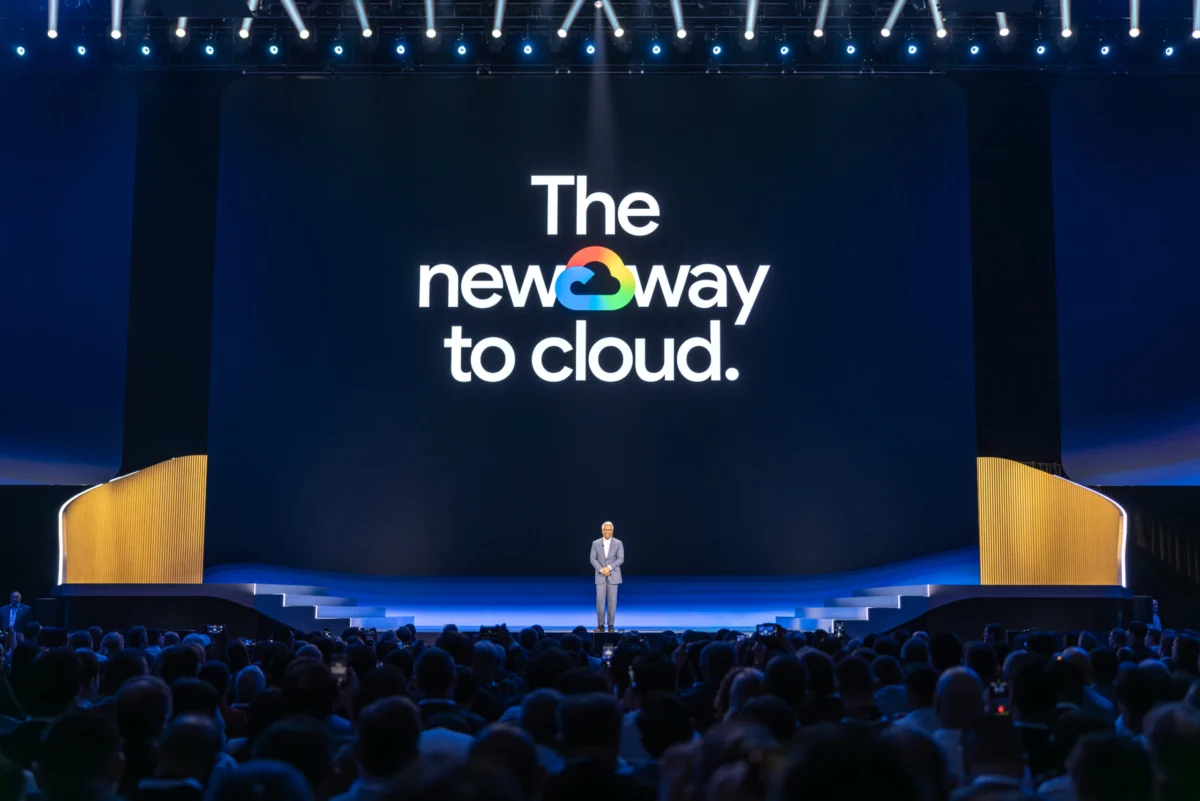

At the Google Cloud Next ‘26 conference in Las Vegas, Google Cloud solidified its bid to become the primary orchestration and governance layer for the emerging era of agentic artificial intelligence. By positioning itself as a "neutral" platform—often referred to internally and externally as the "Switzerland" of the AI ecosystem—Google Cloud is attempting to navigate a crowded competitive landscape where legacy SaaS giants like Salesforce, ServiceNow, Microsoft, and Workday are all vying for the same authoritative role. The company’s strategy centers on a dual-pronged approach: providing a vertically integrated "full stack" of AI infrastructure while simultaneously offering an open architecture that allows enterprises to govern agents built on competing platforms.
The event served as the backdrop for the unveiling of the Gemini Enterprise Agent Platform, a comprehensive suite designed to manage the lifecycle, identity, and security of AI agents. According to Google Cloud CEO Thomas Kurian, the objective is to provide the "Android of the agentic era," a reference to an open yet cohesive ecosystem that can scale across diverse enterprise environments. This strategic pivot comes at a critical juncture as organizations move beyond simple generative AI pilots toward autonomous agents capable of executing complex business processes across multiple software domains.
The Architecture of Enterprise AI Governance
The centerpiece of Google’s technical argument is the Gemini Enterprise Agent Platform. This suite includes several key components designed to solve the fragmentation currently hindering large-scale AI deployments. Key among these are Agent Identity and the Agent Gateway, which apply zero-trust security principles to non-human entities. By treating an AI agent as a distinct identity with specific permissions, Google aims to mitigate the risks of "rogue" agents or unauthorized data access.
Furthermore, the platform utilizes OpenTelemetry-based (OTel) observability. This is a significant technical choice, as OTel is an industry standard for distributed tracing. By adopting this standard, Google Cloud enables enterprise IT teams to aggregate logs and performance data from agents regardless of whether they were built on Google’s Vertex AI, Microsoft Azure, or specialized SaaS platforms. This interoperability is the cornerstone of Google’s "Switzerland" claim.
Supporting this governance layer is the Knowledge Catalog and the Cross-Cloud Lakehouse. These tools address the persistent problem of data siloing. For an agent to be effective, it requires real-time access to accurate corporate data. Google’s architecture allows these agents to query data across different cloud environments without the need for costly and time-consuming data migration, providing a unified "grounding" mechanism for AI outputs.
A Chronology of Strategic Evolution
Google Cloud’s current position is the result of a multi-year transition from infrastructure provider to AI-first platform. In 2023, the focus was primarily on Large Language Models (LLMs) and the introduction of the Gemini family. By 2024 and 2025, the emphasis shifted toward "Vertex AI" as a development environment. The 2026 roadmap, however, represents a fundamental shift toward "Agentic AI"—systems that do not merely suggest content but actively perform tasks such as processing insurance claims, conducting drug discovery filters, or managing customer wealth portfolios.
The timeline of this development reveals a calculated move to address "the long pole in the tent": enterprise readiness. Google executives acknowledged that while the technology has matured rapidly, the organizational capacity of most firms has lagged. To bridge this gap, Google has spent the last 24 months refining its "Forward Deployed Engineer" (FDE) model, moving technical staff directly into client environments to assist with data cleansing and integration. This evolution culminated at Next ‘26 with the announcement of a $750 million partner fund intended to scale these efforts through Global Systems Integrators (GSIs) like Accenture, Deloitte, and PwC.
Evidence from the Field: Merck and Citi Wealth
The validity of Google Cloud’s full-stack proposition is best illustrated through its high-scale enterprise partnerships. At Merck, the pharmaceutical giant is utilizing agentic AI to revolutionize in-silico drug development. Dave Williams, Chief Information and Digital Officer at Merck, noted that the use of agents and robotics allows scientists to move from manual data filtering to a supervisory role, significantly accelerating the research pipeline.
The Merck case study highlights a critical prerequisite for AI success: foundational data work. Merck has spent five years on a cloud acceleration program, consolidating its commercial and manufacturing data into common models. This "pre-work" allowed the company to move from an initial email request to a full roadmap for Gemini Enterprise deployment in just two and a half months.
Similarly, Citi Wealth has deployed "Sky," a conversational avatar that serves as an external-facing customer engagement platform. Unlike many AI projects focused on cost-cutting, Citi’s initiative is a "revenue play." Joseph Bonanno, Head of Wealth Intelligence at Citi, emphasized that the goal is to capture a portion of the estimated $5 trillion in client assets held outside the firm. By using agents to drive upselling and client retention, Citi is positioning AI as an offensive tool rather than a back-office efficiency driver.
According to Rohit Bhat, GM and Managing Director of Financial Services at Google Cloud, the success at Citi was predicated on the "full-stack advantage." Having the design, engineering, and data teams working under one roof allowed for a more defined strategy on risk systems and governance, which is essential for client-facing applications in the highly regulated financial sector.
Competitive Dynamics and the Neutrality Debate
The claim of being a "neutral" orchestration layer is not without controversy. During a private press roundtable, Thomas Kurian was questioned on how Google Cloud expects to win the governance battle when ServiceNow and Salesforce are making nearly identical pitches. Kurian’s response focused on technical standards, asserting that Google’s ability to monitor agents "whether built by us or built on another platform" provides a unique central vantage point.
However, industry analysts point out the political dimension of this contest. It is unlikely that a company heavily invested in the Salesforce ecosystem will easily cede governance of its customer data agents to a Google Cloud gateway. Matt Renner, Google Cloud’s Chief Revenue Officer, offered a more pragmatic view, acknowledging that the near-term reality will involve a multi-platform environment. Renner suggested that while ISVs (Independent Software Vendors) will retain domain-specific governance, Google aims to own the cross-functional orchestration layer that connects those domains.
Renner also pointedly addressed the efforts of SaaS competitors, noting that while they have attempted to dominate the data layer in the past with "mixed success," Google’s independence from a specific application strategy (like CRM or HRIS) makes it a more logical choice for an enterprise-wide orchestration hub.
Supporting Data and Investment Initiatives
To support its ambitious goals, Google Cloud has backed its strategy with significant financial and human capital. The $750 million partner fund is specifically earmarked for resolving the "data readiness" issues that currently stall 90% of AI proofs-of-concept (POCs). This fund supports the embedding of engineers within customer environments to ensure that the transition from POC to production is seamless.
Furthermore, the creation of the McKinsey Google Transformation Group represents a new model of consulting. This group combines McKinsey’s "QuantumBlack" technologists with Google’s engineers to offer outcome-based commercial models. Instead of charging for software seats, these models are increasingly tied to the actual business value generated by the AI deployments.
Data shared at the conference indicated a significant shift in the success rate of AI projects. Three years ago, the POC-to-production success rate for enterprise AI was estimated at a mere 10%. Today, that number is reportedly rising as organizations adopt clearer governance structures and better upfront qualification of use cases. Google’s internal metrics suggest that 1,500 enterprise customers are now actively using Gemini Enterprise, signaling a growing appetite for centralized AI management.
Broader Impact and Future Implications
The implications of Google Cloud’s strategy extend beyond the tech industry. As agents become more autonomous, the nature of enterprise work and risk management will undergo a fundamental transformation. The "Switzerland" strategy, if successful, could position Google Cloud as the essential utility for the AI economy—a layer that sits above the fragmented software landscape, providing the security and oversight necessary for boards of directors to greenlight high-stakes AI autonomous operations.
However, the challenge remains for Google to reach the "unready" enterprise. While Merck and Citi represent the vanguard of digital transformation, the average Fortune 500 company still struggles with legacy silos and a lack of data hygiene. Google’s heavy reliance on co-investment and "boots on the ground" is a resource-intensive way to scale. The success of this strategy will depend on whether the $750 million partner fund can successfully democratize the expertise currently reserved for top-tier clients.
Ultimately, Google Cloud is betting that enterprise trust cannot be bought through software licensing alone; it must be earned through shared risk and proven operational outcomes. By embedding itself in the most difficult parts of the AI journey—data preparation and organizational change—Google is attempting to build a moat of strategic relevance that its competitors, focused largely on their own application stacks, may find difficult to breach. The next several years will determine if this "strategic neutrality" can indeed become the standard for the governed, agentic enterprise.
