
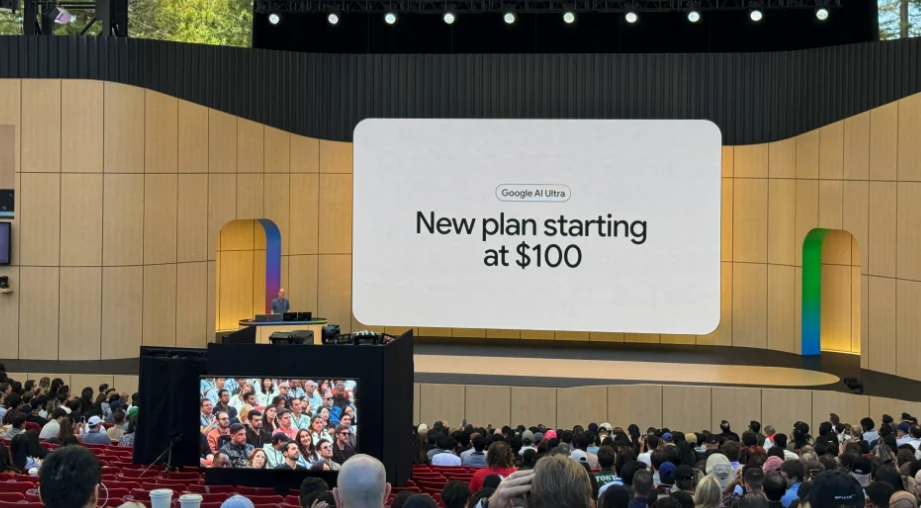

Google has unveiled a strategic overhaul of its Artificial Intelligence subscription offerings, introducing a new $100-per-month AI Ultra plan that strategically bridges its existing $20 and $200 tiers. This move is complemented by a significant shift in how access to its powerful AI tools is metered, transitioning from rigid prompt limits to a more nuanced "compute-used" model. Simultaneously, the tech giant has reduced the price of its premium $250 AI Ultra plan to $200, a rare concession in a market where AI service costs have predominantly trended upwards.
The company’s latest pricing adjustments and feature allocations reflect an increasingly competitive landscape among major AI developers, including OpenAI and Anthropic. This evolving strategy aims to cater to a broader spectrum of users, from individual developers and small businesses to enterprise-level clients, by offering tiered access to increasingly sophisticated AI capabilities. The introduction of the $100 plan specifically addresses a perceived gap, ensuring that a competitive offering exists at this price point, a strategy mirrored by key rivals.
A Competitive Landscape: The Emergence of the $100 AI Tier
The current AI market is characterized by a convergence of pricing strategies, with Google, OpenAI, and Anthropic now all offering subscription plans at $20, $100, and $200 per month. Google also maintains a more accessible $8 per month "Google AI Plus" plan, akin to OpenAI’s entry-level offerings. While core functionalities across these tiers often overlap, Google distinguishes itself by gating access to certain exclusive products and advanced features behind its higher-priced plans.
The new $100-per-month AI Ultra plan mirrors the enhanced usage limits offered by competitors like OpenAI and Anthropic. For users on this tier, Google is providing five times the usage limits within its Antigravity development platform and the Gemini consumer application. Subscribers also gain priority access to Google Antigravity and a substantial 20 terabytes of cloud storage. This offering positions the $100 plan as a significant upgrade for power users and developers who require more extensive access to AI resources without committing to the highest tier.
To further enhance the value proposition of the $100 plan, Google is bundling a YouTube Premium individual subscription. This provides ad-free access to YouTube content, including educational tutorials and music, a perk that can be particularly valuable for individuals and teams engaged in learning and development related to AI and technology.
Subscribers to the AI Ultra plan, at both the $100 and $200 tiers, will be among the first to experience Google’s latest AI innovations. This includes early access to Gemini Spark, a new 24/7 AI agent designed for continuous assistance, and Gemini Omni, Google’s cutting-edge multimodal AI model. The integration of these advanced models into the higher subscription tiers underscores Google’s commitment to pushing the boundaries of AI development and providing its premium customers with access to the forefront of its research.
Shifting to a "Compute-Used" Model: A More Granular Approach to Access
A fundamental shift in Google’s AI access policy is the move away from fixed prompt limits to a "compute-used" model. This new system, also adopted by competitors, measures access based on the computational resources consumed by a user’s interactions with AI tools. Factors influencing this metric include the complexity of prompts, the specific AI features utilized, and the length of conversations.

Google’s rationale for this change is rooted in efficiency and fairness. As the company explains, a simple text-based prompt consumes significantly less computational power than a complex request involving video analysis or code generation. The compute-used model, therefore, allows for a more accurate and equitable allocation of resources, ensuring that users are charged or limited based on their actual consumption of AI processing power.
Under this new framework, compute limits will reset every five hours, with a weekly cap in place. This interval-based reset aims to provide a consistent flow of access for active users throughout the day.
In a move designed to prevent abrupt service interruptions, Google has implemented a tiered fallback system. When users reach the limit of their current plan’s flagship models, they will automatically be transitioned to smaller, less resource-intensive models rather than being completely cut off. This ensures continued, albeit potentially less powerful, access to AI functionalities.
For users who consistently require the full capabilities of Google’s most advanced models, even after exhausting their subscription benefits, a familiar option remains: pay-as-you-go API fees. Both Pro and Ultra subscribers can opt to pay token-based API charges to continue utilizing the largest models. This model, similar to those offered by OpenAI and Anthropic, provides flexibility for users with fluctuating or exceptionally high-demand AI needs.
Historical Context and Implications of the AI Subscription Evolution
The current AI market has witnessed rapid evolution since the public debut of large language models (LLMs) like GPT-3. Initially, access was often limited to research previews or beta programs. As these models matured and demonstrated commercial viability, subscription models emerged as the primary mechanism for monetization and resource management.
OpenAI’s introduction of ChatGPT Plus at $20 per month in early 2023 was a landmark moment, democratizing access to advanced AI for a broader audience. This set a precedent for similar offerings from other AI labs. The subsequent emergence of $100 and $200 tiers reflects the increasing sophistication and computational demands of the AI models themselves, as well as the need to cater to professional and enterprise use cases that require higher throughput and dedicated resources.
Google’s strategic recalibration of its AI subscription plans and metering methods can be analyzed through several lenses:
- Market Alignment: The introduction of a $100 plan and the price reduction of the $250 plan to $200 clearly indicate Google’s intent to align its offerings with competitive benchmarks set by OpenAI and Anthropic. This ensures that Google remains a viable option for customers who are comparing services across these leading providers.
- Value Proposition Enhancement: By including YouTube Premium with the $100 plan, Google is layering additional value onto its subscription. This bundled offering can increase customer loyalty and appeal to a wider demographic that benefits from both AI tools and premium content access.
- Resource Management and Cost Efficiency: The shift to a "compute-used" model is a sophisticated approach to managing the immense computational costs associated with running LLMs. It allows Google to dynamically allocate resources based on actual usage, potentially leading to greater efficiency and a more accurate reflection of service value. This also helps in preventing abuse of the system.
- Tiered Access and Innovation Rollout: The strategy of providing early access to cutting-edge models like Gemini Spark and Gemini Omni to higher-tier subscribers incentivizes upgrades and allows Google to gather crucial feedback from its most engaged users before a wider public release. This phased rollout is a common practice for managing the risks and complexities of deploying new, advanced technologies.
- Developer Ecosystem Support: The inclusion of enhanced limits on the Antigravity development platform and significant cloud storage allocation signals Google’s continued investment in its developer ecosystem. By making these powerful tools more accessible and cost-effective at the $100 tier, Google aims to foster innovation and the development of new AI-powered applications on its infrastructure.
The AI industry is in a constant state of flux, with companies striving to balance accessibility, performance, and profitability. Google’s latest adjustments represent a significant step in this ongoing evolution, aiming to solidify its position in the AI market by offering a more granular, value-driven, and competitively priced suite of AI subscription services. As these models continue to advance, further refinements in pricing and access models are to be expected, reflecting the dynamic nature of this transformative technology.
