
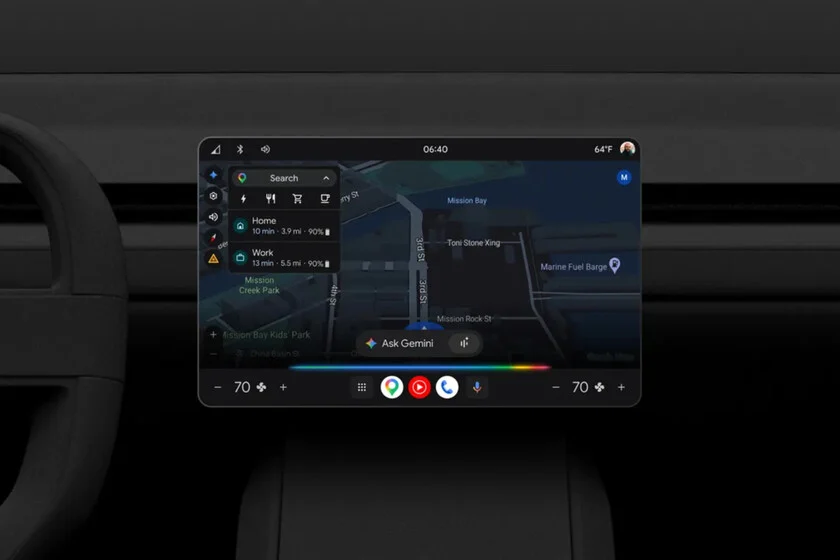

The Android ecosystem is currently experiencing a period of significant innovation and expansion, underscored by the recent "The Android Show" event. This pivotal gathering served as the platform for Google to announce not only the impending release of Android 17 and its ambitious foray into the PC market with the Googlebook, but also a suite of substantial updates across its services and applications. Among these, Android Auto stands out, poised to receive its most comprehensive "facelift" in years, a move that signals Google’s intensified commitment to transforming the in-car digital experience. This strategic acceleration by the Mountain View company aims to solidify Android Auto’s position as a leading automotive infotainment solution, enhancing safety, natural interaction, and entertainment for millions of drivers worldwide.
The Evolution of In-Car Infotainment: Android Auto’s Strategic Expansion
Since its inception, Android Auto has aimed to bridge the gap between smartphone functionality and the automotive environment, offering a safer and more integrated way to access navigation, communication, and media on the go. Google reports that Android Auto is now integrated into over 250 million vehicles globally, a testament to its widespread adoption and the growing demand for connected car technologies. The primary objective behind this latest wave of updates is to ensure that the transition between a user’s mobile device and the vehicle’s infotainment screen is more intuitive, secure, and engaging than ever before. This vision aligns with the broader industry trend towards intelligent, connected vehicles, where the digital experience is as crucial as the driving performance. Google’s strategy involves leveraging its core strengths in design, artificial intelligence, and platform integration to deliver a superior user experience, setting new benchmarks for in-car technology.
The "The Android Show" event itself served as a comprehensive showcase of Google’s long-term vision for its operating system, extending its reach beyond traditional mobile devices. The announcement of Android 17 detailed significant advancements, including the integration of Gemini Intelligence, enhancements to Android Auto, and a strategic pivot towards PC integration. The introduction of the Googlebook, a device designed to run Android natively on personal computers, underscores Google’s ambition to offer a unified, flexible operating system across a multitude of hardware platforms. This overarching strategy provides critical context for the Android Auto updates, framing them not as isolated improvements but as integral components of a larger, interconnected Android ecosystem designed for seamless user interaction across devices and environments.
Aesthetic and Functional Revolution: Embracing Material 3 Expressive and Universal Adaptability
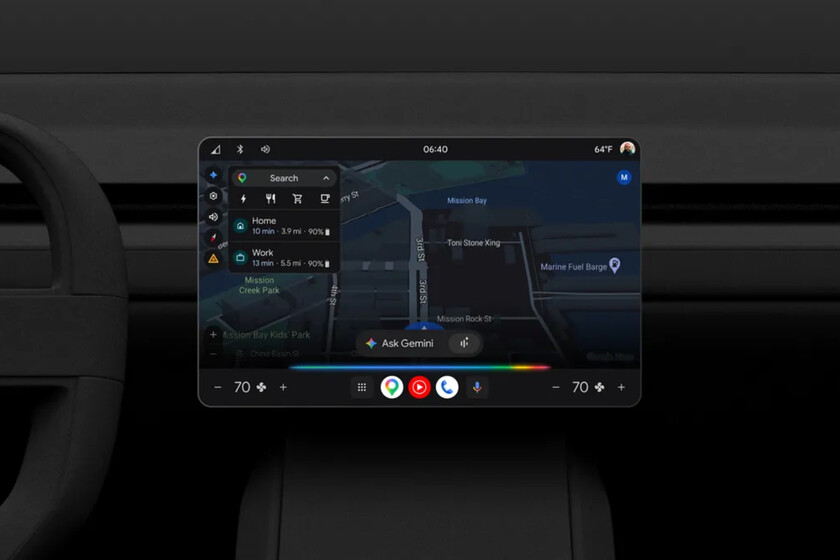
One of the most immediately noticeable changes in the forthcoming Android Auto update is its adoption of the Material 3 Expressive design language. This aesthetic framework, first introduced with Android 16 and refined in Android 17, brings a fresh, modern look and feel to the in-car interface. Users will experience updated fonts, more fluid animations, and the ability to seamlessly integrate their mobile device’s wallpaper, creating a more personalized and cohesive visual environment. This design overhaul is not merely superficial; it represents a fundamental shift towards a more dynamic and adaptable user interface.
Crucially, the new Material 3 Expressive interface is engineered to adjust flawlessly to a wide array of screen types and sizes prevalent in modern vehicles. Whether a car features a traditional rectangular display, an avant-garde circular screen, or even panels with irregular geometries, Android Auto will now adapt its layout and elements perfectly. This universal adaptability addresses a long-standing challenge in automotive infotainment: the fragmentation of display hardware across different manufacturers and models. By ensuring a consistent, optimized experience regardless of screen form factor, Google aims to reduce friction for both users and car manufacturers, facilitating broader and more consistent adoption. This design philosophy also mirrors Google’s broader commitment to accessibility and user-centric design, ensuring that the interface is not only visually appealing but also highly functional and intuitive in diverse contexts. The transition to Material 3 Expressive signifies a maturation of Android Auto’s design principles, moving towards a more sophisticated and flexible presentation layer that can cater to the diverse aesthetic and ergonomic requirements of the automotive industry.
Enhanced Navigation and Interactive Displays: The Introduction of Widgets and Immersive Maps
Beyond the aesthetic overhaul, the new Android Auto introduces significant functional enhancements, most notably the official integration of widgets onto the home screen. This feature allows users to display panels of information and quick action buttons directly on their car’s display while navigation is active. This capability streamlines access to frequently used functions or critical information, such as weather updates, music controls, or calendar appointments, without requiring users to navigate away from their primary mapping interface. The introduction of widgets marks a pivotal step towards a more customizable and information-rich dashboard experience, allowing drivers to tailor their in-car interface to their specific needs and preferences while maintaining focus on the road.
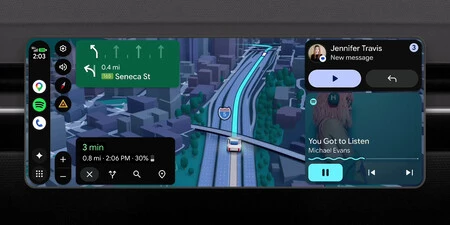
Complementing the widget functionality is the debut of "Immersive Navigation" within Google Maps for Android Auto. This advanced feature transforms the traditional 2D map view into a dynamic 3D representation, bringing the driving environment to life with detailed renderings of buildings, overpasses, and terrain. This enhanced visual fidelity provides drivers with a more realistic and intuitive understanding of their surroundings, particularly in complex urban environments or unfamiliar areas. More critically, Immersive Navigation in Android Auto goes beyond mere aesthetics by highlighting essential driving details directly on the map, such as traffic lights, stop signs, and specific lane guidance. This proactive visual information is designed to significantly improve driver awareness and reduce cognitive load, thereby contributing to a safer and less stressful driving experience. The ability to visualize upcoming road features in a highly detailed and contextual manner represents a substantial leap forward in automotive navigation technology, offering a level of clarity and foresight previously unavailable.
Multimedia Integration: Official Video Playback and Expanded Entertainment Options
For the first time, Android Auto will gain official support for video applications, a long-requested feature by users. The initial rollout will see YouTube integrated, allowing for high-definition content playback at 1080p resolution and 60 frames per second. While third-party applications previously offered workarounds for video streaming in Android Auto, this official integration brings a native, optimized, and secure solution. It is anticipated that, for safety reasons, video playback will be restricted to when the vehicle is stationary, such as during charging stops for electric vehicles or while waiting in parked situations.
This official video support opens up new avenues for in-car entertainment, particularly for passengers or drivers during non-driving periods. The ability to natively stream high-quality video content from platforms like YouTube significantly enhances the utility of the infotainment system, turning the car into a more versatile multimedia hub. While YouTube is the inaugural platform, the precedent set by this integration suggests the potential for other video streaming services to follow suit, further enriching the entertainment options available within Android Auto. This move reflects a broader trend in the automotive industry to provide a more comprehensive digital experience that caters to both driving and non-driving scenarios, recognizing that modern vehicles serve multiple functions beyond mere transportation.
The Brain Behind the Wheel: Gemini Intelligence Takes Control

A cornerstone of Google’s latest Android advancements is the deep integration of artificial intelligence, and Android Auto is no exception. With the new Gemini Intelligence, any mobile device connected to Android Auto will empower the in-car system with advanced contextual understanding and task execution capabilities. This integration allows Android Auto to proactively anticipate user needs and perform actions, moving beyond simple voice commands to a more intelligent, predictive assistant.
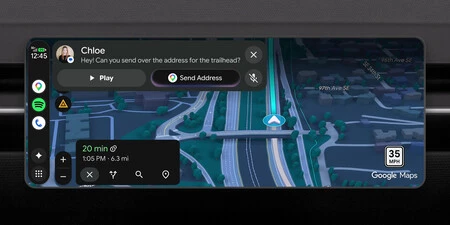
One of Gemini’s standout features in Android Auto is "Magic Cue." This innovative function enables Gemini to comprehend the context of incoming notifications and messages, intelligently search for relevant answers within a user’s SMS, email, and calendar data, and then formulate a personalized response. For instance, if a user receives a text message asking about their estimated time of arrival, Magic Cue could automatically check the calendar for an appointment, cross-reference it with the navigation route, and suggest a concise, accurate reply, all hands-free. This capability significantly reduces driver distraction by automating complex information retrieval and response generation, allowing drivers to remain focused on the road. Furthermore, Gemini’s advanced natural language processing allows for the use of more complex commands, similar to its functionality in smart home devices. An example highlighted by Google includes the ability to order food from supported U.S. chains while driving, illustrating a new level of convenience and integration of daily tasks into the driving experience. This profound integration of AI transforms Android Auto from a mere projection system into an intelligent co-pilot, enhancing both safety and convenience.
Beyond Android Auto: Exclusive Functions for Android Automotive OS
It is crucial to distinguish between Android Auto, which projects a smartphone’s interface onto the car’s display, and Android Automotive OS, which is a full-fledged operating system running natively on the vehicle’s hardware. Google announced that vehicles equipped with Android Automotive OS, currently numbering over 100 models globally, will receive an expanded suite of functions made possible by this direct integration with the car’s underlying systems.
Because Android Automotive OS operates directly on the vehicle’s hardware, it has deeper access and control over various car functions that Android Auto, as a projection system, cannot access. These extended capabilities include seamless integration with the vehicle’s climate control, direct access to vehicle diagnostics, and the ability to control car features like windows or seats through voice commands powered by Gemini. This direct connection allows for a more holistic and immersive in-car experience, where the operating system is intrinsically linked to the vehicle’s mechanics and electronics. For automakers, adopting Android Automotive OS means offering a powerful, customizable, and continuously updated infotainment platform without having to develop one from scratch. For users, it promises a future where their car’s digital brain is as sophisticated and interconnected as their smartphone or smart home, providing unparalleled levels of convenience, personalization, and safety directly from the dashboard. This dual-pronged strategy—enhancing Android Auto for broad compatibility while deepening Android Automotive OS for native integration—underscores Google’s comprehensive approach to the automotive sector.
Deployment and Broader Implications for the Automotive Landscape
Google has indicated that the deployment of these new Android Auto features will occur progressively throughout the remainder of the year. This phased rollout is a common practice for large-scale software updates, allowing Google to monitor performance, gather feedback, and address any unforeseen issues before wider availability. While the exact timeline for each specific feature may vary by region and vehicle compatibility, the overall commitment to delivering these enhancements in the near term is clear.
The implications of these updates for the automotive industry and the broader tech landscape are substantial. For drivers, the promise is a safer, more intuitive, and more entertaining experience that minimizes distractions and maximizes convenience. The integration of advanced AI through Gemini Intelligence represents a significant step towards predictive and context-aware in-car assistants, moving beyond simple command-and-response interactions. For automotive manufacturers, Google’s continued investment in both Android Auto and Android Automotive OS offers robust, feature-rich platforms that can reduce development costs and accelerate time-to-market for advanced infotainment systems. The adaptive Material 3 Expressive design also simplifies integration across diverse vehicle models.
However, challenges remain. The fragmentation of vehicle hardware and software versions across different manufacturers can complicate the consistent delivery of updates. Data privacy and security, especially with deeper AI integration and access to personal information, will continue to be critical considerations for both Google and vehicle owners. Furthermore, the competitive landscape with Apple CarPlay and proprietary OEM systems will push for continuous innovation, ensuring that Google must maintain its aggressive development pace.
In conclusion, the announcements made at "The Android Show" signal a transformative period for Android Auto. By combining a radical design overhaul with advanced AI capabilities and expanded multimedia support, Google is clearly striving to redefine the in-car digital experience. These updates are poised to mark a significant evolutionary leap, promising a future where the connection between our digital lives and our driving experience is more seamless, intelligent, and engaging than ever before, cementing Android’s role as a central pillar of connected mobility.
