
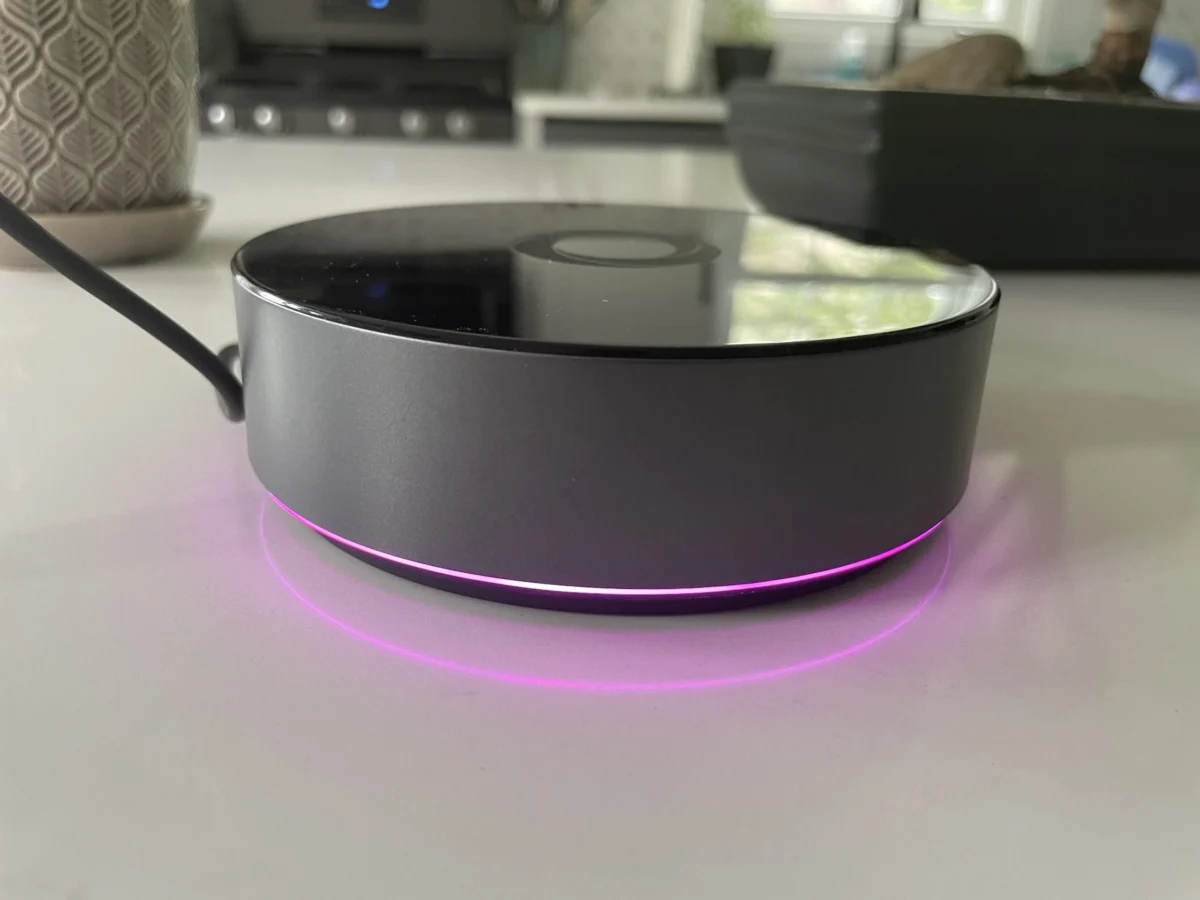

The smart home landscape is constantly evolving, with new hubs and protocols vying for a central role in managing our connected devices. Following the earlier launch of its more budget-friendly Homey Bridge, Athom has now introduced the Homey Pro to the U.S. market. This premium hub, priced at $399, aims to offer a more powerful and localized smart home control experience, building upon the foundation laid by its predecessor. While it boasts significant upgrades in processing power, storage, and connectivity, its true value hinges on its compatibility with the diverse array of smart devices consumers already own.
The Homey Pro: A Leap in Localized Smart Home Control
The Homey Pro represents a substantial upgrade from the $69 Homey Bridge, which was reviewed in March and received generally positive feedback for its simplicity and core functionality. The Pro model addresses many of the limitations and subscription-based features of the Bridge, positioning itself as a robust, privacy-focused alternative for enthusiasts and those seeking greater control. A key differentiator is its emphasis on local processing, aiming to reduce reliance on cloud services and ensure functionality even during internet outages, provided the connected devices themselves do not require cloud connectivity.
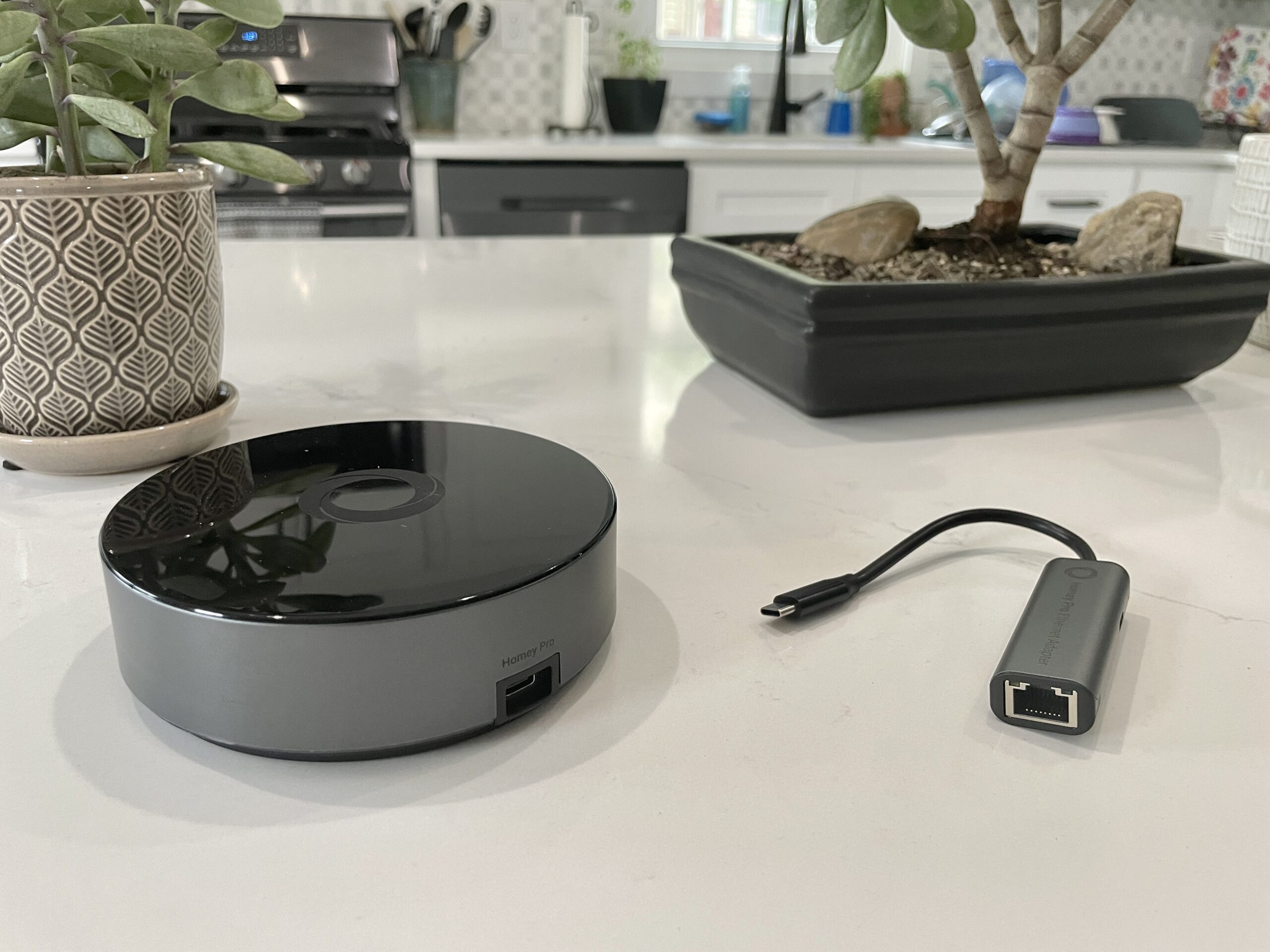
Compared to the 2019 Homey Pro, the new iteration claims a remarkable 3.5 times increase in CPU performance. This is complemented by doubled memory and storage capacities, now standing at 2GB of RAM and 8GB of internal storage respectively. These enhancements are not merely for show; they are crucial for enabling the Pro’s localized control architecture. This move towards local processing aligns with growing consumer concerns about data privacy and security in the smart home.
Enhanced Connectivity and Future-Proofing
While both the Homey Bridge and Pro share a similar set of core wireless technologies—including Wi-Fi, Bluetooth, infrared, Zigbee, and Z-Wave—the Homey Pro introduces a Thread radio, specifically the 833MHz frequency for compatibility with older devices. This inclusion is particularly significant given the burgeoning importance of Thread as a low-power, reliable mesh networking protocol for the smart home, especially in conjunction with the Matter standard.
Furthermore, the Homey Pro breaks free from the Homey Bridge’s restrictive limit of five connected devices. While the Bridge requires a monthly fee of $2.99 to add more devices, the Pro model removes this limitation entirely. The only optional subscription available for the Pro is a $0.99 monthly fee for cloud backups, offering users a choice in how they safeguard their smart home configurations. An optional Ethernet connectivity module is also available for an additional $29, providing a more stable wired network connection for the hub.

Setup and Initial Impressions: A Streamlined Experience
The setup process for the Homey Pro is designed to be user-friendly, mirroring the ease of use noted with the Homey Bridge. Upon powering the device with the included USB-C cable and charger, users are guided through the Homey app on their smartphone. A standout feature of the initial setup is the app’s intelligent questioning about the home’s layout, including the number of floors and the placement of rooms. This detailed environmental mapping is a thoughtful touch that streamlines the subsequent organization of devices within the app, a departure from the more generic approaches seen in many competing smart home platforms.
Once connected to the home’s Wi-Fi network (supporting both 2.4GHz and 5GHz bands), the process of adding devices begins. Homey advertises support for over 50,000 devices, a number that suggests broad compatibility. However, as this review will detail, the actual integration experience can be highly dependent on the specific devices within a user’s smart home ecosystem.
The Crucial Test: Device Compatibility
The central question for any smart home hub is its ability to seamlessly integrate with existing devices. In this review, the Homey Pro faced a mixed reception. While devices like Lutron Caseta switches, Philips Hue bulbs, and Sonos speakers were successfully added and functioned as expected, a significant portion of the tested devices failed to connect. This included a Schlage door lock, an Ecobee Thermostat, Nanoleaf lighting products, a Govee electric kettle, Wyze cameras, Eve Home devices, a Logitech video doorbell, and several smart plugs.

The inability to connect to certain devices raises critical questions about the breadth and depth of Homey’s device support. While the Homey Pro’s impending Matter support is expected to alleviate issues with Matter-certified devices, many of the non-connected devices in this test do not rely on Matter. The reviewer noted that Matter-certified smart plugs, which utilize Thread, did not connect, which is understandable given that full Matter over Thread support is still on the roadmap. However, the failure to integrate older, non-Matter devices from established brands like Nanoleaf, Schlage, and Ecobee is a more significant concern.
For instance, while some Nanoleaf light shapes were recognized, the standard Nanoleaf bulbs and smart lights were not. Similarly, attempts to integrate a Schlage Encode Wi-Fi lock resulted in the app reporting "No devices found" after authentication. The Govee Wi-Fi kettle integration encountered an error message, and a Cync by GE smart plug lacked any dedicated integration. Even within supported brands like Ecobee, only specific older models (Ecobee 3 Lite) and room sensors were compatible, excluding newer thermostats like the Ecobee Thermostat Premium.
The reviewer acknowledges that their personal smart home setup leans away from Zigbee and Z-Wave, protocols that Homey Pro inherently supports well. Users heavily invested in these specific protocols might find better results. However, for a broad consumer base utilizing a mix of Wi-Fi, Bluetooth, and emerging standards, the current device support presents a significant hurdle.

A crucial point for potential buyers is the absence of a readily accessible, comprehensive list of supported products on the Homey website during the initial review period. While an "Apps" section was later identified as the repository for integration information, the lack of a prominent, searchable database can make it difficult for consumers to verify compatibility before purchase. The recommendation for users to download the free Homey app and search for their specific devices within it before committing to a purchase is therefore paramount.
Developer Options and Extensibility
For those with technical expertise, Homey Pro offers a degree of extensibility through its web interface. Users can obtain API keys and utilize JavaScript and Node.js to create custom integrations. This feature, while not intended for the mainstream consumer, caters to developers and hobbyists who wish to tailor their smart home experience further. The underlying architecture is suspected to be Node.js-based, suggesting a robust platform for custom development. However, the support documentation explicitly labels these API keys for "hobbyists and developers," indicating that this advanced functionality is outside the scope of typical user expectations.
The Homey App: A Polished User Interface
Despite the challenges with device compatibility, the Homey mobile application itself is a strong point. It is described as modern-looking and offers access to both basic and advanced features. The ability to easily assign devices to rooms and floors during setup is a notable advantage. However, the reviewer noted that this room assignment function had to be performed post-device integration, requiring a return to individual device settings.

One particularly interesting feature is the estimated smart home energy usage monitoring. Users can input the wattage of individual devices to generate near real-time and historical energy consumption data. This feature is adaptive, adjusting based on dimming levels of lights, and can be viewed within the app or on the web interface. The web interface also provides access to local environmental data such as temperature, barometric pressure, and humidity. A Homey representative clarified that if a device can report actual electricity usage, Homey will display and utilize that data, enhancing the accuracy of this feature.
Advanced Automation with "Flows"
Homey’s automation engine, known as "Flows," is positioned as a powerful tool comparable to the automation capabilities found in platforms like Home Assistant, rather than the simpler routines offered by major tech giants like Amazon, Apple, and Google. Flows utilize a "When… and… then…" structure, offering a logical approach to creating automations. The system supports more complex logic with "else" conditions and allows Flows to trigger other Flows, providing a high degree of customization. The reviewer found the Flows they created to be functional and appreciated the option to build even more complex sequences via the Homey web interface, which also offers device control and viewing capabilities.
Potential and Pitfalls: A Developer’s Dream, a Consumer’s Dilemma
The Homey Pro presents a compelling vision for a localized, privacy-centric smart home hub. Its comprehensive suite of radios, robust processing power, and sophisticated automation engine are undeniable strengths. The market has seen a shift away from purely local hubs as cloud-based solutions have become more prevalent, making the Homey Pro’s approach a refreshing alternative for those prioritizing data sovereignty and offline functionality. The user experience, particularly with the app and the setup process, is generally polished and intuitive.

However, the significant caveat remains device compatibility. For a $399 investment, users must be certain that their existing and planned smart home devices will function with the Homey Pro. The current review indicates that roughly half of the tested devices were not supported, a statistic that could be a deal-breaker for many. While future software updates and the rollout of Matter over Thread support may broaden compatibility, there are no guarantees, and the pace of these updates is a critical factor.
Ultimately, the Homey Pro holds significant potential for a segment of the smart home market – those who value local control, privacy, and have a compatible set of devices or are willing to invest in new ones that are confirmed to work. For users with a diverse and established smart home ecosystem, a thorough pre-purchase investigation of device compatibility via the Homey app is not just recommended; it is essential. Until broader device support is a certainty, many consumers may find themselves sticking with more established, albeit cloud-reliant, solutions or open-source alternatives like Home Assistant, which offer wider compatibility at a lower cost.
This article was updated on August 16, 2023, at 11:00 AM ET, to incorporate clarifications and corrections following communication with Homey representatives.
