
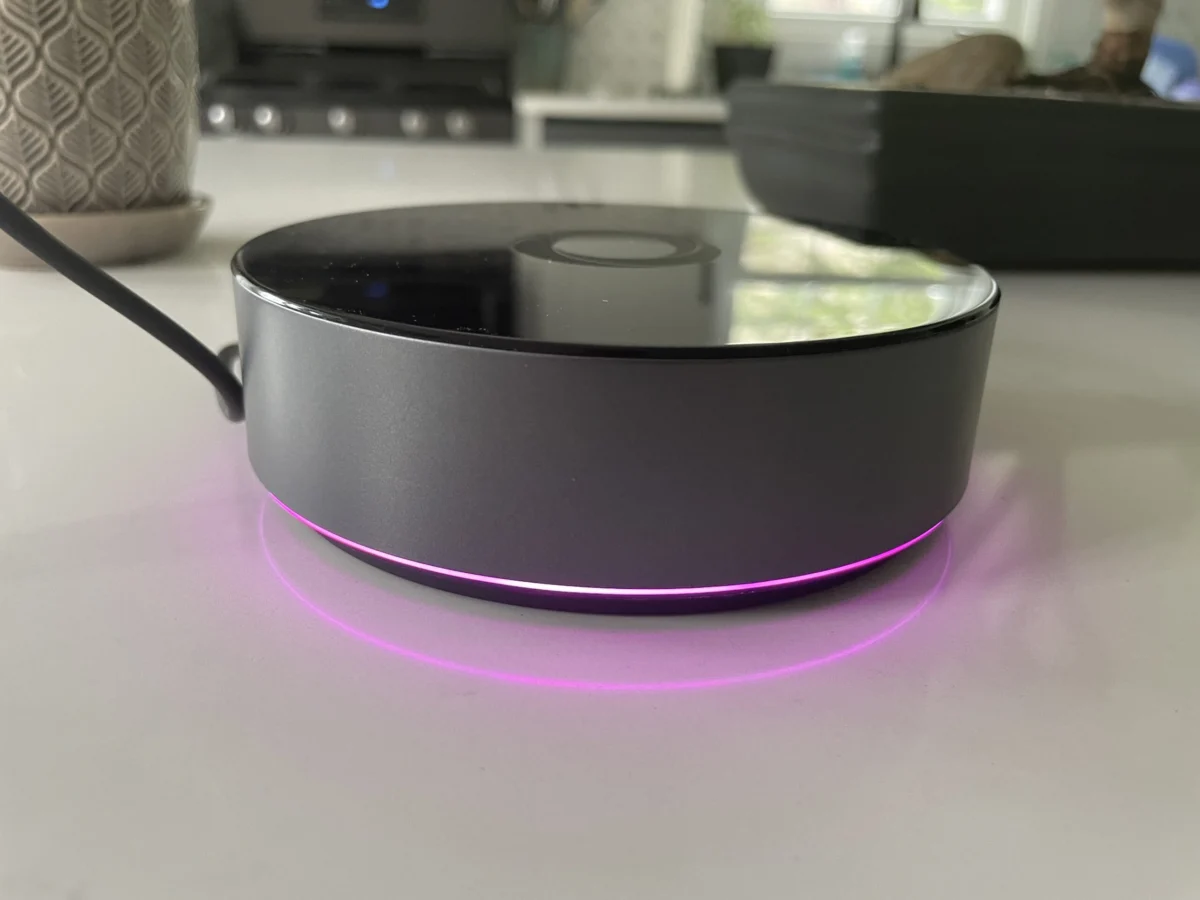

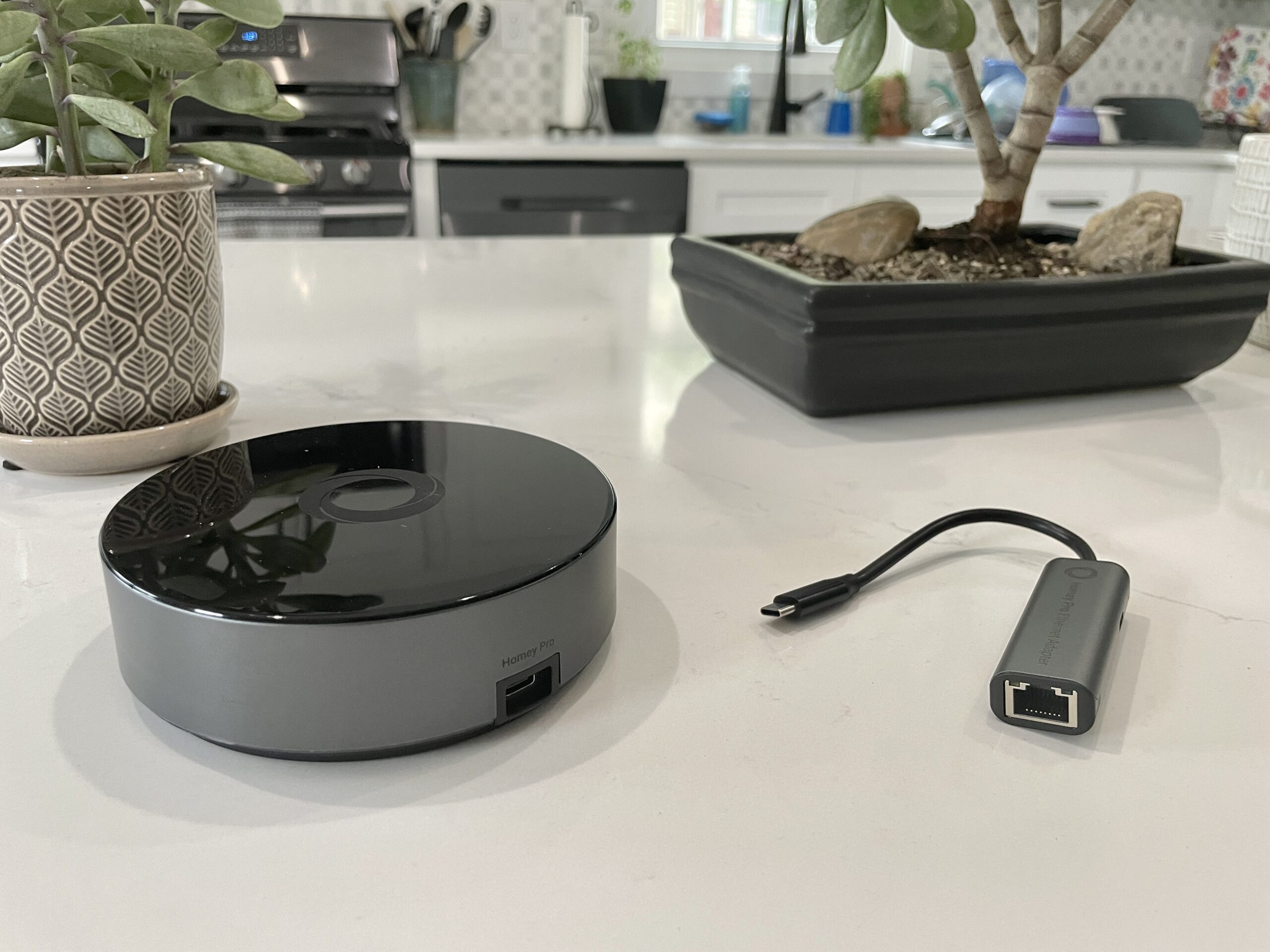
Following the recent launch of the $69 Homey Bridge, the $399 Homey Pro smart home hub is now officially available in the United States. This premium offering from Homey aims to provide a more robust and localized smart home control experience, addressing some of the limitations of its more affordable counterpart. While the Homey Bridge, reviewed in March, garnered generally positive feedback for its simplicity, the Pro model distinguishes itself by significantly reducing subscription fees and expanding device support, while also introducing optional Ethernet connectivity for an additional $29 and promising future Matter support, including Matter over Thread.
The core appeal of the Homey Pro lies in its commitment to local control. Unlike the cloud-centric Homey Bridge, the Pro model prioritizes processing smart home commands and automations directly on the device. This approach not only enhances user privacy by minimizing data transmission to external servers but also ensures continued functionality during internet outages, provided the connected devices themselves do not rely on cloud services for operation. This focus on local processing is a significant differentiator in a smart home market increasingly dominated by cloud-dependent ecosystems.
Enhanced Hardware and Connectivity
The Homey Pro represents a substantial upgrade from the original 2019 Homey Pro, boasting a claimed 3.5 times increase in CPU performance. It also doubles the onboard storage and memory compared to the Bridge, offering 8 GB of storage and 2 GB of RAM. These hardware enhancements are crucial for enabling its local processing capabilities and managing a wider array of connected devices and complex automations.
In terms of wireless connectivity, both the Bridge and Pro models are equipped with a comprehensive suite of radios essential for broad device compatibility. For the U.S. market, this includes Wi-Fi (supporting both 2.4 GHz and 5 GHz bands), Bluetooth, infrared, Zigbee, and Z-Wave. The Homey Pro further distinguishes itself by including a Thread radio, a critical component for future-proofing smart homes and enabling seamless integration with the emerging Matter standard. The inclusion of an 833 MHz radio also caters to compatibility with older devices.
Addressing Subscription Models and Device Limits
A key advantage of the Homey Pro over the Bridge is its significantly reduced reliance on paid subscriptions. While the Homey Bridge limits users to five connected devices without a subscription, and requires a monthly fee for additional devices, the Homey Pro removes this limitation. The only optional subscription available for the Pro model is a $0.99 monthly fee for cloud backups, a stark contrast to the subscription-based model often seen with cloud-dependent hubs. This pricing structure positions the Homey Pro as a more cost-effective long-term solution for users with extensive smart home setups.

Setup and User Experience
The initial setup process for the Homey Pro is designed to be user-friendly, mirroring the experience with the Homey Bridge. Users power the device via an included USB-C cable and charger, download the Homey app on their smartphone, and proceed through a guided setup. A notable feature of the Homey app is its intelligent home mapping capability, which prompts users to specify the number of floors and the rooms located on each. This detailed organizational approach is a significant time-saver compared to the more manual room assignment processes found in many competing smart home applications.
Once connected to the home’s Wi-Fi network, users can begin integrating their smart devices. Homey claims support for over 50,000 devices, a broad claim that warrants careful examination by potential buyers.
Device Compatibility: A Critical Consideration
Despite the extensive device support claims, a significant challenge emerged during the review process: compatibility with the reviewer’s existing smart home ecosystem. While the Homey Pro successfully integrated with popular devices such as Lutron Caseta switches, Philips Hue bulbs, and Sonos speakers, it failed to connect with a substantial portion of other devices. This included a Schlage door lock, Ecobee Thermostat, Nanoleaf lighting, Govee electric kettle, Wyze cameras, Eve Home devices, Logitech video doorbell, and several smart plugs.

The issue of smart plug incompatibility was partly attributed to their Matter certification and the Homey Pro’s current lack of full Matter support, although future updates are expected to address this. However, the failure to integrate with non-Matter devices like older Nanoleaf bulbs, a Meross Garage Door opener, and a Cync by GE smart plug highlighted a more nuanced compatibility challenge. In many instances, while the brand was listed as supported in the Homey app, the specific model owned by the reviewer was not.
For example, the Schlage Encode Wi-Fi lock, despite appearing in the app, failed to connect after authentication. Similarly, the Govee Wi-Fi kettle integration returned an error message. The Ecobee Thermostat Premium also proved incompatible, with only older Ecobee models being supported. The reviewer noted that a greater proportion of Zigbee and Z-Wave devices might exhibit better compatibility, given the Pro’s inclusion of these radios.
This discrepancy between claimed and actual device support underscores the critical importance of verifying compatibility before purchasing. Homey provides an "Apps" section on its website where users can search for supported devices. The recommendation is to download the free Homey app and perform a thorough search for all intended devices before committing to a purchase. The reviewer also noted that the devices that did integrate responded nearly instantaneously to commands.

Developer-Friendly Ecosystem and Advanced Flows
Beyond out-of-the-box compatibility, the Homey Pro offers a unique avenue for advanced users and developers: the ability to create custom integrations. Through the product’s web interface, users can obtain an API key and access example code for developing their own integrations using JavaScript and Node.js. This feature suggests that the Homey Pro is built on a Node.js server architecture, appealing to those with programming expertise who wish to extend the hub’s functionality. However, Homey clearly states that these API keys are intended for "hobbyists and developers," implying that this functionality may be beyond the reach of the average consumer.
For automation enthusiasts, Homey’s "Flows" offer a powerful alternative to the simpler routines found in mainstream smart home platforms like Amazon Alexa, Apple HomeKit, and Google Home. Flows operate on a "When… and… then…" logic, providing a more structured and versatile approach to creating automations. The system allows for complex conditional logic, including "else" conditions, and the ability to trigger other Flows, resembling the capabilities of platforms like Home Assistant. These Flows can be created within the mobile app or through a more advanced mode in the Homey web interface, which also provides access to device control and viewing functionalities.
Energy Monitoring and Data Insights
A particularly innovative feature of the Homey Pro is its estimated smart home energy usage monitoring. This feature provides near real-time and historical data on energy consumption. To enable this, users must manually input the wattage of each connected device. While this requires an initial setup effort, it offers valuable insights into energy consumption patterns. The system dynamically adjusts energy usage estimates based on device output, such as dimming lights to 50% and observing a corresponding decrease in the reported power draw. Energy data can be viewed within the app or on the web interface, which additionally displays local temperature, barometric pressure, and humidity readings. Homey representatives have indicated that if a device can report actual electricity usage, the Homey Pro will display and utilize that data.

Broader Market Implications
The Homey Pro’s focus on local control and its comprehensive radio suite position it as a compelling option for users prioritizing privacy and offline functionality. In a market where many smart home ecosystems have migrated towards cloud-based solutions, the Homey Pro represents a return to a more localized and user-controlled paradigm. This approach aligns with growing consumer concerns about data privacy and the reliability of smart home systems in the absence of internet connectivity.
However, the significant hurdle of device compatibility remains a critical factor for widespread adoption. The $399 price point, coupled with the potential need to replace existing devices to ensure full integration, presents a considerable investment. For users with a diverse range of smart home products, particularly those relying on newer protocols like Wi-Fi-based Matter devices that haven’t yet been fully integrated, the Homey Pro might not be the immediate solution.
The availability of custom integration capabilities, while a strong point for developers and advanced users, also highlights the niche appeal of the Homey Pro. Mainstream consumers may be deterred by the perceived complexity of developing their own integrations.

Conclusion
The Homey Pro presents a powerful and promising smart home hub with a strong emphasis on local control, privacy, and extensive connectivity options. Its robust hardware, flexible automation engine, and innovative energy monitoring features are significant advantages. The reduction in subscription fees compared to the Homey Bridge makes it a more attractive long-term investment for those seeking a comprehensive smart home solution.
However, the crucial factor determining its success in the U.S. market will be its device compatibility. Potential buyers are strongly advised to meticulously verify that all their existing and planned smart home devices are supported through the Homey app or website before making a purchase. While the Homey Pro offers the potential for a truly localized and privacy-centric smart home experience, users must weigh this against the current limitations in device integration. For those whose devices are compatible, the Homey Pro offers a sophisticated and highly capable control center.
This review was updated on August 16, 2023, at 11:00 AM ET, with clarifications and corrections following communication with Homey representatives.
