

This week’s technology landscape is buzzing with significant developments, from the persistent challenges plaguing the smart home industry to groundbreaking advancements in edge computing. Amidst this dynamic environment, a notable conversation has emerged around how industrial giants like Honeywell are strategically integrating Tiny Machine Learning (TinyML) to enhance their data services and operational efficiency. This deep dive into Honeywell’s approach, featuring insights from Muthu Sabarethinam, VP of AI/ML Product and Services, reveals a forward-thinking strategy poised to redefine how data is processed and utilized at the very edge of industrial operations.
The Smart Home Conundrum: A Persistent Interoperability Headache
Before delving into Honeywell’s strategic vision, it is crucial to acknowledge the ongoing struggles within the smart home ecosystem, particularly concerning the Matter standard. Despite its ambitious promise of seamless interoperability, Matter has encountered significant headwinds, primarily centered around the complexities of Thread credentialing and uneven device support. This situation has led to a frustrating user experience, where the anticipated plug-and-play simplicity often devolves into intricate troubleshooting sessions.
The core of the Matter challenge lies in its reliance on Thread, a low-power wireless networking protocol, and the intricate process of establishing secure connections between devices. While The Verge has extensively documented these issues, highlighting the difficulties users face in onboarding and maintaining connectivity, the underlying problem appears to be a confluence of technical hurdles and vendor-specific implementations. The promise of a unified smart home experience is currently hampered by a fragmented reality, where devices from different manufacturers may not communicate as effortlessly as envisioned. This has left consumers questioning the true value proposition of a standard designed to simplify their connected lives.
The implications of these persistent interoperability issues extend beyond mere user inconvenience. They can stifle innovation, deter broader adoption of smart home technologies, and ultimately impact the growth trajectory of the industry. The need for robust and straightforward credentialing mechanisms for Thread networks, along with a commitment from all participating vendors to ensure consistent device support, remains paramount for Matter to achieve its full potential.
Whispers of Cyber Threats and Industrial Security
In a stark contrast to the consumer-focused smart home, the industrial sector faces its own set of evolving threats. Recent reports have surfaced regarding potential cyber vulnerabilities in critical infrastructure, specifically concerning radiation sensors in the Chernobyl exclusion zone. Kim Zetter’s investigation has brought to light concerns about the possibility of these sensors being compromised, raising alarming questions about the security of environmental monitoring systems in sensitive locations.
While the specifics of any potential breach remain under investigation, the mere prospect of such an attack underscores the increasing sophistication of cyber threats and their potential impact on vital safety and monitoring systems. The incident serves as a potent reminder of the need for robust cybersecurity measures, not just in digital networks but also in the physical infrastructure that underpins our safety and environmental well-being. The interconnectedness of modern systems means that vulnerabilities in one area can have cascading effects, necessitating a holistic approach to security.
Shifting Sands in the Semiconductor Landscape: RISC-V and IoT Consolidation
The semiconductor industry, the bedrock of technological advancement, is also undergoing significant transformations. A major development is the formation of a new RISC-V company backed by industry titans such as Qualcomm, NXP, and Infineon. This collaboration signals a strong industry push towards the open-source RISC-V architecture, a move that could significantly disrupt the dominance of established proprietary instruction set architectures. The RISC-V ecosystem, with its emphasis on flexibility and customizability, offers a compelling alternative for chip designers seeking to innovate at the edge and in specialized applications. The backing from these major players suggests a concerted effort to accelerate the development and adoption of RISC-V-based solutions across a wide range of markets, from automotive to IoT.
In parallel, the landscape of the Internet of Things (IoT) module business is witnessing consolidation. Renesas has reportedly struck a deal to acquire an IoT module business, indicating a strategic move by established semiconductor manufacturers to bolster their offerings in the rapidly growing IoT space. Such acquisitions are driven by the increasing demand for integrated solutions that simplify the development and deployment of connected devices, allowing companies to focus on their core competencies. The consolidation also reflects a maturing market where scale and specialized expertise are becoming increasingly critical for success.
The Drone Network Revolution: A New Frontier for Connectivity
Beyond traditional hardware and software, innovative startups are pushing the boundaries of connectivity and operational capabilities. Birdstop, a California-based drone startup, is making waves with its ambitious plan to build an on-demand drone network across America. This network, designed to operate beyond visual line of sight (BVLOS), aims to protect critical infrastructure. The concept bears a striking resemblance to a satellite network, where a distributed fleet of drones can be deployed rapidly to provide coverage and perform tasks over vast geographical areas.
The implications of such a network are far-reaching. It could revolutionize industries such as agriculture, logistics, infrastructure inspection, and emergency response. The ability to deploy drones on demand, with the reach and persistence akin to satellites, opens up new possibilities for data collection, monitoring, and intervention. The challenge, of course, lies in the complex regulatory environment, airspace management, and the sheer logistical undertaking of maintaining such a widespread and dynamic network. However, the potential for enhanced situational awareness and operational efficiency makes this a development worth watching closely.
The guest of the week, Muthu Sabarethinam, VP of AI/ML Product and Services at Honeywell, offers invaluable insights into another critical area of technological evolution: TinyML. Honeywell, a conglomerate with a deep history in industrial automation and control systems, is at the forefront of exploring how to leverage data from its vast array of equipment to build sophisticated services.

Honeywell’s Strategic Pivot to Edge Intelligence with TinyML
Sabarethinam elaborates on Honeywell’s strategic thinking, which centers on transforming the data generated by industrial equipment into actionable services. This involves not only collecting data but also processing it intelligently to derive meaningful insights and automate responses. The discussion then pivots to the specific role of TinyML in this grand vision.
The core of Honeywell’s interest in TinyML lies in its potential to deploy machine learning algorithms directly on sensors themselves. This "on-sensor" processing offers several compelling advantages:
- Enhanced Security: By processing data locally on the sensor, sensitive information can be anonymized or aggregated before being transmitted, significantly reducing the attack surface and mitigating risks associated with data interception or breaches during transmission. This is particularly crucial in industrial environments where proprietary data and critical operational parameters are involved.
- Reduced Power Consumption: Transmitting raw data from numerous sensors can be power-intensive. TinyML allows for the processing of data locally, sending only the essential insights or alerts. This leads to substantial power savings, extending the battery life of sensors and reducing the overall energy footprint of connected systems, a key consideration for sustainability initiatives.
- Minimized Latency: In time-sensitive industrial applications, even minor delays in data transmission and processing can have significant consequences. TinyML enables real-time decision-making directly at the source, eliminating the latency associated with sending data to a central cloud or server for analysis. This is critical for applications like predictive maintenance, safety monitoring, and automated process control.
Sabarethinam highlights that Honeywell supports over a million sensors currently deployed in the field. The prospect of equipping these existing and future sensors with TinyML capabilities opens up a vast frontier for innovation. The ability to run sophisticated algorithms directly on these distributed devices could unlock new levels of operational intelligence and automation.
Packaging Algorithms for Scalable TinyML Deployment
A significant challenge in the widespread adoption of TinyML is the packaging and deployment of algorithms. Sabarethinam emphasizes the importance of developing standardized methods for packaging machine learning models to facilitate their deployment at scale across a diverse range of sensor hardware. This involves considerations such as algorithm efficiency, compatibility with various microcontrollers, and the ability to update and manage models remotely. The goal is to create an ecosystem where developers can easily create and deploy TinyML models, much like how software applications are distributed today. This would democratize access to advanced intelligence at the edge and accelerate the pace of innovation.
Business Models and Customer Data Access
The conversation concludes with a discussion on business models and customer preferences regarding data access. Honeywell is exploring various ways to monetize the insights derived from its sensor data, with a strong emphasis on providing customers with controlled and valuable access to this information. This could include subscription-based services, data analytics platforms, or performance-based contracts that leverage the intelligence gathered by TinyML-enabled systems. The underlying principle is to deliver tangible value to customers by transforming raw data into actionable intelligence that drives efficiency, reduces costs, and improves safety.
Kevin’s Home Assistant Journey and Audience Engagement
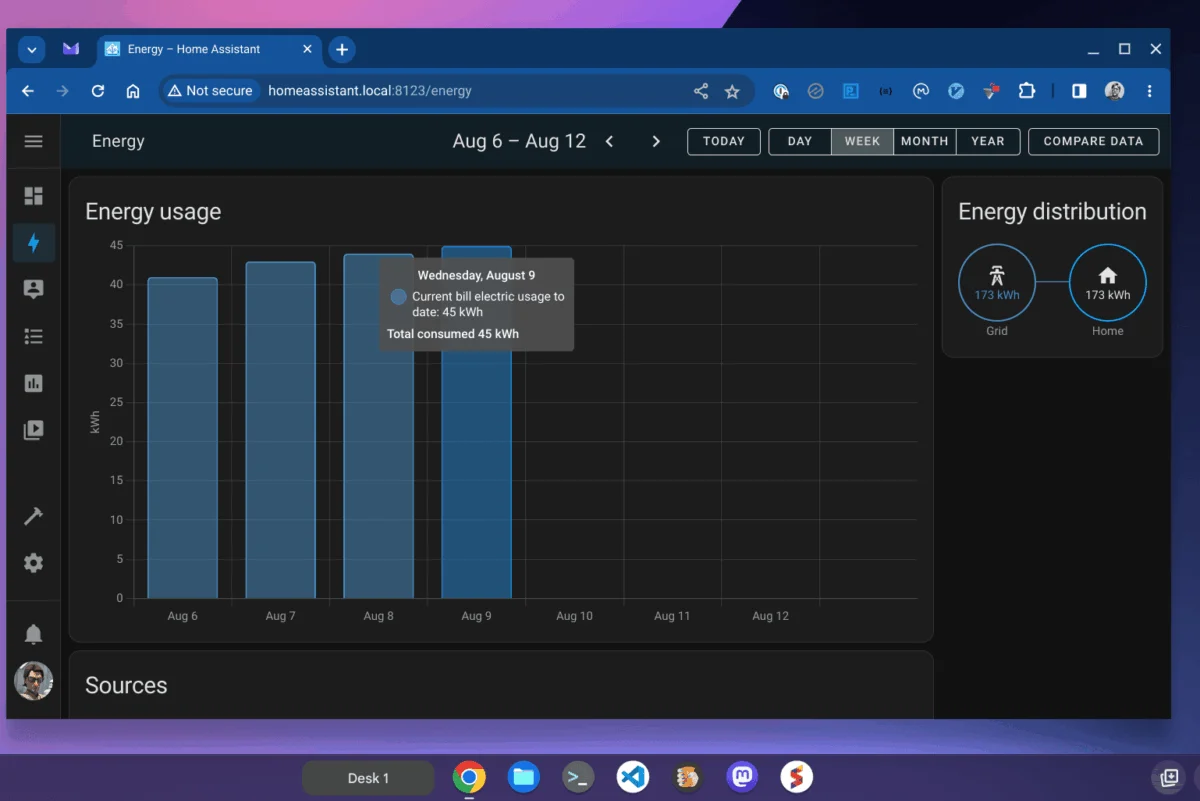
On a more personal note, the podcast also touches upon Kevin’s recent transition to Home Assistant, a popular open-source home automation platform. His experiences and the subsequent audience reactions offer a glimpse into the challenges and rewards of adopting and customizing smart home systems. The engagement from the audience, offering advice and sharing their own experiences, underscores the vibrant and supportive community surrounding such platforms. This interaction highlights the importance of community-driven development and user feedback in shaping the future of smart home technology.
Preparing for Smart Energy Management
In a practical segment, the article provides actionable tips for homeowners looking to prepare for smart energy management programs. As utility companies increasingly implement dynamic pricing and demand-response initiatives, consumers are encouraged to adopt energy-efficient practices and technologies. This includes understanding their energy consumption patterns, investing in smart thermostats and appliances, and exploring options for renewable energy integration. The transition to smart energy management is not only about reducing utility bills but also about contributing to a more sustainable and resilient energy grid.
Listener Question: Amazon Echo Show and Device Compatibility
Finally, the podcast addresses a listener’s question regarding the Amazon Echo Show and its compatibility with other devices. This segment provides practical advice for users seeking to expand their smart home ecosystem, offering recommendations for devices that can seamlessly integrate with the Echo Show, enhancing its functionality and user experience. This type of audience engagement demonstrates a commitment to providing practical solutions and fostering a deeper understanding of the smart home landscape.
The convergence of industrial innovation, smart home challenges, evolving semiconductor technologies, and the burgeoning drone industry paints a complex yet exciting picture of the technological future. Honeywell’s strategic embrace of TinyML stands out as a significant development, promising to unlock new levels of intelligence and efficiency at the edge of industrial operations. As these various threads of technological advancement continue to weave together, the impact on our daily lives and the global economy will undoubtedly be profound.
