
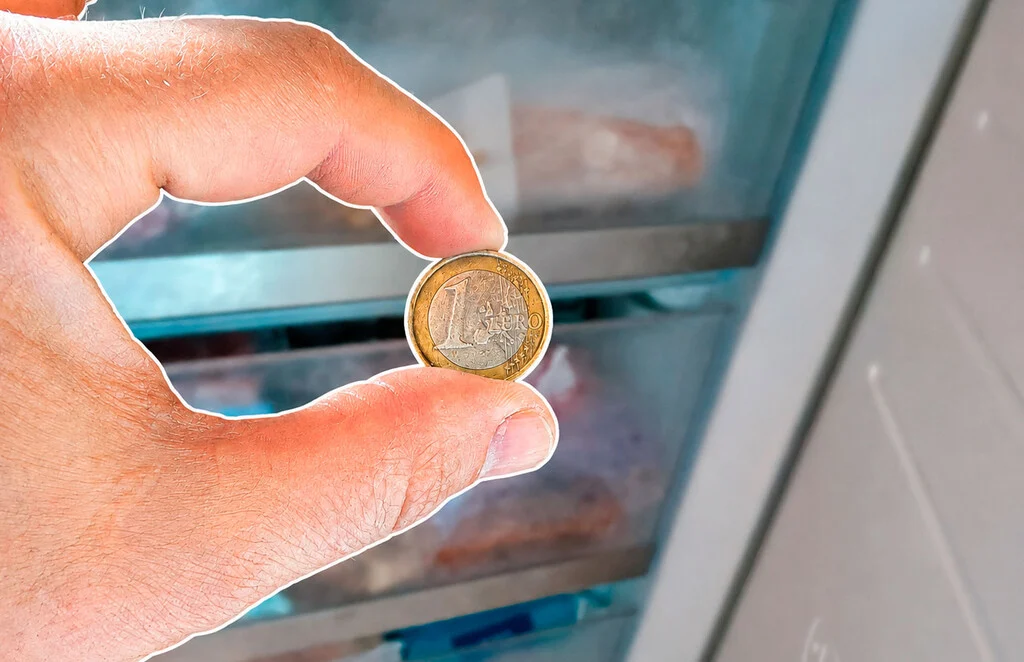

The simple act of placing a coin atop a frozen block of ice in your freezer serves as an analog sentinel against the silent threat of food spoilage. The principle is deceptively simple yet remarkably effective: if a power outage occurs and the freezer temperature rises sufficiently for the ice to melt, the coin will sink. Should the power return before the ice completely thaws, the water will refreeze, encapsulating the coin within the ice block or leaving it at the bottom of the container. Upon returning home, the position of the coin—whether still on top, partially submerged, or at the bottom—offers an immediate, tangible indicator of the freezer’s operational history. A coin found at the bottom signals a significant power interruption, strongly advising against consuming the potentially compromised food, thus preventing serious health risks associated with foodborne illnesses.
The Genesis and Mechanics of an Analog Safeguard
The coin-in-freezer trick gained prominence in an era preceding widespread internet connectivity and integrated smart appliances. It emerged as a practical solution to a common household problem: the uncertainty surrounding food safety after a power outage, especially when residents were away for extended periods like vacations. Before the advent of digital temperature sensors and remote monitoring, homeowners had few reliable means to assess the integrity of their frozen provisions without direct inspection. This trick, therefore, filled a crucial void, empowering individuals with a simple, cost-effective diagnostic tool.
The mechanics are rooted in basic thermodynamics. Water expands when it freezes, creating a solid block. When temperatures rise above freezing, the ice melts, turning back into liquid water. If the power supply to a freezer is interrupted, its internal temperature will gradually increase. The rate of temperature rise depends on several factors, including the freezer’s insulation quality, its initial temperature, the ambient room temperature, and how frequently the door was opened (though this is less relevant for an absent homeowner). As the ice melts, the coin, being denser than water, will sink through the liquid. If power is restored, the water will refreeze, potentially trapping the coin at its lowest point reached during the thaw.
Food safety guidelines, such as those issued by the U.S. Food and Drug Administration (FDA) and the U.S. Department of Agriculture (USDA), emphasize the critical importance of maintaining proper temperatures for perishable foods. Frozen foods should ideally remain at 0°F (-18°C) or below. A freezer full of food will generally keep its temperature for about 48 hours (24 hours if half-full) if the door remains closed. However, once the temperature rises above 40°F (4°C) for more than two hours, perishable food items, including meat, poultry, fish, eggs, and leftovers, enter the "danger zone" where bacteria can multiply rapidly. Consuming such foods can lead to severe gastrointestinal distress, food poisoning, or worse. The coin trick, while not providing precise temperature readings or timestamps, offers a binary "safe/unsafe" indicator that prioritizes health and caution.
The Modern Paradigm: Smart Appliances and Remote Monitoring
In stark contrast to the analog simplicity of the coin trick, the 21st century has ushered in an era of unprecedented connectivity within the home. Smart refrigerators, smart plugs, and comprehensive home monitoring systems now offer sophisticated alternatives for tracking freezer conditions. These devices leverage the Internet of Things (IoT) to provide real-time data and alerts, fundamentally transforming how homeowners interact with their appliances and manage household risks.
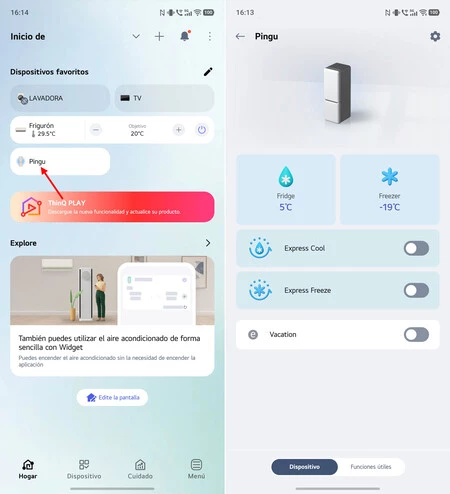
Smart refrigerators, for instance, often come equipped with internal temperature sensors that can be monitored remotely via a smartphone application. Many models can send push notifications or email alerts if internal temperatures deviate from set parameters, if the door is left ajar, or if a power outage is detected. Some advanced units even maintain logs of temperature fluctuations, offering a precise chronology of any potential thawing events. This level of detail far surpasses what the coin trick can provide, offering homeowners peace of mind through actionable data.
Similarly, smart plugs, which can be connected to any traditional appliance, offer a more accessible entry point into remote monitoring. By plugging a freezer into a smart plug, users can track its power consumption in real-time. A sudden drop to zero consumption would indicate a power outage, while a return to normal consumption would signal restoration. Many smart plugs also feature built-in temperature sensors or can be integrated with external ones, allowing for direct temperature monitoring and alert generation. These systems typically rely on a home Wi-Fi network and a stable internet connection, transmitting data to a cloud server accessible through a mobile app.
The market for smart home devices has seen robust growth. According to Statista, the smart home market generated substantial revenue in 2023, with projections for continued expansion. Smart appliances, including refrigerators, are increasingly becoming standard offerings, driven by consumer demand for convenience, energy efficiency, and enhanced security. The adoption rate of smart plugs and other monitoring devices is also on an upward trajectory, reflecting a broader trend towards digitized household management. This technological evolution represents a significant shift from reactive, post-event assessment to proactive, real-time surveillance.
A Comparative Analysis: Analog vs. Digital Resilience
The choice between the traditional coin trick and modern smart technology is not always straightforward, as each method presents distinct advantages and limitations.
Cost: The coin trick is virtually free, requiring only a coin and a small container of water. Smart plugs can range from $15 to $50 per unit, while smart refrigerators represent a significant investment, often hundreds or thousands of dollars more than their conventional counterparts.
Reliability and Independence: The coin trick operates entirely independently of electricity once the ice is frozen. It requires no Wi-Fi, no internet connection, no batteries, and no complex setup. Its reliability is purely physical. Smart systems, however, are inherently dependent on continuous power (at least for the monitoring device itself, if not the freezer), a stable Wi-Fi network, and an active internet connection. While many smart hubs and plugs have battery backups for short outages, prolonged disruptions to power or internet service can render them inoperable, creating blind spots in monitoring. This dependency highlights a critical vulnerability that the analog method gracefully bypasses.
Information Depth: Smart devices offer unparalleled data. They can log precise temperatures, provide timestamps for outages, and even differentiate between a brief power flicker and a prolonged shutdown. This granular information allows for more informed decisions regarding food safety. The coin trick, by contrast, provides a binary result: either the power was out long enough for significant melting, or it wasn’t. While effective for its primary purpose, it lacks the diagnostic detail of digital systems. For instance, a coin at the bottom indicates an outage but doesn’t tell you if it was for 3 hours or 30, which could be crucial for certain food items.
Ease of Use: Both methods are relatively easy to implement. Setting up a smart plug and its corresponding app might take a few minutes, while preparing the ice and coin is even simpler. However, troubleshooting smart devices (e.g., Wi-Fi connectivity issues, app glitches) can be more complex than simply observing a coin’s position.
Food Safety: The Paramount Concern
Regardless of the monitoring method employed, the overarching objective remains food safety. Foodborne illnesses are a significant public health concern. The Centers for Disease Control and Prevention (CDC) estimates that 1 in 6 Americans (48 million people) get sick, 128,000 are hospitalized, and 3,000 die from foodborne diseases each year. A substantial portion of these cases can be attributed to improper food handling and storage, including the consumption of perishable foods that have been left at unsafe temperatures.
Food safety experts consistently advise a "when in doubt, throw it out" policy regarding perishable foods affected by power outages. This caution is paramount because many harmful bacteria, such as Salmonella, E. coli, and Listeria, do not alter the taste, smell, or appearance of food. Therefore, relying on sensory cues alone is insufficient and dangerous. The coin trick serves as a stark, visual reminder of this principle, prompting immediate disposal if a significant thaw has occurred.
The economic implications of food waste are also substantial. Households discard millions of tons of food annually, a significant portion of which is due to spoilage. A power outage, especially when undetected, can lead to the loss of hundreds of dollars’ worth of frozen goods for an average family. The coin trick, or smart monitoring, can mitigate these losses by providing clear guidance on what is safe to keep and what must be discarded, thus preventing unnecessary waste. From an environmental perspective, reducing food waste also lessens the burden on landfills and reduces greenhouse gas emissions associated with food production and decomposition.
The Hybrid Approach: Merging Wisdom and Innovation
Given the respective strengths and weaknesses, a compelling argument can be made for a hybrid approach. For homeowners equipped with smart technology, relying on smart plugs or refrigerators for real-time alerts and detailed temperature logs is undoubtedly the most convenient and informative strategy. These systems offer peace of mind through continuous monitoring and immediate notification, allowing for prompt action if an issue arises (e.g., asking a neighbor to check on the freezer if an extended outage is detected).
However, the inherent vulnerabilities of smart systems—their dependence on power, Wi-Fi, and internet service—mean that a backup plan is always prudent. This is where the venerable coin-in-freezer trick retains its value. In scenarios where internet connectivity is lost, or a smart device fails, the coin provides an infallible, physical record. It acts as a fail-safe, a last line of defense when the digital guardians fall silent. For those without smart home technology, the coin trick remains an indispensable, accessible tool for ensuring food safety without any upfront investment.
Energy companies are increasingly investing in smart grid technologies to enhance reliability and provide more granular data to consumers. Yet, even with these advancements, localized power outages due to weather events, infrastructure failures, or unexpected disruptions remain a reality. According to the U.S. Energy Information Administration (EIA), the average U.S. electricity customer experienced over eight hours of power interruptions in 2022, a figure that can vary significantly by region and year. These statistics underscore the ongoing need for household preparedness.
Beyond the freezer, the principles of remote monitoring extend to other aspects of home security and management. Smart plugs can be used to monitor the operational status of water heaters, sump pumps, or even lighting, providing alerts for potential issues like leaks or security breaches. The underlying philosophy is consistent: leveraging technology to provide information and control, even when physically absent.
Conclusion: A Testament to Adaptability
The narrative of the coin-in-freezer trick against the backdrop of smart home technology is a testament to human adaptability and the enduring value of practical solutions. While modern digital tools offer unprecedented levels of detail, convenience, and remote control, the analog simplicity of the coin trick serves as a powerful reminder of traditional wisdom and its inherent resilience. It offers a tangible, undeniable indicator of freezer integrity, unburdened by technological dependencies.
For many, particularly those in areas prone to frequent power disruptions or without the means to invest in smart home ecosystems, the coin remains an indispensable guardian of food safety. For others, it offers a reassuring backup, a physical failsafe in an increasingly digital world. Ultimately, whether one opts for the cutting-edge vigilance of a smart appliance or the time-tested wisdom of a simple coin, the goal is the same: to protect health, minimize waste, and maintain peace of mind, even when far from home. This blend of old and new offers a comprehensive strategy for navigating the challenges of household management in an unpredictable world.
