
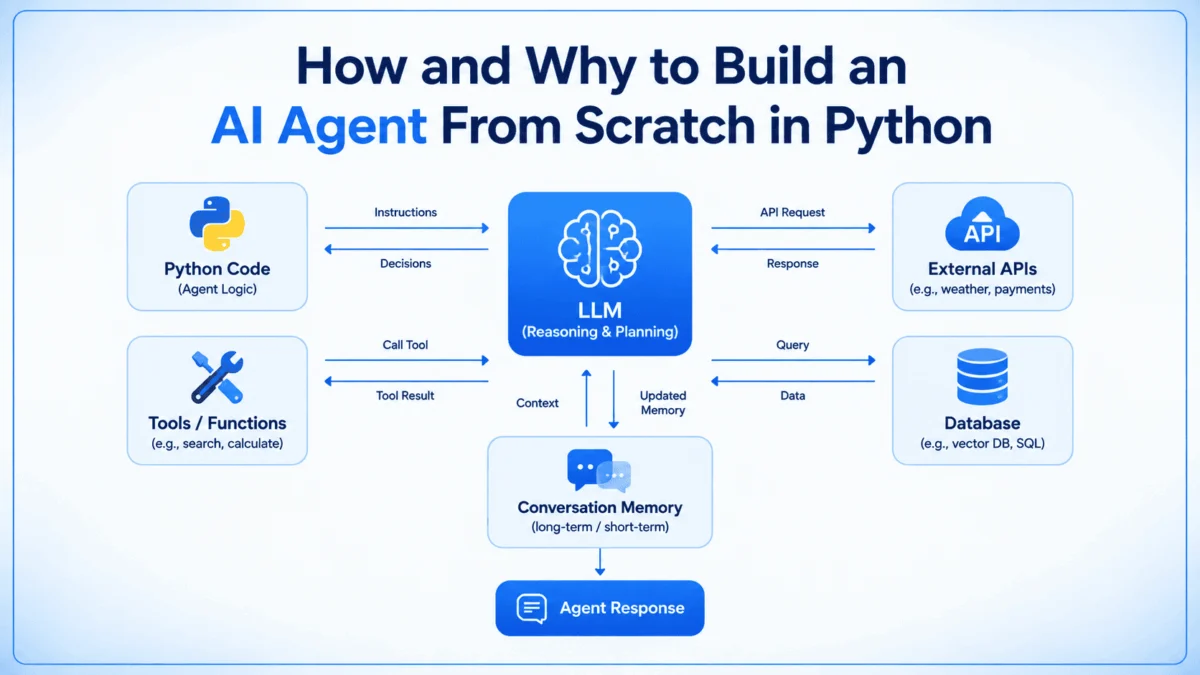

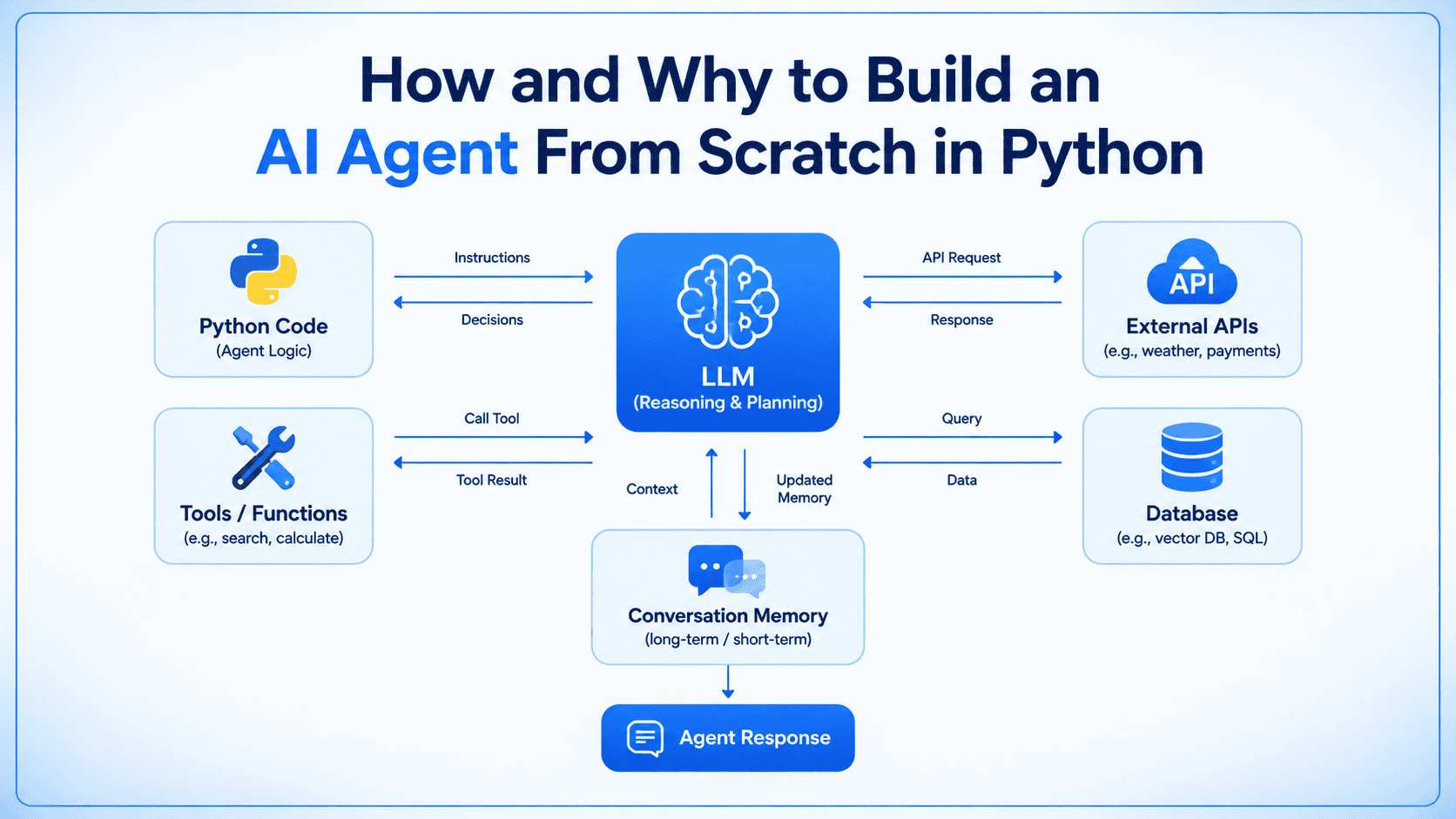
The rapid evolution of artificial intelligence has transitioned from simple, static chat interfaces to dynamic, autonomous entities known as AI agents. While orchestration frameworks like LangChain or AutoGPT have become the industry standard for managing complex workflows, they often act as "black boxes" that obscure the fundamental mechanics of large language model (LLM) interaction. By building an AI agent from the ground up using raw Python and the Anthropic API, developers can achieve a transparent, high-performance architecture that relies on nothing more than a model, a loop, and a set of well-defined functions.
The Shift from Static LLMs to Autonomous Agents
The primary limitation of a standard LLM is its reliance on its static training set. If a user asks a model to explain a company policy or summarize a document, the model performs effectively because the required information exists within its latent knowledge. However, modern enterprise requirements often demand real-time data retrieval—such as checking the status of an active shipment, querying a live SQL database, or interacting with third-party APIs.
This is where the agentic paradigm emerges. An AI agent is defined by its ability to perform "tool calling"—a mechanism where the model pauses its generation process to request the execution of an external function. By providing the model with a clear schema and the capability to interpret output from these functions, the agent effectively closes the gap between general intelligence and specific, real-time utility.
Technical Prerequisites and Environment Setup
To implement an agent from scratch, the architecture requires a stable Python environment (version 3.10 or later) and the official Anthropic Python SDK. As of late 2026, developers are advised to monitor model deprecation schedules. With the upcoming retirement of Claude Sonnet 4.5 on November 30, 2026, engineers must ensure that production codebases are updated to support newer iterations of the Claude family to avoid service interruptions.
The setup process requires the configuration of an ANTHROPIC_API_KEY. Rather than hardcoding credentials, best practices dictate that this key be stored as an environment variable, ensuring that the client SDK can securely authenticate API calls. Once the client is initialized, the agent’s logic is built around the messages.create method, which serves as the interface between the user’s prompt and the model’s reasoning engine.
The Mechanics of Tool Calling
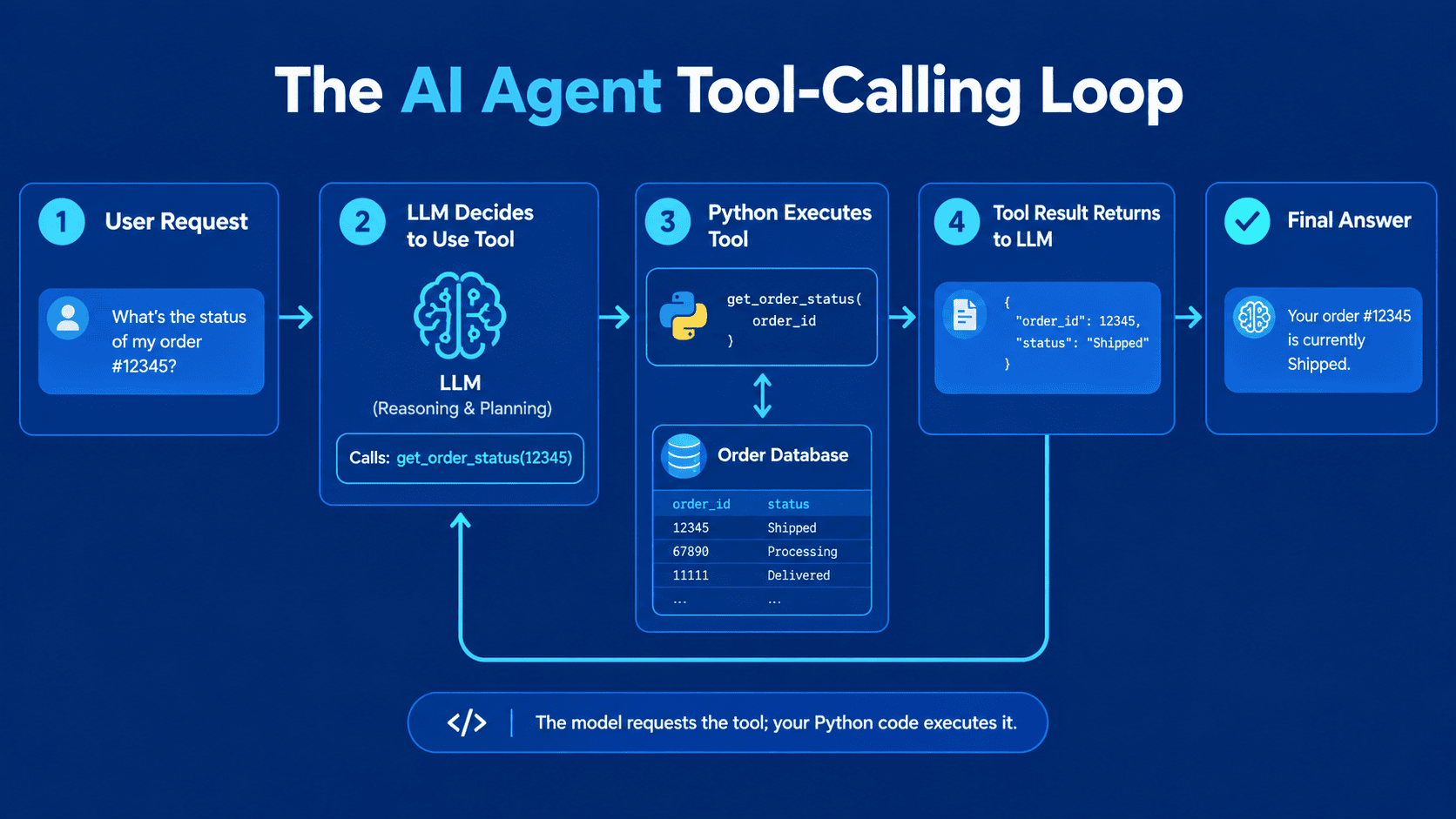
The core of an autonomous agent is the "Tool Schema." This is a structured JSON-like definition that provides the model with a roadmap of available functions. For instance, if an agent is tasked with managing customer orders, it requires a function—such as get_order_status—and a corresponding metadata schema.
The schema must include:
- Name: A clear identifier for the function.
- Description: A natural language explanation that informs the model of the tool’s purpose.
- Input Schema: A technical definition of the arguments required (e.g., an order ID string).
When the model receives a request that requires external data, it does not attempt to hallucinate an answer. Instead, it generates a stop_reason of tool_use. This is the crucial moment where the agent acts as an intermediary. The developer’s script must catch this signal, execute the specified function locally, and pass the result back to the model in a follow-up API call. This process, often referred to as a "round trip," ensures that the final response provided to the user is grounded in accurate, verified data.
Designing the Execution Loop
For simple tasks, a single round trip is sufficient. However, complex real-world workflows often require multiple, sequential, or conditional tool calls. To handle this, developers must implement a control loop. This loop sends the user’s request to the model, inspects the response for a tool_use signal, executes the requested tools, appends the outputs to the message history, and loops back to the model.
A critical design consideration in this loop is the implementation of a max_iterations constant. In production systems, a model may occasionally enter a recursive loop, repeatedly calling the same tool or misinterpreting the result. By capping the number of iterations, developers prevent infinite loops that would otherwise consume excessive API tokens and increase latency, effectively creating a "circuit breaker" for the agent’s reasoning process.
Implementing Persistent Memory
A major hurdle in building an agent from scratch is managing state. A stateless function will treat every query as a brand-new interaction, meaning the agent will lack the "memory" required to resolve pronouns (e.g., "What is the status of it?") or build upon previous steps in a conversation.
To overcome this, the agent must be encapsulated within a class. By maintaining an internal self.messages list, the agent can store the entire history of the conversation, including user prompts, assistant tool-use requests, and the subsequent tool results. As the interaction progresses, this history is passed back into every API call, allowing the model to synthesize context from the entire session.
Broader Implications and Future Directions
The move toward "bare-metal" agent development represents a broader trend in the machine learning community: a preference for transparency and control over heavy, opinionated abstractions. By understanding how models manage tool use and state, engineers can optimize their agents for specific performance metrics—such as reducing total tokens, minimizing latency, or increasing the reliability of tool selection.
However, this manual approach comes with its own challenges. As the conversation history grows, it may exceed the model’s context window. Sophisticated implementations must therefore include "memory management" strategies, such as:
- Summarization: Condensing old parts of the conversation to save space.
- Persistence Layers: Moving long-term history to an external database (e.g., PostgreSQL or Redis) rather than keeping it all in RAM.
- Retrieval Augmented Generation (RAG): Dynamically pulling only the most relevant historical context when the message list grows too large.
Analysis of the Agentic Architecture
The simplicity of the "model-loop-tool" architecture belies its power. By stripping away frameworks, developers gain the ability to debug at the granular level. If a tool call fails, the developer can inspect the exact JSON payload sent to the model; if the model misinterprets a result, the developer can adjust the tool description directly in the schema without fighting against the rigid constraints of a third-party library.
Furthermore, this modularity allows for the integration of diverse capabilities. An agent built on these principles can easily incorporate web search, code execution environments, or internal enterprise resource planning (ERP) connections. As long as the function is callable and the schema is descriptive, the agent’s capabilities are limited only by the permissions granted to the functions it manages.
Conclusion
Building an AI agent from scratch in plain Python is more than just an educational exercise; it is a foundational skill for any engineer looking to deploy reliable, scalable, and transparent AI systems. By mastering the interaction between the LLM and the local environment, developers ensure that their applications remain agile and maintainable as the underlying model technology continues to advance. Whether for internal business automation or external user-facing applications, the ability to build and manage agents without relying on black-box frameworks remains a critical competitive advantage in the modern software landscape.
