

The Spring Branch Independent School District (SBISD), located in the affluent west Houston corridor, is currently undergoing a fundamental transformation of its digital backbone following a series of technical challenges and a landmark global IT outage. Serving 31,000 students across 46 campuses and 57 buildings, the district represents a microcosm of the modern American educational landscape, where extreme wealth and economic disadvantage coexist across the local "I-10 divide." Managing this complex environment is Troy Neal, the district’s Executive Director of Cybersecurity and Technology, who oversees a team of 12 specialists responsible for 4,000 wireless access points, 500 network switches, and an expansive fleet of 80,000 devices ranging from iPads to enterprise servers.
The district’s technological evolution reached a critical inflection point in the summer of 2024. For years, SBISD operated on a traditional capital expenditure (capex) model, typical of Texas school districts, where hardware is purchased in large cycles funded by community-approved bonds. However, the limitations of this model were exposed during the global CrowdStrike outage on July 19, 2024, leading to a total reassessment of how the district manages risk, data storage, and disaster recovery.
The July 19 Catalyst: A Morning of Crisis and Recovery
The global disruption began in the early hours of Friday, July 19, when a faulty configuration update to CrowdStrike’s Falcon sensor triggered a "Blue Screen of Death" (BSOD) on approximately 8.5 million Windows machines worldwide. For Spring Branch ISD, a CrowdStrike customer, the impact was immediate. Neal recalled waking at 4:00 a.m. to news of the outage and realizing the district’s entire Windows estate was at risk.
By 6:30 a.m., the district’s IT "troops" were assembled at their west Houston headquarters. While many organizations worldwide struggled for days to manually remediate machines, SBISD was fully functional by noon. This rapid recovery was not the result of the standard fixes recommended by Microsoft or CrowdStrike—which Neal noted were largely ineffective for their specific environment—but rather a strategic reliance on their secondary backup system, Pure Storage (Everpure).
Prior to the outage, the district utilized a "4-2-1" backup strategy. The primary backup target was a Dell Data Domain appliance, with Pure Storage serving as a secondary understudy. During the heat of the crisis, the performance disparity between the two systems became the deciding factor for the district’s future strategy. While the Dell system was reliable, its restoration speeds were insufficient for a rapid return to operations. In contrast, the Pure Storage environment allowed the team to restore massive virtual machines (VMs), such as the 500GB student information system, in minutes rather than hours. The efficiency of a "single-click" restoration process provided the IT team with the confidence necessary to bypass manual machine-by-machine remediation.
Shifting the Financial Paradigm: From Bonds to Subscriptions
The success of the recovery efforts accelerated a major shift in the district’s procurement philosophy. Traditionally, Texas K-12 districts rely on bond elections to fund massive hardware "refreshes." This creates a cycle where districts buy millions of dollars of hardware upfront, which then depreciates over five to seven years. Neal argued that this model is increasingly obsolete in an era where software and security tools are almost exclusively subscription-based.
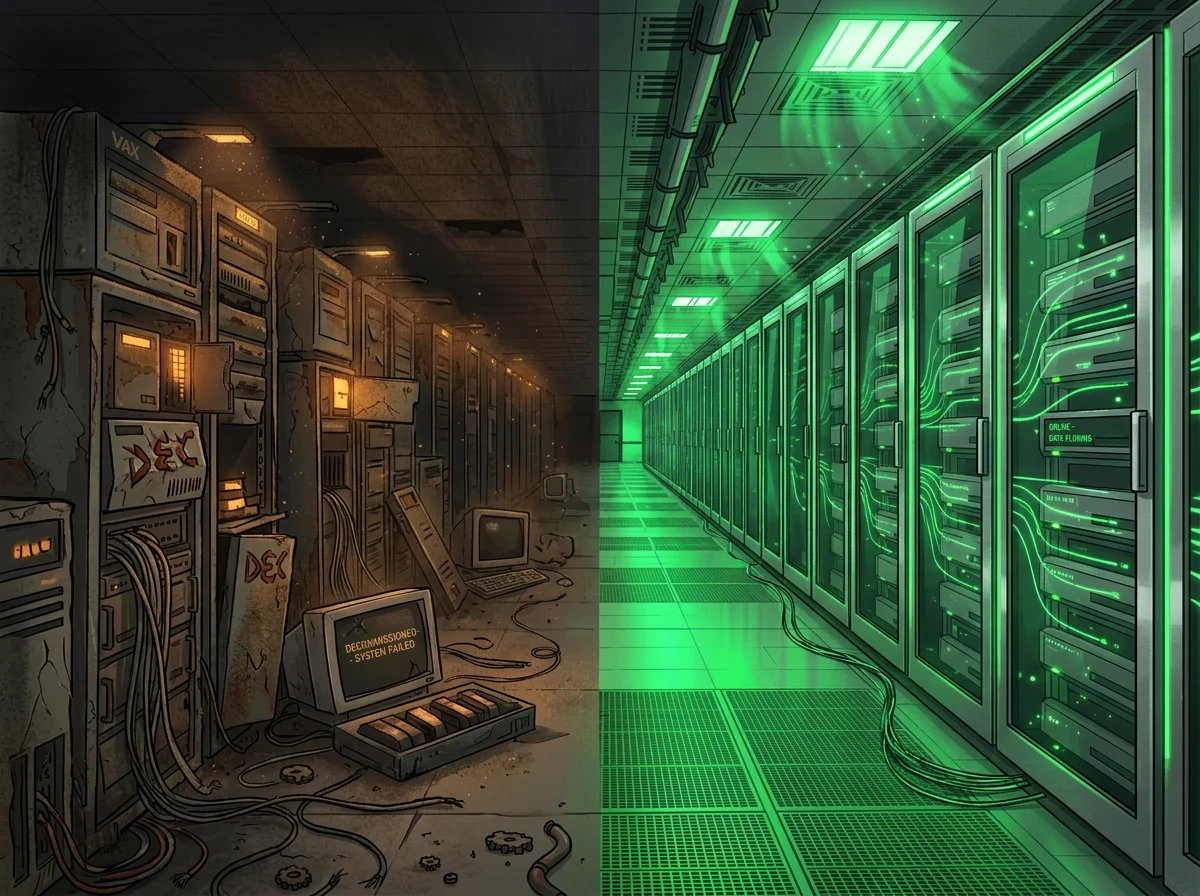
This summer, SBISD began the process of decommissioning one of the largest Dell hyper-converged infrastructure (HCI) environments ever sold to a school district—a seven-year-old system nearing the end of its functional life. Instead of a like-for-like hardware replacement, Neal opted for a "Storage-as-a-Service" model via Pure Storage’s Evergreen//One subscription.
This move represents a significant departure from standard public sector accounting. By moving to a subscription model, the district avoids the "waste" of hardware that sits idle or becomes obsolete before its bond-funded replacement cycle. The subscription model allows for predictable costs and ensures the district is always running on modern hardware without the need for disruptive, "forklift" upgrades every few years.
Risk Transference and the Lean IT Team
A central pillar of Neal’s strategy is "risk transference." With a lean team of only 12 people supporting 80,000 devices, the district cannot afford the labor-intensive tasks of manual patching, hardware monitoring, and constant troubleshooting. By moving to a managed subscription model, the burden of maintaining hardware health shifts to the vendor.
This approach was validated recently when the vendor proactively flagged a potential blade failure and opened a support ticket before the district’s internal team even noticed a fluctuation. For Neal, this "set it and forget it" mentality is essential for operational efficiency. It eliminates the "noise" of constant system alerts, allowing his engineers to focus on higher-level tasks rather than the drudgery of infrastructure maintenance.
This operational shift also serves as a recruitment and retention tool. In a competitive Houston job market, school districts often struggle to match the salaries offered by the energy and healthcare sectors. By providing engineers with top-tier, enterprise-class tools and removing the burden of mundane maintenance, SBISD aims to offer a more compelling professional environment for IT talent who are motivated by high-level systems architecture rather than "hardware watching."
The Economic Reality: A $25 Million Shortfall
The infrastructure overhaul comes at a time of severe financial strain for Spring Branch ISD. The district is currently facing a $25 million budget shortfall for the upcoming academic year. This deficit is part of a broader trend across Texas, where stagnant state funding, high inflation, and declining enrollment have forced many districts to make painful cuts. SBISD has already closed three schools over the last two summers to consolidate resources.
This financial pressure makes the efficiency of the IT department even more critical. Neal treats the district’s technology department like a major corporation, insisting on enterprise-grade products that offer full support and reliability. The goal is to ensure that every dollar spent on technology directly contributes to the district’s resilience and ability to educate, regardless of the socioeconomic status of the students on either side of the I-10 divide.
Lessons in Data Management and "Buyer’s Remorse"
Part of the district’s journey involved learning from past procurement errors. Neal admitted to "buyer’s remorse" regarding a previous acquisition of six petabytes of Hitachi storage dedicated to CCTV footage. At the time of purchase, the district prioritized raw capacity and lower upfront costs, assuming the storage array would behave with the same agility as their backup products.
The experience led to a renewed emphasis on due diligence and rigorous Proof of Concept (PoC) testing. The district now operates with the understanding that total cost of ownership (TCO) must include the "soft costs" of management, support, and the speed of recovery. The Hitachi system, while functional for its specific task, lacks the integrated ecosystem and ease of use that the district now requires for its primary infrastructure.
Cybersecurity, AI, and the Path Forward
Looking toward the future, SBISD remains cautiously optimistic but vigilant. Neal acknowledges that in the current threat landscape, a major cyber event is a matter of "when, not if." The district’s new infrastructure is designed specifically with cyber-resiliency in mind, ensuring that in the event of a ransomware attack, the district has access to a "pristine environment" for restoration—a requirement often mandated by cyber insurance providers.
On the front of Artificial Intelligence, the district is taking a measured approach. While SBISD has approved a limited number of AI tools for staff use, Neal is wary of the implications for student data privacy. The community has expressed concerns regarding excessive screen time and the security of sensitive information. Consequently, the district is focusing on professional development and "AI awareness" training rather than rushing to integrate AI-driven demand into its core infrastructure.
The transition at Spring Branch ISD serves as a case study for public sector organizations grappling with the transition from legacy hardware to modern, service-oriented IT. By leveraging a global crisis as a proof-of-concept for new technologies, the district has managed to turn a day of potential disaster into a long-term strategy for resilience and fiscal responsibility. As Neal noted, the goal is to ensure that despite the external pressures of budget cuts and technical vulnerabilities, the "best part about Spring Branch"—the uniformity and quality of its programs—remains protected by a robust and invisible digital shield.
