
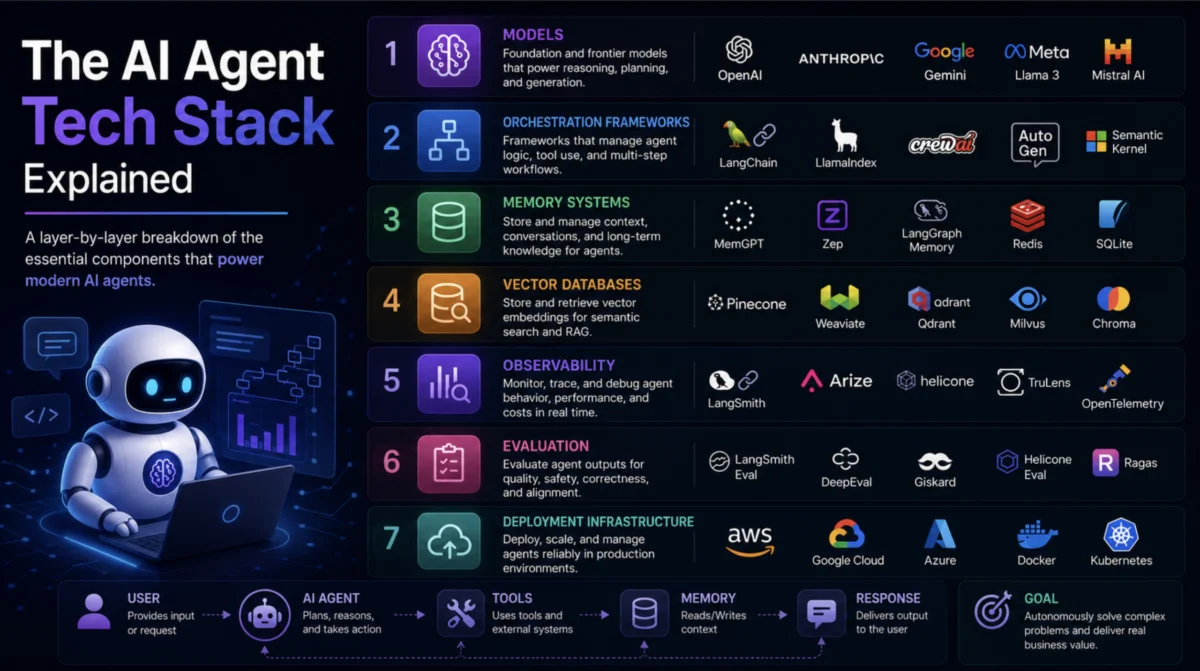

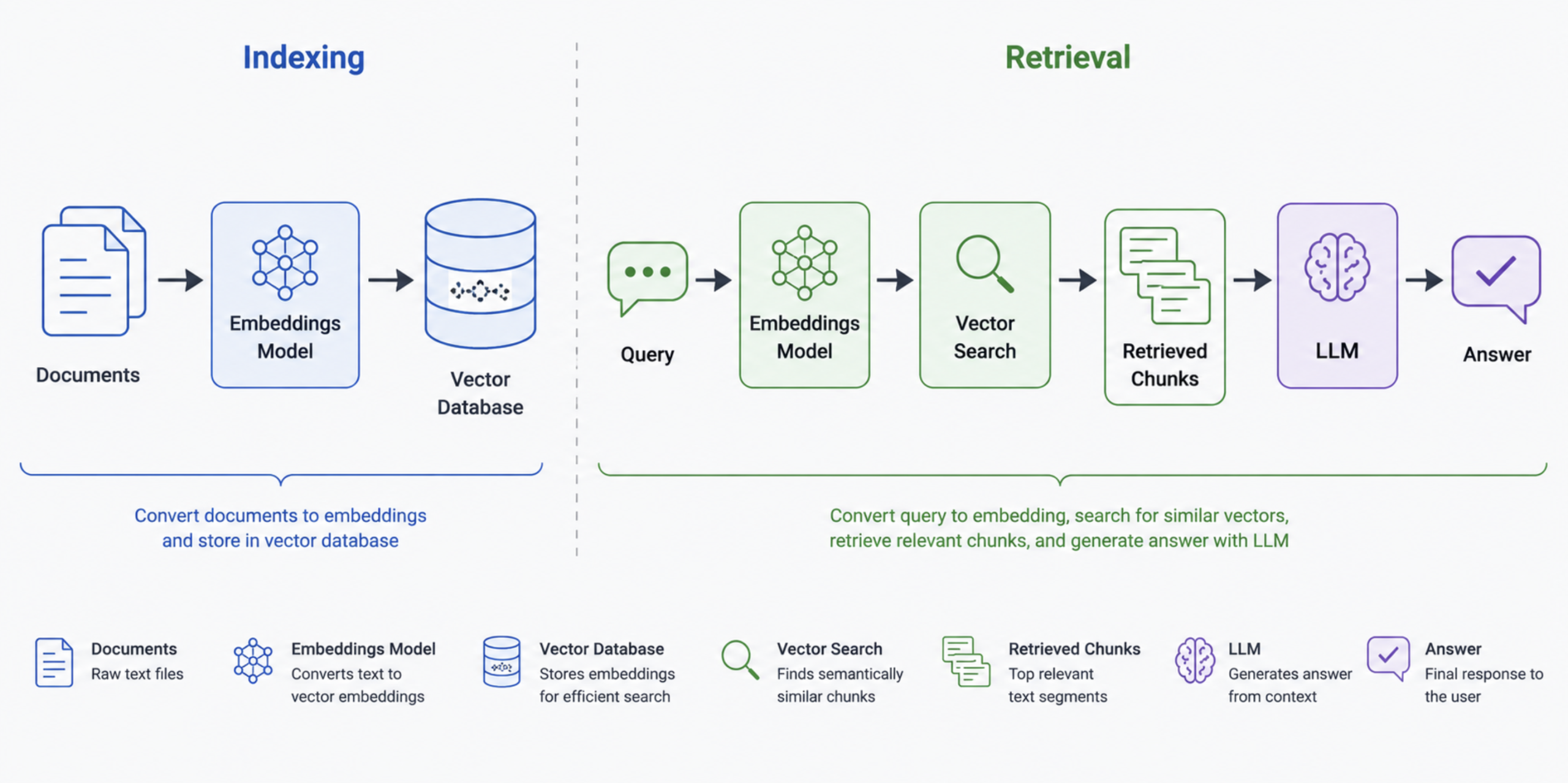
The rapid proliferation of artificial intelligence agents within enterprise applications is reshaping the technological landscape, demanding a comprehensive understanding of the intricate layers that underpin their functionality. As businesses increasingly deploy these autonomous systems to automate complex tasks, from competitor analysis to real-time reporting, the focus shifts beyond the celebrated large language models (LLMs) to the underlying stack that ensures their operational efficacy and reliability. What appears to be a seamless, instantaneous response from an AI agent is, in fact, the culmination of seven distinct technological layers working in concert, each critical for performance and prone to specific points of failure. This holistic view is paramount for engineers and technical leads tasked with navigating the burgeoning era of AI-driven automation.
The Accelerating Adoption of AI Agents
The integration of AI agents into enterprise workflows is no longer a distant prospect but a present reality experiencing near-vertical adoption. According to a Gartner report from August 2025, a staggering 40% of enterprise applications are projected to feature task-specific AI agents by the end of 2026, a dramatic increase from less than 5% in 2025. This aggressive growth trajectory underscores the urgent need for a deep, end-to-end understanding of the AI agent stack, extending far beyond the foundational models that often capture the most public attention. Industry analysts emphasize that successful deployments hinge not just on powerful models but on the robust integration and orchestration of the six supporting layers beneath them.
Deconstructing the Seven Layers of the AI Agent Stack
A typical AI agent, capable of performing multi-step tasks like researching competitors, extracting data, summarizing findings, and disseminating reports, relies on a sophisticated architecture. This article delves into each of the seven essential layers, explaining their purpose, interconnections, and the leading solutions available in 2026.
Layer 1: The Foundation Model – The Cognitive Core
At the apex of the AI agent stack lies the foundation model, serving as the agent’s cognitive engine. This is where complex reasoning occurs, natural language is comprehended, and critical decisions about subsequent actions are formulated. Every other component in the stack is designed either to feed context into this model or to execute the directives it generates.
In 2026, the market for enterprise-grade foundation models is dominated by several key players, each offering unique strengths. OpenAI’s GPT-5.5 stands out for its speed in routine tasks and its reliable tool-calling capabilities, benefiting from the most mature ecosystem of integrations and a vast developer community. Anthropic’s Claude Sonnet 4.6 is a strong contender for processing extensive documents and executing nuanced instructions at a more competitive price point, while Claude Opus 4.8 is preferred for tasks demanding deeper, long-horizon reasoning. Google’s Gemini 3.1 Pro boasts an impressive 1 million token context window, making it ideal for agents that need to process large codebases or expansive knowledge bases in a single pass. For organizations prioritizing full control over deployment and data residency, open-weight models such as Meta’s Llama 4 and Mistral Large 3 offer compelling alternatives, albeit with the added overhead of self-managed infrastructure.
A notable evolution from 2025 is the blurring of lines between "standard" and "reasoning" model families. Leading providers like OpenAI, Anthropic, and Google have integrated adjustable reasoning effort levels directly into their primary models. GPT-5.5, for instance, offers effort settings from "none" to "xhigh," with similar parameters available in Claude and Gemini. While default or low-effort settings suffice for most agent workflows, optimizing for speed and cost, tasks requiring meticulous planning or complex mathematical computations benefit significantly from increased reasoning effort, justifying the additional cost through enhanced accuracy.
Layer 2: The Orchestration Framework – The Agent’s Nervous System
If the foundation model is the brain, the orchestration framework functions as the nervous system, dictating the agent’s control flow. This layer is responsible for determining the agent’s next move, when to invoke external tools, how to manage tool outputs, and maintaining the coherence of the reasoning loop across multiple steps.
The prevailing pattern in most frameworks is ReAct (Reasoning and Acting). This iterative loop involves the agent generating a thought, deciding on an action, executing that action via a tool, observing the outcome, and then refining its thought process. Despite its apparent simplicity, this layer is frequently where production failures manifest, leading to scenarios such as incorrect tool calls, infinite loops, or the agent’s inability to recognize task completion.
The choice of orchestration framework is highly dependent on the agent’s specific requirements. LangGraph or LangChain are popular choices for single-agent task runners, offering robust state management and well-documented capabilities. For complex scenarios involving coordinated teams of specialized agents, frameworks like CrewAI and AutoGen provide sophisticated multi-agent management. Enterprise environments often gravitate towards Semantic Kernel due to its enterprise-grade features and integration capabilities. For workflows heavily reliant on document retrieval, LlamaIndex offers specialized functionalities.
Layer 3: Memory Systems – Bridging the Stateless Gap
A fundamental challenge in AI agent design is the inherent statelessness of LLMs. Each interaction typically starts anew, devoid of prior context unless explicitly provided. While acceptable for one-off queries, this limitation becomes a critical impediment for agents requiring conversational recall, personalized preferences, or the ability to build upon past work. Atlan’s research on AI agent memory in 2025 revealed that 95% of enterprise generative AI pilots failed to deliver measurable ROI, attributing these failures primarily to inadequate context readiness rather than deficiencies in model quality.
A production-grade AI agent typically incorporates four types of memory:
- Working Memory: Short-term context, usually the current conversation turn, passed directly into the LLM’s context window.
- Episodic Memory: A log of past interactions, often summarized or retrieved to provide long-term conversational context.
- Semantic Memory: Knowledge external to the LLM’s training data, typically accessed via Retrieval-Augmented Generation (RAG) from vector databases.
- Procedural Memory: The agent’s learned behaviors, rules, and strategies for task execution, often encoded in prompts or fine-tuning.
Effective memory management is crucial. For instance, combining working and episodic memory ensures continuity. Episodic memory acts as a persistent log, summarized and injected into the system prompt for each new interaction. Working memory, meanwhile, maintains the in-session message history, which is dynamically trimmed to prevent token overflow within the LLM’s context window. This dual approach allows agents to remember user preferences and past interactions, even across extended sessions, without incurring excessive token costs or computational overhead.
Layer 4: Vector Databases and Retrieval (RAG) – Enterprise Knowledge Integration
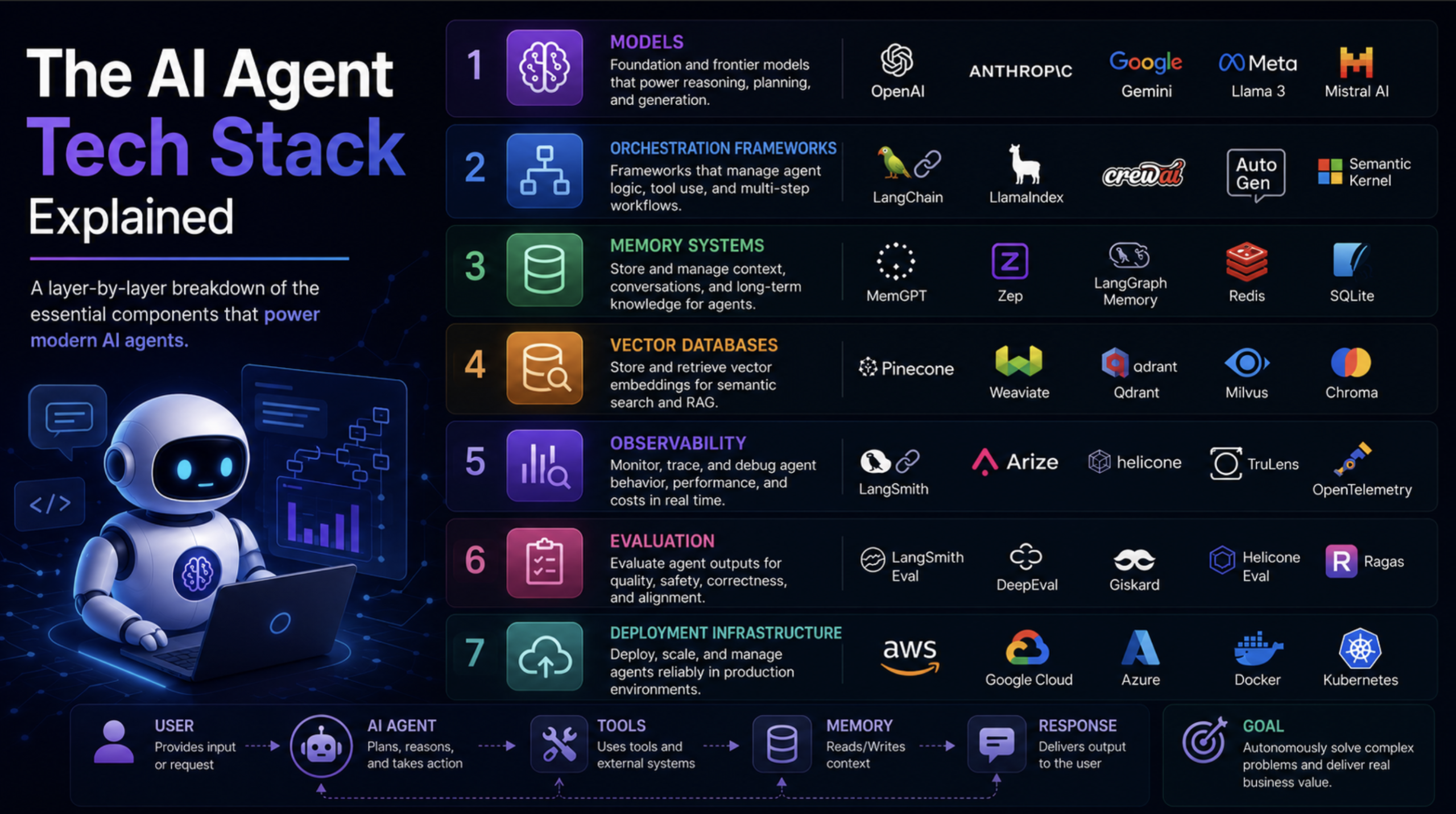
While foundation models possess vast general knowledge, they lack familiarity with an organization’s proprietary data, internal documents, or real-time information sources. Retrieval-Augmented Generation (RAG) addresses this critical gap by providing a mechanism for agents to access and incorporate relevant external knowledge.
The RAG concept is elegant in its simplicity: instead of attempting to cram an entire knowledge base into an LLM’s context window, documents are transformed into numerical representations (embeddings), stored in a specialized vector database, and only the most pertinent chunks are retrieved at query time. This ensures the agent receives a highly focused and relevant context, significantly reducing the likelihood of hallucinations and improving factual accuracy.
The global vector database market reached an estimated $3.2 billion in 2025, with an annual growth rate of 24%, reflecting the central role RAG plays in modern AI systems. Leading vector database options cater to diverse use cases:
- Chroma: A developer-friendly, local-first database, ideal for prototyping and smaller to medium production workloads, especially after its performance-boosting Rust rewrite in 2025.
- Pinecone: A managed vector database optimized for high-scale, low-latency similarity searches, preferred for production RAG systems where infrastructure management is offloaded.
- Weaviate: An open-source vector database offering native hybrid search (BM25 keyword search combined with dense vector search), deployable via self-hosting or Weaviate Cloud.
- pgvector: A PostgreSQL extension that adds vector similarity search capabilities, leveraging existing PostgreSQL infrastructure and capable of handling millions of vectors with HNSW indexing for low latency.
A typical RAG pipeline involves document chunking, embedding generation using models like OpenAI’s text-embedding-3-small, storage in a vector database, and subsequent retrieval of relevant chunks to ground the LLM’s responses.
Layer 5: Tools and External Integrations – Empowering Action
An AI agent without tools is effectively a sophisticated text generator, severely limited in its ability to interact with the real world. Tools are the critical layer that enables agents to perform actions, extending their capabilities beyond mere conversation.
Technically, a tool is a function that the foundation model can autonomously decide to call. The model’s decision-making process is guided by a natural language description of the function’s purpose and a precisely defined input parameter schema. The model doesn’t execute the function itself; rather, it determines when and with what arguments to invoke it, with the actual execution handled by the underlying code.
Key categories of tools for production agents include:
- Web Search: For accessing real-time, current information.
- Code Execution: For calculations, data processing, and logical operations.
- File I/O: For reading from and writing to documents or databases.
- API Calls: For connecting to external services and internal systems (e.g., CRM, ERP, messaging platforms).
- Browser Use: For interacting with web interfaces that lack dedicated APIs, enabling more complex automation.
A significant development in this space is the Model Context Protocol (MCP), introduced by Anthropic in late 2024. MCP provides a standardized method for models to communicate with external tools and data sources, reducing the need for custom integration code. Amazon Bedrock Agents notably added native MCP support in October 2025, signaling a growing industry trend towards unified interaction protocols. The success of tool integration heavily relies on the quality of the tool’s schema and description, which must be precise to prevent misinterpretations and incorrect invocations by the model.
Layer 6: Observability and Evaluation – Ensuring Reliability and Trust
A stark reality in AI agent deployment is the phenomenon of "silent failures." As highlighted by experts at Kanerika, a hallucinated answer can still return an HTTP 200 status, meaning standard infrastructure monitoring tools may register a successful request while the agent confidently provides incorrect information. LLM correctness is semantic, not merely structural, demanding a specialized observability layer.
A robust LLM observability setup typically tracks three key areas:
- Tracing: This involves following every step of an agent’s execution, including LLM calls, tool invocations, retrieval queries, intermediate reasoning steps, and their respective latencies.
- Evaluation: This scores the agent’s output against critical metrics such as faithfulness (adherence to retrieved context), relevance (answering the user’s query), and hallucination rate. This often requires human-in-the-loop validation or advanced ML-grade evaluation models.
- Monitoring: This tracks behavioral drift over time, assessing whether the agent’s performance on specific input classes is improving or degrading as models and prompts evolve.
Leading platforms offer distinct advantages. LangSmith provides deep integration with LangChain and LangGraph, offering a fast track to comprehensive tracing for users within that ecosystem. Langfuse, an open-source solution with over 19,000 GitHub stars, is self-hostable and framework-agnostic. Arize Phoenix is recognized for its ML-grade evaluation rigor, offering over 50 research-backed metrics for faithfulness, relevance, safety, and hallucination detection. MLflow’s analysis suggests that the optimal choice often aligns with the existing framework: LangSmith for LangChain teams, and Phoenix or Langfuse for LlamaIndex or raw API integrations.
Layer 7: Deployment Infrastructure – Operationalizing AI at Scale
The transition from a flawless development environment to a stable, scalable production system is where the deployment infrastructure layer proves its worth. Without careful planning, even the most sophisticated agent can become a maintenance nightmare.
Containerization with Docker is a minimum requirement, ensuring consistent behavior across diverse environments, simplifying dependency management, and providing a clear path to cloud deployment. The alternative—shipping Python scripts with basic dependency lists—is a common source of environment-related bugs that disproportionately consume engineering resources.
For the serving layer, two primary architectural options exist:
- Synchronous API (Flask, FastAPI): Suitable for agents that complete tasks within a few seconds, allowing HTTP connections to remain open.
- Asynchronous Queue (Celery, AWS SQS, Google Pub/Sub): Essential for agents involving multiple tool calls, long retrieval pipelines, or extensive document processing that might take 30-60 seconds or longer. Here, the client receives an immediate task ID and polls for the result, preventing connection timeouts.
Cloud providers have also introduced managed agent infrastructure. Amazon’s AgentCore, generally available since October 2025, provides dedicated agentic infrastructure on AWS, handling memory management, tool execution, and session handling without server provisioning. Google Vertex AI Agent Builder is a natural fit for GCP users, offering native Gemini integration and built-in observability. For Microsoft-centric enterprises, Azure OpenAI Service combined with Semantic Kernel provides a compliant and integrated solution.
Effective cost management practices are also crucial at this layer. Caching repeated queries, batching non-urgent tasks, and setting max_iterations in agent executors to prevent runaway token consumption are vital for maintaining economic viability in production.
Strategic Implementation: From Prototype to Enterprise
The optimal choices across these seven layers vary significantly depending on an organization’s stage in the project lifecycle:
-
Prototype (Rapid Development, Minimal Infrastructure):
- Foundation Model: GPT-5.5 (for reliability and ecosystem).
- Orchestration: LangGraph (for fast setup).
- Memory: In-context only (no infrastructure overhead).
- Vector DB: Chroma (local, developer-friendly).
- Tools: DuckDuckGo + simple custom functions (zero API keys).
- Observability: Langfuse (cloud free tier for quick insights).
- Deployment: Local / Docker (for rapid iteration).
-
Production Startup (Scalability with Control):
- Foundation Model: GPT-5.5 + Claude Sonnet 4.6 fallback (for redundancy and cost efficiency).
- Orchestration: LangGraph or CrewAI (for advanced state and multi-agent management).
- Memory: Episodic (Postgres) + Semantic (RAG) (for persistent context).
- Vector DB: Weaviate or Pinecone (for scale and hybrid search).
- Tools: Comprehensive tool suite with MCP integration (for standardized interactions).
- Observability: Langfuse self-hosted or Arize Phoenix (for data control and ML-grade evaluations).
- Deployment: Docker + Kubernetes + async queue (for production-grade scalability and cost control).
-
Enterprise (Compliance, Governance, Auditability):
- Foundation Model: Azure OpenAI or AWS Bedrock (for compliance, data residency, and SLAs).
- Orchestration: Semantic Kernel or LangGraph (for enterprise language support and governance).
- Memory: Managed memory with robust audit trails (to meet regulatory requirements).
- Vector DB: Weaviate or pgvector (for self-hostable, compliance-ready solutions).
- Tools: MCP-based, internally approved tools (with stringent security reviews and access control).
- Observability: Langfuse self-hosted or Datadog LLM module (for integration with existing infrastructure).
- Deployment: AWS AgentCore / Google Vertex AI Agent Builder (for fully managed, governed, and auditable solutions).
Addressing Challenges and Future Implications
The foundation model, despite its prominence, is merely one component of a complex ecosystem. The functionality of an AI agent is truly determined by the seamless interaction of all seven layers. Failures can cascade: an orchestration loop getting stuck, memory systems forgetting critical context, retrieval layers returning irrelevant information leading to hallucinations, vague tool schemas causing incorrect invocations, or a lack of observability masking these issues until they become critical. Gartner estimates that over 40% of agentic AI projects face cancellation by 2027 due to unclear value, escalating costs, and weak governance. Most of these failures, industry experts predict, will not stem from a flawed model but from an inadequately designed and integrated stack.
A comprehensive understanding of the full AI agent stack is not about building every piece from scratch, but about making informed decisions, understanding trade-offs, and strategically selecting the right technologies for each layer. This nuanced approach is the fundamental differentiator between an agent that performs admirably in a demo and one that reliably delivers value in a production environment. As AI agents become increasingly integral to enterprise operations, mastering this multi-layered architecture will be key to unlocking their full transformative potential.
