

The launch of the Huawei Mate 90 series marks a climactic moment in a five-year saga of industrial defiance against the most stringent trade restrictions ever imposed by the United States. When the U.S. Department of Commerce first placed Huawei on the Entity List in 2019, the primary objective was to decapitate the company’s ability to design, procure, and manufacture advanced semiconductors, effectively isolating its mobile division from the global supply chain. Today, the unveiling of the Mate 90 signals that the era of total reliance on Western silicon architectures and software ecosystems has effectively ended for China’s technology flagship.
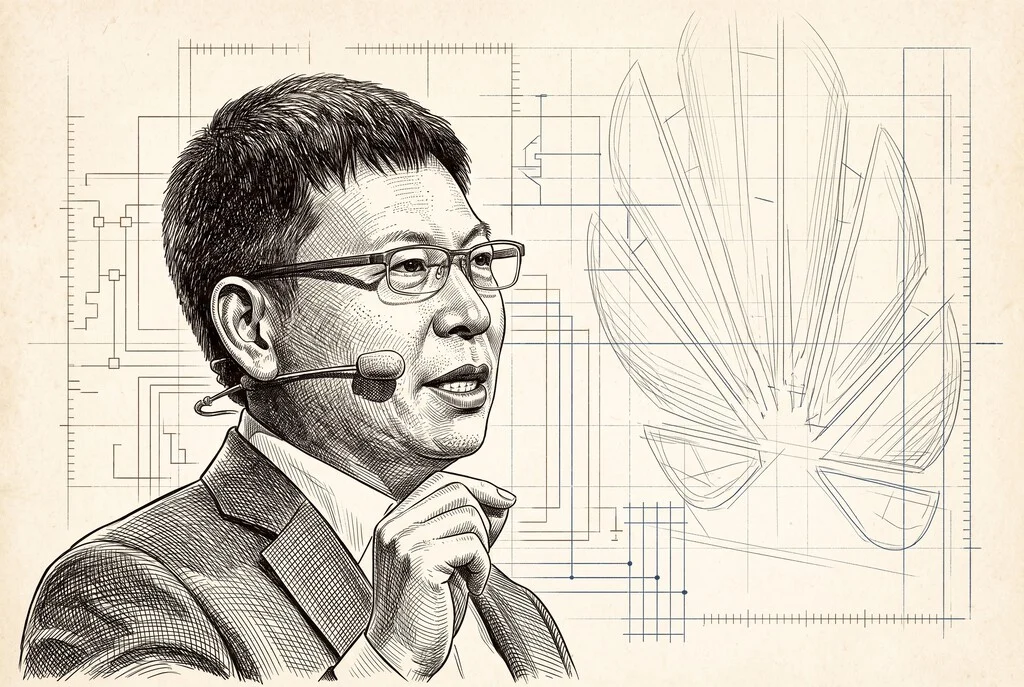
For Huawei, the Mate 90 is not merely a smartphone refresh; it is the culmination of a "survivalist" strategy initiated in the wake of the 2019 blockade. During the product keynote, Richard Yu, chairman of Huawei’s Consumer Business Group and Investment Review Committee, framed the new lineup as the ultimate vindication of China’s domestic semiconductor industry. By achieving high-performance computing capabilities despite being barred from utilizing state-of-the-art extreme ultraviolet (EUV) lithography machines—the gold standard for sub-7nm chip fabrication—Huawei has demonstrated that engineering ingenuity can, to some extent, circumvent geopolitical hardware constraints.
A Chronology of Resistance: From Crisis to Capability
The path to the Mate 90 was paved with strategic pivots that many Western analysts once deemed impossible. The chronology of Huawei’s response to U.S. sanctions provides a clear window into how the company maintained its market relevance:
- 2019: The Blackout: The U.S. government restricts Huawei’s access to Google Mobile Services (GMS) and cutting-edge chip foundries like TSMC. Huawei faces an existential threat to its global smartphone market share.
- 2020-2021: The Inventory Buffer: Huawei relies on stockpiled chips while frantically accelerating internal R&D through its subsidiary, HiSilicon. The company begins to divest from its secondary brands, such as Honor, to ensure their survival outside the scope of sanctions.
- 2023: The Breakthrough: The launch of the Mate 60 Pro surprises global observers. The device features a Kirin 9000s processor, manufactured domestically on 7nm nodes. This confirmed that China had successfully established a high-end foundry pipeline, albeit one facing significant yield and scalability hurdles.
- 2024: The Ecosystem Shift: The rollout of the Mate XT, the world’s first tri-fold phone, demonstrated that Huawei could master complex mechanical engineering and system-level integration.
- 2025: The Mate 90 Era: The current generation confirms the maturity of the Kirin architecture and the full independence of HarmonyOS from Android frameworks.
The Technical Architecture: Innovation Through Integration
At the heart of the Mate 90’s performance lies an unconventional approach to chip design. Faced with the inability to purchase the most modern lithography tools from firms like ASML, Huawei has turned to a strategy of vertical integration. By aligning hardware design, software optimization, and cloud-based processing, the company is extracting performance levels that defy the theoretical limitations of their available manufacturing nodes.
Technical analysis of the latest Kirin processors reveals a focus on interconnect efficiency. Industry data indicates that the architecture utilizes approximately five million signal transmission links, supporting an unprecedented bandwidth of 125 TB/s. This high-density interconnect capability effectively reduces latency, allowing the system to perform complex computational tasks—such as AI-driven image processing and multi-tasking—with a speed that challenges 3nm chips produced by international competitors.
This approach, which some industry observers have termed "LogicFolding," suggests that Huawei is compensating for the lack of raw miniaturization by optimizing the physical layout of the chip and the efficiency of the software stack. By ensuring that HarmonyOS 7 is tightly coupled with the hardware, the system overhead is significantly reduced, creating a user experience that remains fluid and competitive in the high-end market.
Official Responses and the Strategic Narrative
Richard Yu’s rhetoric during the launch was pointedly aimed at both domestic stakeholders and international competitors. By positioning the Mate 90 as a "testimony of an era," Yu emphasized that China has transitioned from being a consumer of foreign innovation to a developer of its own foundational systems.
"The Mate 90 series is a milestone in our semiconductor journey and a triumph for our domestic operating system," Yu stated. "We have moved beyond the survival phase into an era of excellence. Our success is built upon a complete integration of hardware, software, chips, and cloud technology."
This narrative of sovereignty serves as a powerful political tool within China, reinforcing the government’s mandate for "indigenous innovation." While Western governments express concern that these advancements suggest that sanctions are failing to slow China’s military-industrial complex, Huawei’s leadership maintains that their efforts are purely a response to the "extreme survival" conditions imposed by foreign trade policy.
The Broader Economic and Geopolitical Impact
The success of the Mate 90 carries significant implications for the global semiconductor landscape. First, it proves that the "decoupling" of the technology supply chain is forcing the emergence of a bifurcated market. As China continues to build out its own fabrication capacity, the reliance on Western intellectual property, such as ARM architectures and American EDA (Electronic Design Automation) software, will likely continue to wane.
Second, the maturation of HarmonyOS represents a major challenge to the duopoly of iOS and Android. If Huawei can successfully convince global developers to build for its platform—or if the sheer scale of the Chinese market forces them to do so—it could permanently fracture the global mobile software ecosystem.

However, analysts caution that the long-term sustainability of this model remains an open question. While Huawei has proven it can manufacture 7nm-class chips, it remains unclear if it can produce them at a cost-efficient scale that matches the economies of mass production enjoyed by competitors. The "misterious" inscriptions found on some chips, such as "2035," have led to speculation that Huawei is planning for a decade-long cycle of continued restricted access, ensuring their supply chain remains resilient to further tightening of export controls.
Fact-Based Analysis of Future Challenges
The challenge facing Huawei is no longer just about survival; it is about scaling and quality control. The transition from lab-proven prototypes to millions of commercial units is the most difficult hurdle in semiconductor manufacturing. If the yields of these domestically manufactured chips are low, the financial burden on the company will remain high, potentially requiring continued state-backed subsidies.
Furthermore, the technological gap remains. While the Kirin chips in the Mate 90 are performant, they are still conceptually behind the cutting-edge nodes currently being deployed by firms like TSMC, Samsung, and Intel. The real test for Huawei will be whether it can bridge the gap in power efficiency and transistor density in the coming three to five years without access to the latest EUV equipment.
Nevertheless, the launch of the Mate 90 serves as a clear message: the technological blockade, intended to paralyze the Chinese mobile industry, has instead acted as an accelerant for domestic self-reliance. By forcing the company to look inward, the sanctions have helped foster an ecosystem that is now fundamentally more resilient than it was in 2019. Whether this "sovereign tech" path will lead to a new standard of global innovation or a permanent state of technological isolation remains the defining question of the next decade in the electronics industry. As the world watches, Huawei continues to rewrite the rules of its own existence, shifting the power balance in the high-stakes game of global semiconductor manufacturing.
