
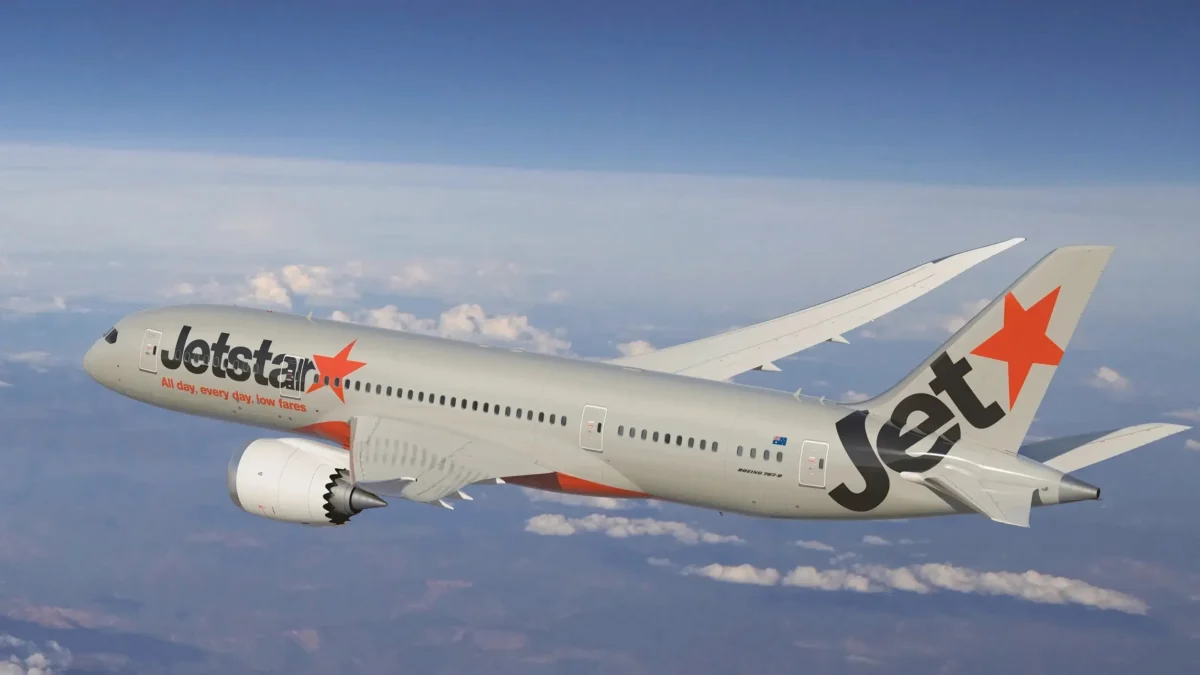

Jetstar Airways, Australia’s prominent low-cost carrier and a key subsidiary of the Qantas Group, has officially entered into a strategic agreement with global communications leader Viasat to integrate the Amara in-flight connectivity (IFC) solution across its long-haul Boeing 787 Dreamliner fleet. This high-profile technology deployment is set to cover all 11 of Jetstar’s Dreamliner aircraft, marking a significant shift in the airline’s service offerings as it seeks to bridge the gap between low-cost operations and high-end digital expectations. The announcement, made on Wednesday, confirms that the installation phase is already underway, with the first upgraded aircraft having successfully entered commercial service earlier this month. This rollout represents a critical component of Jetstar’s wider multi-million dollar cabin refurbishment program, designed to modernize the passenger experience on some of the airline’s longest international routes.
A Comprehensive Technical Integration and Timeline
The partnership between Jetstar and Viasat follows a meticulous selection process aimed at identifying a connectivity solution capable of handling the rigorous demands of transoceanic flight paths. The Viasat Amara system is specifically designed for the wide-body environment, offering a scalable architecture that adapts to various satellite constellations. According to the deployment schedule released by the airline, the fleet-wide integration will be a phased process, with completion targeted for mid-2027.
The chronology of this project aligns with Jetstar’s scheduled heavy maintenance and cabin interior overhauls. By synchronizing the IFC installation with the broader "Dreamliner Refresh" program, Jetstar aims to minimize aircraft downtime and ensure that the hardware integration is seamless with the new cabin aesthetics. The initial aircraft that entered service this month serves as a proof-of-concept for the system’s performance in the unique atmospheric and geographical conditions of the Asia-Pacific region, where satellite handovers can often be a challenge for older IFC systems.
The Dreamliner Refresh: Beyond Just Connectivity
The introduction of Viasat’s Amara solution is not an isolated upgrade but a pillar of a comprehensive multi-million dollar investment in the Jetstar Boeing 787 fleet. This refurbishment is one of the most significant capital investments in the airline’s history, focusing on enhancing both the physical comfort and the digital capabilities of the cabin.
Key features of the refurbishment include:
- Seating Upgrades: A complete overhaul of the seat ergonomics in both Economy and Business Class.
- Business Class Expansion: Jetstar is doubling its Business Class seating capacity on the 787-8 aircraft, responding to a growing trend of "premium leisure" travel where passengers are willing to pay more for comfort on long-haul routes while still seeking the value of a low-cost carrier.
- Modernized IFE and Lighting: The integration of the latest generation of in-flight entertainment systems and programmable LED mood lighting designed to reduce the effects of jet lag.
The addition of Wi-Fi is the "digital glue" connecting these physical improvements. For the first time, Jetstar passengers on routes to destinations such as Honolulu, Seoul, Tokyo, and Bali will have the ability to remain connected to the ground in real-time. The airline has structured its service model to offer complimentary Wi-Fi to Business Class customers, while Economy Class passengers will have the option to purchase various tiers of connectivity, ranging from simple messaging packages to high-speed streaming access.
Technical Deep Dive: The Amara Multi-Orbit Advantage
The selection of Viasat Amara is particularly noteworthy due to its multi-orbit capability. Unlike traditional in-flight Wi-Fi systems that rely solely on Geostationary (GEO) satellites—which orbit at approximately 35,000 kilometers and can suffer from higher latency—Amara is built to be "future-proof."
The system leverages Viasat’s existing GEO constellation, including the high-capacity ViaSat-3 satellites, which provide massive throughput for data-heavy activities like 4K streaming and cloud-based productivity tools. However, the true innovation lies in its multi-network architecture. Amara is designed to integrate with Low-Earth Orbit (LEO) constellations, specifically the upcoming Telesat Lightspeed network. LEO satellites orbit much closer to Earth (typically 500 to 1,200 kilometers), drastically reducing latency.
For the passenger, this means the "lag" often associated with satellite internet is virtually eliminated. For Jetstar, this dual-orbit approach ensures high reliability and global coverage. As the aircraft moves across different regions, the system can intelligently switch between satellite networks to maintain the strongest and fastest connection available. This is essential for Jetstar’s network, which covers vast stretches of the Pacific and Indian Oceans where traditional ground-based connectivity is impossible.
Strategic Objectives and Official Perspectives
Jetstar Group CEO Stephanie Tully emphasized that these investments are a direct response to evolving consumer behavior. In a recent statement regarding the Dreamliner refresh, Tully noted that the airline’s mission is to provide access to low fares on long-haul routes without forcing customers to sacrifice modern necessities.
"We’ve invested heavily in this fleet because we believe our customers deserve access to more low fares on longer international routes, and these refurbished aircraft are how we deliver that," Tully stated. "Doubling our business cabin means more people than ever can takeoff in style for less and installing Wi-Fi capability means customers can remain fully connected in the air."
From a strategic standpoint, the move also brings Jetstar into closer alignment with its parent company, Qantas. Qantas has a long-standing and successful partnership with Viasat, offering free high-speed Wi-Fi on its domestic and international fleets. By adopting a similar technological backbone, the Qantas Group can leverage economies of scale in hardware procurement, maintenance, and data management. It also ensures a consistent brand experience for passengers who may be connecting between Qantas and Jetstar flights.
Analyzing the Impact on the Low-Cost Carrier (LCC) Model
The decision to implement high-speed, streaming-quality Wi-Fi marks a significant evolution in the low-cost carrier business model. Historically, LCCs avoided the weight and complexity of IFC systems to keep operational costs low and fuel efficiency high. However, the "ancillary revenue" model has shifted.
- Ancillary Revenue Streams: By offering paid Wi-Fi in Economy, Jetstar creates a new stream of non-ticket revenue. As digital dependency grows, the take-rate for in-flight internet is expected to rise, potentially offsetting the initial capital expenditure of the hardware.
- Competitive Differentiation: In the Asia-Pacific region, Jetstar competes with carriers like AirAsia X, Scoot, and various full-service airlines. High-speed Wi-Fi is becoming a "must-have" rather than a "nice-to-have." By offering Viasat’s Amara system, Jetstar positions itself ahead of competitors who may still rely on slower, legacy L-band or older Ku-band systems.
- Operational Efficiency: Beyond passenger use, the Viasat system provides the flight crew with real-time data links for weather updates, maintenance reporting, and flight path optimization. This can lead to improved on-time performance and reduced fuel consumption, which are critical metrics for any LCC.
Market Context and Industry Trends
The aviation industry is currently experiencing a "connectivity arms race." According to recent industry data, the global in-flight connectivity market is projected to grow at a CAGR of approximately 15% over the next decade. Passengers now carry multiple devices and expect the same level of connectivity at 35,000 feet as they have in their living rooms.
Viasat’s expansion into the Australian market through Jetstar is a testament to the increasing demand for high-capacity satellite bandwidth. The launch of the ViaSat-3 constellation is a central part of this story. While the first ViaSat-3 satellite faced some initial deployment challenges with its antenna, the company has continued to push forward with its global coverage map, ensuring that airlines like Jetstar have the "pipes" necessary to deliver high-speed data.
Furthermore, the inclusion of Telesat Lightspeed (LEO) capability reflects a broader industry trend toward hybrid connectivity. Other major players, such as Starlink and Eutelsat OneWeb, are also aggressively entering the aviation space. By choosing the Amara platform, Jetstar is betting on a multi-orbit solution that provides the stability of GEO with the speed of LEO, rather than committing to a single-orbit provider.
Conclusion: The Road to 2027
As Jetstar continues the rollout of the Viasat Amara system through mid-2027, the airline is effectively redefining the expectations for budget-conscious long-haul travel. The integration of high-speed internet into the Boeing 787 Dreamliner fleet is more than just a technical upgrade; it is a statement of intent. It signals that Jetstar is committed to maintaining its position as a leader in the LCC space by embracing the digital transformation of the skies.
For passengers, the timeline means that within the next three years, the "offline" flight will become a thing of the past for Jetstar’s international travelers. Whether it is a business traveler finishing a presentation in the expanded Business Class cabin or a tourist streaming a movie in Economy, the partnership between Jetstar and Viasat is set to fundamentally change the way Australians and international visitors experience long-haul travel across the Southern Hemisphere. With the first aircraft already in the skies, the transition to a fully connected, modernized fleet is well under way.
