
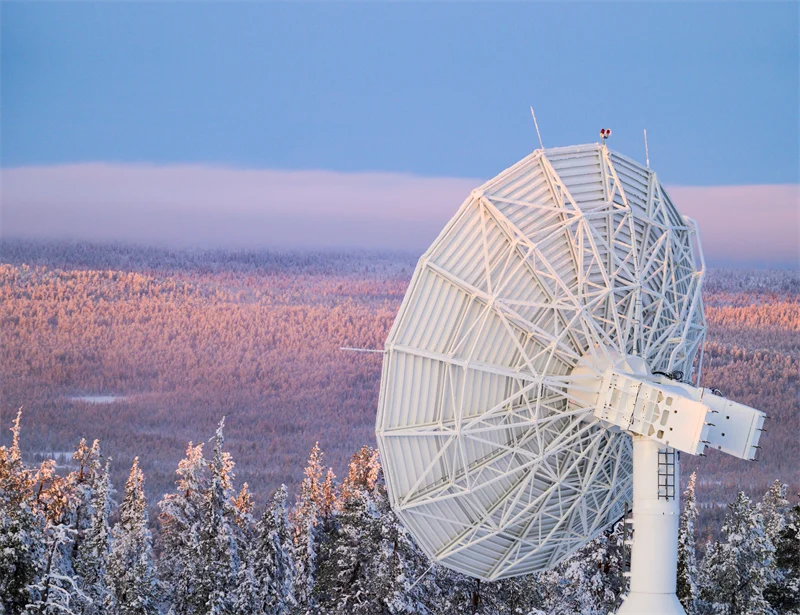

In a significant move to consolidate the Nordic region’s position within the global space economy, SSC Space (Swedish Space Corporation) and Kuva Space have announced a comprehensive regional collaboration aimed at strengthening space-based capabilities across the entire value chain. The partnership, formalized through a Letter of Intent (LOI) signed on April 22, marks a pivotal alignment between Sweden’s premier space service provider and Finland’s leading hyperspectral satellite operator. This strategic alliance is designed to address a broad spectrum of commercial, institutional, and security-related opportunities, positioning the Nordic corridor as a primary hub for European space innovation and operational resilience.
The collaboration comes at a time when the demand for high-resolution earth observation and robust ground segment services is surging, driven by both commercial interests in environmental monitoring and urgent governmental needs for regional security. By combining SSC’s extensive experience in ground station operations and launch services with Kuva Space’s cutting-edge hyperspectral imaging technology, the two entities aim to create a vertically integrated ecosystem capable of supporting complex space missions from inception to data analysis.
A Unified Vision for the Nordic Space Value Chain
The partnership between SSC Space and Kuva Space is structured to leverage the complementary strengths of the Swedish and Finnish space sectors. Under the terms of the LOI, the companies will explore joint participation in diverse space programs, with a heavy emphasis on the Nordic region. The scope of the agreement covers several critical pillars of modern space operations, including ground segment services, hosted payload opportunities, technology development, future mission architectures, launch and early orbit phase (LEOP) services, and downstream analytics.
SSC Space, headquartered in Solna, Sweden, brings to the table more than five decades of experience in space services. As a global leader in the field, SSC operates one of the world’s largest civilian networks of ground stations and manages the Esrange Space Center in northern Sweden. Kuva Space, based in Espoo, Finland, represents the "NewSpace" vanguard, specializing in microsatellites equipped with hyperspectral cameras that provide unique insights into the composition of the Earth’s surface and atmosphere.
Charlotta Sund, President and CEO of SSC Space, emphasized the strategic nature of the agreement, stating that the collaboration is intended to support closer Finnish and Swedish cooperation in security-related space activities while advancing the commercial interests of both firms. Sund highlighted Kuva Space as a driving force in the innovative Finnish market, suggesting that the partnership would catalyze growth for both organizations.
Deepening Ties in a Shifting Geopolitical Landscape
The timing of this collaboration is inextricably linked to the evolving geopolitical environment in Northern Europe. With both Sweden and Finland recently joining NATO, the requirement for sovereign and allied space-based surveillance and communication has reached an all-time high. The Nordic region is increasingly viewed as a strategic frontier, particularly regarding Arctic monitoring and the security of critical infrastructure.
By aligning their capabilities, SSC and Kuva Space are positioning themselves as primary contractors for institutional and defense-related space programs within the European Union and NATO frameworks. The ability to provide end-to-end mission support—ranging from the physical launch of satellites to the secure processing of hyperspectral data—offers a compelling value proposition for defense ministries seeking to enhance situational awareness in the High North.
Historically, the Nordic countries have maintained a high level of cooperation in research and development. This LOI represents a transition from purely scientific collaboration to a more robust, industrial-scale partnership aimed at securing technological sovereignty. The joint effort is expected to foster a more resilient space infrastructure that can withstand the complexities of modern electronic warfare and cyber threats, which are of increasing concern in the orbital domain.
Technical Synergies: From Hyperspectral Data to Global Ground Networks
At the heart of this partnership lies a technological synergy that addresses the "bottlenecks" of satellite operations. For a satellite operator like Kuva Space, the primary challenge is not only the deployment of hardware into orbit but also the efficient and frequent retrieval of data. SSC’s Universal Space Network, which includes ground stations in Sweden, Chile, Australia, and the United States, provides the necessary global footprint to ensure that Kuva’s growing constellation can transmit data back to Earth with minimal latency.
Kuva Space is currently developing a constellation of microsatellites designed to provide daily hyperspectral insights. Unlike traditional optical satellites that capture images in three primary colors (red, green, and blue), hyperspectral sensors capture hundreds of narrow spectral bands. This allows for the identification of specific materials, the health of vegetation, the presence of pollutants, and the chemical composition of the atmosphere.
For SSC, providing ground segment services for such a data-intensive constellation is a significant commercial opportunity. Furthermore, the LOI explores "hosted payload" opportunities, where SSC could facilitate the inclusion of Kuva Space’s sensors on other satellite platforms, or vice versa, thereby optimizing the cost of access to space.
The Role of Esrange and Northern European Launch Capabilities
A critical component of the collaboration involves the use of the Esrange Space Center near Kiruna, Sweden. In January 2023, Sweden inaugurated "Spaceport Esrange," the first orbital launch site on mainland Europe. This facility is a cornerstone of SSC’s future strategy, moving the company from suborbital sounding rocket launches to full orbital capabilities.
For Finnish companies like Kuva Space, having a launch site within the Nordic region significantly reduces the logistical and regulatory complexities associated with launching from facilities in the United States, French Guiana, or Kazakhstan. The partnership envisions SSC providing Launch and Early Orbit Phase (LEOP) services for Kuva Space, ensuring that once a satellite is released from its rocket, it is immediately tracked, commissioned, and integrated into the operational network.
This regional "launch-to-data" pipeline is expected to attract significant interest from institutional investors. By keeping the entire mission lifecycle within the Nordic-European sphere, the partnership minimizes dependency on non-European providers, a goal that aligns with the European Space Agency’s (ESA) push for "autonomous access to space."
Driving the "NewSpace" Economy in Finland and Sweden
The growth of the Finnish space sector has been meteoric over the last decade. Following the launch of Aalto-1 in 2017, Finland has birthed a cluster of high-tech firms specializing in SAR (Synthetic Aperture Radar), hyperspectral imaging, and propulsion. Kuva Space has been a standout performer in this ecosystem, recently securing €16.6 million in Series A funding to accelerate its constellation deployment.
Sweden, conversely, has long been an established player with a mature industrial base. The collaboration between a "legacy" giant like SSC and an agile innovator like Kuva Space exemplifies the "NewSpace" transition—where established infrastructure meets disruptive technology.
Data suggests that the global space economy will exceed $1.8 trillion by 2035. For the Nordic region to capture a significant share of this market, industrial consolidation and strategic partnerships are essential. This LOI is viewed by industry analysts as a defensive and offensive move: defensive in the sense of protecting regional interests, and offensive in the sense of creating a competitive entity capable of bidding for large-scale international contracts.
Institutional and Security Implications for NATO’s High North
As the Arctic becomes more accessible due to climate change, the need for persistent monitoring has intensified. Hyperspectral imaging is uniquely suited for this task. It can detect changes in ice thickness, identify illegal fishing vessels through chemical signatures of engine exhaust, and monitor the health of fragile northern ecosystems.
From a security perspective, the SSC-Kuva Space partnership enhances the "Space Domain Awareness" (SDA) of the Nordic nations. In the event of a regional crisis, the ability to rapidly task satellites and receive processed intelligence via local ground stations is a major strategic advantage. This collaboration likely signals a move toward more integrated defense procurement between Stockholm and Helsinki, where space assets are shared or co-developed to maximize taxpayer value and operational efficacy.
While the LOI is currently an "exploration of opportunities," the language used by both parties suggests a long-term commitment. The dialogue will likely evolve into specific service-level agreements (SLAs) as Kuva Space nears the launch of its next generation of satellites.
Future Projections for the SSC-Kuva Partnership
Looking ahead, the roadmap for this collaboration includes several key milestones. In the near term, the focus will be on integrating Kuva’s data downlink requirements into SSC’s ground station schedule. Mid-term goals will likely involve joint bids for European Commission and ESA tenders, particularly those related to the Copernicus program or the IRIS² multi-orbital constellation.
Long-term, the partnership could serve as a blueprint for other Nordic collaborations. Denmark and Norway also possess significant space assets, and a "Nordic Space Alliance" could eventually emerge, creating a unified bloc that rivals the traditional space powers of France and Germany within the European framework.
The collaboration between SSC Space and Kuva Space is more than a commercial agreement; it is a statement of intent for the Nordic region. By bridging the gap between Finnish innovation and Swedish infrastructure, the two companies are laying the groundwork for a future where the High North is not just a participant in the space age, but a leader. As the first satellites under this new framework begin their journey into orbit, the impact of this partnership will be felt across the fields of environmental science, regional security, and the burgeoning digital economy of the 21st century.
