
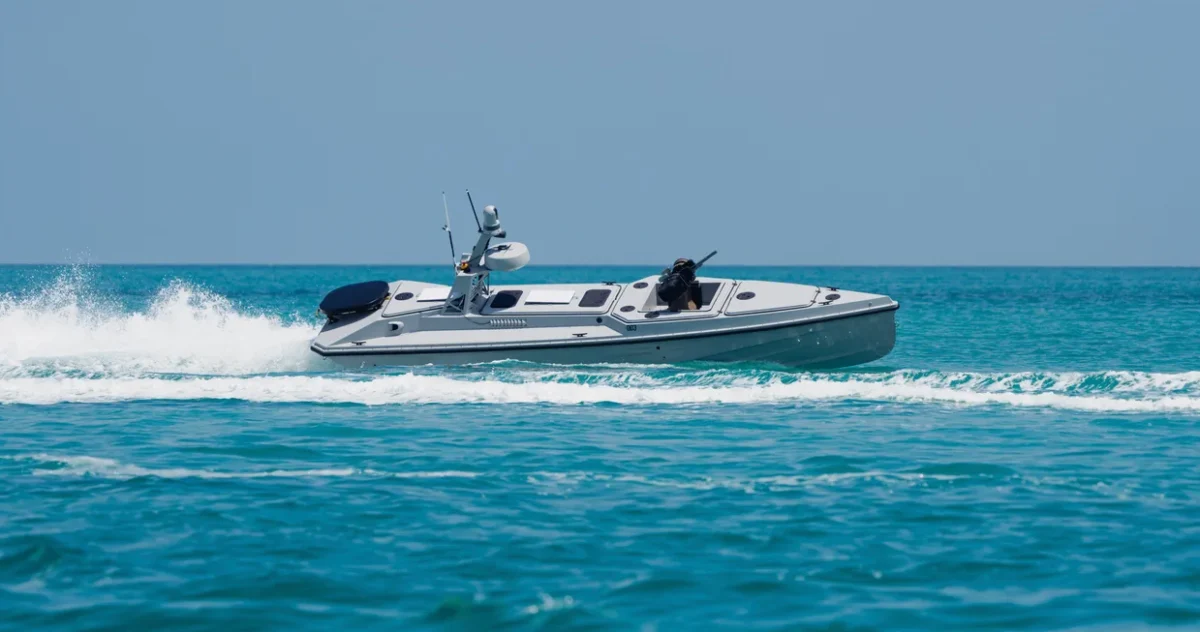

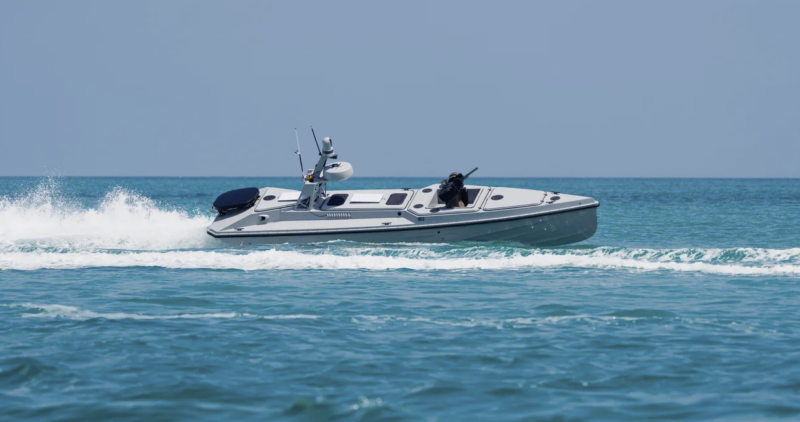
In a move that signals a significant shift in the landscape of autonomous maritime operations, Kymeta, a leader in flat-panel satellite antenna technology, has entered into a strategic partnership with Red Cat Futures, an independent consortium focused on the advancement of robotics and autonomous systems. Announced on May 14, this collaboration focuses on the integration of Kymeta’s high-bandwidth, multi-orbit satellite communication (satcom) terminals into uncrewed surface vessels (USVs). Specifically, the partnership will see Kymeta’s technology embedded into the Blue Ops Variant 7, a sophisticated USV designed for complex maritime environments. This integration aims to solve one of the most persistent challenges in unmanned naval operations: maintaining high-speed, reliable connectivity while moving across vast, often contested, oceanic territories.
The Evolution of Autonomous Maritime Systems and the Connectivity Gap
The partnership between Kymeta and Red Cat Futures arrives at a pivotal moment for the maritime defense and commercial sectors. As the global security environment shifts toward distributed maritime operations, the reliance on uncrewed systems has transitioned from experimental to essential. However, the effectiveness of a USV is fundamentally limited by its ability to communicate with its command-and-control (C2) centers. Traditional radio line-of-sight communications are limited by geography and the curvature of the earth, while older, bulky satellite dishes are often unsuitable for the sleek, low-profile designs required for stealthy or high-speed USVs.
Red Cat Futures, led by the defense technology firm Red Cat Holdings, recognizes that the next generation of robotics requires more than just mechanical autonomy; it requires "informational autonomy." By integrating Kymeta’s electronically steered arrays (ESAs), the Blue Ops Variant 7 USV can maintain a constant link to satellite constellations without the need for mechanical gimbals, which are prone to failure in harsh salt-spray environments. This technical leap enables "communications on the move" (COTM), allowing the vessel to transmit high-definition video feeds, sensor data, and telemetry in real-time, regardless of its distance from the shore.
Technical Specifications: The Kymeta Advantage and the Variant 7 Platform
At the heart of this integration is Kymeta’s proprietary metamaterial-based technology. Unlike traditional satellite antennas that use moving parts to track satellites, Kymeta’s terminals use software-defined electronic beams to lock onto signals. This is particularly advantageous for the Blue Ops Variant 7, a vessel designed for versatility and durability. The Variant 7 platform is engineered to handle various mission sets, including electronic warfare, intelligence, surveillance, and reconnaissance (ISR), and tactical logistics.
The integration of Kymeta’s terminals allows the Variant 7 to tap into multi-orbit connectivity. This means the vessel can switch seamlessly between Geostationary Orbit (GEO) satellites and Low Earth Orbit (LEO) constellations, such as those operated by Eutelsat OneWeb. LEO satellites offer significantly lower latency and higher throughput, which are critical for the low-lag requirements of remote piloting and the rapid transmission of large datasets generated by onboard AI and sensor suites.
Barry Hinckley, president of Blue Ops, the maritime division of Red Cat, emphasized that as missions become more distributed, the ability to coordinate multiple units—often referred to as "swarming"—becomes the primary objective. "Reliable connectivity is a critical enabler for coordinated operations," Hinckley noted. He highlighted that the Kymeta integration allows for a level of coordination and range that was previously unattainable for vessels of this size and class.
Chronology of Development and the Road to SOF Week
The announcement of this partnership is the culmination of several years of parallel development within both companies. Kymeta has spent the last decade refining its flat-panel technology, moving from early prototypes to the ruggedized, military-grade Hawk u8 and Peregrine u8 terminals currently used in land and sea applications. Meanwhile, Red Cat Holdings has been aggressively expanding its portfolio, acquiring companies like Teal Drones and establishing Red Cat Futures to act as an incubator for cutting-edge autonomous integrations.
The timeline for this specific collaboration intensified in early 2024, as the demand for USVs surged following successful deployments of similar technology in international conflict zones, most notably the Black Sea. The partners fast-tracked the integration process to prepare for a public unveiling at SOF Week (Special Operations Forces Week) in Tampa, Florida. SOF Week serves as the premier venue for demonstrating technology tailored for the world’s most elite military units, providing an ideal backdrop for showing how the Variant 7 can operate in "denied" or "degraded" environments where traditional communications might be jammed or unavailable.
Market Context and Supporting Data: The Surge in USV Demand
The strategic importance of this partnership is underscored by the rapid growth of the global uncrewed surface vessel market. Industry analysts project the USV market to grow from approximately $0.9 billion in 2023 to over $2.5 billion by 2030, representing a compound annual growth rate (CAGR) of nearly 15%. This growth is driven by several factors:
- Cost-Effectiveness: USVs can perform "dull, dirty, and dangerous" missions at a fraction of the cost of manned frigates or destroyers.
- Attrition Tolerance: In high-intensity conflict, the loss of an uncrewed vessel is a tactical setback rather than a human tragedy.
- The "Replicator" Initiative: The U.S. Department of Defense has signaled a massive push toward fielding thousands of small, smart, and cheap autonomous systems to counter near-peer adversaries.
Data from recent naval exercises suggests that USVs equipped with high-bandwidth satcom can increase the "sensor-to-shooter" timeline efficiency by up to 40%, as data no longer needs to be cached and downloaded upon return to base but can instead be processed and acted upon mid-mission.
Official Responses and Strategic Implications
While the primary focus of the May 14 announcement was the technical integration, the broader implications for the defense industry are profound. Red Cat Holdings has positioned itself as a provider of an "unmanned ecosystem," and the addition of Kymeta’s connectivity solutions completes a vital piece of that puzzle.
Industry observers suggest that this partnership may prompt other USV manufacturers to move away from traditional hardware. A spokesperson for the consortium indicated that the "open architecture" approach of Red Cat Futures allows for rapid iteration, meaning the Kymeta-equipped Variant 7 could eventually see further upgrades, such as integrated mesh networking or enhanced cybersecurity protocols for protected satellite communications (TRANSEC).
The reaction from the satellite industry has been equally positive. Experts note that Kymeta’s ability to provide a low-profile, high-throughput solution for the maritime "edge" validates the move toward multi-orbit strategies. By not being tied to a single satellite provider, Red Cat ensures that its vessels remain operational even if one network is compromised or suffers from regional outages.
Analysis: The Future of Maritime Autonomy and Distributed Warfare
The integration of Kymeta technology into the Blue Ops Variant 7 is more than a simple hardware upgrade; it is a foundational step toward the future of "Distributed Maritime Operations" (DMO). In this naval doctrine, power is not concentrated in a single large carrier strike group but is spread across dozens or hundreds of smaller, interconnected platforms.
For DMO to work, the "connective tissue" of the fleet must be resilient. The Kymeta-Red Cat partnership addresses this by ensuring that even a small USV can possess the same level of situational awareness and connectivity as a much larger vessel. This enables:
- Over-the-Horizon Targeting: USVs can act as forward-deployed eyes for the fleet, spotting threats hundreds of miles away and relaying that data via satellite to weapon systems on other platforms.
- Autonomous Swarming: Multiple Variant 7 units could theoretically communicate with one another via satellite-linked cloud servers to perform synchronized maneuvers, overwhelming enemy defenses through sheer numbers and coordination.
- Edge Computing and AI: With high-speed satcom, USVs can offload complex processing tasks to shore-based AI models, allowing the vessel to identify and classify targets with higher accuracy than onboard hardware alone might allow.
Conclusion and Outlook
As the Blue Ops Variant 7 makes its debut at SOF Week, the industry will be watching closely to see how the Kymeta integration performs in real-world scenarios. The success of this partnership could set a new standard for the USV industry, making multi-orbit satellite connectivity a "must-have" feature for any autonomous platform intended for blue-water operations.
For Kymeta, the deal reinforces its position as the go-to provider for flat-panel solutions in the defense sector. For Red Cat, it solidifies its reputation as an innovator capable of bringing together disparate technologies to create a unified, mission-ready autonomous system. As maritime threats evolve and the push for autonomy accelerates, the ability to stay connected on the move will likely remain the most decisive factor in the effectiveness of uncrewed naval forces. The collaboration between Kymeta and Red Cat Futures represents a significant leap toward a future where the ocean is populated by intelligent, interconnected, and highly capable autonomous guardians.
