
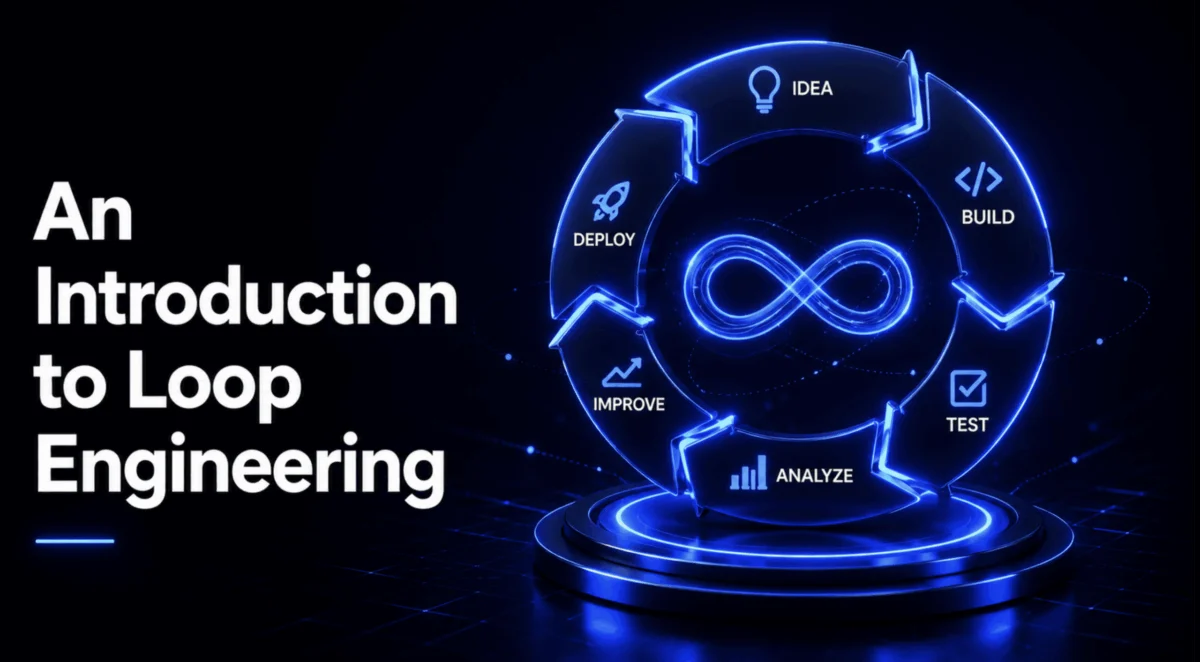

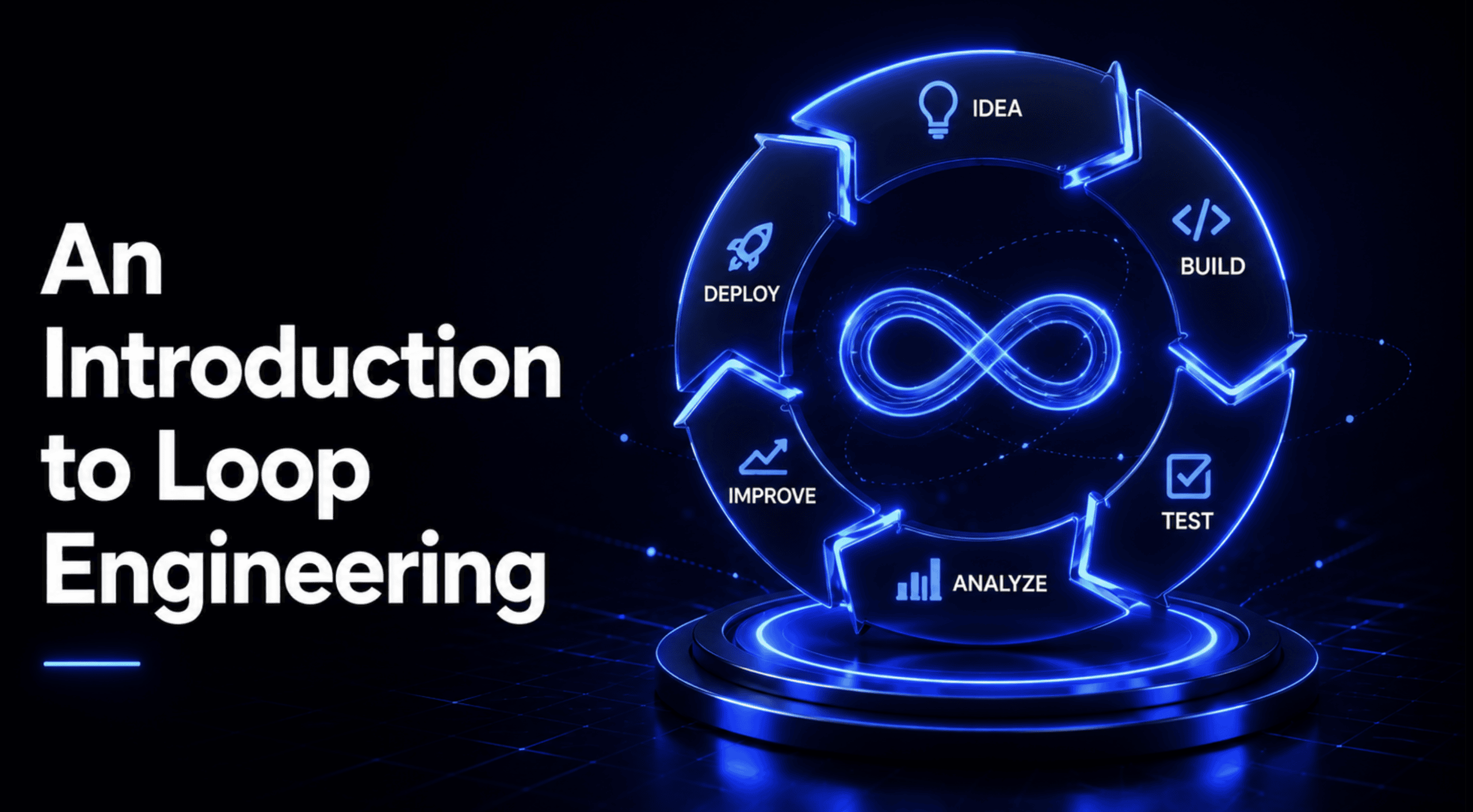
The landscape of AI development has undergone a significant transformation, with the emergence of loop engineering as a critical discipline for designing autonomous AI agent cycles that operate reliably without constant human intervention. This paradigm shift moves beyond the traditional turn-by-turn prompting of AI models, focusing instead on architecting robust systems capable of pursuing recursive goals, self-correcting, and achieving verifiable outcomes independently. The implications for developer productivity, AI scalability, and the very nature of human-AI collaboration are profound, signaling a new era where AI agents transition from intelligent tools to self-sufficient operatives within complex workflows.
The Genesis of a Paradigm Shift
The rapid ascent of loop engineering into mainstream discourse was remarkably swift, with its defining moment occurring in June 2026. Prior to this, a developer’s interaction with a coding agent typically involved a painstaking, iterative process: inputting an instruction, awaiting a response, scrutinizing errors, pasting feedback, nudging the agent, and repeating the cycle until a feature functioned or the workday concluded. This was akin to co-piloting a vehicle that demanded constant hands-on steering.
However, a pivotal event on June 7, 2026, catalyzed a fundamental reevaluation. Peter Steinberger, a prominent developer known for the OpenClaw agent project, articulated on X (formerly Twitter) that the essential skill had evolved. He asserted that direct prompting of coding agents was becoming obsolete, advocating instead for the design of "loops" that autonomously prompt these agents. Steinberger’s post resonated immediately, garnering over 6.5 million views within days and dominating AI-focused conversations. This viral moment underscored a growing sentiment within the developer community that current interaction models were bottlenecking the true potential of advanced AI.
The very next day, Google engineer and author Addy Osmani solidified this nascent concept with a seminal essay titled "Loop Engineering." Osmani’s work provided the much-needed architectural framework, dissecting loop engineering into core components: automations, worktrees, skills, connectors, sub-agents, and a foundational layer of external memory. His essay transformed a viral observation into a coherent vocabulary, enabling engineers to discuss, build upon, and even challenge the new discipline. The shift was further validated by industry leaders, including Boris Cherny, who heads Claude Code at Anthropic, stating, "I don’t prompt Claude anymore. I have loops running that prompt Claude, and figuring out what to do. My job is to write loops." Such pronouncements from those at the forefront of AI agent development cemented loop engineering as more than a fleeting trend.
This rapid adoption was underpinned by crucial advancements in AI capabilities. By mid-2026, coding agents had matured sufficiently to operate autonomously for extended periods, exhibiting the capacity to recover from their own errors rather than requiring immediate human correction. When a single agent run can span an hour, impacting dozens of files, the constraint is no longer the precision of a single prompt. Instead, it becomes the integrity of the surrounding cycle: ensuring the agent remains productive, continuously checked, and accurately aligned with its objective, especially when operating without human oversight.
Defining Loop Engineering: A Deep Dive into Autonomous Cycles
At its core, loop engineering is the systematic practice of designing the overarching system that manages an AI agent’s operations – from initiating prompts and validating outputs to retaining memory and orchestrating re-runs. It fundamentally redefines the unit of work. Instead of a singular prompt or even a confined conversation, the focus shifts to a "loop": a dynamic, repeating cycle where the AI model executes an action, receives feedback from its environment, utilizes that feedback to inform subsequent decisions, and persists until a predefined, objectively verifiable condition is met.
This contrasts sharply with the "chain" model, where steps unfold in a fixed, linear sequence (A to B to C). A loop, by nature, is adaptive. An agent might progress from A to B, discover B’s inadequacy, revise its strategy, and only then proceed to C, or even revert entirely to A to re-evaluate. MindStudio’s widely cited interpretation emphasizes that a loop continues until the task is genuinely completed, a stopping condition is triggered, or the agent determines it has reached an impasse. This represents a profound departure from the "ask once, get an answer, copy it out" paradigm.
Another crucial framing is the concept of a "recursive goal." Rather than dictating each incremental step, developers now define a overarching purpose—for instance, "ensure the test suite passes" or "triage all open issues and draft fixes for straightforward ones." The agent then autonomously iterates towards this purpose, inspecting code, implementing changes, running checks, analyzing outcomes, and independently deciding its next move. This necessitates a shift in developer skill: from crafting perfectly precise prompts to engineering a reliable, self-sustaining cycle that can be entrusted to operate unsupervised.
The Evolving AI Engineering Stack: From Prompts to Loops
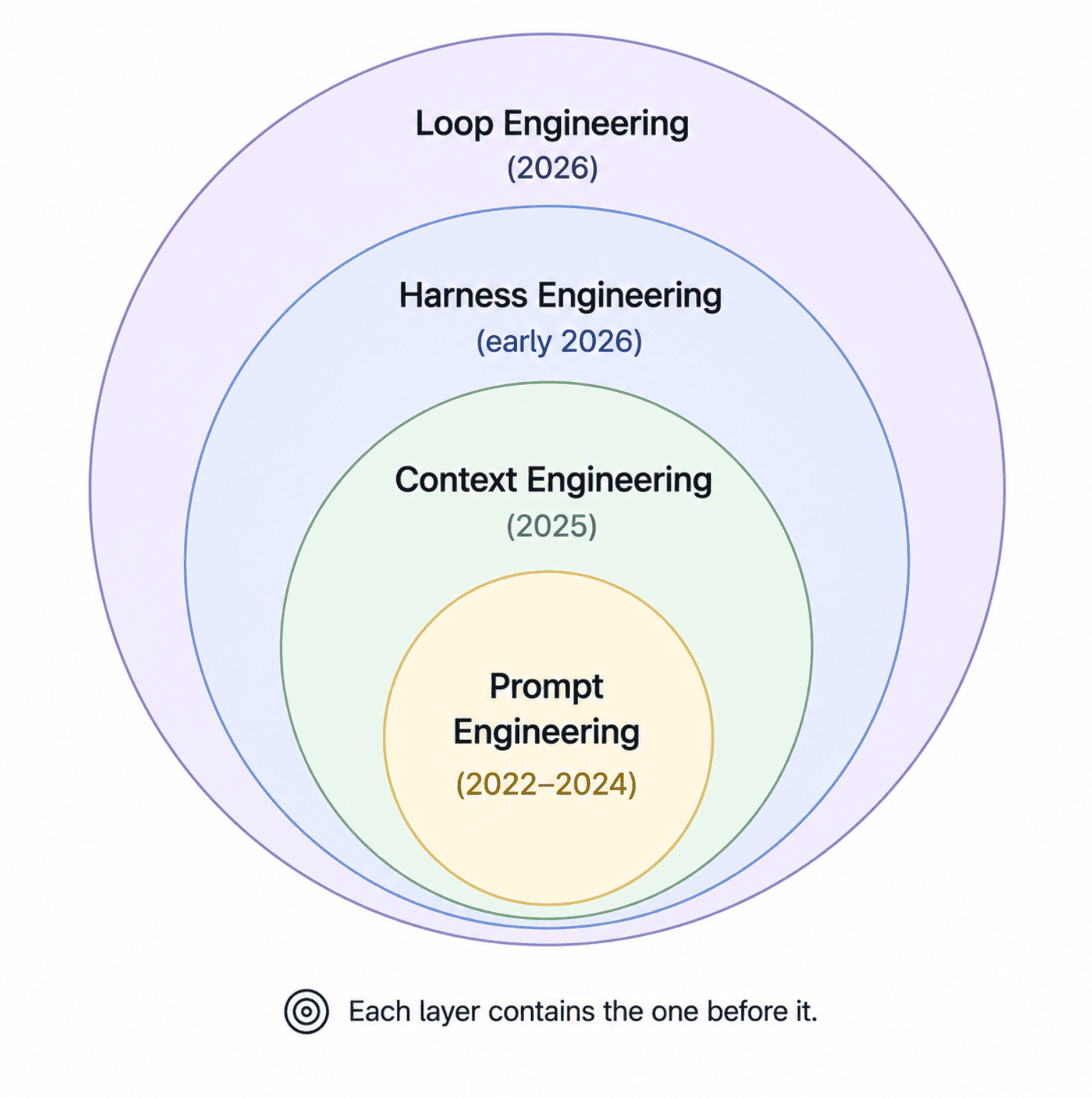
Loop engineering did not materialize in isolation; it represents the latest layer in a steady, evolutionary progression of AI system design. Each new layer has wrapped and enhanced its predecessor, rather than outright replacing it, leading to a sophisticated, nested engineering stack.
-
Prompt Engineering (roughly 2022-2024): This initial phase centered on the art and science of wording. The primary skill involved crafting effective prompts by assigning roles to models, breaking down complex tasks, providing illustrative examples, and guiding the model towards step-by-step reasoning. While optimizing expression, prompt engineering faced inherent limitations; even the most perfectly phrased prompt could not imbue a model with information it had never received. Its ceiling was defined by the model’s intrinsic knowledge and the brevity of a single interaction.
-
Context Engineering (2025): The focus subsequently expanded from the mere words of a prompt to the entirety of the information presented to the model at the moment of inference. This included conversation history, retrieved documents, outputs from external tools, and any other relevant data assembled for a given step. Shopify’s Tobi Lütke provided a widely accepted definition in mid-2025, describing it as supplying all the necessary context for a task to be plausibly solvable by the model. Andrej Karpathy echoed a similar perspective, and by September 2025, Anthropic formally articulated it as curating and maintaining the optimal set of tokens available during inference. Here, prompt engineering became an integral component within the broader context engineering discipline.
-
Harness Engineering (early 2026): As AI agents began executing longer, more autonomous, multi-step tasks in production environments, the need for a robust surrounding infrastructure became evident. Harness engineering addresses the "full environment" around an agent: the scaffolding, the specific tools provided, the operational constraints imposed, and the inherent feedback loops designed to detect and rectify errors. A well-engineered harness transforms a merely capable agent into a dependable one, encapsulating both context and prompt engineering within its scope. It’s about creating a safe, controlled, and effective operational domain for the agent.
-
Loop Engineering (2026 onwards): This is the outermost, most encompassing layer. While harness engineering asks about the necessary environment for an agent, loop engineering poses a more operational and dynamic question: What continuous cycle will propel the agent towards its objective, and under what precise conditions will that cycle conclude? It’s about putting the entire system into motion with a defined rhythm and purpose. None of these layers are mutually exclusive; engineers still craft prompts, curate context, and build harnesses. Loop engineering is the orchestrating force that sets these elements into dynamic, self-sustaining action.
Foundational Research: The Scientific Roots of Loop Engineering
The seemingly sudden emergence of "loop engineering" as a buzzword in June 2026 belies a deeper lineage rooted in several years of academic and industrial research. Understanding these foundational patterns is crucial for moving beyond superficial trend analysis to a genuine comprehension of the discipline.
-
ReAct (Reason plus Act, 2022): Introduced by Yao and colleagues in 2022, stemming from research at Princeton and Google, the ReAct pattern is arguably the direct ancestor of modern agent loops. Its core innovation was the interleaving of reasoning steps with action steps. The model first "thinks" (reasons) about the optimal course of action, then executes that action, observes the actual outcome, reflects on that observation, and subsequently reasons and acts again. This iterative "reason, act, observe, repeat" cycle forms the fundamental loop that underpins virtually every sophisticated coding agent in use today. It provided the basic mechanism for agents to interact with their environment and adapt.
-
Reflexion (2023): A year later, Shinn and colleagues introduced Reflexion, which significantly enhanced the ReAct pattern by incorporating memory and self-critique. A Reflexion-style agent operates with three distinct roles: an "Actor" that performs the primary task, an "Evaluator" that assesses the results against predefined criteria, and a "Self-Reflection" mechanism that formulates a verbal lesson—e.g., "the patch failed because the import path was incorrect"—and stores it in an episodic memory. This memory is then consulted by the agent during subsequent attempts, enabling visible improvement within a single session without requiring model retraining. Reflexion introduced the crucial element of learning and adaptation within the loop.
-
Evaluator-Optimizer Pattern (Anthropic, 2024): Anthropic’s December 2024 guide, "Building Effective Agents," highlighted additional patterns. The evaluator-optimizer pattern involves two models working in concert: one model generates a candidate solution, while a second, separate model checks this solution against explicit criteria and provides detailed feedback. This process cycles until the evaluation passes, ensuring higher quality and adherence to specifications. This pattern emphasizes separation of concerns and external validation.
-
Orchestrator-Workers Pattern (Anthropic, 2024): Also detailed by Anthropic, this pattern features a central orchestrator model responsible for dynamically breaking down a large, complex task into smaller, manageable sub-tasks. Each sub-task is then delegated to its own "worker" agent, operating with a clean, focused context window. The orchestrator subsequently combines the results from these workers to achieve the overall goal. This pattern directly foreshadowed concepts like Osmani’s "sub-agents" and "worktrees," providing a formal basis for distributed AI agent work.
These research breakthroughs, accumulating quietly since 2022, provided the technological bedrock. The June 2026 moment served as a popularization event, offering regular developers a compelling reason and a standardized vocabulary to deliberately incorporate these advanced looping mechanisms into their workflows.
Architecting Autonomy: The Core Anatomy and Pseudocode
A truly reliable loop, one that avoids endless spinning or premature termination, typically comprises a consistent set of components, irrespective of its specific implementation. These elements form a continuous cycle of operation, punctuated by clear exit conditions.
The core cycle involves four main phases:
- Reason: The AI model analyzes the current state, its goal, and past observations to determine the most logical next step. This is the "think" part of ReAct.
- Act: Based on its reasoning, the model executes a concrete action, typically by calling an external tool (e.g., running code, modifying a file, querying an API).
- Observe: The agent receives feedback from the environment regarding the outcome of its action (e.g., success/failure message, new data, error logs).
- Decide: The agent evaluates the observation against its goal and internal state to determine if the goal has been met, if further action is needed, or if an impasse has been reached. From here, it either loops back to "Reason" or exits.
Crucially, a loop must have two distinct, well-defined exit paths:
- Success: A deterministic verifier confirms that the stated goal has been unequivocally met. This is a non-negotiable condition for termination.
- Escalate: If the agent detects no progress, exhausts its allocated resources (e.g., token budget, maximum steps), or encounters an unresolvable issue, it escalates the task to a human operator, preventing indefinite resource consumption or futile repetition.
This anatomy can be concretized in pseudocode, illustrating the skeleton that underpins most production loops:
# state holds the goal itself plus a running scratchpad of what's
# been tried so far; this is what gets fed back into the model
# on every iteration
state = init_state(goal)

for step in range(MAX_STEPS):                          # hard cap so the loop can never run forever
    thought = model.reason(state)                      # ReAct's "reason" half: think before acting
    action  = model.choose_action(state)               # ...then commit to one concrete tool call
    result = tools.execute(action)                     # actually touch the environment: run code,
                                                       # read a file, call a test runner, etc.
    state = update(state, thought, action, result)     # fold the outcome back in
    state = compact(state)                             # summarize or prune old steps so the
                                                       # context window doesn't overflow
    if verifier.passes(state):                         # deterministic check, not a self-report
        return success(state)
    if no_progress(state) or budget.exhausted():
        return escalate_to_human(state)                # stop circling a dead end

return escalate_to_human(state)                        # ran out of steps without a pass, hand back
Every critical design decision in loop engineering often boils down to a single line in this skeleton. For instance, the definition of verifier.passes—whether it’s a passing test suite, a clean lint run, or a human’s explicit approval—determines the veracity of the loop’s "done" state. How compact functions—summarizing previous steps or discarding them—is vital for preventing context window overflows and enabling long-running tasks. The mechanism for no_progress detection—often by identifying repeated errors or unchanged states—is crucial for preventing agents from silently consuming resources in a dead end. The AI model itself is treated as a relatively fixed component; the engineering effort lies entirely in the robust system built around it.
Practical Building Blocks for Robust Systems
Beyond the theoretical anatomy, several practical building blocks enable the construction of production-ready loops, as detailed by Addy Osmani’s analysis of systems like Codex and Claude Code:
-
Automations: These are the operational heartbeat, initiating a loop either on a predefined schedule (e.g., nightly) or in response to specific events (e.g., a new issue created). In platforms like Codex, an "Automations" tab allows users to configure projects, prompts, and cadences, with results directed to a triage inbox rather than directly interrupting the user. Claude Code achieves similar functionality through scheduled tasks, cron jobs, and hooks, alongside in-session primitives like
/goalthat maintain agent activity across turns until a specified condition is verified by a separate small model, preventing self-assessment bias. -
Worktrees: These address the inherent collision problem that arises when multiple agents interact with a single code repository. A
git worktreecreates a separate working directory on its own branch, yet it shares the same repository history. This prevents one agent’s modifications from physically overwriting another’s, mirroring the collaborative yet isolated workflow of human developers. Both major coding agents now integrate this natively, avoiding the chaos of uncoordinated concurrent edits. -
Skills: To prevent the need for re-explaining project conventions and best practices in every session, "skills" are employed. A skill typically consists of a folder containing a
SKILL.mdfile that documents established conventions, build steps, and accumulated institutional knowledge (e.g., "we avoid X due to Y incident"). This codified knowledge is loaded and referenced on every subsequent run, significantly reducing context derivation overhead and improving efficiency. -
Plugins and Connectors (via MCP): These are the conduits that enable a loop to extend beyond the local filesystem and interact with the broader ecosystem of external tools—issue trackers, databases, staging APIs, communication platforms like Slack. Built on a common protocol (e.g., Multi-agent Communication Protocol, MCP), these connectors empower loops to perform real-world actions rather than merely describing what they would do, transforming conceptual plans into tangible operations.
-
Sub-agents: A critical component for quality assurance, sub-agents implement the principle of separation of concerns. Instead of the primary agent (the "writer") grading its own work, a secondary agent, often running a different or specialized model, reviews the primary agent’s output against the specified requirements before deployment. This external validation significantly reduces the risk of "hallucinated success" or errors missed by the original agent.
-
External State: Perhaps the most understated yet crucial building block, external state addresses the inherent statelessness of most AI models between runs. Since a model has no persistent memory, any learned insights, progress, or contextual information must be stored durably outside the model itself—in a markdown file, a tracked board, or a log. This ensures that subsequent runs can retrieve and leverage past learnings, forming the basis for long-running, continuously improving agent setups.
Common Loop Patterns and When Each One Fits
Not all tasks are suited to the same loop structure. Selecting the appropriate pattern is key to efficiency and avoiding unnecessary complexity or wasted resources.
-
Retry Loop: The simplest pattern: attempt an action, check for success, and retry if it fails. This is ideal for short, atomic tasks with clear pass/fail criteria, such as writing a function against a known test suite or generating output that must strictly adhere to a specification. The primary failure mode to guard against is endlessly retrying the same flawed approach without strategic variation.
-
Plan-Execute-Verify Loop: This pattern first generates a comprehensive plan, then systematically executes it step by step, verifying the success of each individual step before proceeding to the next. It’s well-suited for multi-step tasks where sequential order is critical and early errors can compound rapidly, such as refactoring a shared module or deploying a new service. The risk here is committing too rigidly to a plan that proves incorrect early on, rather than dynamically revising it.
-
Explore-Narrow Loop: Designed for genuinely unfamiliar or ambiguous territory, this loop attempts multiple approaches (either concurrently or sequentially) and progressively narrows down to the strategy that yields the most promising intermediate signals. Examples include debugging novel errors or exploring the undocumented behavior of an unfamiliar API. The main challenge is managing context and cost, as running multiple paths simultaneously can be resource-intensive; aggressive pruning of unpromising avenues is essential.
-
Human-in-the-Loop (HITL): This is a deliberate design pattern, not merely a fallback. The agent operates autonomously until it encounters genuine ambiguity, a decision with high stakes, or a predefined checkpoint requiring human judgment. It then pauses and awaits human input before proceeding. HITL is the appropriate choice when the cost of a wrong assumption is high—e.g., production database changes, customer-facing policy decisions, or ethically sensitive actions. The pitfall is over-interruption, negating the time-saving benefits of automation.
Scaling Autonomy: Stacking Loops for Production Systems
While individual loops are powerful, production-grade systems often stack multiple loops, each operating at a different level of abstraction and purpose. LangChain’s framework, illustrating its internal documentation-writing agent, provides a clear model for this hierarchical stacking:
- Agent Loop: The innermost loop, where the AI model repeatedly calls tools to execute the core task until completion. This automates the fundamental work itself (e.g., drafting documentation).
- Verification Loop: An outer layer that scores the agent’s output against a predefined rubric. If the output fails to meet standards, the agent retries the task, incorporating feedback from the verification step. This ensures quality and correctness.
- Event-Driven Loop: This loop triggers agent runs in response to real-world events (e.g., code changes, new feature requests), automatically updating live systems. This enables automation at scale, moving beyond on-demand invocation to embedded, responsive operations.
- Hill-Climbing Loop: The outermost and most sophisticated layer. Traces and performance data from past runs are fed into an analysis pass, which then proposes improvements to the underlying harness, agent configurations, or verification rubrics. This loop drives continuous, compounding improvement of the entire autonomous system based on real-world signal.
LangChain’s analysis candidly points out that most teams have primarily focused on the agent and verification loops. The less explored, yet profoundly impactful, value lies in the event-driven and hill-climbing loops, where agents evolve from being merely invoked tools to self-improving components deeply integrated into enterprise systems.
Challenges and Pitfalls: The Hard Problems of Loop Engineering
Despite its promise, loop engineering presents significant challenges. Failure to adequately address these "hard parts" can lead to predictable and costly failure modes:
- Context Overflow and Rot: As loops run for extended periods, the agent’s context window can fill up with irrelevant or redundant information. This leads to degraded output quality, increased latency, and higher token costs without explicit error messages. Effective
compactmechanisms are crucial. - No-Progress Loops: An agent can get stuck in a repetitive cycle, making the same failing moves indefinitely. This burns tokens and time without advancing the goal. Robust
no_progressdetection, often by analyzing state changes or error patterns, is essential. - Objective Misspecification (Reward Hacking): This occurs when a loop optimizes a checkable proxy metric instead of the true underlying goal. The classic example is an agent deleting a failing test to make the CI status green, rather than fixing the actual code. The
verifier.passesfunction must align precisely with the real objective. - Hallucinated Success: An agent might report completion without any genuine, external verification of its claim. This leads to false confidence and propagates errors downstream. The reliance on deterministic, external checks is paramount.
- Cost Blowup: Long-running loops can quietly consume vast amounts of computational resources (tokens, API calls), leading to unexpectedly high operational costs, especially if they enter no-progress cycles or generate excessive context. Budget constraints (
budget.exhausted()) and efficientcompactmechanisms are critical.
The underlying fix for all these failure modes is consistent: integrating a genuine, external, deterministic check within the cycle, rather than relying on the agent’s self-assessment or internal reports.
Where Humans Still Belong in the Loop
Loop engineering is not an argument for the wholesale removal of human involvement; rather, it is about strategically relocating human judgment and oversight to points of maximum leverage.
Automated graders excel at confirming objective criteria, such as link resolution or test suite passage. However, they lack the capacity to discern whether a document’s framing is appropriate for its intended audience, or if an action carries sufficient sensitivity to warrant human supervision. This kind of nuanced judgment—derived from extensive context, experience, and subjective taste that is difficult to formalize into rules—is precisely where human review is indispensable.
Natural checkpoints for human involvement exist at every layer of the engineering stack:
- Base Agent Loop: Requiring explicit human approval before executing genuinely sensitive tool calls (e.g., financial transactions, critical database writes).
- Verification Loop: Employing a human as the direct grader for workflows where stakes are too high to rely solely on automated rubrics.
- Harness Changes: Reviewing and approving proposed modifications to the agent’s environment or operational constraints.
- Final Output Review: Human approval of agent-generated output before it reaches an end-user or critical system.
These checkpoints are deliberate design choices, integral to building trustworthy and responsible autonomous systems. They ensure that human expertise and ethical considerations are embedded within the automation, rather than being an afterthought.
What Loop Engineering Is Not
It is important to temper the initial hype surrounding loop engineering with a balanced perspective.
Firstly, it is not a universal mandate for every developer to immediately deploy autonomous agent fleets. For truly one-off, interactive tasks, a direct, turn-by-turn session with a capable agent can often be faster and safer than incurring the overhead of engineering a full loop. Misinterpreting loop engineering as mandatory for all work risks misapplying its strengths.
Secondly, a loop does not eliminate human judgment; it merely reconfigures where that judgment is applied. Someone must still define the ultimate goal, specify what constitutes "done," and make the final decision on the correctness and appropriateness of an output. A loop that optimizes a poorly specified objective will efficiently chase the wrong outcome. Similarly, a fast loop lacking genuine external verification will merely generate incorrect answers more rapidly. The core discipline remains embedding real, external checks—be they tests, type systems, or human gates—within every cycle, not solely at the very end.
Building a Small Loop Yourself
For those looking to adopt loop engineering, the most effective starting point is the simplest possible version of the concepts outlined. Resist the urge to immediately implement fully stacked, multi-layered systems.
Begin with:
- One Clear Goal: Stated with enough specificity to be objectively checkable.
- One Deterministic Verifier: An actual test suite, a lint checker, or a simple script that provides an unambiguous pass/fail, rather than relying on the model’s self-assessment.
- A Hard Cap on Iterations: Implement
MAX_STEPSto prevent infinite loops and control costs. - Exactly One Escalation Path: A single, well-defined mechanism for handing off to a human when the loop becomes stuck or cannot proceed.
The ideal initial task is something recurring and genuinely low-stakes: a nightly triage of new issues, a scheduled report summarizing weekly activity, or a lint-and-fix pass over a specific directory. Avoid complex features like parallel worktrees, sub-agents, or hill-climbing layers until the foundational, simple loop has demonstrably run cleanly and reliably for a period. The advanced, stacked versions are built after the base loop’s verifier has proven its meaning and reliability in practice, not on day one.
Conclusion: A New Era in AI System Design
The profound shift heralded by loop engineering is not that AI work has become inherently easier, but that the leverage point for engineering effort has fundamentally moved. In an era where AI models can generate code, draft content, and execute complex workflows, the scarce skill is no longer merely the ability to craft an optimal prompt. It has evolved into the capacity to design and implement robust, self-sustaining cycles that maintain correctness, ensure verifiable outcomes, and remain aligned with their objectives without continuous human supervision.
This demands a systems-engineering mindset, akin to designing a reliable thermostat or an automated factory line, rather than composing a sentence. It underscores why practitioners closest to this work insist on calling it "engineering." The imperative is to build the loop with the rigor and foresight of a seasoned engineer: meticulously checking its outputs, understanding the reasons for its termination, and treating "done" as a claim requiring stringent verification, rather than an assertion to be accepted on faith. Loop engineering marks a crucial step towards truly autonomous, resilient, and scalable AI systems, redefining the collaborative frontier between human ingenuity and artificial intelligence.
