
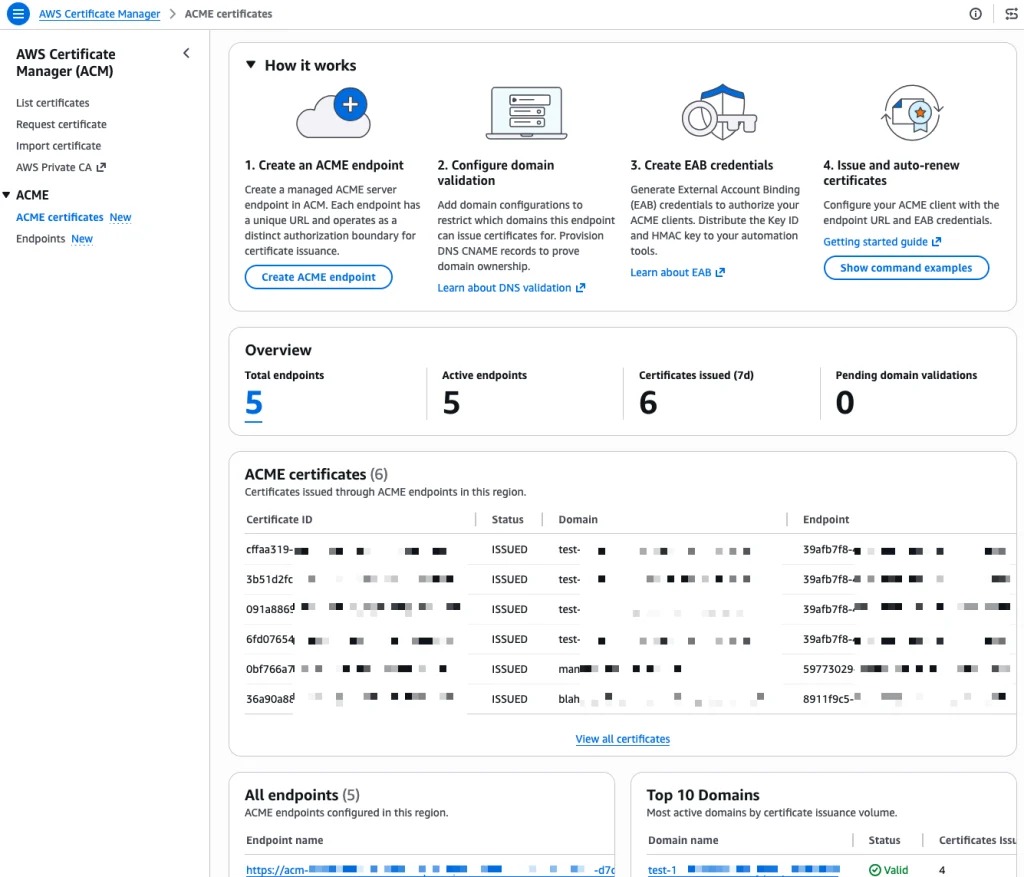

The landscape of digital security is constantly evolving, with the management of Transport Layer Security (TLS) certificates emerging as a critical yet increasingly complex challenge for organizations worldwide. Today, AWS Certificate Manager (ACM) announced comprehensive support for the Automatic Certificate Management Environment (ACME) protocol for public certificates, a move poised to significantly enhance the automation, security, and governance of TLS certificate lifecycles within the Amazon Web Services ecosystem. This integration addresses a pressing industry need, particularly in light of increasingly stringent mandates from the Certification Authority (CA)/Browser Forum that dictate shorter maximum validity periods for TLS certificates.

The Escalating Challenge of TLS Certificate Management
For years, managing TLS certificates has been a source of operational overhead and potential vulnerability. Certificates, which are fundamental to securing internet communications, have a finite lifespan. When they expire, the consequences can range from frustrating customer-facing errors and service interruptions to severe security breaches and significant financial losses. A 2022 study by the Ponemon Institute, for example, highlighted that the average cost of an unplanned outage can be hundreds of thousands of dollars per hour, with certificate expirations being a common culprit.

The manual renewal processes traditionally employed by many organizations are becoming untenable. The CA/Browser Forum, the industry body that sets guidelines for certificate authorities and web browsers, has been progressively reducing maximum certificate validity periods to bolster security and minimize the window of opportunity for attackers. This trajectory saw validity periods drop from years to 398 days, and further reductions are on the horizon. Starting March 2027, the maximum validity will be mandated to 100 days, plummeting further to just 47 days by 2029. This accelerated expiry cycle means that manual tracking and renewal for potentially thousands of certificates across diverse applications, services, and environments is no longer a viable or secure strategy. The sheer volume and frequency of renewals demand robust, automated solutions.
ACME Protocol: The Standard Bearer for Automated Certificate Management
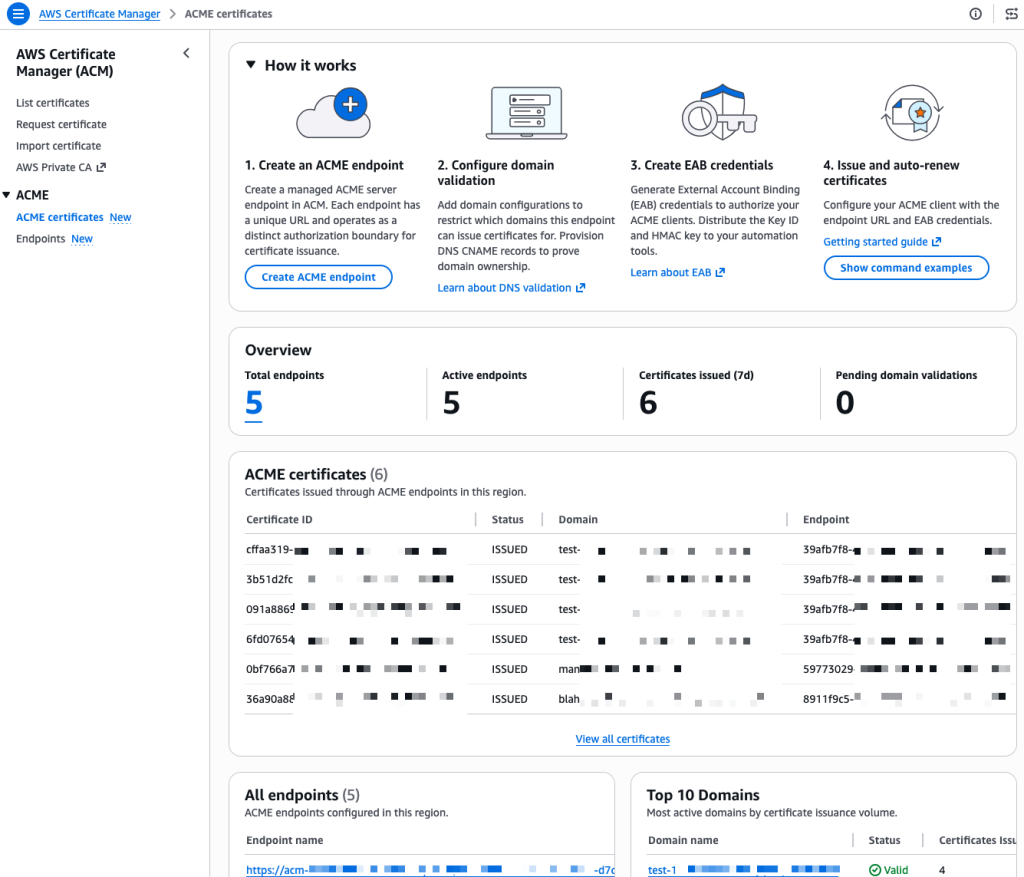
Enter the Automatic Certificate Management Environment (ACME) protocol. ACME is an open, standardized communication protocol designed to automate the interactions between certificate authorities (CAs) and web servers or other software clients. Its primary purpose is to simplify the processes of requesting, renewing, and revoking TLS certificates without requiring human intervention. This automation significantly reduces the likelihood of human error, streamlines operations, and ensures continuous security.
The protocol gained widespread recognition and adoption through its use by Let’s Encrypt, a free, automated, and open certificate authority that has issued billions of certificates, fundamentally changing how many organizations approach TLS security. The success of Let’s Encrypt propelled ACME into a de facto industry standard, leading to its support by dozens of clients across virtually every operating system and platform, from command-line tools like Certbot and acme.sh to Kubernetes controllers like cert-manager. The broad compatibility of ACME clients makes it an ideal choice for a unified certificate automation strategy.
AWS Certificate Manager Embraces ACME: A Unified Solution
Prior to this announcement, organizations seeking automated certificate management via ACME typically had to rely on external certificate authorities alongside their AWS-managed certificates in ACM. This often resulted in a fragmented certificate inventory, with some certificates residing within ACM and others managed externally, leading to limited visibility, inconsistent policies, and a lack of centralized control. PKI administrators faced significant challenges in monitoring certificate usage, enforcing domain policies, and auditing requests across their entire infrastructure.
With today’s announcement, ACM now provides a fully managed ACME server endpoint. This means that organizations can leverage their existing ACMEv2-compatible clients to issue public TLS certificates directly from Amazon Trust Services, the public certificate authority operated by AWS. This integration brings the power of ACME automation directly into the AWS ecosystem, consolidating certificate management and offering a comprehensive solution for even the most complex enterprise environments.
Centralized Control and Enhanced Governance for PKI Administrators
The ACME support within ACM is not merely about automation; it’s about empowering PKI (Public Key Infrastructure) administrators with unprecedented centralized control and governance capabilities. This goes beyond basic certificate issuance, offering a robust framework for managing certificate lifecycles at scale.
- Fine-Grained Access Control with IAM: Administrators can now bind AWS Identity and Access Management (IAM) roles to specific ACME accounts. This allows for precise, fine-grained control over which domains each ACME client or application owner is authorized to request certificates for, adhering to the principle of least privilege.
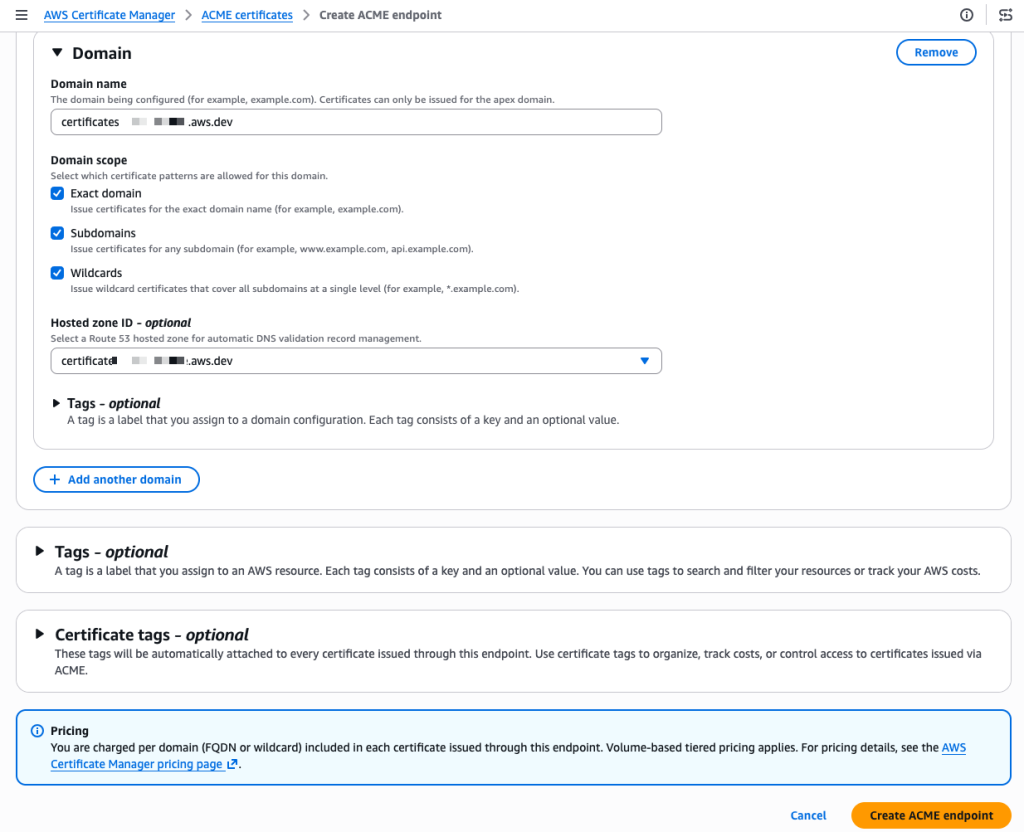
- Domain Scoping and Policy Enforcement: A critical feature is the ability to define domain scopes at the endpoint level. This enables administrators to enforce organization-wide policies, dictating exactly what certificate patterns ACME clients are permitted to request. For instance, an endpoint can be configured to allow only exact domain matches or subdomains, while explicitly disallowing wildcard certificates for stricter security postures. This level of policy enforcement is invaluable for mitigating risks associated with broad wildcard certificate issuance.
- Centralized Monitoring and Auditability: The integration brings all ACME-issued certificates under the familiar ACM console, providing a single pane of glass for monitoring. Every certificate request made through the ACME endpoint is logged in AWS CloudTrail, offering comprehensive auditability for compliance and security investigations. Amazon CloudWatch tracks operational metrics, providing insights into certificate issuance and renewal activities. Furthermore, ACM continues to send expiry notifications, ensuring that administrators are proactively alerted when certificates approach their renewal window, irrespective of whether they were issued via the console, API, or ACME. This unified visibility is a significant departure from fragmented management approaches.
Operational Workflow: A Simplified Path to Automation
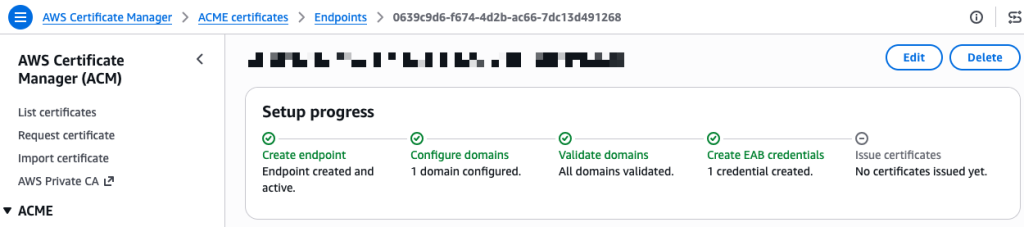
Setting up ACME support in ACM involves a streamlined process designed to separate administrative control from application-level certificate requests, enhancing security and operational efficiency.
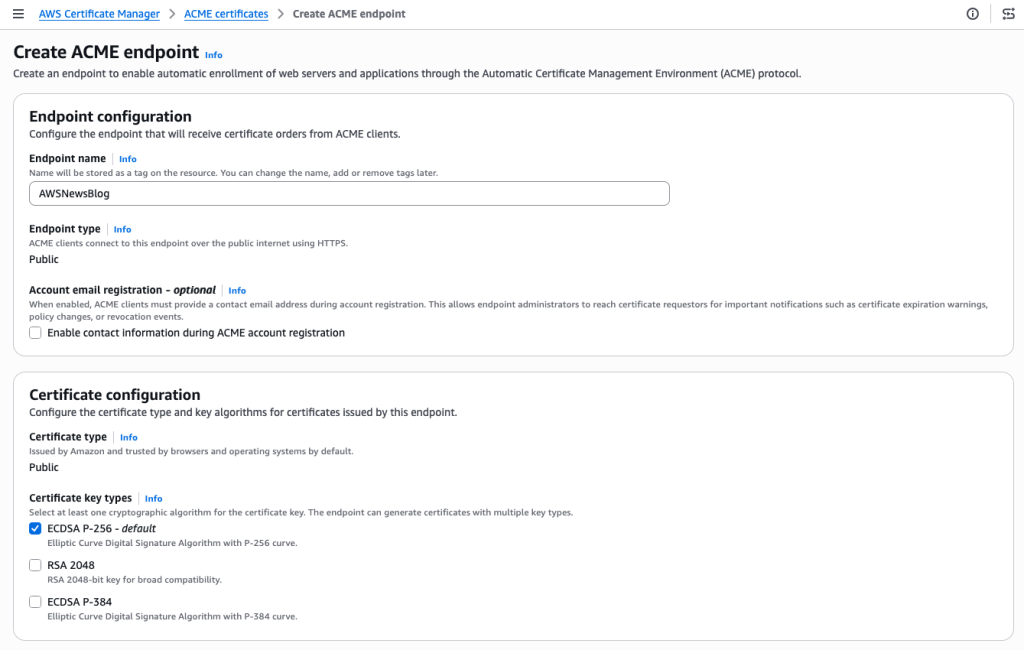
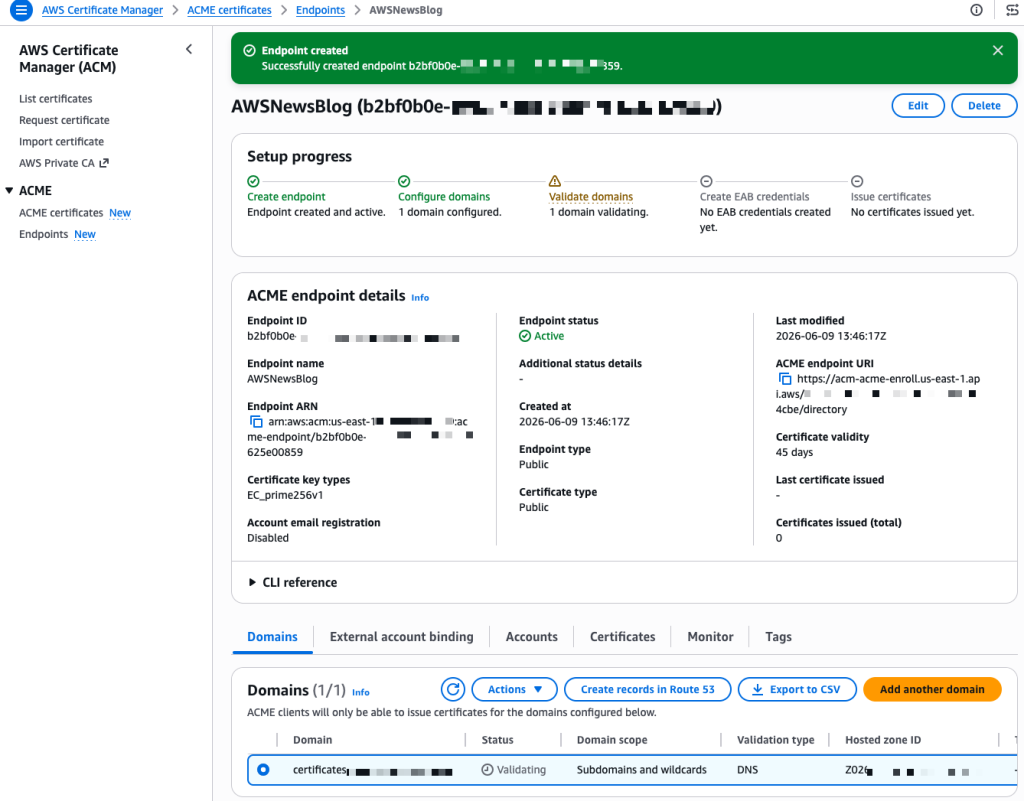
- Endpoint Setup: The first step involves creating a dedicated ACME endpoint within the AWS Certificate Manager console. During this configuration, administrators specify the endpoint type (Public), certificate type (Public, issued by Amazon Trust Services), and the desired certificate key type (e.g., ECDSA P-256, RSA 2048).
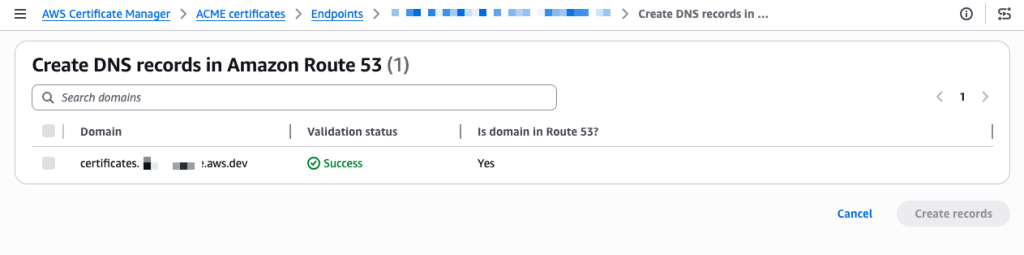
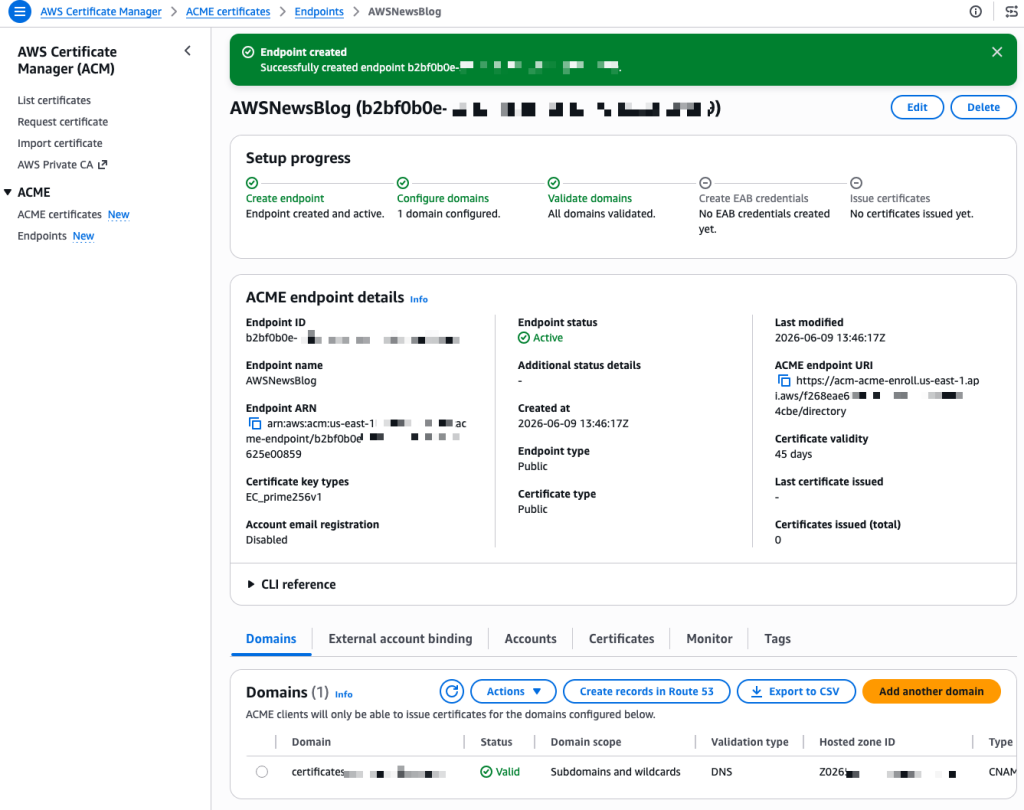
- Domain Configuration and Validation: Administrators then configure the domains for which the endpoint can issue certificates. This is a crucial step where the domain scope is defined (e.g., exact domain, subdomains, wildcards). The most significant enhancement here is the automated domain validation process when using Amazon Route 53. By selecting a Route 53 hosted zone, ACM automatically creates the necessary DNS CNAME records for domain validation, eliminating manual intervention. For domains hosted outside Route 53, administrators are provided with the CNAME record to manually configure with their DNS provider. This centralized validation means PKI administrators authenticate domains once, retaining control over DNS credentials, while application owners never directly interact with DNS.
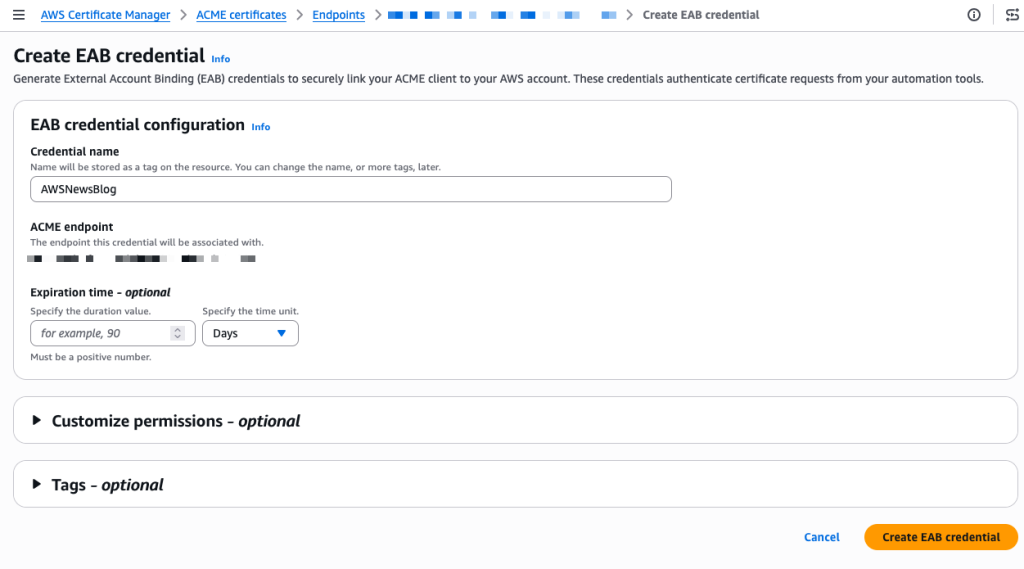
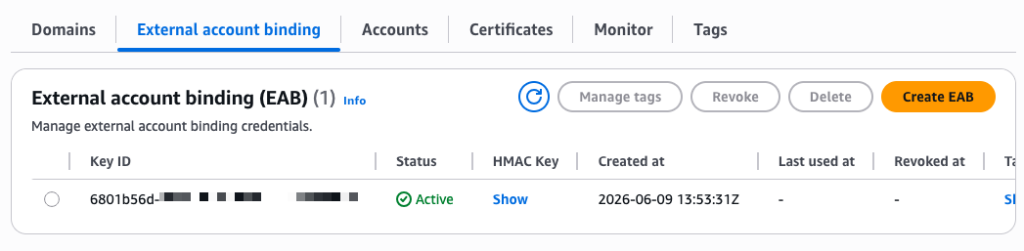
- External Account Binding (EAB) Credentials: To securely link ACME clients to the ACM ACME server, External Account Binding (EAB) credentials are created. An EAB credential consists of a key identifier (KID) and an HMAC key pair. These credentials are used by the ACME client during its initial registration with the ACME server. Once registered, the client generates its own asymmetric key pair for subsequent authentication of certificate requests. Administrators can also set an expiration time for EAB credentials, further enhancing security by limiting their window of validity.
- Client Configuration and Certificate Request: With the endpoint configured and EAB credentials generated, application owners or automated systems can then point their existing ACME clients (such as Certbot or acme.sh) to the new ACM ACME endpoint. The client uses the EAB credentials to register and then initiates certificate requests for the domains permitted by the endpoint’s configured scope. The process concludes with the ACME client receiving a valid certificate signed by Amazon Trust Services, which is then automatically visible and manageable within the ACM console.
This architecture ensures a strong separation of duties: PKI administrators control the overall certificate issuance policies and domain authentication, while application teams can self-serve their certificate needs within those defined boundaries, significantly reducing bottlenecks and improving agility.
Broader Industry Impact and Strategic Implications
The introduction of ACME support in ACM arrives at a pivotal moment for digital security. The CA/Browser Forum’s move to shorten certificate validity periods is a direct response to evolving threat landscapes, aiming to limit the impact of compromised private keys and ensure faster adoption of cryptographic best practices. This mandate makes automation not just a convenience, but a necessity for maintaining operational continuity and security posture.
AWS’s decision to natively support ACME positions ACM as an even more comprehensive and competitive solution in the certificate lifecycle management space. It removes a significant hurdle for enterprises already heavily invested in AWS, allowing them to consolidate their PKI operations within a single, integrated platform. This could potentially reduce reliance on third-party certificate lifecycle management (CLM) products or the need for costly custom-built policy layers, offering substantial cost savings and reducing operational overhead.
Industry analysts anticipate that this integration will accelerate ACME adoption within enterprise environments that previously hesitated due to the complexities of integrating external CAs with their AWS infrastructure. Security experts laud the move, emphasizing that centralized policy enforcement and enhanced auditability are crucial for maintaining a strong security posture in today’s dynamic cloud environments. A representative from a leading cybersecurity firm commented, "This move by AWS streamlines a historically cumbersome process, empowering organizations to meet compliance mandates and improve their security posture without sacrificing agility. It’s a game-changer for cloud-native PKI management."
Availability and Transparent Pricing
ACME support in AWS Certificate Manager is available immediately across all commercial AWS Regions. AWS has also indicated plans for future availability in AWS GovCloud (US), the China Regions, and the AWS European Sovereign Cloud partitions, ensuring broader access for regulated industries and global enterprises.
Pricing for ACME-issued certificates follows a clear, domain-based model. Charges are incurred per domain included in each certificate at the time of issuance, with distinct pricing for fully qualified domain names (FQDNs) and wildcard domains. Volume tiers are calculated based on the total number of domain occurrences across all certificates issued per month within an AWS account, providing scalability and cost-efficiency for high-volume users. Detailed pricing information is readily available on the ACM pricing page, promoting transparency and predictability for budgeting.
For organizations looking to enhance their TLS certificate management strategy, the new ACME support in AWS Certificate Manager offers a robust, automated, and centrally governed solution. It marks a significant step forward in simplifying digital security operations, enabling businesses to focus on innovation while AWS handles the complexities of certificate lifecycle management. Users can get started by visiting the ACM section on the AWS console or consulting the comprehensive documentation for detailed implementation guidance.
