
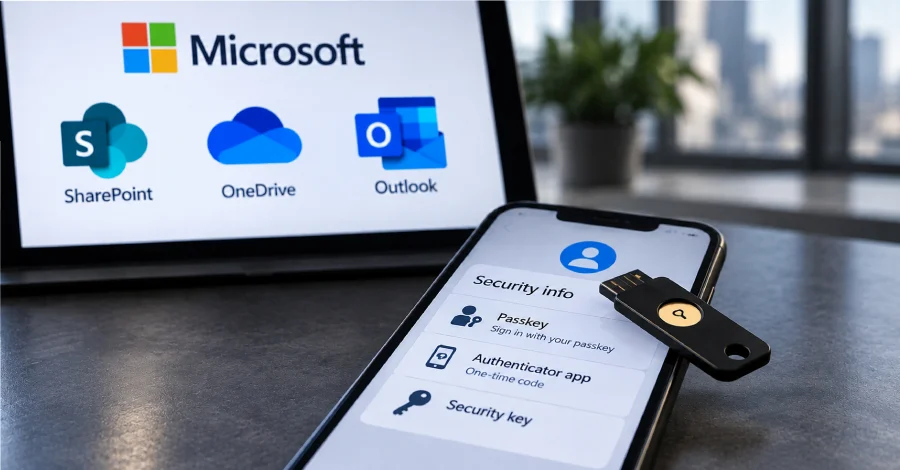

The digital threat landscape has reached a new level of sophistication as Microsoft’s security researchers recently disclosed the discovery of two distinct, high-impact cyberattack campaigns currently targeting global enterprise environments. These operations, observed throughout the latter half of 2026, represent a dual threat: one leveraging generative artificial intelligence to orchestrate large-scale financial fraud, and the other utilizing advanced social engineering tactics to bypass multi-factor authentication (MFA) and compromise cloud-based identity providers. These campaigns highlight an evolving strategy where attackers move beyond simple phishing, instead opting for multi-layered deception that targets the intersection of human psychology and automated infrastructure.
The Rise of AI-Assisted Executive Impersonation
Between August 3 and August 5, 2026, threat actors launched a massive email-based campaign that delivered over one million fraudulent messages. The operation was characterized by its high degree of personalization and the use of generative AI to craft realistic, context-aware correspondence. By masquerading as high-ranking executives—specifically CEOs and CFOs—the attackers targeted accounts payable departments across a wide array of sectors, including IT services, consumer goods, real estate, and discrete manufacturing.

The primary objective of this campaign was to induce organizations to initiate fraudulent Automated Clearing House (ACH) transfers under the guise of paying for an annual ServiceNow subscription. What distinguished this operation from conventional business email compromise (BEC) was the meticulous construction of a "unified narrative." Rather than relying on a single malicious link or attachment, the attackers embedded fabricated invoices and simulated internal email threads within the body of the message. By incorporating the actual names, signatures, and contact details of real-world corporate leadership, the attackers significantly reduced the level of skepticism among finance personnel.
Security analysts noted that the use of generative AI was instrumental in this campaign. The technology enabled the rapid generation of diverse email templates that could be tailored to specific recipients, ensuring that the tone, language, and formatting appeared legitimate. By registering impersonation domains that mimicked trusted brands, the threat actors created an ecosystem of deception that forced even diligent employees to question the authenticity of their internal communication protocols.
Chronology of the Cloud-Based Identity Compromise
While the financial fraud campaign targeted the human element of corporate finance, a second, arguably more technical campaign has been targeting cloud identity since May 2026. This operation centers on the exploitation of passkey-themed social engineering to gain unauthorized access to Microsoft 365 environments.

The attack sequence typically follows a consistent, well-rehearsed pattern:
- Initial Reconnaissance: Attackers gather detailed intelligence on organizational structure and employee roles using professional networking platforms and public data sources.
- The Lure: The attacker contacts a targeted employee via phone or private messaging, impersonating a member of the organization’s IT help desk.
- The Urgency: The employee is warned that their MFA or single sign-on (SSO) configuration is outdated, creating a false sense of urgency to "update" their credentials to prevent account lockout.
- Adversary-in-the-Middle (AitM) Execution: The victim is redirected to a malicious website that mirrors the legitimate Microsoft sign-in interface. The attacker then guides the user through a device-code authentication flow, effectively capturing the session token or forcing the user to grant access on the actor’s behalf.
Once initial access is secured, the attackers prioritize persistence. They often register their own authentication methods—such as a personal phone number or an authenticator application—as a secondary factor. This move is strategic, as it allows the threat actors to maintain access even if the legitimate user changes their password, provided the session tokens remain active.
Data-Driven Analysis of Threat Actor Tactics
The patterns observed by Microsoft researchers point to a high degree of coordination and resource sharing among modern cybercrime syndicates. The cloud-focused campaign, in particular, exhibits strong operational overlaps with groups tracked as UNC6671, also known as Storm-3032. This group is believed to be a splinter faction of the notorious BlackFile ransomware collective, now operating under the "Helix" extortion brand.

Supporting data from Microsoft’s security telemetry reveals that these attackers do not act in isolation. Instead, they rely on a "commoditized" infrastructure that includes shared phishing panels, voice-phishing (vishing) scripts, and automated tools designed to scrape data from compromised accounts. The use of Microsoft Graph API, for instance, has become a hallmark of these intrusions. Attackers utilize these APIs to silently enumerate sensitive files, download content from SharePoint and OneDrive, and harvest mailbox data. Microsoft emphasizes that because these API calls often appear legitimate when viewed in isolation, organizations must adopt a holistic approach to security monitoring, focusing on behavioral progression rather than static threshold alerts.
Official Responses and Strategic Implications
Microsoft’s Security Research team has urged organizations to move beyond traditional credential-based defense mechanisms. In their official advisory, the team highlighted that the "passkey" theme is currently a potent psychological weapon, as users are increasingly being trained to adopt passkeys for security, making them more likely to trust a prompt requesting such an update.
Industry experts suggest that the implications of these campaigns are profound. The ability of attackers to weaponize generative AI means that the "detectability" of phishing emails has reached an all-time low. When an email is perfectly formatted, uses correct company terminology, and is sent from a spoofed domain that mimics a real executive, the human firewall becomes the most significant point of failure.

"The shift toward persistent, multi-factor authentication enrollment by threat actors is a game-changer," says a senior security consultant familiar with the investigation. "Once the attacker registers their own device as a second factor, they are no longer just an intruder; they are effectively a ‘legitimate’ user from the perspective of the identity provider. This renders password resets and standard account lockouts largely ineffective."
Toward a Hardened Security Posture
The dual nature of these attacks—one targeting the wallet through human error and the other targeting the infrastructure through identity compromise—underscores the need for a "zero-trust" architecture. Microsoft recommends that organizations implement the following defensive measures:
- FIDO2 Security Keys: Organizations should prioritize the transition to hardware-based FIDO2 security keys, which are resistant to AitM phishing and cannot be easily bypassed by traditional credential harvesting.
- Cross-Event Correlation: Security Operations Centers (SOCs) must move toward behavioral analytics that correlate disparate events. A single API call to a Graph endpoint might be benign, but when preceded by a suspicious sign-in from an unmanaged device, it should trigger an immediate, automated response.
- Identity Governance: Regularly auditing authentication methods associated with high-privilege accounts is essential. Organizations should be able to identify, in real-time, when a new phone number or MFA device is registered to an account.
- Employee Education regarding Vishing: Given the rise of help-desk impersonation, employees must be trained to verify the identity of IT support staff through established internal channels before performing any authentication-related actions.
The campaigns of 2026 serve as a stark reminder that as enterprise security defenses improve, so too does the capability of threat actors to innovate. By blending advanced technical exploitation with the subtle art of social engineering, these groups are successfully navigating the gaps between traditional security tools. For global enterprises, the path forward requires not only better technology but a fundamental shift in how organizations perceive, monitor, and defend their digital identities in an era of AI-enhanced deception.
