
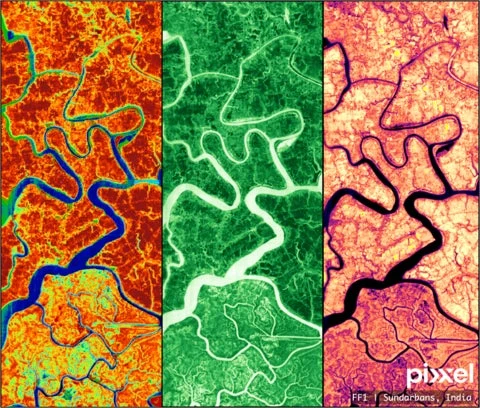

The National Reconnaissance Office (NRO) has formally expanded its integration of commercial space capabilities by awarding three new contracts for Earth-sensing data under its Strategic Commercial Enhancements (SCE) program. Announced at the GEOINT Symposium in Aurora, Colorado, these awards represent a significant step in the agency’s ongoing effort to diversify its data sources and leverage the rapid innovation occurring within the private space sector. The contracts were granted to EarthDaily for electro-optical and infrared (EO/IR) data, Pixxel for hyperspectral imagery, and Iceye for radio frequency (RF) sensing. This move signals a deepening reliance on commercial providers to augment the United States’ national security architecture with high-revisit, specialized intelligence.
Under the terms of the Commercial Solutions Opening (CSO) awards, each of the three companies received an initial base contract of $300,000. This first stage is dedicated to modeling and simulation efforts, allowing the NRO to assess how each provider’s data can be integrated into existing government systems and workflows. Following the successful completion of the modeling phase, each contractor is eligible for a Stage 2 option valued at $900,000. This second phase focuses on the procurement of actual data products and ad hoc items, providing the agency with "real-world" operational data to verify vendor claims regarding latency, resolution, and accuracy.
The Strategic Commercial Enhancements Framework
The Strategic Commercial Enhancements (SCE) effort is the NRO’s primary vehicle for evaluating and adopting emerging commercial remote sensing technologies. Established to bridge the gap between traditional government-built "exquisite" satellites and the burgeoning commercial market, the SCE framework allows the agency to move quickly—often within months—to contract with innovative startups and established commercial leaders.
Pete Muend, the director of the NRO’s Commercial Systems Program Office (CSPO), emphasized during the GEOINT Symposium that these contracts have been "highly successful" in broadening the agency’s access to diverse data types. The SCE program operates on a "buy what we can, build what we must" philosophy, which seeks to satisfy as many requirements as possible through the commercial market to preserve government resources for highly classified, specialized missions that the private sector cannot fulfill.
By utilizing the CSO process, the NRO can engage with companies that may not have a long history of government contracting. This streamlined acquisition process is designed to lower the barrier to entry for the commercial space industry, ensuring that the U.S. intelligence community remains at the forefront of technological advancement.
Deep Dive into the Awardees and Technologies
The three companies selected in this latest round of funding bring distinct and complementary capabilities to the NRO’s orbital toolkit.
EarthDaily: Daily Global EO/IR Coverage
EarthDaily is focused on providing a "daily digital twin" of the planet. Their constellation is designed to capture high-resolution electro-optical and infrared imagery of the entire Earth’s landmass every single day. For the NRO, this provides an unprecedented level of persistence. While traditional government satellites might offer superior resolution, they often lack the "revisit rate" (the frequency with which a satellite passes over the same spot) required to track fast-moving geopolitical developments or environmental changes. EarthDaily’s contribution will enhance the NRO’s ability to monitor global activity patterns and detect anomalies in near-real-time.
Pixxel: The Power of Hyperspectral Imaging
Based in India and the United States, Pixxel is a pioneer in the field of hyperspectral imaging. Unlike standard electro-optical cameras that capture light in three primary bands (Red, Green, and Blue), hyperspectral sensors divide the electromagnetic spectrum into hundreds of narrow, contiguous bands. This allows the sensor to detect the "chemical signature" of objects on the ground. For the NRO, hyperspectral data is invaluable for distinguishing between different types of materials, such as identifying specific types of vegetation, detecting camouflaged military equipment, or monitoring chemical leaks and soil composition. The inclusion of Pixxel underscores the NRO’s growing interest in advanced "phenomenologies" that go beyond what the human eye can see.
Iceye: Expanding from SAR to RF
Iceye, a Finnish company with a strong U.S. presence, is already a major provider of Synthetic Aperture Radar (SAR) data to the NRO. SAR is critical because it can "see" through clouds, smoke, and darkness, providing all-weather surveillance. This new award, however, focuses on Radio Frequency (RF) data. RF sensing involves detecting and geolocating electronic emissions from the Earth’s surface, such as signals from marine radars, handheld radios, or satellite phones. By combining Iceye’s existing SAR capabilities with new RF data, the NRO can achieve a more comprehensive "tip and tune" capability—using RF signals to detect activity and then tasking a SAR or optical satellite to take a closer look.
A Chronology of NRO’s Commercial Expansion
The latest awards to EarthDaily, Pixxel, and Iceye follow a series of strategic moves by the NRO over the past 24 months to solidify its relationship with the commercial sector.
- February 2024: The NRO issued its first CSO contracts under the SCE effort to HEO, SatVu, and Sierra Nevada Corporation (SNC). These awards focused on non-Earth imagery (tracking other satellites), medium-wave infrared (MWIR), and RF sensing respectively.
- Early 2024 (Post-Award): SatVu, a UK-based company specializing in thermal imaging, decided to "pivot their business approach" shortly after their initial award. While specific details of the pivot were not disclosed, Pete Muend noted the shift during his remarks at GEOINT, highlighting the volatile and fast-paced nature of the commercial space market.
- Mid-2024: The NRO continued to integrate data from earlier SCE awardees in the SAR and hyperspectral sectors, moving several companies from Stage 1 (modeling) to Stage 2 (data delivery).
- March 2025: The announcement of the EarthDaily, Pixxel, and Iceye contracts marks the second major wave of expansion for the SCE program, bringing the total number of commercial phenomenologies under NRO contract to include EO, SAR, RF, Hyperspectral, and MWIR.
Strategic Implications and National Security Impact
The NRO’s shift toward a hybrid architecture—combining government-owned assets with commercial data—has profound implications for national security and the global space economy.
Resiliency and Redundancy
One of the primary drivers for these awards is the need for orbital resiliency. In a conflict scenario, government satellites are high-priority targets for adversaries. By integrating dozens of commercial providers, the NRO creates a "distributed" architecture. If one satellite or constellation is compromised, the agency can simply shift its data requirements to other commercial providers, making it much harder for an opponent to "blind" U.S. intelligence.
Speed of Intelligence
Commercial constellations, often consisting of dozens of small satellites (CubeSats), offer much higher revisit rates than a few large, expensive government satellites. This allows for "pattern of life" analysis, where intelligence officers can monitor how a specific port, airfield, or border crossing changes hour by hour. This temporal resolution is often more important for modern decision-making than pure spatial resolution.
Validation of the Commercial Market
The NRO is widely considered the most demanding customer for satellite imagery in the world. An NRO contract serves as a "seal of approval" for a commercial company, often helping them secure further private investment and international government contracts. By investing in companies like Pixxel and EarthDaily, the U.S. government is effectively subsidizing the growth of a domestic and allied space industrial base that can out-innovate global competitors.
Technical Challenges: The "Firehose" of Data
While the benefits of commercial integration are clear, the NRO faces significant technical hurdles in managing this influx of data. Each commercial provider uses different formats, downlinking schedules, and calibration standards.
The Stage 1 modeling and simulation phase is critical for solving these integration issues. The NRO must ensure that data from a Pixxel hyperspectral sensor can be layered accurately over an Iceye SAR image and an EarthDaily optical image. This requires advanced automated processing and Artificial Intelligence (AI) to filter through the "firehose" of data and identify the specific frames that contain actionable intelligence.
Pete Muend noted that if a company already has operational spacecraft in orbit, the NRO moves quickly to purchase data to test vendor assumptions regarding latency. In the intelligence world, data that arrives three hours late is often useless; the SCE program is designed to push commercial vendors to meet the rigorous timing requirements of military and intelligence users.
Conclusion and Future Outlook
The NRO’s latest awards to EarthDaily, Pixxel, and Iceye represent a maturing of the relationship between the U.S. intelligence community and the private space sector. By diversifying into hyperspectral and RF sensing, the NRO is moving beyond simple "pictures from space" and into a more sophisticated realm of multi-phenomenology intelligence.
As the SCE program continues to evolve, the industry expects further awards in niche areas such as greenhouse gas monitoring, nighttime lights (low-light imaging), and advanced signals intelligence. The NRO’s commitment to "ad hoc" purchases and flexible contracting suggests that the agency is no longer just a builder of satellites, but a sophisticated broker of global orbital data. For the commercial space industry, the message is clear: if you can provide high-quality, timely data that solves a national security problem, the NRO is ready to buy.
