
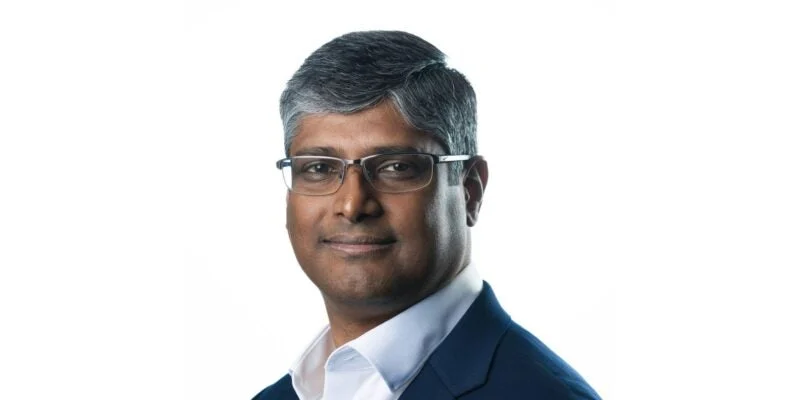

In a move signaling a strategic pivot toward software-defined infrastructure and telecommunications convergence, ST Engineering iDirect appointed Sridhar Kuppanna as its new Chief Executive Officer in late March. The transition comes at a transformative moment for the satellite ground segment, an industry currently grappling with the dual pressures of rapid technological evolution and the disruptive market entry of vertically integrated LEO (Low Earth Orbit) operators like SpaceX’s Starlink. Kuppanna, who previously served as the company’s Chief Technology Officer, succeeds Don Claussen, inheriting a mandate to accelerate a turnaround effort and solidify the company’s position within an increasingly crowded satcom ecosystem.
Kuppanna’s elevation to the CEO role is widely viewed as a "technology-first" appointment. During his tenure as CTO, he was the primary architect of the company’s technology roadmap, championing the adoption of cloud-native architectures, multi-orbit connectivity, and 5G non-terrestrial networks (NTN). His background in the broader networking and telecommunications sector is expected to be a cornerstone of his leadership, as he seeks to move the satellite industry away from the proprietary, bespoke hardware solutions that have historically defined the sector and toward the interoperable standards that govern modern terrestrial mobile networks.
The Context of Market Disruption: The Starlink Catalyst
The appointment of Kuppanna cannot be separated from the broader upheaval in the satellite industry. For decades, the ground segment—comprising the hubs, modems, and antennas that connect satellites to terrestrial networks—was dominated by a few established players providing specialized hardware. However, the arrival of Starlink shifted the paradigm. By controlling both the space segment (the satellites) and the ground segment (the user terminals and gateways), Starlink demonstrated the efficiency of a vertically integrated model.
This disruption initially sent shockwaves through incumbent ground tech providers. According to industry analysis, the rapid deployment of thousands of LEO satellites has forced traditional operators to rethink their value propositions. At major industry gatherings like the 2024 Satellite Show in Washington, D.C., the sentiment has shifted from initial alarm to a renewed focus on innovation. Kuppanna observes that while Starlink has captured significant market share in the low-end consumer and certain commercial verticals, its presence has also acted as a catalyst for the "telco-fication" of satellite communications. This shift involves adopting virtualization and 5G standards to allow satellite services to integrate seamlessly with global telecommunications infrastructure.
A Chronology of Strategic Evolution
The current trajectory of ST Engineering iDirect is the result of a multi-year consolidation and transformation strategy. In 2019, Singapore-based ST Engineering acquired Newtec for approximately $250 million, subsequently merging it with iDirect to create a dominant force in the ground segment. The goal was to combine iDirect’s strength in VSAT (Very Small Aperture Terminal) enterprise markets with Newtec’s high-efficiency broadcast and mobility technologies.
In early 2023, Don Claussen was appointed CEO to oversee a "turnaround effort" as the parent company, ST Engineering, noted that the integration and market response were taking longer than anticipated to yield financial results. By November 2023, ST Engineering’s leadership acknowledged that while the strategy remained sound, the pace of recovery was hindered by the shifting dynamics of the LEO market.
Kuppanna’s appointment in March 2024 represents the next phase of this chronology. Having spent the last year refining the product strategy, he is now tasked with the execution phase. His leadership marks a transition from structural integration to product-led growth, centered on the "Intuition" platform launched in late 2023.
The Technological Roadmap: Cloud-Native and 5G NTN
Central to Kuppanna’s vision is the belief that the satellite industry must adopt the same standards that have enabled the massive scale of the terrestrial telecom world. In his view, the industry is poised to "leapfrog" certain intermediate stages of virtualization. While the telecom industry spent a decade transitioning from physical hardware to virtual machines (OpenStack) and then to cloud-native containers (Kubernetes), Kuppanna expects the satcom industry to jump directly to community-based, cloud-native architectures.
This approach is built on four strategic pillars:
- Digital Transformation: Moving toward software-defined architectures that can be scaled and updated without replacing physical hardware.
- Network Convergence: Implementing 5G NTN standards to ensure that a satellite link is treated no differently than a terrestrial cell tower within a carrier’s network.
- Multi-Orbit Connectivity: Developing solutions that allow a single terminal to switch seamlessly between GEO (Geostationary), MEO (Medium Earth Orbit), and LEO satellites.
- Interoperability: Moving away from "vendor lock-in" by using standardized interfaces that allow equipment from different manufacturers to work together.
By adopting these standards, ST Engineering iDirect aims to expand its Total Addressable Market (TAM). Rather than remaining a niche provider of specialized satellite gear, the company seeks to become a core infrastructure provider for global telecommunications giants like Verizon, AT&T, and Deutsche Telekom, who are increasingly looking to satellite to provide "ubiquitous connectivity."
Sovereign Space and Geopolitical Implications
One of the most significant growth areas identified by Kuppanna is the rise of "sovereign space." As space becomes recognized as critical national infrastructure, many nations are reluctant to rely on foreign-controlled, vertically integrated constellations for their defense and government communications.
Kuppanna identifies three tiers of sovereignty that are currently driving demand:
- Operational Control: Countries that want to own and operate their own ground gear using trusted partners.
- Security Control: Nations that require specialized cryptography and security layers on top of standard platforms.
- Full Sovereignty: Governments that demand local manufacturing, control over the waveform (the physical layer of the radio signal), and a local workforce for development.
To meet these needs, ST Engineering iDirect has focused on software-defined modems, such as the recently launched 450 series. These devices can host multiple waveforms simultaneously, allowing a national defense force to use its own secure, proprietary waveform while retaining the ability to "roam" onto commercial or allied partner networks. This flexibility is a key differentiator against closed systems that do not allow for third-party waveform integration.
Vertical Integration vs. Open Ecosystems
The industry is currently debating the merits of vertical integration, with players like SES and Amazon (Project Kuiper) following Starlink’s lead in seeking more control over the entire value chain. Kuppanna argues that while vertical integration offers short-term efficiency, an "open architecture" model will ultimately provide more value to operators.
Drawing parallels to the mobile phone industry, he suggests that while a closed system (like Apple’s iOS) has its advantages, the broader market often thrives on open standards (like Android) that foster competition and lower costs. By providing a standardized, interoperable ground infrastructure, ST Engineering iDirect allows satellite operators to offer "vertically integrated services" without being tied to a single hardware vendor. This approach reduces Capital Expenditure (CapEx) and allows operators to pick and choose the best technology for specific use cases, whether it be maritime, aero, or government services.
Financial Outlook and the "Intuition" Launch
The success of Kuppanna’s tenure will likely be measured by the market adoption of the "Intuition" platform. According to the CEO, the platform has already seen significant interest, with the company responding to over two dozen Requests for Proposals (RFPs) in recent months. The platform is designed to handle the complexity of multi-orbit, multi-beam networks, using AI-driven automation to manage the orchestration layer.
Furthermore, the company is pivoting its business model through "Unbound," a ground-infrastructure-as-a-service offering. This model is particularly attractive to regional operators who may be capital-constrained but have steady operating cash flow. By moving from a CapEx-heavy model to an OpEx (Operating Expenditure) model, ST Engineering iDirect is lowering the barrier to entry for operators looking to modernize their networks.
Analysis: Turning the Corner in a High-Stakes Environment
The appointment of Sridhar Kuppanna reflects a calculated bet by ST Engineering that the future of satellite ground tech lies in software and standards rather than proprietary hardware. While the "Starlink effect" has undoubtedly compressed margins in the consumer segment, it has also accelerated a much-needed modernization of the industry’s back-end infrastructure.
For ST Engineering iDirect, the challenge will be execution. The company must prove that its software-defined solutions can deliver the performance and reliability of the bespoke systems they replace, while also maintaining a competitive price point. The emphasis on sovereign networks provides a strategic "moat" against mass-market LEO providers, as government and defense sectors prioritize security and control over cost.
As Kuppanna enters his first year as CEO, his objectives are clear: drive profitable revenue growth, accelerate the adoption of the Intuition platform, and lead the satellite industry’s integration into the global 5G ecosystem. If successful, he will have transformed ST Engineering iDirect from a traditional hardware manufacturer into a pivotal player in the global telecommunications infrastructure, proving that even in a world of disruptive giants, there is a massive market for open, standardized, and secure connectivity solutions.
